Aussie Burger with Beetroot

Aussie Burger with Beetroot

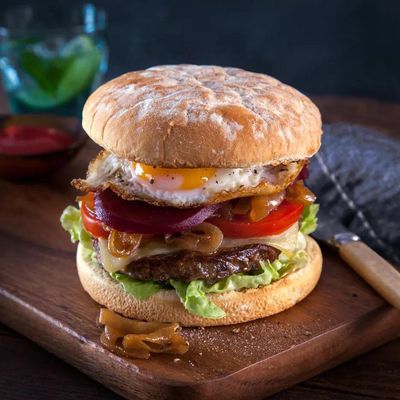
The Aussie burger, sometimes called "the lot", is a milk-bar institution that emerged in Australia in the mid-twentieth century when European immigrants and returning soldiers reshaped the corner takeaway. What distinguishes it from any American or British burger is the insistence on tinned pickled beetroot, a slice of canned pineapple, a fried egg and rashers of streaky bacon, all stacked under a thick beef patty on a toasted bun. The beetroot is non-negotiable: it stains the bread, it stains your fingers, it leaks down your wrist, and it is the entire point. The combination sounds chaotic but works because each layer plays a clear role: sweet pineapple against salty bacon, earthy beetroot against rich egg yolk, sharp tomato chutney cutting through melted cheese. The patty itself is generously sized, hand-shaped, and seasoned simply so the toppings can do the talking. Difficulty is low; the only real skill is timing several pans at once so the egg, bacon and patty all arrive hot together. This is not delicate food. It is built to be eaten leaning forward over a paper wrapper with napkins and a cold drink. Serve it at a backyard barbecue and watch grown adults negotiate the architecture of the bite.
Australian 40 minutes Serves4
Baghali Polo Ba Mahiche

Baghali Polo Ba Mahiche

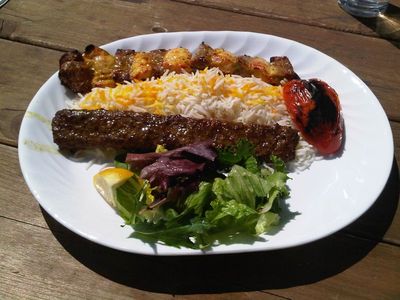
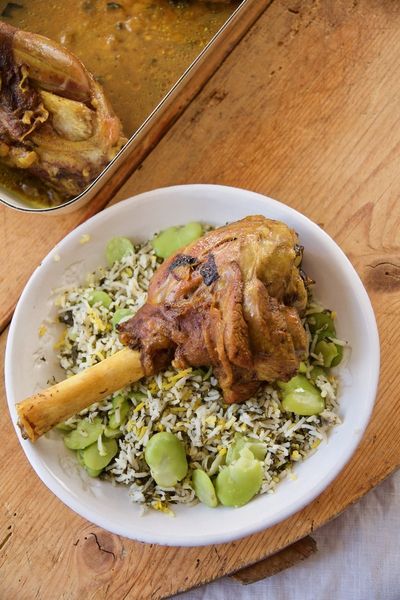
Lamb shanks brown hard; cook for 2 hours 30 minutes with onion, garlic, turmeric, cinnamon and saffron in a covered pot with a small amount of stock until fork-tender. Meanwhile, basmati rinses and soaks for 1 hour. Frozen (or fresh, podded) broad beans simmer briefly until tender; the rice parboils for 6 minutes in heavily salted water; drains. The rice layers in the cooking pot with the broad beans, dill and saffron: bottom oil-and-rice for tahdig; then a mixed layer of rice + beans + dill; another rice-and-bean-and-dill layer; topped with rice and saffron-water; lid-wrapped-in-towel; steam for 40 minutes. Plated with the lamb shanks alongside.

Persian 4 hours 30 minutes Serves4
Bifana

Bifana

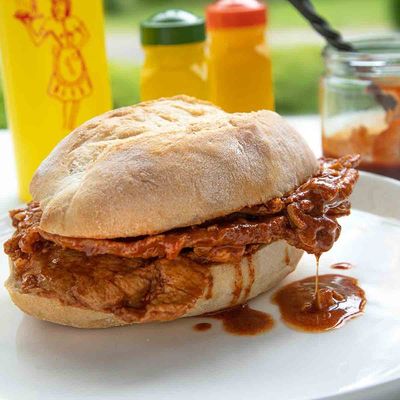
Bifanas are Portugal's national lunch sandwich, sold at every counter from Lisbon to Porto. Slices of pork loin (paper-thin, across the grain) marinate for a couple of hours in white wine, garlic, paprika, bay and black pepper, then go into a screaming-hot pan with olive oil and a knob of butter for sixty seconds a side. The marinade reduces in the pan to a salty, winey sauce, which gets ladled over a halved papo-seco roll along with the pork. Add mustard, or a squirt of piri-piri, and you've nailed it. Eaten standing at the counter with a glass of Sagres beer, or in Porto with a Super Bock.

Portuguese 2 hours 30 minutes Serves4
Brown Stew Shrimp and Sweet Potato Grits

Brown Stew Shrimp and Sweet Potato Grits

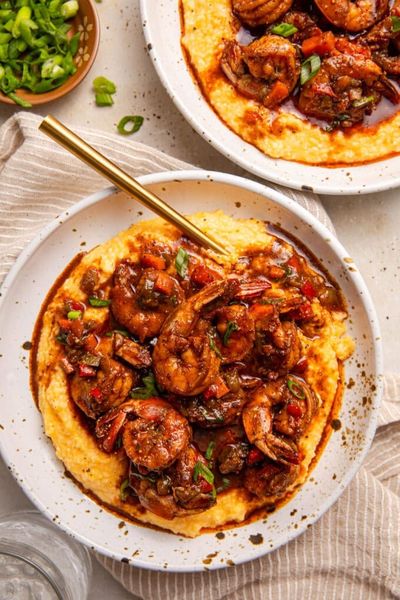
A Caribbean-Southern crossover that works because both traditions cook in a similar register: butter, peppers, alliums, slow heat, savoury depth. The brown stew base on top of the dish is Jamaican, bell peppers, carrot, Scotch bonnet, ginger, browning sauce, that mahogany-coloured gravy with the unmistakable allspice-and-thyme signature, and the bed underneath is from Lowcountry Charleston, where sweet potato grits enriched with butter, half-and-half and gouda are a long-running modern Southern restaurant standard. The shrimp themselves are quick-cooked and sweet, picking up the brown stew sauce. Two textures stacked: silky-rich grits, brothy stew on top with bite from the diced peppers and carrot. Smell is sweet-onion-and-browning-sugar over the corn-sweet base of the grits. Not difficult but it's two pans running at once, so timing matters; the grits hold on a low warm setting while the shrimp cook quickly. A modern fusion rather than a traditional dish, popularised by Black American chefs in the 2010s exploring the points of overlap between Lowcountry and Caribbean cookery.

Jamaican 1 hour Serves4
Buffalo Wings

Buffalo Wings

Chicken wings separate at the joint into drums and flats. Pat very dry; toss with a little baking powder + salt; rest on a rack 1 hour (the baking powder draws moisture for crispness). Oil heats to 160°C for stage one (cooks through, 10 min); rest for 5 min; oil up to 190°C for stage two (crisps shell, 4 min). Sauce: equal parts melted butter + Frank's RedHot whisked together with a touch of vinegar and a pinch of cayenne. Toss hot wings in warm sauce; serve immediately with celery sticks and blue-cheese dip.

Snacks 1 hour 40 minutes Serves4
Chicken Inasal

Chicken Inasal

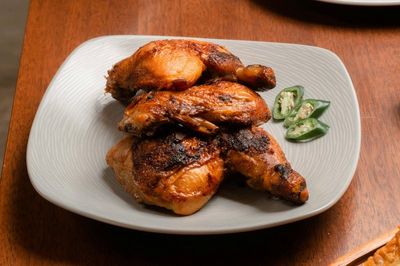
Chicken inasal is the pride of Bacolod City on Negros Occidental, where streetside grill houses serve nothing else: trays of chicken parts skewered on bamboo, smoking over long coal pits, with the cook brushing on bright orange annatto oil every few turns. The marinade is what marks it as Filipino: calamansi (a small, sour citrus halfway between lime and tangerine), cane vinegar, ginger, lemongrass, garlic and a generous slug of black pepper. The annatto oil (atsuete) is just neutral oil warmed gently with annatto seeds until it stains a vivid orange-red; this is the dish's signature look and a mild peppery flavour. Basting starts halfway through cooking so the colour goes onto skin that's already partly cooked, and continues right up to the moment the chicken leaves the grill. Difficulty for a home cook is low; the only special ingredients are calamansi (lime juice plus a touch of orange juice substitutes well) and annatto seeds (sometimes sold as achiote, found in any Filipino or Latin American shop). The flavour profile is sharp, herbal, slightly smoky, with a peppery edge from black pepper rather than chilli, and ribbon-thin lemongrass perfume running through everything. Service is non-negotiable: a heap of garlic rice (sinangag), a saucer of toyomansi (soy-calamansi-vinegar dipping sauce with sliced chillies), and the cook's pot of warm annatto oil for the table.

Filipino 4 hours 50 minutes Serves4
Chicken Satay with Peanut Sauce

Chicken Satay with Peanut Sauce

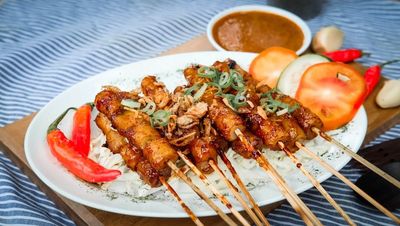
I’m a big fan of Thai chicken satay with peanut sauce. Although it isn’t necessary, it is best to marinate the chicken for at least a day. You could get away with 30 minutes but a longer marinating time will get you much tastier results. As the chicken soaks up that incredible marinade, it not only tenderizes it but makes it much juicier when cooked. This recipe could be used with thinly sliced pork or beef, both are also popular at Thai restaurants and takeaways. Pork is the meat of choice in Thailand but chicken is the most popular in the UK. I also like to serve this dish with cucumber and chilli relish.

Starters 35 minutes Serves6
Crostini di Fegatini

Crostini di Fegatini

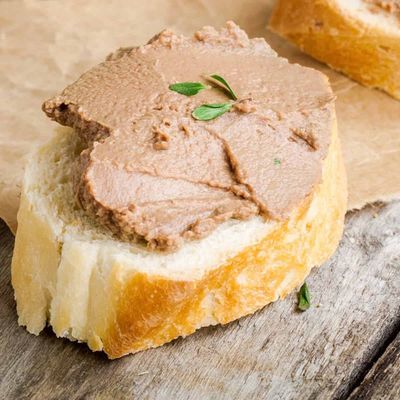
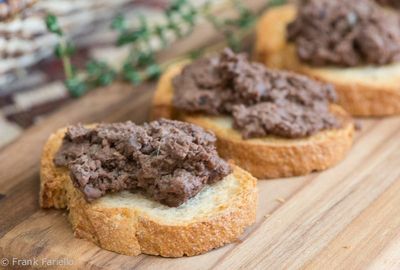
Onion is softened in olive oil with chopped anchovies. Trimmed chicken livers join and brown briefly. Vin Santo (sweet Tuscan dessert wine, or dry Marsala / brandy as substitute) deglazes; capers are stirred in; the mixture simmers for 8 minutes covered until the livers are tender. Pulsed (not pureed) in a food processor with a knob of cold butter and fresh sage to a coarse spreadable paste. Warm, the paté is spread onto small toasts; eaten as antipasto with prosecco or a glass of Chianti.

Snacks 40 minutes Serves6
Dal Makhani

Dal Makhani

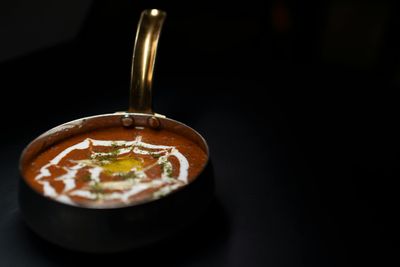
Whole black urad lentils and a small handful of red kidney beans are soaked overnight, then pressure-cooked or simmered until completely tender. A tomato-and-spice masala is built separately with onion, garlic, ginger and a careful hand with the spices. The lentils are folded into the masala and simmered, low and slow, for two hours, while butter and cream are stirred through in the final stage. The lentils break down into a glossy, almost-velvet finish.

Indian 3 hours 15 minutes Serves6
Diri Ak Djon Djon

Diri Ak Djon Djon

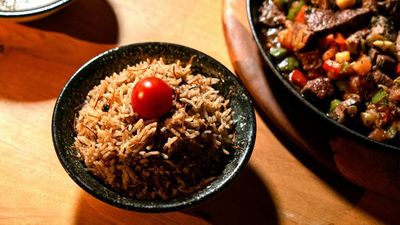
Dried djon djon mushrooms are soaked in hot water for 30 minutes; the inky black soaking liquid is strained and reserved (the mushrooms themselves are mostly discarded or used minimally). Aromatics, shallot, garlic, thyme, parsley, Scotch bonnet, épis, are sweated in oil, then green peas and lima beans are added, then long-grain rice is stirred in to coat. The djon djon broth is poured over the rice; the pot is covered and steamed gently until the rice is tender and slate-black. Garnished with parsley and served as the centrepiece of any meal it appears in.

Haitian 1 hour 30 minutes Serves6
Dolma (Azerbaijani Stuffed Vine Leaves)

Dolma (Azerbaijani Stuffed Vine Leaves)

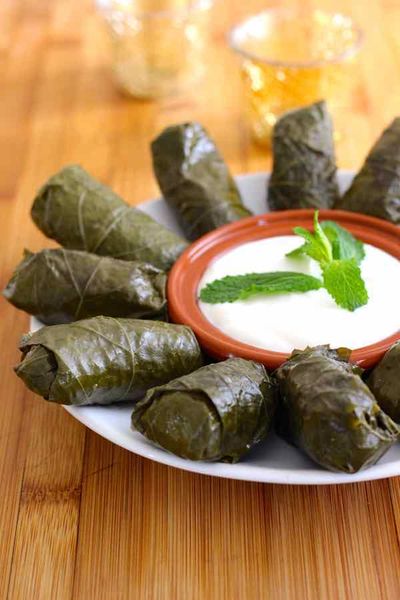
Azerbaijan's stuffed vine leaves, claimed as the national dish in 2017 and added to UNESCO's list of Intangible Cultural Heritage. You start by soaking brined vine leaves in warm water for twenty minutes to leach out the salt, then build a filling of raw lamb mince with rinsed short-grain rice, finely chopped onion, fresh mint and dill, butter, salt and pepper. Each leaf gets a teaspoon of filling and rolls into a tight cigar. The rolls pack in a single layer in a heavy pot, then a second and third layer perpendicular to the first, like a brickwork pattern that holds them together as they cook. Stock and a splash of sumac water pour in to barely cover, an inverted plate weighs everything down so the dolma keep their shape, and the lot simmers slowly for fifty minutes. Plated on a platter with thick garlic yogurt alongside for dipping.

Azerbaijan 2 hours Serves6
Doro Wat

Doro Wat

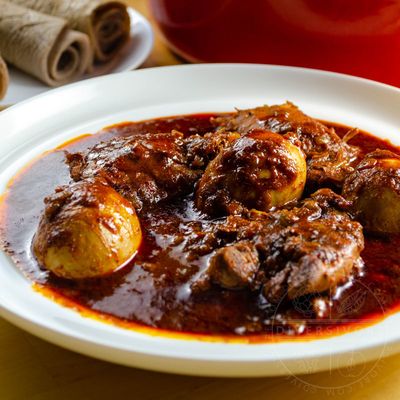
Ethiopia's national dish, the spiced chicken stew that turns up at every wedding, Easter feast and Christmas table, and the one dish a cook is judged on. The foundation is the onion - you cook it down slowly for nearly an hour into a deep dark base, and this is the step that decides whether the wat is great or merely acceptable. Berbere (the Ethiopian spice blend of chilli, fenugreek, ginger and a dozen others) and niter kibbeh (spiced clarified butter, the dish's defining fat) fold in. Chicken thighs and legs simmer in the deep red sauce, and hard-boiled eggs join late, scored with a knife so they take on the colour and the flavour. Eaten communally from a single platter, with injera flatbread torn into pieces to scoop the stew. No cutlery, no individual plates, hands clean before the meal.

Ethiopian 2 hours Serves4-6
← Prev Page 1 of 3 Next →