Bhutanese

Himalayan cuisine where chillies are treated as a vegetable, not a seasoning. Ema datshi (chilli-and-cheese stew, the national dish) anchors the table; rice and red rice are the staple; yak and pork the predominant meats. Fermented cheeses, dried chillies, butter, ginger and Sichuan pepper define the seasoning. Bhutanese food is genuinely hot - even mild versions are spicier than most cuisines' fiery extremes.

4 recipes

Ema Datshi

Ema Datshi

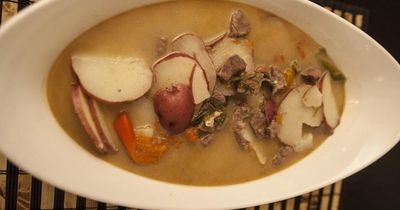
Bhutan's national dish, built on an honest two-ingredient premise: chillies and cheese, in roughly equal volume. The flavour is two things held in tension. The fierce burn of green chillies (jalapeños standing in for the hotter, more floral local Bhutanese varieties) on one side, the funky salty richness of blue cheese (Stilton or Gorgonzola standing in for the traditional yak cheese) on the other. The dairy fat tempers the burn just enough that you can actually eat it, but only just. The burn is the point. You build the dish out with beef, potato and tomato into a proper stew, and everything goes into the pot together to simmer until the cheese melts down into a fierce, creamy, chilli-flecked sauce. Eaten with red Bhutanese rice at most meals in Bhutan. Halve the chilli count the first time you cook it; the locals will laugh, but you'll be able to taste your next meal.
50 minutes Serves6
Jasha Maru

Jasha Maru

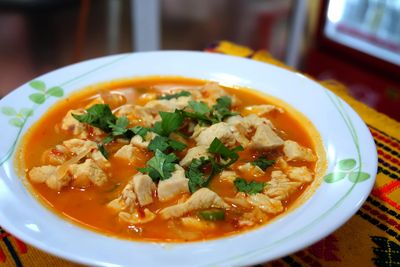
The Bhutanese weeknight chicken stew, the dish a Thimphu cook turns to after a long day. You joint a whole bone-in chicken and stew it with onion, tomato, plenty of fresh garlic and ginger, three or four green chillies, and butter or vegetable oil with a splash of water. The cook is fast: a brief sear to colour the meat, a simmer with the tomato until the chicken is cooked through and falling off the bone, and a finish with chopped coriander and spring onion just before serving. What you get back is a brothy, fresh, gently spicy chicken dish that sits somewhere between Indian and East Asian cookery, which is exactly where Bhutan sits geographically. Eaten with red rice, perhaps a small bowl of ema datshi on the side for whoever wants to push the heat further.

50 minutes Serves4
Kewa Datshi

Kewa Datshi

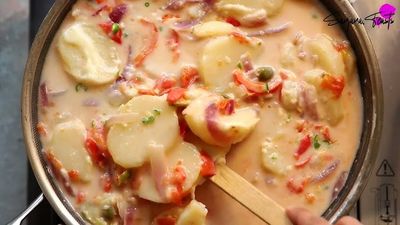
The gentler, more domestic cousin of ema datshi: a Bhutanese family supper of potatoes simmered with chilli and cheese into a creamy, lively sauce. You slice waxy potatoes into thin rounds and drop them into a single pot with green chillies, onion, garlic, butter and the cheese mixture, then cover with water and simmer for about twenty-five minutes until the potatoes are tender and the cheese has melted into a thick, pale-yellow chilli-flecked sauce. The technique is the simplest in Bhutanese cooking: everything goes in together and cooks down without ceremony. The art is in the chilli-to-cheese ratio. More chilli and the dish reads as fiery; more cheese and it reads as rich. Either way it's eaten with red Bhutanese rice, the potatoes half-melting into the rice as you spoon.

35 minutes Serves4
Phaksha Paa

Phaksha Paa

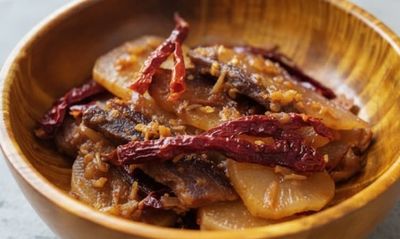
A Bhutanese pork belly braise that leans Sichuanese on the spice rack, the Himalayan border showing in the dish. You cut pork belly into thumb-length strips and start it on its own in a heavy pot to render the fat and brown the meat properly, the rendered juices becoming the cooking fat for everything that follows. Then in go whole dried red chillies, daikon cut into chunks, ginger, garlic, a measure of soy and a generous spoon of Sichuan pepper, and the lot braises gently in the pork's own rendered juices until the radish has gone soft and the sauce has thickened into a glossy red-brown lacquer that coats the pork. The whole chillies sit in the pot still intact, and the cook at the table can choose to eat them or push them to one side. Eaten with red Bhutanese rice, the broth ladled over.

1 hour 15 minutes Serves4