Haitian

The Caribbean cuisine of Haiti, shaped by West African heritage, French colonial influence and indigenous Taino roots. Épis (a fresh green seasoning paste of parsley, scallion, garlic, bell pepper, thyme, lime and oil) is the flavour base for nearly every dish. Griot (twice-cooked pork), poulet aux noix (chicken with cashews), lalo (jute leaf stew), legume (mixed-vegetable stew), pikliz (pickled cabbage relish) and diri kole ak pwa (rice and beans) define the table. Scotch bonnet supplies the heat; lime, sour orange and vinegar do the brightness.

4 recipes

Diri Ak Djon Djon

Diri Ak Djon Djon

Dried djon djon mushrooms are soaked in hot water for 30 minutes; the inky black soaking liquid is strained and reserved (the mushrooms themselves are mostly discarded or used minimally). Aromatics, shallot, garlic, thyme, parsley, Scotch bonnet, épis, are sweated in oil, then green peas and lima beans are added, then long-grain rice is stirred in to coat. The djon djon broth is poured over the rice; the pot is covered and steamed gently until the rice is tender and slate-black. Garnished with parsley and served as the centrepiece of any meal it appears in.

1 hour 30 minutes Serves6
Griot

Griot

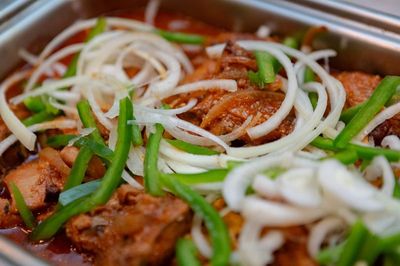
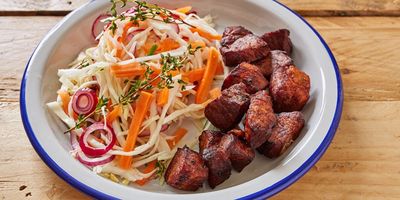
Pork shoulder is cubed and marinated overnight in a punchy mixture of épis, bitter orange juice, lime juice, garlic, Scotch bonnet, thyme and salt. The next day the pork simmers in its own marinade until tender (the meat goes in cold and comes up to a slow simmer; the marinade reduces almost entirely as it cooks). Once the pork is fork-tender and the liquid has cooked down to a sticky glaze, the cubes are drained dry and deep-fried in hot oil for 5-7 minutes until the outsides crackle and brown. Served piping hot with pikliz, rice, beans and plantains.

1 hour 50 minutes Serves6
Poul Ak Nwa

Poul Ak Nwa

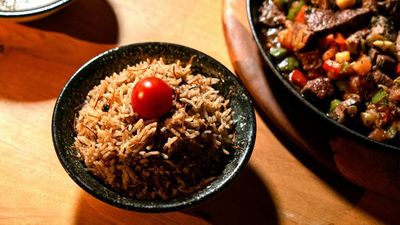
A Sunday dish from Cap-Haïtien on Haiti's north coast where cashews have been a regional cash crop since colonial times. The dish translates as "chicken with cashews" and the nut is everywhere: ground into powder and whisked into the gravy as a thickener (the technique parallels almond-and-walnut gravies in West African and Levantine cookery), and added whole-toasted near the end for texture. The flavour is unexpectedly creamy, like a cashew-cream sauce that happens to be tomato-based; mellow, sweet, faintly nutty, sat over a base of Haitian épis (the green seasoning paste of parsley, scallion, garlic, bell pepper, thyme and lime that's the foundation of most Haitian cookery). A whole habanero in the bouquet garni adds quiet heat. Smell is roasted cashews and tomato paste with thyme drifting through. Not difficult but not quick, 3-4 hours of marinating, then 45 minutes of cooking, and the bouquet garni technique (wrapping herbs in cheesecloth) gives a clean, herb-free finished sauce. Served at Haitian Sunday tables on the north coast over white rice with sliced avocado on the side; the cashew sweetness and the buttery avocado are the pairing that makes it.
5 hours 15 minutes Serves4
Soup Joumou

Soup Joumou

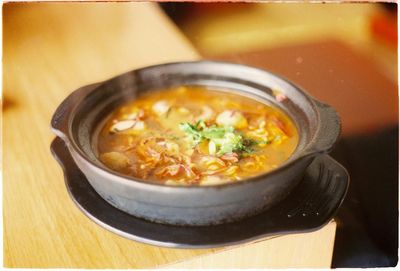
Beef shank or stewing beef marinates overnight in épis and citrus, then browns and simmers in beef broth for an hour. A whole calabaza pumpkin is boiled separately until soft, then puréed with some of the cooking liquid and stirred back into the soup pot. Carrots, turnips, celery, cabbage, leeks and potatoes go in to simmer until tender; vermicelli noodles and a whole pierced Scotch bonnet are added near the end. Final adjustments are lime juice, a knob of butter, fresh parsley and salt. The soup is served on January 1st by tradition; the rest of the year it stays the family Sunday-soup of the Haitian diaspora.

3 hours Serves8