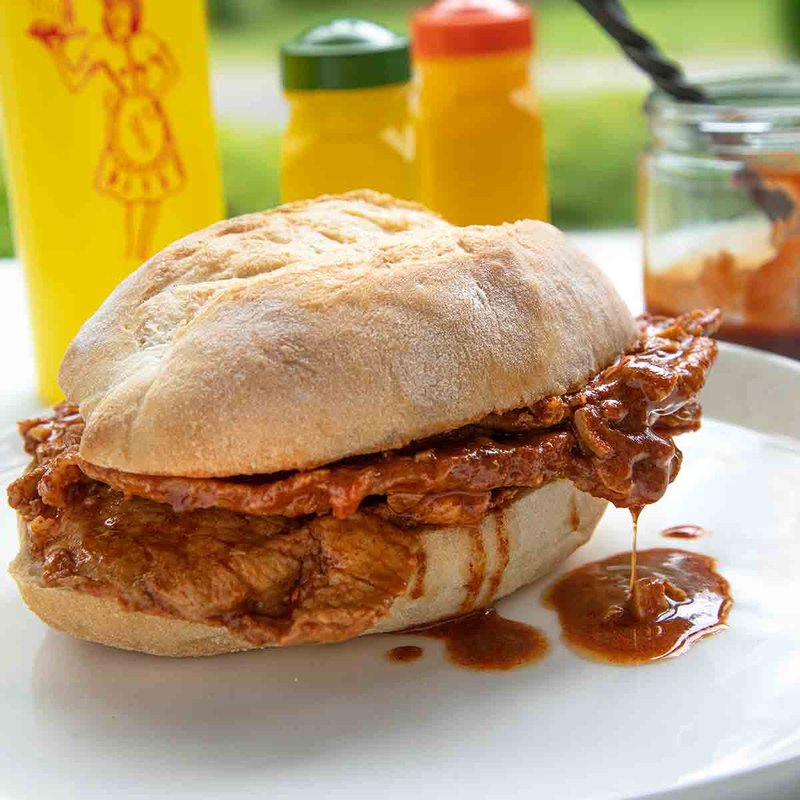
Bifana
Portugal's street sandwich: thin pork loin slices marinated in garlic, white wine and paprika, fried hard, piled into a soft papo-seco roll.
Overview
Bifanas are Portugal's national lunch sandwich, sold at every counter from Lisbon to Porto. Slices of pork loin (paper-thin, across the grain) marinate for a couple of hours in white wine, garlic, paprika, bay and black pepper, then go into a screaming-hot pan with olive oil and a knob of butter for sixty seconds a side. The marinade reduces in the pan to a salty, winey sauce, which gets ladled over a halved papo-seco roll along with the pork. Add mustard, or a squirt of piri-piri, and you've nailed it. Eaten standing at the counter with a glass of Sagres beer, or in Porto with a Super Bock.
Ingredients
Pork
- 600 g pork loin (or boneless pork shoulder, sliced 3 mm thin across the grain - about 12 slices)
Marinade
- 200 ml dry white wine (vinho verde or any dry white)
- 8 garlic cloves (crushed)
- 1 tablespoon sweet paprika
- 1 teaspoon smoked paprika
- 2 bay leaves
- 1 teaspoon black pepper
- 1 ½ teaspoons salt
- 2 tablespoons olive oil
To cook
- 3 tablespoons olive oil
- 2 tablespoons butter
To serve
- 4 papo-seco rolls (or soft white rolls/baguettes)
- Mustard, piri-piri sauce, hot pepper paste
Method
Stage 1 - Slice
- Place pork in the freezer 20 minutes (firms it for easier slicing).
- Slice 3 mm thick across the grain. Each slice should be about a palm size.
- Bash slices lightly between baking paper with a meat mallet (or rolling pin) to thin them further to 2 mm - this is important for the texture.
Stage 2 - Marinate
- In a wide bowl, combine all marinade ingredients.
- Add the pork slices; toss to coat thoroughly.
- Cover; refrigerate 2-4 hours.
Stage 3 - Cook
- Heat olive oil and butter in a wide pan over high heat until shimmering.
- Lift pork slices out of the marinade (reserve the marinade); add to the hot pan in a single layer (work in 2 batches).
- Fry 1 minute per side, no longer - the slices should be coloured and cooked through but not dried out.
- Lift onto a plate; cover.
Stage 4 - Pan sauce
- Pour the reserved marinade into the hot pan.
- Bring to a boil; reduce 3-4 minutes until thickened slightly into a syrupy sauce.
Stage 5 - Combine
- Return the pork to the pan; toss in the sauce 30 seconds to coat.
Stage 6 - Assemble
- Slice the rolls in half.
- Lift 3 slices of pork (with sauce) onto each roll bottom.
- Spoon some pan-juices over the top piece of bread; the bread should be visibly soaked.
- Close the roll.
Stage 7 - Serve
- Eat immediately, standing up if possible.
- Mustard, piri-piri or hot sauce alongside.
- A glass of cold beer is mandatory.
Notes
- Thin slices, fast cook: The pork is too thin for slow cooking. High heat, fast sear, 1 minute per side - any longer and you have shoe leather.
- Soak the bread: Half the pleasure of a bifana is the marinade-soaked bread underneath. Don't be shy with the pan-juices - spoon them generously.
- Pork shoulder or loin: Loin is leaner and slightly drier. Shoulder is more flavourful but tougher. Both work; loin is more traditional in Lisbon, shoulder in the north.
Storage
- Best within 5 minutes of cooking. Bifana doesn't keep.
- The marinated pork (uncooked) refrigerates 24 hours.
- Cooked pork without bread refrigerates 2 days; reheat in a pan.
More like this
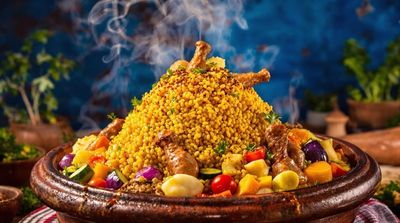
Couscous Royale
Lamb and chicken poach slowly in a saffron-tomato broth with chunks of root vegetables and chickpeas. Merguez sausages grill or fry separately. Couscous steams (or is rehydrated quickly with hot broth and butter). Everything plates separately on a vast platter; diners build their own bowls and slick with harissa.
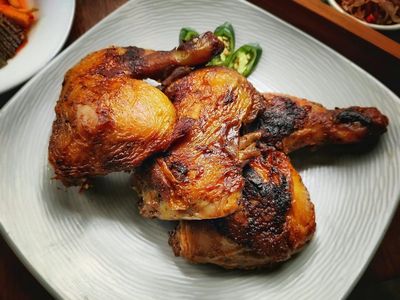
Piri Piri Chicken
Piri-piri chicken is the dish that travelled from Mozambique to Portugal to the high street, and the original is still the best: a whole chicken spatchcocked flat, marinated overnight in a vivid red paste of bird's-eye chillies, garlic, paprika, lemon and olive oil, then grilled hard over charcoal until the skin is darkly blistered and the meat just-cooked through. The marinade itself takes five minutes in a blender. The bird wants a minimum of four hours in it, ideally overnight. A home broiler on max works if you do not have a barbecue, but the smoke from the coals is half the dish. Serve with a second bowl of the same marinade as a sauce, a green salad, and chips.
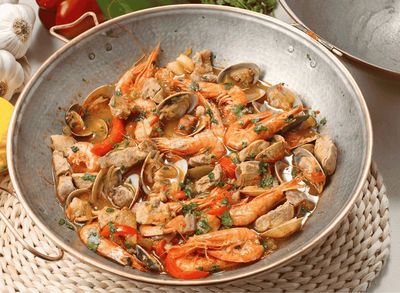
Cataplana de Marisco
A cataplana is a hinged copper clamshell pan, and the seafood stew named after it is one of those dishes where the cookware does the work. You build a base of onions, peppers, sliced chouriço, smoked paprika, tomato and white wine in the bottom of the cataplana, then layer clams, mussels, prawns and chunks of firm white fish on top, clamp the lid shut, and steam it all for less than ten minutes. The lid lifts at the table to release a cloud of paprika-and-wine-scented steam, which is the entire point of the dish. If you do not have a cataplana, any wide pan with a tight lid does the same job. Coriander and lemon at the end, crusty bread for the broth, and vinho verde for everything else.
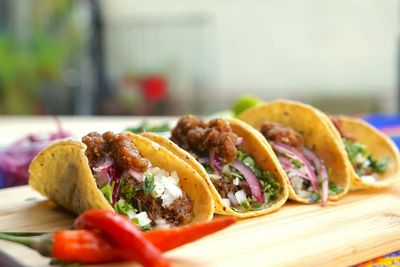
Cochinita Pibil
Pork shoulder is rubbed with a paste of achiote, orange and lime juices, garlic, oregano and warming spices, then left to marinate overnight. The pork is wrapped in banana leaves and roasted low and slow until it shreds with two forks. The pibil sits in its own bright red juices; warm corn tortillas and habanero-bright pickled red onions are the only accompaniments needed.