Beef and Broccoli
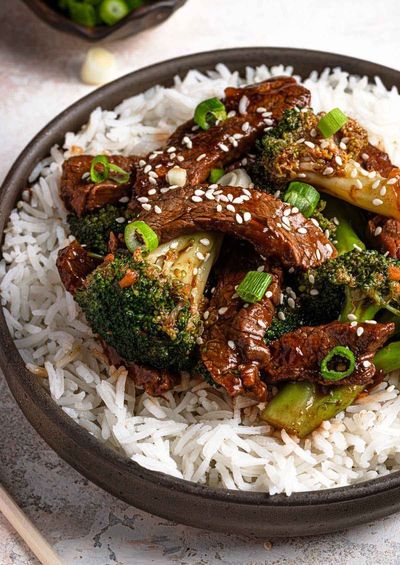
Sliced beef velvets briefly in cornflour and soy, broccoli florets blanch to bright green, and the lot stir-fries hard with garlic and ginger in a soy-oyster-rice-wine sauce. Served over steamed rice.
A cuisine of regional variety, spanning Cantonese restraint, Sichuan numbing heat, Hunan smoke and northern wheat tradition. Aromatics lean on garlic, ginger and spring onion, with depth from soy, rice wine, sesame oil and fermented bean pastes. Wok-based stir-frying, steaming, red-braising and dough work for dumplings and noodles dominate the kitchen.
Sliced beef velvets briefly in cornflour and soy, broccoli florets blanch to bright green, and the lot stir-fries hard with garlic and ginger in a soy-oyster-rice-wine sauce. Served over steamed rice.
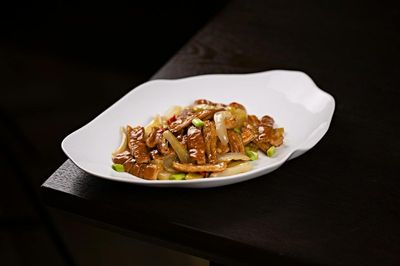
A quick and elegant stir-fry that balances savoury oyster sauce with tender beef. This dish exemplifies the Chinese technique of high-heat cooking to seal flavours while keeping meat moist. Quality oyster sauce is essential, it should deepen the dish rather than dominate it.
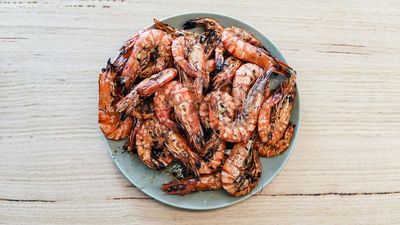
A simple, elegant preparation favoured by street vendors throughout southern China. This quick-braising method takes only minutes and produces tender, fragrant prawns. The beauty of this dish lies in its simplicity, fresh ginger and spring onions infuse the delicate sweetness of prawns. Equally delicious served hot immediately or chilled for an exotic picnic dish.
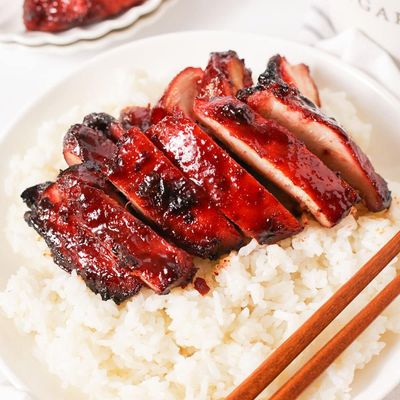
This is summer-BBQ adaptation of the lacquered red roast meats that hang in the windows of Cantonese siu mei shops. The marinade borrows from char siu (hoisin, soy, Shaoxing wine, five-spice, fermented bean curd, garlic, ginger) but pulls back on the sugar slightly because chicken does not need as much sweetness as pork shoulder. Bone-in skin-on thighs are the right cut: they stay juicy on the grill, the skin renders down and crisps, and the bones give the meat shape. A two-stage glaze does the rest. The thighs cook over indirect heat first to render the fat and set the meat, then move directly over the coals for the last few minutes while a honey-maltose mixture is brushed on repeatedly. Every brush of glaze caramelises, blackens slightly at the edges, then gets brushed again. The result is sticky-shiny with a smell that is half five-spice, half woodsmoke. Difficulty is low if you control your heat. A two-zone fire (one side coals piled high, the other side empty) is the only real requirement; on a gas grill, two burners on full and one off does the same job. Serve sliced over plain rice with sliced cucumber and a spoon of chilli oil, or stuffed into bao with hoisin and spring onion.
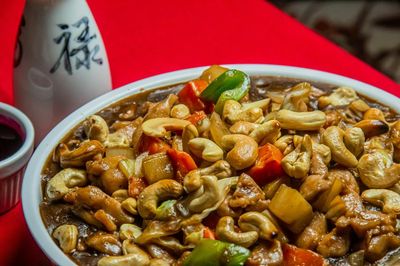
This dish exemplifies the Chinese penchant for contrasting textures. Tender succulent pieces of chicken are paired with sweet, crunchy cashew nuts and a delicate sauce. While the original Chinese version would have used peanuts (as cashews were not traditionally featured in Chinese cookery), this adaptation showcases how the cuisine evolves while maintaining its core philosophy of textural harmony.
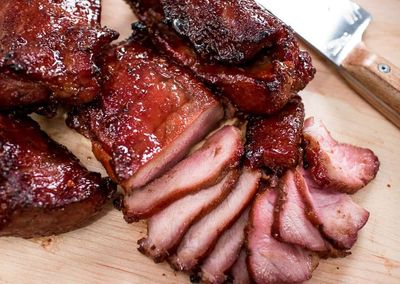
Char siu, literally "fork-roasted" in Cantonese, is the lacquered red barbecue pork that hangs in the windows of siu mei shops across Hong Kong, Guangzhou and any Cantonese diaspora neighbourhood worth knowing. Traditionally long strips of pork are skewered on hooks and lowered into vertical ovens or charcoal pits, where the marinade caramelises into a shimmering, almost brittle crust while the inside stays juicy and pink at the edges. The marinade is a careful balance: hoisin sauce for sweetness and body, light and dark soy for salt and colour, Shaoxing wine for aromatics, five-spice for warmth, fermented red bean curd (nam yu) for the deep umami funk that distinguishes shop-quality char siu from home attempts, and a final glaze of maltose syrup thinned with honey for that characteristic glossy finish. Pork shoulder is the cut of choice because the marbling keeps the meat moist through high-heat roasting; lean cuts like loin go dry and stringy. The classic colour comes from a small amount of red yeast rice or, in modern home recipes, a touch of red food colour, though the dish tastes the same without it. Difficulty is moderate. The marinade needs overnight, and the roasting needs your attention for the final glazing turns under high heat, but the technique itself is straightforward. Serve over rice with greens, in a soft bao bun, or chopped onto wonton noodles.
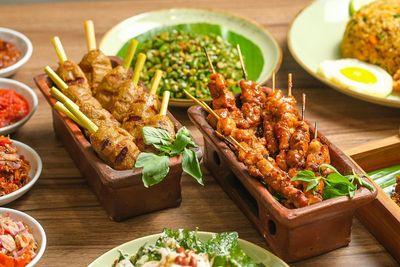
When cooking Chinese food, it's essential to think about the flavours and textures of ingredients working in harmony. Juicy chicken combined with succulent baby corn, tender vegetables, and salty, crunchy cashew nuts create a balanced dish where each element complements the others. A glossy sauce ties everything together without overwhelming delicate flavours.
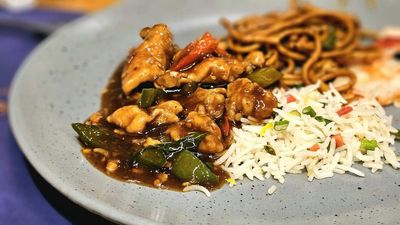
A classic Chinese dish bursting with the fragrance of black bean and garlic. Chicken wings are ideal for this preparation as they cook quickly in a high-heat wok while remaining succulent and flavourful. The fermented black beans add depth and a distinctive umami character that defines authentic Chinese cooking.
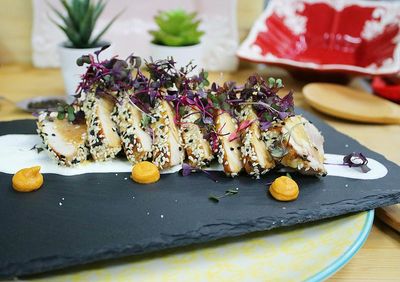
This is a version of the fragrant Sichuan dish popularly known as 'Strange taste chicken' or bang-bang chicken because it incorporates many flavours simultaneously, hot, spicy, sour, sweet, and salty all in perfect balance. The sesame seeds add a crunchy texture that contrasts beautifully with tender chicken meat. Equally delicious served hot or at room temperature, making it ideal for entertaining.
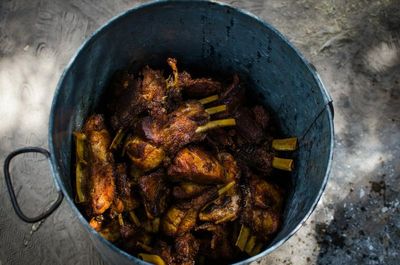
This showstopper from western Chinese cooking combines spices and sauces in a signature style. Deep-fried spareribs are braised until tender, then finished in the oven with a glossy, spicy coating. The combination of chilli bean sauce, hoisin, and yellow beans creates a complex, savoury flavour profile characteristic of the region. The spareribs can be finished in the oven, under a grill, or on a barbecue.
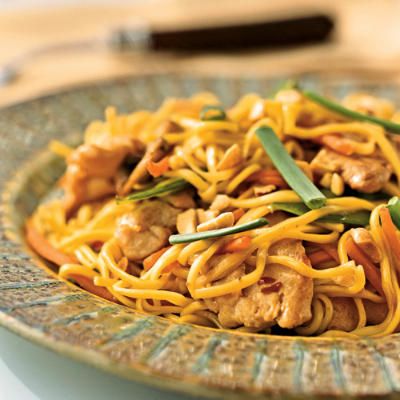
Chow mein literally means 'stir-fried noodles' and this contemporary dish is equally popular throughout southern China as it is worldwide. Fresh egg noodles are quickly stir-fried with protein and vegetables, creating a harmonious balance of textures and flavours. The keys to success are properly cooked noodles, high-heat wok cooking, and precise timing.
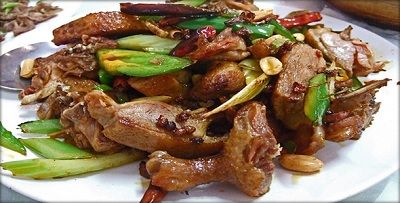
In China, duck is a special occasion treatment reserved for banquets and celebrations. Don't be intimidated by the preparation, most steps are straightforward and can be done a day ahead. The technique is masterful: steaming renders out most of the fat, leaving meat moist and succulent, while deep-frying creates a shatteringly crisp skin. The result is elegant, restaurant-quality dinner.
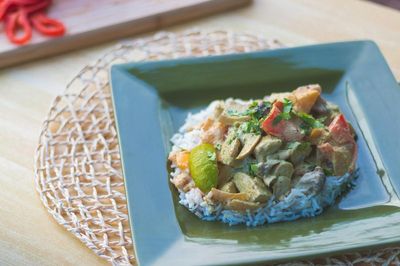
Curry blends beautifully with chicken when prepared in the style of southern Chinese cuisine, as a light, subtle sauce that enhances rather than overpowers the delicate chicken meat. This recipe balances spice with refinement, proving that curry in Chinese cooking is more elegant whisper than aggressive shout.
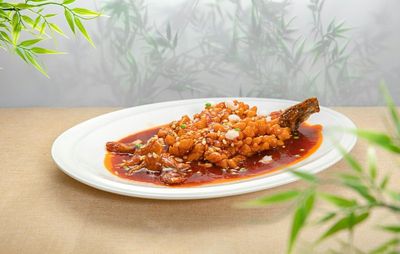
The combination of hot and sour is a signature of western Chinese cuisine. This quick, simple dish is perfect for a light family meal or elegant entertaining. The interplay between chilli heat, vinegar acidity, and savoury umami creates a vibrant sauce that complements delicate fish beautifully without overwhelming it.
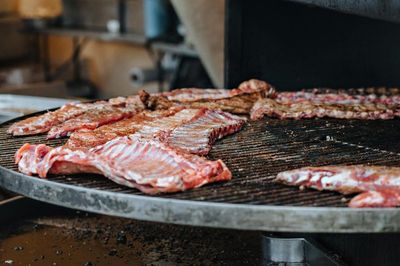
This delightful meat dish engages the senses with many contrasting tastes. The spareribs are first marinated, then deep-fried until crisp, and finally slowly braised in an unusual, piquant sauce. Five spice powder provides the warm, complex backbone, while vinegar and orange peel add brightness and complexity. The result is both elegant and deeply satisfying.
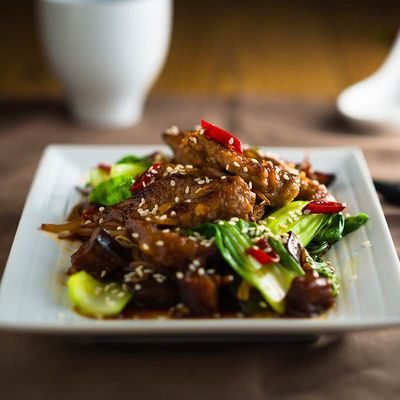
Wuxiang niurou is one of China's great deli meats, descended from the spiced braised meats of the Hui Muslim community that travelled along the Silk Road and settled into the cuisines of Beijing, Xi'an and Nanjing. The legend traces the modern dish to Ma Qingrui's Yue Sheng Zhai restaurant in Beijing in the 1700s, which still operates today as a halal state enterprise. Originally made with mutton, the recipe shifted to beef shank as the dish moved into the mainstream Han diet: shank is lean, gelatinous and full of connective tissue that turns silky after a long simmer. The flavour is dark, sweet and savoury with a slow warmth from Sichuan peppercorn and the woody perfume of cassia and star anise. Difficulty is low but the timeline is long: salt overnight, braise an afternoon, cool overnight in the liquid so the meat tightens and the spices penetrate. Sliced thinly across the grain the next day, the beef shows off the marbled cross-section of muscle and tendon that makes shank the right cut. Eat as part of a cold meze with pickles and peanuts, layer into a bowl of lanzhou lamian, or fold into bing flatbreads with cucumber.
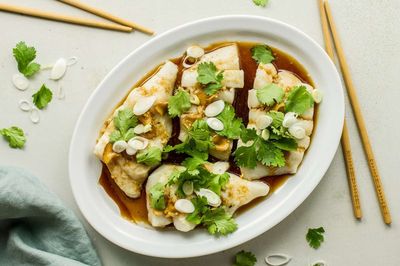
Ginger is the Chinese cook's answer to lemon in European fish cookery. In this elegant preparation, fresh ginger imparts a subtle fragrance that enhances rather than masks the delicate flavour of fish. The simplicity of the technique belies the sophistication of the result, the interplay between crispy exterior and tender flesh, balanced with aromatic sauce.
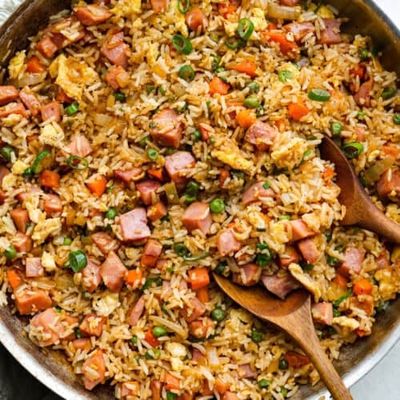
Fried rice is fundamentally about texture contrast: individual grains coated entirely with hot oil, remaining crispy and separate, never clumped or greasy. Success requires three critical elements: Cold rice (overnight-refrigerated best), sufficiently hot oil (nearly smoking), and a light hand with seasonings. The beaten egg is never pre-cooked; instead, it's added raw to the hot rice and oil where residual heat cooks it silkily, coating the grains. Bean sprouts provide fresh textural contrast. This is not comfort food; it's refined technique applied to simple ingredients.
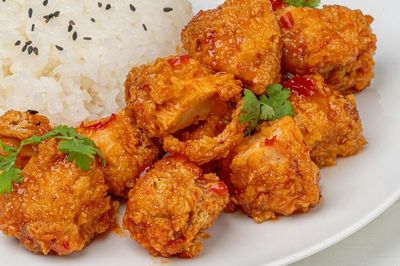
This iconic American-Chinese dish combines deep-fried chicken with a sweet, spicy, and slightly tangy sauce. General Tso's chicken exemplifies the bold flavours of outside China Chinese cooking, where heat from dried chillies, sweetness from sugar, and complexity from vinegar create a sauce that is bold yet balanced. Restaurant-quality results require proper oil temperature and crispy, well-coated chicken.
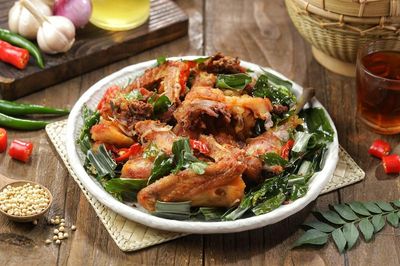
Guizhou lazi ji is the southwest's answer to the Sichuan chongqing lazi ji, but with a fundamentally different character. Where Chongqing's version is a dry, fried, chilli-buried dish, Guizhou's is a wet braise built on ciba lajiao: rehydrated mild dried chillies pounded into a thick red paste with ginger and garlic, then slow-fried in oil until it deepens to a rich, almost jam-like base. The paste is the soul of the dish and the soul of Guizhou cooking more broadly: the province is the first in China where chilli was used as a condiment after its arrival from the Americas, and produces roughly a third of the country's chillies today. Difficulty for a home cook is moderate, the only finicky steps being the chilli soak and the slow-frying of the paste, rush it and the sauce stays harsh; do it right and the flavours bloom into something layered and fragrant. The result is best after an overnight rest, and even better the day after, served over plain rice with the orange chilli oil pooling around the edge. Regional variations across Guizhou tweak the proportions, sometimes adding fermented rice or douchi for extra savoury depth.
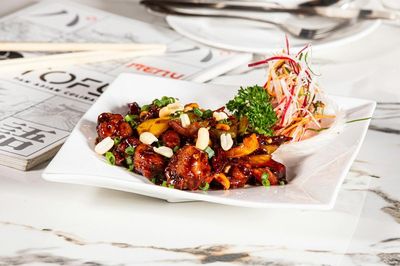
This iconic hot and spicy chicken from western China showcases contrasting flavours, heat from chillies and Sichuan peppercorns balanced with subtle sweetness. The numbing quality of Sichuan peppercorns and the fragrance of slow-braising creates an aromatic dish that is equally delicious served immediately or reheated the next day.
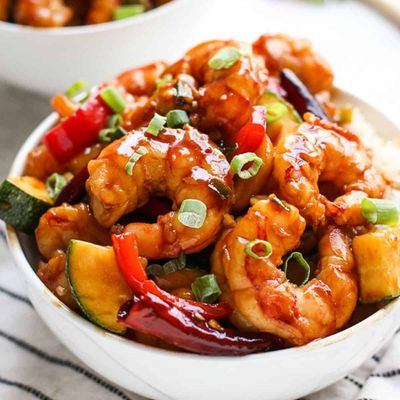
Kung pao (gongbao) shrimp is the seafood cousin of the classic Sichuan gongbao jiding, named for the 19th-century governor-general Ding Baozhen whose title was Gong Bao. Where the chicken version uses diced meat, the shrimp version keeps the prawns whole or halved so they curl into bright pink commas around the chillies and peanuts. The flavour profile is the signature Sichuan "lychee" balance: a touch of sweetness from sugar, sourness from black vinegar, salt and umami from soy, and the warm tingle (ma la) of toasted Sichuan peppercorn paired with the smoky bite of dried er jing tiao chillies. This is a fast dish, fundamentally a wok exercise: every ingredient must be prepped and lined up before the heat goes on, because once the chillies hit the oil you have maybe ninety seconds before everything is overcooked. Difficulty is moderate for a home cook with a working wok and high burner; the trick is keeping the chillies dark red and fragrant without scorching them black, and pulling the shrimp out the moment they curl. Served over plain rice it is one of the most rewarding ten-minute meals in the repertoire.
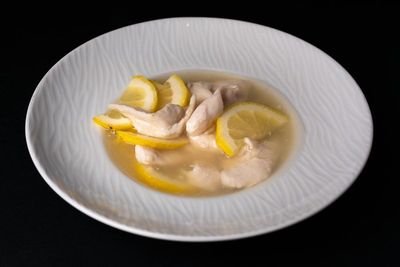
A Hong Kong specialty that pairs delicate chicken with a tart yet subtly sweet lemon sauce. The technique of shallow-frying chicken strips until just cooked keeps the meat tender, while a glossy sauce coats each piece perfectly. The balance between citrus acidity and the subtle spice of dried chilli makes this dish elegant yet comforting.
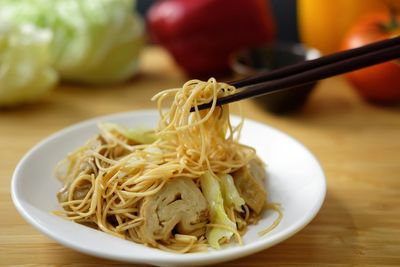
Yi mein (e-fu) are pre-fried Cantonese egg noodles sold as flat round cakes; they soften almost instantly in hot water and pick up sauce like a sponge. Stir-fried over high heat with shiitake mushrooms and ginger; finished with garlic chives, soy and a quick splash of shaoxing. The noodles are tossed gently - never cut, never broken - and served piled high in a wide bowl. If you can't find yi mein, fresh thin egg noodles work; the symbolism stays intact.
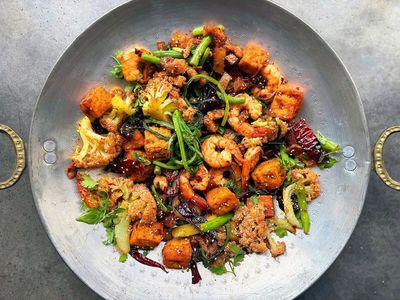
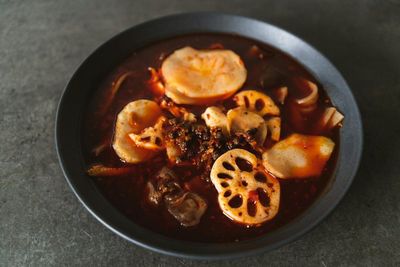
Ganguo, literally "dry pot", is the dry sister of hotpot. Where hotpot is a communal soup simmered at the table, dry pot is a wok composition: each ingredient pre-cooked separately, then everything tossed together at the last moment in a fragrant mala sauce based on Pixian doubanjiang, fermented black beans and chilli oil. The result lands somewhere between a stir-fry, a casserole and a giant heap of bar snacks. The dish is usually credited to Chongqing in the 1990s and exploded into nationwide popularity in the 2000s; it now anchors the menu of countless ganguo restaurants where you point at ingredients on a fridge and they appear minutes later in a single-handled wok at your table. Difficulty for a home cook is low if you accept the rhythm: blanch the vegetables, sear the proteins, then build the final dish from already-cooked components. The trick is restraint with the sauce, generous heat under the wok, and the willingness to commit to a long ingredient list. The recipe is endlessly flexible: lotus root, potato, cauliflower, mushrooms, squid, chicken wings, beef, fish balls, tofu skin, whatever you have, in any combination, totalling 1-1 ½ kg.
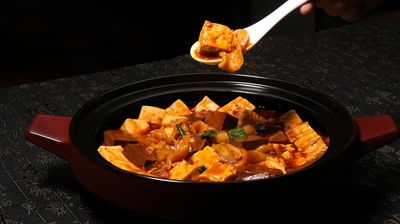
Silken tofu cubes are blanched briefly in salted water (firms slightly and seasons). Pork mince is fried hard in oil; doubanjiang and douchi join, cooking to release oil; garlic, ginger, chilli flakes and ground Sichuan peppercorn are toasted briefly. Stock is poured in; tofu is slipped in; gentle simmer for 5 minutes; cornflour slurry thickens. Spring onions and a final dusting of ground Sichuan peppercorn finish.
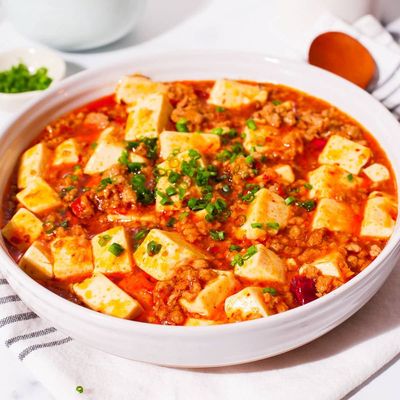
Silken tofu poaches briefly in salted water (firms it up so it doesn't break). Dried shiitake mushrooms rehydrate and chop fine. Doubanjiang fries in oil until the oil reddens; mushrooms, garlic, ginger and chilli flakes follow. Stock loosens; tofu joins gently; cornflour slurry thickens. Sichuan peppercorn dust at the table.
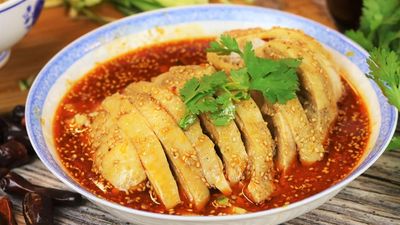
Kou shui ji is one of the great cold appetisers of Sichuan cuisine, a benchmark by which any aspiring Sichuanese cook is judged. It belongs to the broader family of cold chicken dishes (liang ban ji) that also includes bobo ji and bang bang ji, but kou shui ji is set apart by its sauce: not just spicy, but a complex layering of mala (numbing-hot) Sichuan pepper oil, fragrant chilli oil with its crisp sediment, deep aged black vinegar, sweet stone-ground sesame paste, and the concentrated chicken essence captured from steaming. The dish is uncooked at the assembly stage, which makes ingredient quality non-negotiable: cheap supermarket chilli oil and tahini will produce a sad, muddy version. Difficulty for a home cook is low if you have the right pantry; the only technical step is the gentle steaming, which yields more flavourful meat and crucial savoury juices than poaching does. The visual is striking, pale chicken slices half-submerged in a pool of red oil, scattered with chopped peanuts, sesame seeds and bright green scallion tops. Serve as a starter, on rice, or over cold noodles; the leftover sauce is too good to waste.
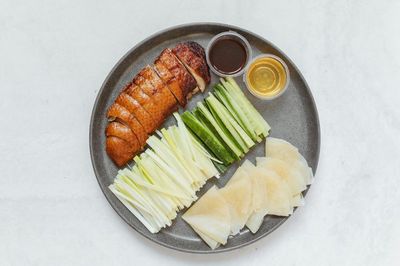
The Chinese revere duck as a symbol of wholesomeness and fidelity. With Peking duck, Chinese cooks mastered the art of maximising the duck's rich, succulent flesh while minimising bone and fat. This simplified method produces similar results to traditional restaurant preparations. While the authentic version involves air-pumping and wood-burning ovens, this approach creates shatteringly crisp skin through a honey-syrup glaze and extended drying.
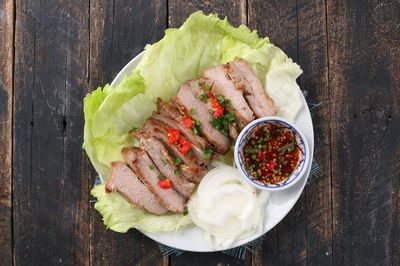
Pork goes particularly well with black beans; their salt and spicy flavour is distinctly Chinese. This quick-cooking dish balances tender pork with the bold, pungent character of fermented black beans. The result is authentic, flavour-forward, and ready in minutes. Perfect for weeknight meals or elegant entertaining.
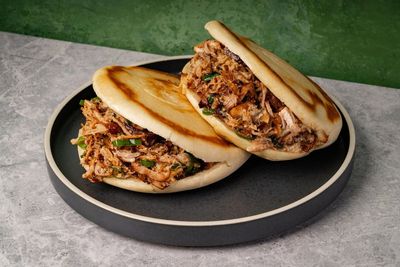
Roujiamo is often, lazily, called the Chinese hamburger, but it is older than the burger by perhaps a thousand years and structurally quite different. The bread is a flat, lightly leavened, sometimes laminated wheat round, with the layered Tongguan style (flaky and croissant-like) considered superior to the softer baijimo. The filling is rich braised pork, shoulder or belly, simmered with rock sugar, soy and warming spice until it shreds under a knife, then chopped fine on a board with raw onion and cilantro and a spoonful of its own dark cooking liquid. The whole assembly is then crammed inside the freshly fried-and-baked bun while everything is still hot. Roujiamo is a quintessentially Xi'an dish, the product of a city that for centuries sat at the eastern terminus of the Silk Road; the bread tradition comes from the Hui and Uyghur Muslim communities of the northwest, while the braised pork belongs to the Han Chinese kitchen. Difficulty for a home cook is moderate to high, the lamination of the bread takes practice, and there are multiple components on timed tracks, but the result is one of the great street foods of China, and the buns and meat can both be made ahead.
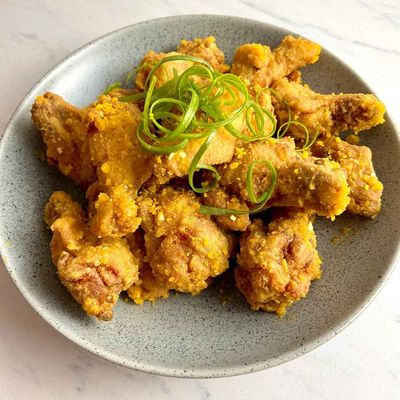
The wings are mild on their own, lightly seasoned with rice wine, soy and white pepper, then dusted in cornstarch and shallow-fried until the skin crackles. The drama is in the second step: crumbled salted duck egg yolks are stirred in hot oil until they foam into a frothy, sandy paste with a pale yellow colour and a smell somewhere between butter, parmesan and salt-cured anchovy. The fried wings go back into that sand and get tossed until each one wears a fine pale crust. The eating experience is genuinely unusual, the salted yolk is intensely savoury, almost umami-heavy, but not fishy or overwhelming like the egg eaten alone. Easy to cook if you can find the salted yolks (Asian grocers stock them whole-egg or yolk-only in vacuum packs); the only real skill is recognising the foaming point so the coating clings instead of burning. The combination originated in Hong Kong dim-sum kitchens in the 1980s and spread through Singapore, Malaysia and modern Chinese restaurants worldwide; it is now common across home kitchens in Sichuan and Guangdong as a snack or beer dish.
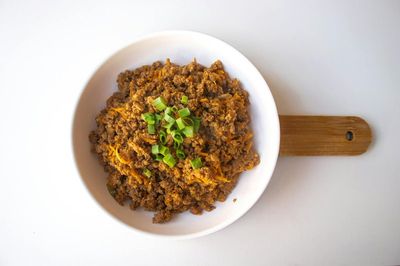
The essence of this recipe lies in knife technique: the beef must be cut into very thin strips for authentic texture and rapid cooking. A brief freeze makes slicing easier and more uniform. The result is a dish of tender, fragrant beef balanced with fresh ginger, crisp vegetables, and bold chilli heat.
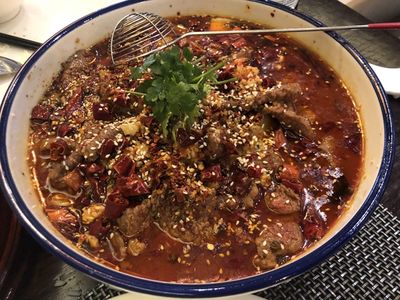
Two sensations at once: the bright, immediate burn of dried chilli (la) sitting under the slow numbing-electric prickle of Sichuan peppercorn (ma). That mala pair is the whole point. Beneath that, the broth is salty and fermented-funky from doubanjiang, the deep umami of broad-bean paste that's been aged for months in clay vessels. The hot oil pour at the table is theatre but it does real work: it blooms the dried chillies and Sichuan peppercorn powder right before you smell them, so the aroma arrives in a wave. Texturally: gloriously tender silk-thin beef slices (the cornflour-and-egg-white marinade is what keeps them that way), crisp-on-the-edge bok choy or bean sprouts wilting under the heat, oil swimming on top. Easier than its restaurant-banquet reputation suggests once you have doubanjiang and Sichuan peppercorns in the pantry; the technique is mostly "don't overcook the beef" and "pour the oil while it's smoking". Originates in 1930s Chongqing as a riverboat-worker's dish, water and chillies were cheap, lean cuts of beef tough, then spread through Sichuan in the 1980s as the wider mala movement caught hold.
This straightforward Sichuan preparation showcases the region's bold use of chillies and spices. The technique is simple: season, rest, and cook in layers, building flavour as you go. Oyster sauce adds depth, while seven spices (chilli power, Sichuan pepper, salt, garlic, ginger, pepper) create a full-bodied dish.
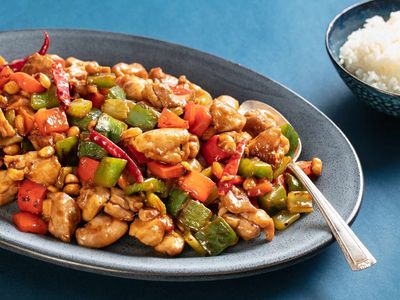
This recipe from the Sichuan region of western China showcases the region's trademark use of chillies combined with the modern addition of cashew nuts. The sauce is complex and layered, savoury from fermented beans and hoisin, spicy from dried chillies, and balanced with vinegar's acidity and sugar's sweetness. The result is distinctly Chinese in technique yet contemporary in execution.
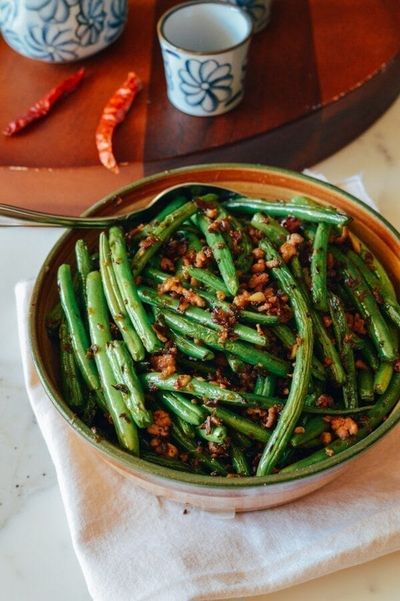
Beans dry-fry in just a thin slick of oil over high heat for 6-8 minutes, they need to blister and wrinkle, not stay green and snappy. Aromatics, garlic, ginger, dried chillies, Sichuan peppercorns and zhacai (Sichuan preserved mustard tuber), flash-cook. Beans return; soy and rice wine glaze; sesame oil to finish.
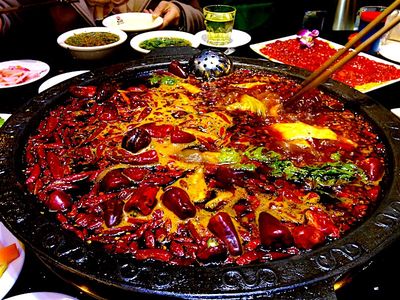
Two pots if you have them: a spicy red broth and a clear chicken broth. The red broth fries doubanjiang and chilli bean paste in beef tallow, adds Sichuan peppercorns, dried chillies, star anise, cassia, bay, ginger and garlic, then stock; simmers for 30 minutes. Diners cook their own ingredients in the simmering pot and dip in a small bowl of sesame oil + chopped garlic + coriander. The mala (numbing-hot) sensation comes from green Sichuan peppercorns + dried chilli together.
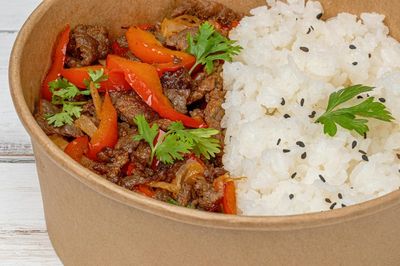
This fast, easy, and delicious supper showcases how Chinese five-spice powder flavours an entire dish via a marinade approach. Overnight marination develops deep, complex flavours that distinguish this simple stir-fry from quickly-thrown-together meals. The combination of Sichuan pepper's numbing quality with five-spice complexity creates an unforgettable sauce.
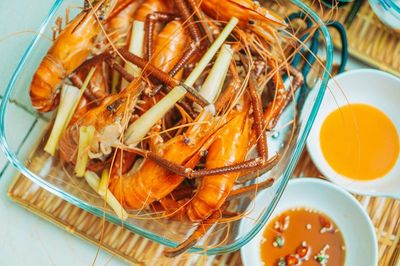
Sichuan cooking is becoming increasingly popular in Western restaurants, and this is one of the best-known dishes from that region. Quick and easy to execute, it makes a wholesome and delicious meal when served with stir-fried vegetables and steamed rice. The vibrant sauce perfectly complements the firm texture of prawns.
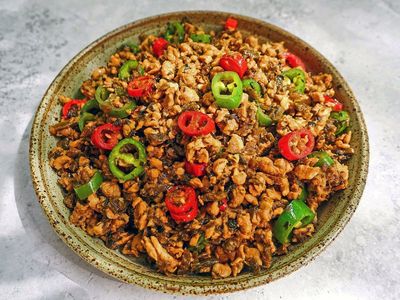
Jimi yacai (literally "chicken rice yacai") is a Sichuan home-cook classic that turns a humble jar of preserved mustard greens into something extraordinary. Yacai is one of Sichuan's "four famous pickles", produced in Yibin in the south of the province where mustard stems are salted, fermented and aged with sugar and spices for months until they turn glossy black and intensely savoury-sweet. Diced finely and tossed with chicken cut "rice-sized" (the literal meaning of jimi), the result eats like a savoury condiment as much as a dish, a few spoonfuls over plain rice are enough to keep a meal going. The technique is straightforward but rewards finesse: the chicken is velveted with cornflour and Shaoxing wine for tenderness, the yacai is rinsed and then dry-toasted to wake up its aroma, and everything finishes with sliced fresh chillies for colour and a gentle warming heat rather than mala fire. Difficulty for a home cook is low; the dish comes together in under ten minutes once the chicken is diced. Traditionally eaten with steamed rice or wowotou (cornmeal buns), it is also superb as a noodle topping.
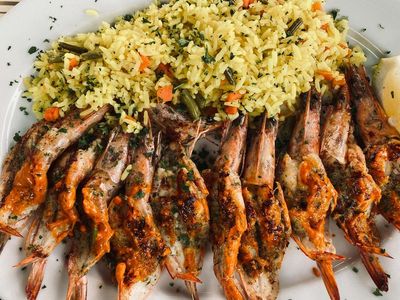
This is a dramatic dish sure to earn you compliments. Moderately easy to make but requiring organisation and some Chinese cooking experience. The key to success is that both the prawn sauce mixture and rice cake must be fairly hot, this creates a dramatic, theatrical sizzle when they combine. A showstopping presentation perfect for entertaining.
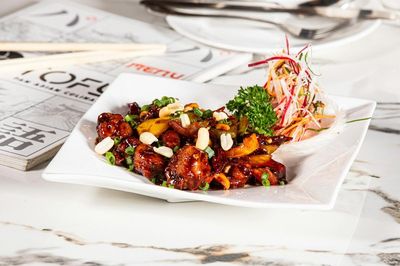
This is a classic western Chinese dish better known in China as Gongbao chicken (or Kung Pao chicken). Named after Chinese official Ding Baozhen, Governor of Sichuan province in the nineteenth century, it represents the region's bold approach to flavour: spicy, slightly sour, sweet, and savoury all at once. The combination of roasted peanuts and dried chilli creates an unforgettable sauce.
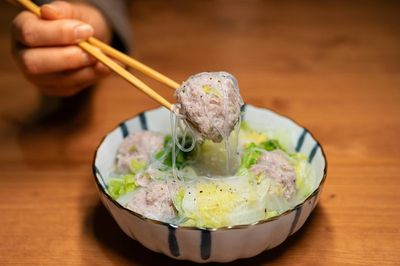
The secret to light and fluffy meatballs lies in proper technique: egg white and cornflour incorporate air into the mixture, creating a delicate texture. This gentle steaming method keeps them moist and tender while the aromatics infuse throughout. These meatballs reheat beautifully by steaming and are perfect for dinners or as an appetizer at parties.
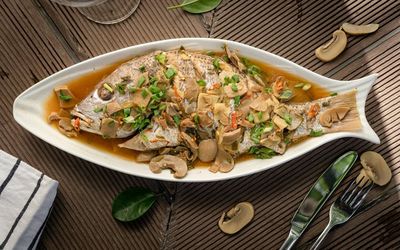
Steaming is a great southern Chinese tradition and is considered the preferred method of cooking fish as it brings out the purest flavours. Because it is such a gentle cooking technique, nothing masks the fresh taste of the fish, which remains moist and tender. Simple aromatics, ginger, garlic, and spring onion, infuse the fish without overwhelming its delicate character.
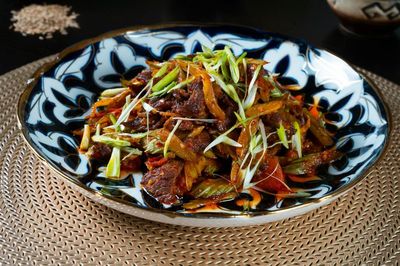
This typically Cantonese dish is one of the quickest and tastiest ways to cook beef. The ginger adds a subtle and fragrant spiciness that enhances without overwhelming the tender beef. Freezing the beef before slicing is essential for uniform, thin strips that cook instantly.
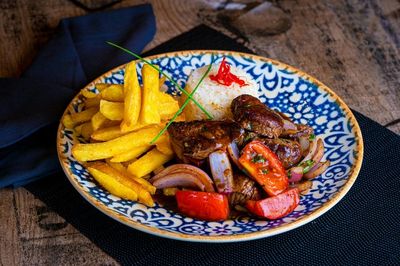
This is a northern Chinese beef speciality that lends itself to using dried tangerine peel. The Chinese always use peel that has been dried, and the older the peel, the more prized the flavour. The combination creates a sophisticated, citrus-forward sauce that balances the richness of beef beautifully.
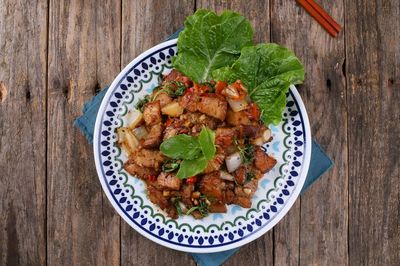
This simple stir-fried dish in the southern Chinese tradition showcases how elemental technique and timing create exceptional results. The key to success is not to overcook the pork. A brief marinade tenderizes the meat and infuses flavour, while spring onions added late retain their fresh bite and delicate onion flavour.
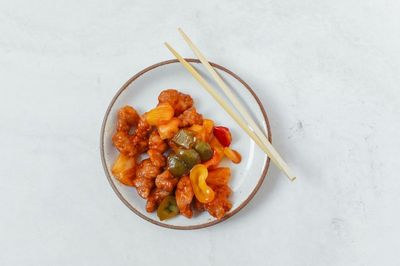
Often mis-made in the West as doughy balls drowned in cloying sauce, properly prepared sweet and sour pork is a delicate balance of flavours, neither strictly sweet nor sour, but harmoniously combined. The key is quality ingredients, proper deep-frying technique, and a refined sauce that complements rather than masks the tender pork. Tinned lychees add authentic sweetness and texture.
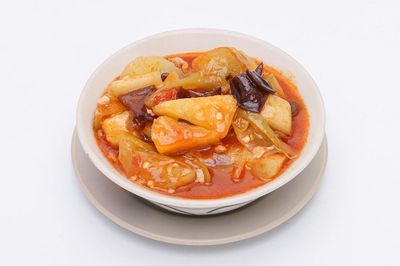
This is a very popular Chinese dish where the sweet and pungent flavours of the sauce combine beautifully with firm, succulent prawns. Simple to make and elegant enough for entertaining, it can be served as part of a larger Chinese meal or as a standalone starter. The balance of sweet, sour, spicy, and savoury creates an unforgettable sauce.
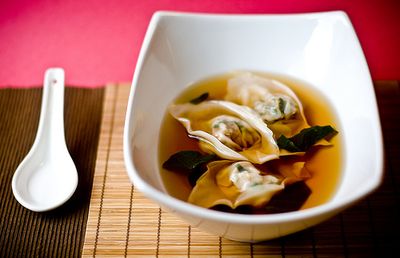
A comforting Chinese soup featuring delicate pork-filled wontons poached and served in a clear chicken broth, garnished with soy sauce and sesame oil for authentic flavor.