Uyghur

Central Asian Muslim cuisine from the Tarim Basin and beyond, distinct from Han Chinese food despite a shared political map. Lamb is the centrepiece - hand-pulled laghman noodles under wok-fried lamb-and-vegetable toppings, polo (yangrou zhuafan) pilaf in lamb fat, lamb kebabs from the tonur clay oven, big-plate chicken (da pan ji) for parties. Cumin, sweet chilli pepper, sesame and Sichuan peppercorn run through the seasoning; raisins, walnuts and dried fruits sweeten the savoury side. Sheker manta steamed sugar dumplings and twisted donuts handle the snack table.

12 recipes

Browse by section

Recipes

Big Plate Chicken

Big Plate Chicken

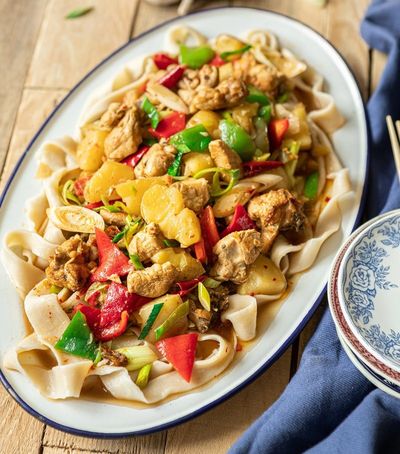
A dish that wears its multi-culture origin on its sleeve: chicken, potato and green pepper in a sweet-savoury soy-based braise (the Han Chinese influence), with star anise, Sichuan pepper, cumin and dried chilli (the Uyghur side), thickened by the starch from chunks of potato, ladled over flat hand-cut belt noodles. The sauce is the centrepiece. Browning sugar in oil before the chicken goes in builds a dark caramel that turns the whole braise a deep brick-red, and the soy underneath gives it weight; the Sichuan peppercorns add a mild numbness rather than dominating. Smell is rich, sweet, slightly spicy, with anise drifting through. Not difficult but not quick, 45 minutes once the prep is done, and the belt noodles are a small project on their own. Born in the 1980s in northern Xinjiang where a generation of Han Chinese migrants opened restaurants alongside the existing Uyghur food economy; the dish is the synthesis of those two traditions and is now the signature dish of Xinjiang cuisine, eaten across China and beyond.
1 hour 10 minutes Serves3-4
Laghman

Laghman

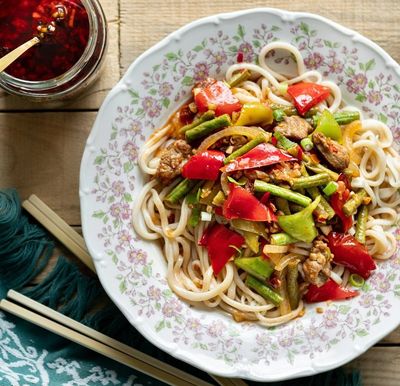
Two distinct elements that meet at the bowl: long, springy hand-pulled noodles with the chew of fresh ramen, and a brothy lamb-and-tomato topping that's somewhere between a stir-fry and a stew. The topping reads bright and savoury more than spicy, fresh tomato and sundried tomato together giving sweetness and depth, peppers and yardlong beans for crunch, cumin and white pepper for warmth, with a single fresh chilli for gentle heat. Smell-wise it's lamb fat hitting hot oil, then tomato vines, then cumin. The noodles are the difficulty: pulling a coiled rope of rested dough into long even strands takes practice, and your first few attempts will tear. The reward is a noodle nothing like the dried equivalent, thicker, glossier, with proper pull. A signature dish across the entire Uyghur world, eaten from Kashgar to Almaty to Toronto, with each family making minor variations on the topping; the noodle technique itself is shared with the lamian tradition of Lanzhou further east, which laghman is etymologically related to.

1 hour 45 minutes Serves3
Pan Kabap

Pan Kabap

The dish is essentially a stripped-back tonur kebab: thin slices of fatty lamb, cumin, sweet chilli pepper powder, salt, no marinade and no skewer. The pleasure is in what you don't add. Cumin coats the slices in layered passes (two or three small sprinkles rather than one large dump), so the spice toasts gently into the rendering fat instead of scorching. The result is meat that tastes intensely of cumin and lamb fat with a deep gold sear on the edges. Smell carries across a flat: cumin and animal fat at high heat is one of the most evocative aromas in Central Asian cooking. Genuinely fast and forgiving as long as you respect two rules: the lamb must have fat on it, and the pan must already be smoking when the meat goes in. The home-kitchen version of a tradition that's centuries old across Xinjiang, the Hexi Corridor and into Kazakhstan, whenever a household couldn't fire up a clay oven for skewers, this is what they cooked instead.

20 minutes Serves1-2
Suykash

Suykash

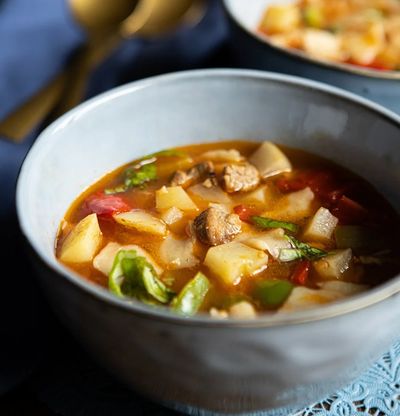
A bowl of warm, slightly tangy tomato-and-lamb broth thickened by the starch of just-cooked hand-torn pasta. The shape of the noodles is the soul of the dish: irregular thumbnail-sized squares with thick centres and thin edges that grab the broth differently in every spoonful. Aromatics lean savoury rather than spicy; cumin and white pepper sit in the background, fresh basil hits at the end, and a splash of black rice vinegar lifts everything. Texturally it's chunky and homely, diced turnip, potato, peppers and lamb, all about the same size as the pasta pieces, so it eats with one motion of the spoon. Easy to make solo, but the traditional way is collective: several people tearing pasta directly into the boiling pot at the same time, faster and looser. The dish is everyday food across Uyghur households and a counterpart to the more elaborate hand-pulled laghman; the name suykash translates roughly as "water tear", which captures the technique exactly.

1 hour 15 minutes Serves3-4
Uyghur Kebab Burger

Uyghur Kebab Burger

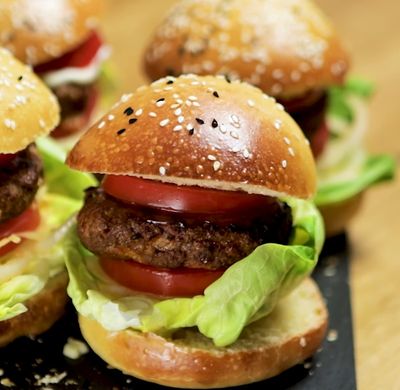
A burger that tastes like a Kashgar street kebab rather than a Western quarter-pounder. Cumin is the dominant note (Uyghur cooking uses it the way the rest of China uses Sichuan pepper); behind it sits sweet chilli powder for warmth without burn, and the lamb fat that catches a deep gold sear on the outside. The patty stays loose and juicy because the mix is bound with a single egg and a spoon of flour rather than pressed dense like a beef burger. Smell-wise: charred fat, cumin, and the sweet onion folded into the meat. Easy enough that you can do it on a weeknight as long as the mix has had its 3-hour rest in the fridge; the resting time is what makes the difference between a flat-tasting patty and one that eats like the real tonur version. The dish is a clear modern adaptation of the classic Uyghur cumin lamb kebab, scaled down for households without access to a clay tandoor, and increasingly common in cafés across Xinjiang and the Uyghur diaspora.

8 hours 40 minutes Serves4
Uyghur Lamb Ribs

Uyghur Lamb Ribs

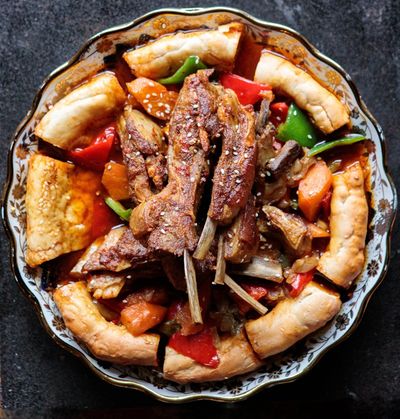
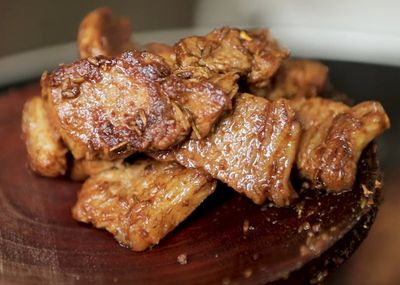
Lamb fat rendered slowly into a paprika-and-cumin glaze, with naan acting as both bread and sauce-sponge underneath. The flavour profile is direct and unfussy: sweet paprika for colour and warmth, cumin for the Uyghur signature note, salt to draw out moisture, and the long braise to dissolve the connective tissue in the ribs. No tomato, no soy, no aromatic broth, the dish is meat, spice, onion and fat. The naan is the surprise. Tucked around the edge of the pan in the last few minutes, it goes from crisp to soft to flavour-loaded as it soaks the orange-stained juices, and turns into the most satisfying part of the plate. Easy cooking once the ribs are in the pan, 90 minutes of unattended braise, but you need patience for the rendering at the start; rushing the brown is what produces a flat dish. A celebratory dish in Uyghur households, served on a wide platter for guests, and a clean example of how Xinjiang lamb cooking does so much with so few ingredients.

1 hour 50 minutes Serves2
Xinjiang Lamb Pilaf

Xinjiang Lamb Pilaf

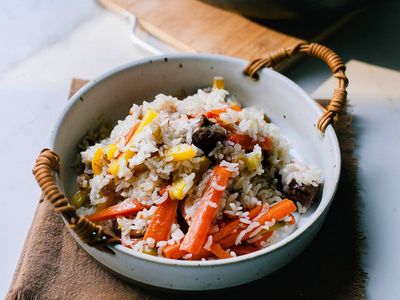
A dish entirely about lamb fat carried through rice. Each grain ends up glossy and orange-tinted from the rendering, with sweetness from caramelised yellow carrot, honey and raisins, and a savoury back-end from tender lamb cubes. White and black pepper give a quiet warmth; cumin doesn't appear here (unlike in most Uyghur lamb cookery), and that absence is deliberate, this pilaf is sweet-savoury rather than spice-driven. The aroma when the lid comes off is unmistakable Silk Road: lamb fat, sweet onions, honey, faintly resinous from the carrot. Not difficult but it requires confidence in the no-peek phase; the rice cooks by steam trapped under the lid, and lifting it sabotages the dish. Sits at the centre of a long Silk Road pilaf lineage that runs from Persian polo through Uzbek plov to Indian biryani, and a Xinjiang Uyghur celebration dish, the polo at every wedding, every Eid, every guests-coming-tonight household. Eaten with the hands, which is what zhuafan means.

1 hour 45 minutes Serves4-6