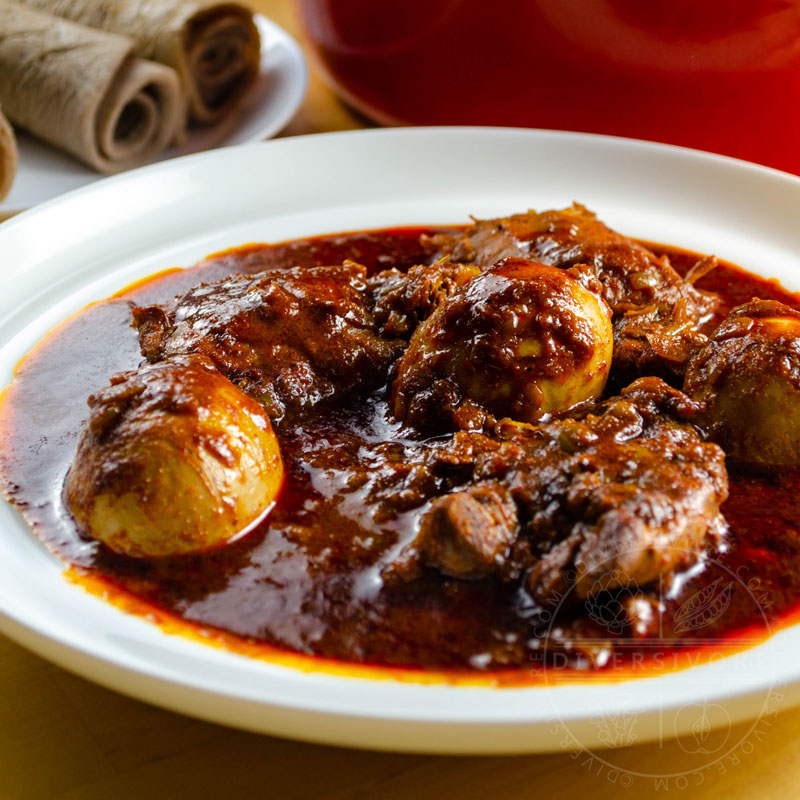
Doro Wat
Ethiopian spiced chicken stew: chicken legs simmered in a thick, deep red sauce of caramelised onions, berbere spice and niter kibbeh (spiced clarified butter), with hard-boiled eggs poached in the sauce. The national dish; festive food, served with injera flatbread to scoop with.
Overview
Ethiopia's national dish, the spiced chicken stew that turns up at every wedding, Easter feast and Christmas table, and the one dish a cook is judged on. The foundation is the onion - you cook it down slowly for nearly an hour into a deep dark base, and this is the step that decides whether the wat is great or merely acceptable. Berbere (the Ethiopian spice blend of chilli, fenugreek, ginger and a dozen others) and niter kibbeh (spiced clarified butter, the dish's defining fat) fold in. Chicken thighs and legs simmer in the deep red sauce, and hard-boiled eggs join late, scored with a knife so they take on the colour and the flavour. Eaten communally from a single platter, with injera flatbread torn into pieces to scoop the stew. No cutlery, no individual plates, hands clean before the meal.
Ingredients
Niter kibbeh (spiced butter)
- 250 g unsalted butter
- 2 garlic cloves (crushed)
- 1 thumb fresh ginger (sliced)
- 1 onion (small, chopped)
- 1 teaspoon fenugreek seeds
- 1 teaspoon cumin seeds
- 1 teaspoon coriander seeds
- 1 cinnamon stick
- 4 cardamom pods (cracked)
Stew
- 4 red onions (large, very finely chopped - about 800 g)
- 4 tablespoons niter kibbeh (from above)
- 1 thumb fresh ginger (grated)
- 6 garlic cloves (crushed)
- 4 tablespoons berbere spice mix (Ethiopian; or homemade - see notes)
- 2 tablespoons tomato purée
- 100 ml dry red wine (optional)
- 500 ml chicken stock
- 1 kg chicken thighs and drumsticks (skinned)
- 1 lemon (juice)
- 6 hard-boiled eggs (peeled, scored shallow lengthwise)
- Salt
To serve
- 4-6 sheets of injera (Ethiopian sourdough flatbread; from any East African grocer)
Method
Stage 1 - Niter kibbeh
- Melt the butter slowly in a small pan with all the spice ingredients.
- Heat very gently for 20 minutes (don't simmer; warm) so the milk solids settle and the spices infuse.
- Strain through muslin into a jar; discard the solids and the bottom layer.
- (Will keep 2 months refrigerated; use the rest in any Ethiopian dish.)
Stage 2 - Cook the onions
- Place the chopped onions in a large heavy pot WITHOUT any oil.
- Cook over medium-low heat, stirring occasionally, for 30-40 minutes until they're very soft, dark and have lost most of their volume.
- Add 4 tablespoons niter kibbeh; cook another 10 minutes.
Stage 3 - Build the sauce
- Add the ginger and garlic; cook 1 minute.
- Stir in the berbere; cook 2-3 minutes (don't burn).
- Add the tomato purée; cook 2 minutes.
- Pour in the wine; reduce by half.
- Add the stock; bring to a simmer.
Stage 4 - Chicken
- Add the skinned chicken pieces; turn to coat in the sauce.
- Squeeze in the lemon juice.
- Cover and simmer 35-40 minutes until tender.
Stage 5 - Eggs
- Add the scored hard-boiled eggs; spoon sauce over.
- Simmer uncovered another 10 minutes; the eggs absorb the colour.
Stage 6 - Serve
- Spread injera sheets across a large platter.
- Spoon the doro wat into the centre.
- Set extra rolled injera on the side.
- Eat with hands: tear injera, pinch up bites of stew.
Notes
- The onions are 50% of the dish: No oil, slow cook, until very dark. This is what makes doro wat doro wat. Don't shortcut.
- Berbere shop-bought: Pre-blended berbere from Ethiopian grocers is excellent. Homemade involves toasting and grinding 12+ spices.
- Skin the chicken: Doro wat doesn't have skin in the sauce; skin gets removed before simmering.
Storage
- Improves overnight. Keeps 4 days refrigerated.
- Freezes 3 months.
Recipes mentioned here
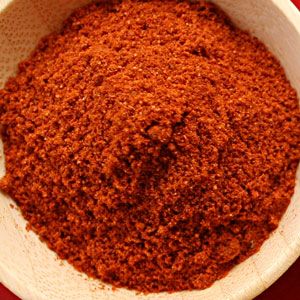
Berbere
Berbere is the cornerstone of Ethiopian cuisine, a powerfully hot and complex spice blend that's both a condiment and a cooking base. Unlike other chilli-forward blends, Berbere combines dried chillies with cardamom, cloves, and ajowan to create heat with sophistication. The blend is intensely aromatic and demands respect; a little goes a long way. This is a blend for stews and braises that simmer for hours, allowing the spices to develop depth and integrate with other ingredients.
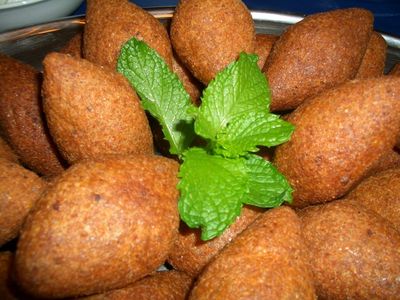
Kibbeh
Fine bulgur soaks until soft. The shell mixture combines bulgur, raw minced lamb, finely-grated onion, salt and spices, then blitzes (or pounds) into a dense, smooth, almost claylike paste. The filling is a separate cooked mince of lamb, onion, pine nuts, allspice and cinnamon. Each kibbeh shell is shaped over a finger; filling stuffs in; the lot pinches closed into a pointed oval. Deep-fries for 5 minutes.
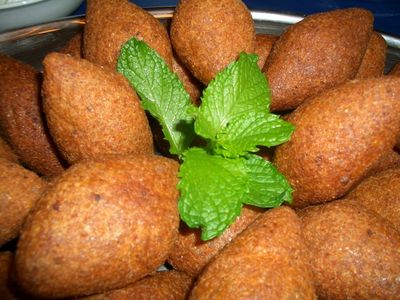
Kibbeh
Two preparations: the bulgur-and-mince shell paste and the spiced cooked filling. The shell is shaped around a portion of filling into a football shape, then deep-fried until the outside is golden and the inside is hot and savoury. Served warm with yogurt or tahini.
More like this
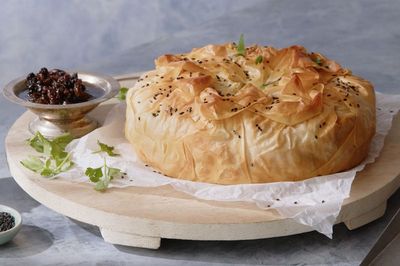
b'Stilla
Chicken poaches in a heavily spiced broth (saffron, ginger, cinnamon, lemon). The shredded meat returns to a reduced sauce thickened with beaten eggs to make a soft set. Toasted almonds with sugar and cinnamon form a layer. Everything wraps in butter-brushed filo, baked golden, and dusted with icing sugar and cinnamon.
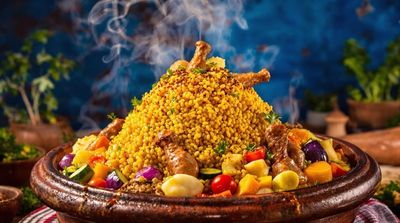
Couscous Royale
Lamb and chicken poach slowly in a saffron-tomato broth with chunks of root vegetables and chickpeas. Merguez sausages grill or fry separately. Couscous steams (or is rehydrated quickly with hot broth and butter). Everything plates separately on a vast platter; diners build their own bowls and slick with harissa.
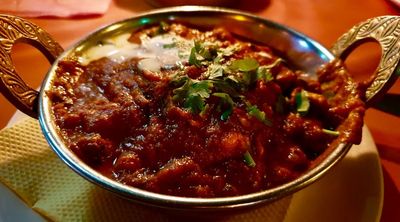
Chicken Pathia
A British-Indian pathia curry with a sweet-and-sour profile, tuned for balanced acidity and a hint of chilli warmth. The recipe uses lemon, mango chutney and sugar for tang/sweetness, with optional red food colouring for the classic curry-house appearance.
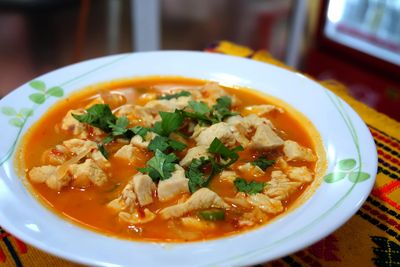
Jasha Maru
The Bhutanese weeknight chicken stew, the dish a Thimphu cook turns to after a long day. You joint a whole bone-in chicken and stew it with onion, tomato, plenty of fresh garlic and ginger, three or four green chillies, and butter or vegetable oil with a splash of water. The cook is fast: a brief sear to colour the meat, a simmer with the tomato until the chicken is cooked through and falling off the bone, and a finish with chopped coriander and spring onion just before serving. What you get back is a brothy, fresh, gently spicy chicken dish that sits somewhere between Indian and East Asian cookery, which is exactly where Bhutan sits geographically. Eaten with red rice, perhaps a small bowl of ema datshi on the side for whoever wants to push the heat further.