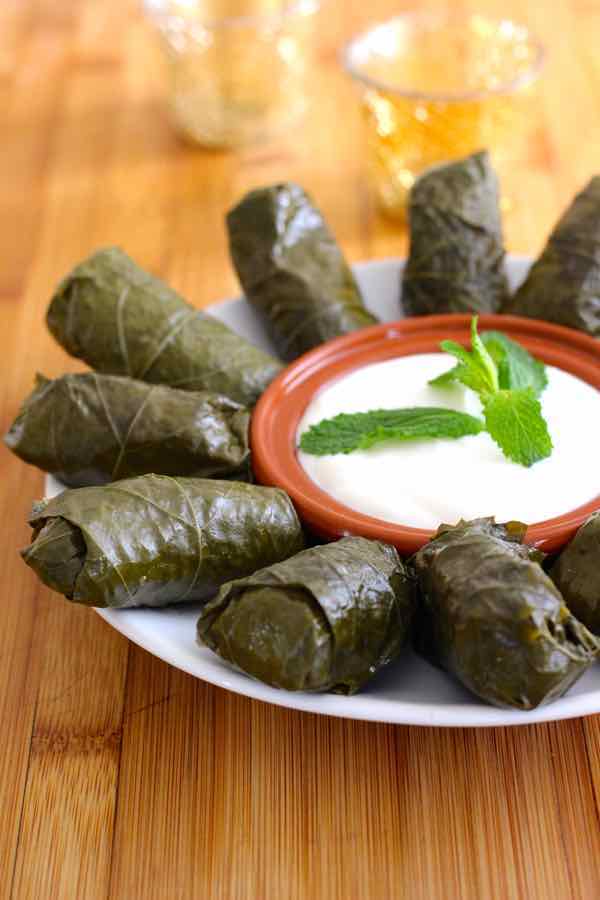
Dolma (Azerbaijani Stuffed Vine Leaves)
Azerbaijan's stuffed vine leaves: leaves rolled around lamb mince, rice, mint and dill, simmered slow in lamb stock under a weighted plate.
Overview
Azerbaijan's stuffed vine leaves, claimed as the national dish in 2017 and added to UNESCO's list of Intangible Cultural Heritage. You start by soaking brined vine leaves in warm water for twenty minutes to leach out the salt, then build a filling of raw lamb mince with rinsed short-grain rice, finely chopped onion, fresh mint and dill, butter, salt and pepper. Each leaf gets a teaspoon of filling and rolls into a tight cigar. The rolls pack in a single layer in a heavy pot, then a second and third layer perpendicular to the first, like a brickwork pattern that holds them together as they cook. Stock and a splash of sumac water pour in to barely cover, an inverted plate weighs everything down so the dolma keep their shape, and the lot simmers slowly for fifty minutes. Plated on a platter with thick garlic yogurt alongside for dipping.
Ingredients
Vine leaves
- 60 brined vine leaves (about 250 g)
Filling
- 500 g lamb mince (20% fat ideal)
- 100 g short-grain rice
- 1 onion (large, very finely diced)
- 30 g fresh mint (leaves only, chopped)
- 30 g fresh dill (chopped)
- 50 g unsalted butter (softened)
- 1 ½ teaspoons salt
- 1 teaspoon ground black pepper
- ½ teaspoon ground cinnamon
Cooking liquid
- 600 ml lamb stock (or water + 1 stock cube)
- 2 tablespoons sumac
- 2 tablespoons lemon juice
- 30 g butter
Garlic yogurt (sürmek)
- 400 g Greek yogurt
- 3 garlic cloves (crushed)
- 1 teaspoon salt
- 1 tablespoon dried mint
Method
Stage 1 - Prep the leaves
- Soak the vine leaves in warm water for 20 minutes to leach out brine.
- Drain and pat dry.
- Trim any tough stems; lay flat shiny-side down on the work surface.
Stage 2 - Filling
- Rinse the rice in 3-4 changes of cold water until the water runs clear.
- In a wide bowl, combine the rice, lamb mince, finely diced onion, chopped mint and dill, softened butter, salt, pepper and cinnamon.
- Knead with your hands for 2 minutes until the filling is uniform and slightly tacky.
Stage 3 - Roll
- Place a heaped teaspoon of filling near the stem end of each leaf.
- Fold the stem flap up over the filling.
- Fold the two side flaps in.
- Roll tightly into a cigar 6-7 cm long.
Stage 4 - Pack and cook
- Line the bottom of a heavy-based pot with any torn or imperfect leaves (this is sacrificial padding).
- Pack the rolls seam-down in a single tight layer.
- Add a second layer perpendicular to the first, and a third if needed.
- Whisk the sumac and lemon juice into the lamb stock; pour over the rolls until barely covered.
- Dot with 30 g butter.
- Invert a small heatproof plate directly on top of the rolls to weigh them down.
- Bring to a gentle simmer; cover; cook on low 50 minutes.
Stage 5 - Yogurt and serve
- Stir the crushed garlic, salt and dried mint into the yogurt.
- Lift the rolls onto a warm platter.
- Spoon a little of the cooking liquid over.
- Serve with the garlic yogurt and warm bread.
Notes
- Raw rice, not pre-cooked: the rice cooks inside the leaf, absorbing the lamb juices. Pre-cooked rice gives a stodgy filling.
- Weight the pot: without an inverted plate the top rolls float and unravel. Use a heatproof saucer or a small plate.
- 20% fat mince: lean lamb dries out; ask the butcher for shoulder-cut mince.
Storage
- Refrigerate 3 days in their cooking liquid. Eat cold or gently reheat in a 160°C oven, covered, 15 minutes.
- Freezes 2 months packed in their liquid; thaw overnight in the fridge before reheating.
More like this
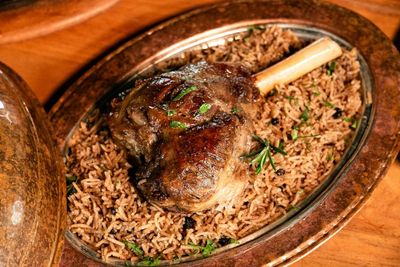
Quzi
A bone-in lamb shoulder rubs with baharat, dried lime, garlic and yogurt; sits overnight; roasts long and slow until the meat falls from the bone. Saffron rice cooks separately with onion, raisins and toasted nuts. Everything assembles on a wide platter, rice mounded under the lamb, sauce spooned over, almonds and pine nuts scattered.
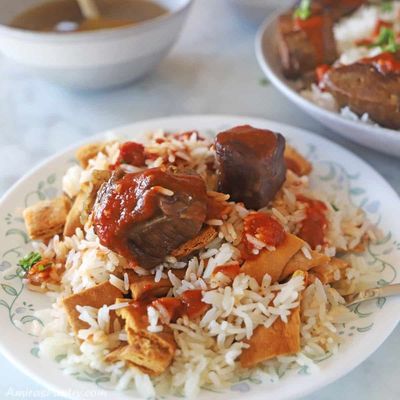
Fattah Bil Lahma
Lamb shoulder simmers in a spiced stock for 90 minutes until tender. Meanwhile, basmati rice cooks pilaf-style. Pieces of baladi bread (or pita) crisp in the oven. A dakka sauce: garlic, vinegar, coriander, butter, all sizzled briefly. A tomato sauce reduces. Layer: bread → rice → dakka → tomato sauce → shredded meat → ladles of cooking liquor.
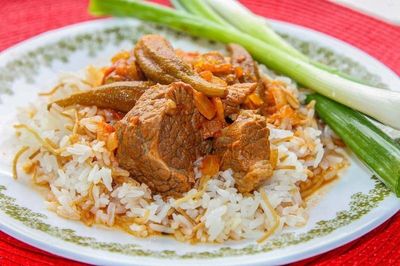
Bamia Iraqi
Lamb shoulder is browned hard; onion is softened; garlic, baharat and tomato paste join. Stock, tamarind, dried lime and tinned tomato deglaze. The lamb is braised for 75 minutes. Small whole okra goes in the last 25 minutes (long enough to soften, short enough not to disintegrate). Taqliya, crushed garlic and coriander sizzled in oil, is drizzled over at the end.
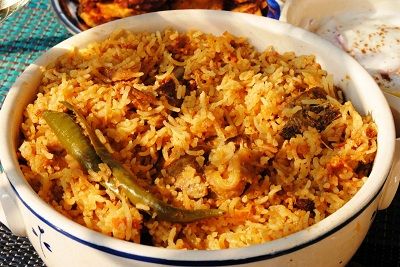
Biryani
Biryani represents the height of Indian culinary technique: multiple components prepared separately with precision, then assembled in layers where flavors permeate through steam cooking. This isn't a one-step rice dish; rather, it's an architectural construction where yogurt-marinated lamb develops tenderization and flavor, then cooks slowly with warm spices and tomato, while basmati rice is independently flavored with saffron infusion and whole spices. Upon assembly, the two elements marry through steam, creating a unified dish where lamb and rice are inseparable in flavor. Traditionally cooked during festivals and royal celebrations, biryani requires patience and multiple steps but rewards with sophistication.