Bibimbap
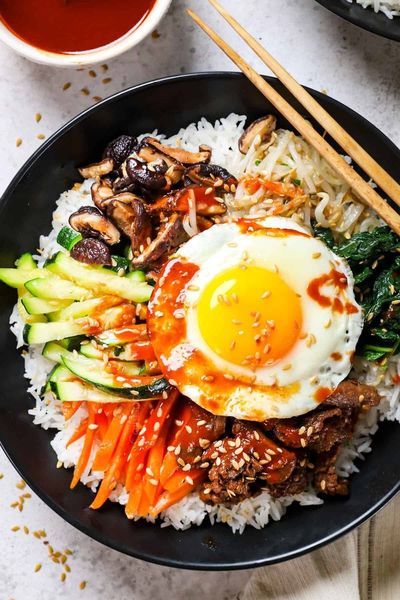
Each vegetable cooks separately and gets dressed with sesame oil, garlic and soy. They arrange in colourful piles around a mound of rice; an egg fries on top. Gochujang sauce on the side. Diners mix vigorously before eating.
A cuisine built on banchan (the small side dishes that fill the table) and the alchemy of fermentation. Gochujang and gochugaru chillies, doenjang fermented soybean paste, soy and toasted sesame oil drive the flavour; kimchi appears at almost every meal. Live grilling at the table (bulgogi, dak galbi), wok-quick stir-fries, layered bibimbap rice bowls and slow-cooked stews like jjigae define the experience.
Each vegetable cooks separately and gets dressed with sesame oil, garlic and soy. They arrange in colourful piles around a mound of rice; an egg fries on top. Gochujang sauce on the side. Diners mix vigorously before eating.
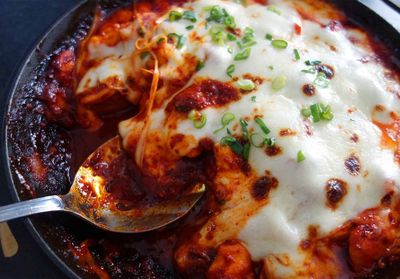
Boneless chicken thighs cube small; marinate for 1 hour in gochujang, gochugaru, soy, garlic, ginger, sugar and sesame oil. Pan-grill in a wide cast-iron skillet over medium-high until the sauce caramelises and the chicken is just cooked. Off heat, generous mozzarella scatters across the top; cover briefly or finish under a grill to melt. Top with sesame seeds and spring onions.
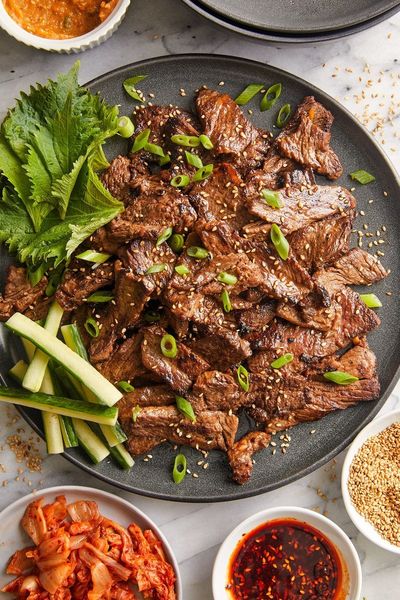
Rib-eye or sirloin sliced paper-thin sits in a marinade of soy, brown sugar, sesame oil, garlic, ginger and grated Asian pear (or apple), then sears hard in a screaming-hot pan or on a BBQ. Served wrapped in lettuce leaves with rice and ssamjang.
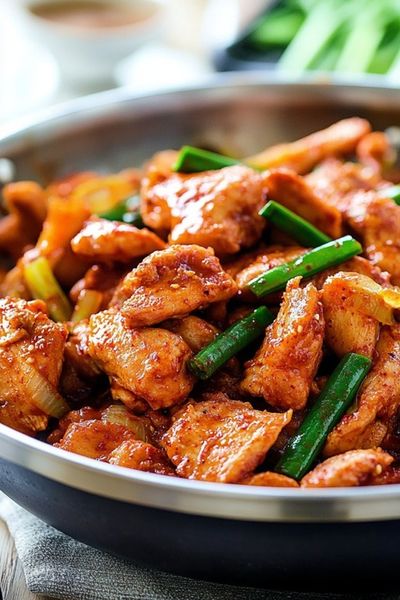
Boneless chicken thighs cube up and marinate in a gochujang-soy-garlic-ginger paste with mirin and sugar. They stir-fry hard with onion, sweet potato chunks, cabbage and Korean rice cakes (tteok). Often finished with cheese melted over for the modern variant; classic version skips it.
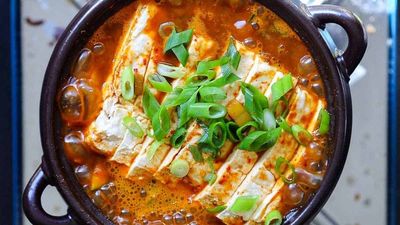
A quick anchovy-and-kelp stock makes the broth backbone (the Korean kitchen standard, taking 10 minutes). Doenjang (about 3 tablespoons) whisks into the hot stock with a small spoonful of gochujang for warmth, never aggressive heat. The vegetables go in by sturdiness: potato first, then courgette and mushrooms, then onion and chilli, finally cubed tofu and clams (or anchovies) at the end. Simmers for 12-15 minutes total. A little minced garlic stirs in at the very end so it doesn't dull. Brought to the table in the cooking pot, still bubbling.
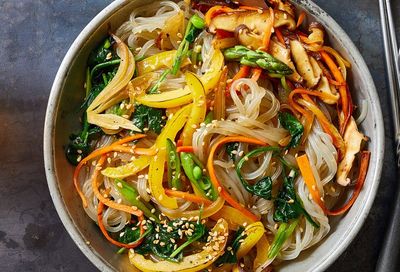
Sweet potato glass noodles (dangmyeon) boil and toss in a soy-sesame sauce. Vegetables (spinach, carrot, mushrooms, onion, peppers) sauté separately to keep their colour and texture, and beef stir-fries fast. Everything tosses together with the sauced noodles and a final sesame finish.
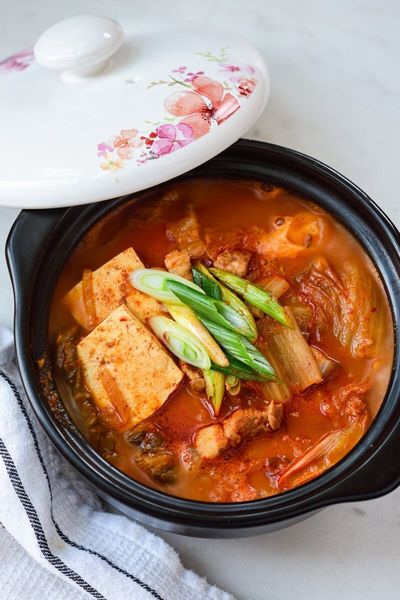
Pork belly slices brown in a heavy pot, joined by chopped sour kimchi (the older the better) and its juice. Stock and gochujang go in; the lot simmers until the pork is tender and the broth is dark and thick. Tofu cubes finish; spring onion scattered. Eaten with rice.
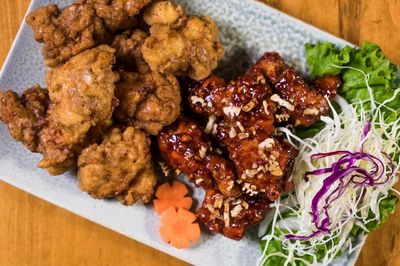
Chicken wings (or boneless thighs) get a light cornflour-and-flour coating and fry low and slow first to cook through. They cool, then fry hot and fast for the crisp. The sauce is a quick reduction of gochujang, gochugaru, soy, garlic, ginger, honey and rice vinegar; the just-fried chicken tosses in the sauce and gets eaten immediately.
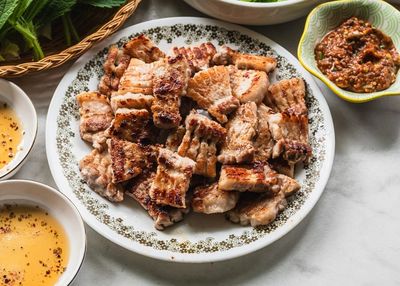
Samgyeopsal, literally "three-layered flesh" after the visible stripes of meat and fat, is the most beloved grill-at-the-table meal in South Korea. It is not a marinade-heavy preparation: the entire point is the quality of the pork belly itself, sliced thick and grilled fresh over charcoal or a hot griddle while everyone sits around the table with side dishes, garlic, and a pile of lettuce leaves. The eating ritual is as important as the cooking. You take a leaf of lettuce or sesame perilla, lay on a piece of grilled belly fresh off the heat, add a smear of ssamjang (a thick, savoury paste of doenjang fermented soybean paste and gochujang chilli paste), a sliver of raw garlic grilled briefly in the pork fat, maybe a strand of spring onion salad, then wrap the whole thing tight, pop it into your mouth in one bite, and chase it with a shot of soju. Korean restaurants do not slice the belly for you at the table on purpose: the host or eldest cuts it with kitchen scissors as it cooks, in messy diagonals, which is part of the relaxed, social character of the meal. Difficulty is low; the cook is essentially supervision and a pair of tongs. The skill is in the side dishes (banchan) and the pacing. Sourcing matters: ask for skin-off pork belly cut between 1 ½ and 2 cm thick. Thin belly burns; thicker belly stays juicy.
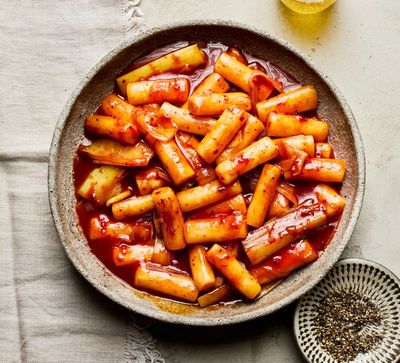
Cylindrical rice cakes (refrigerated or frozen) soak for 10-30 minutes if dry/firm. Stock (anchovy-kelp dashi or water) simmers with gochujang, gochugaru, sugar, soy sauce to make the spicy red sauce. Rice cakes go in; cook for 8-10 minutes until softened and the sauce thickens to a glaze. Fish cakes and boiled egg join in the last 5 minutes. Topped with sesame oil, sesame seeds and spring onion.