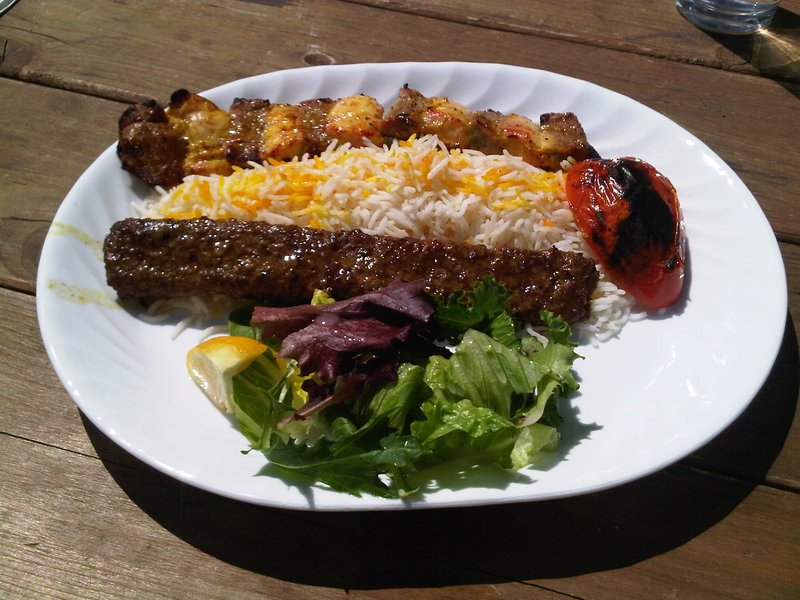
Chelo Kabab Koobideh
Iran's national dish: minced lamb seasoned with grated onion, sumac and saffron, shaped on flat skewers and grilled hard. Served on saffron rice.
Overview
Mince mixes with very finely-grated onion (squeezed dry), salt, pepper, turmeric and a hit of saffron-water. The mixture chills, then forms onto wide flat skewers in long sausage shapes. Charcoal grills are traditional; a hot grill pan or barbecue works at home. The kababs grill for 3-4 minutes per side; whole tomatoes char alongside; rice piles on the plate; everything assembles together.
Ingredients
Kababs
- 700 g minced lamb (or 500 g lamb + 200 g beef; 20% fat)
- 1 onion (large, finely grated; squeezed hard to remove all liquid)
- 1 ½ teaspoons salt
- 1 teaspoon black pepper
- ½ teaspoon ground turmeric
- ½ teaspoon ground sumac (plus more for sprinkling)
- A pinch of saffron (steeped in 2 tablespoons hot water 10 min)
- ½ teaspoon bicarbonate of soda (helps the meat stick to the skewer)
To grill
- 4 ripe tomatoes (whole, on stems if possible)
- 2 long red chillies (whole)
- 50 g unsalted butter
To serve
- Chelo (saffron rice; cooked separately with tahdig)
- Fresh basil
- Mint
- Spring onions (whole)
- Sumac (for sprinkling)
- 4 lavash flatbreads
- Yogurt and cucumber dip (mast-o khiar)
Method
Stage 1 - Mix
- Place the mince in a large bowl.
- Squeeze the grated onion in a clean tea towel - wring out as much liquid as possible.
- Add the onion to the mince with the salt, pepper, turmeric, sumac, half the saffron-water and the bicarb.
- Knead with your hands for 5-7 minutes - really work it. The mixture should become slightly sticky and tight; this is what makes it stick to the skewer.
Stage 2 - Chill
- Cover and refrigerate at least 1 hour, ideally 3.
Stage 3 - Shape
- If using flat metal skewers (the wide-bladed Persian style - the only kind that holds koobideh): wet your hands.
- Take a fistful of the mince mixture (about 150 g) and press onto the centre of the skewer.
- Working from the centre outward, press the meat thinly along the skewer in a long sausage shape (about 20 cm).
- Pinch ridges at intervals along the length with damp fingers - gives the classic ridged koobideh look.
- Repeat for 8 skewers total.
Stage 4 - Heat the grill
- Preheat a charcoal grill to high (or gas barbecue, or a heavy grill pan over high heat).
- Brush grates with oil.
Stage 5 - Grill
- Lay the skewers across the grill (not directly on the grates - suspended between two bricks or rails so air circulates beneath; this is how Persians do it).
- Don't disturb for 90 seconds; rotate 180°; cook another 90 seconds; flip; cook the other side similarly.
- Total time 5-6 minutes - the meat should be just cooked through, with deep char on both sides.
- Grill the tomatoes and chillies alongside, turning, until blistered.
Stage 6 - Plate
- Lay 1-2 grilled tomatoes on each plate, alongside a chilli.
- Pile rice next to it, top with a generous knob of butter and the remaining saffron-water.
- Slide the koobideh off the skewer onto the plate.
- Drizzle butter over the kababs.
- Sprinkle sumac over everything.
Stage 7 - Eat
- Tear lavash; wrap kabab pieces in bread with a smashed tomato, fresh herbs and onion. Or eat with a fork over the rice. Both are correct.
Notes
- Wide flat skewers are the tool: Round skewers don't work - the meat slips and cracks off. Persian-style flat skewers (about 1 ½ cm wide blade) are sold at Middle Eastern grocers and online.
- Squeeze the onion dry: Wet onion makes wet mince that won't stay on the skewer.
- Bicarb in the mix: Untraditional in Iran but a reliable home-cook trick - it tenderises the surface and helps the meat grip the skewer. Skip if you'd rather; just knead longer.
Storage
- Best fresh from the grill. Freezes well shaped and uncooked on the skewer (3 months).
Recipes mentioned here
Lavash
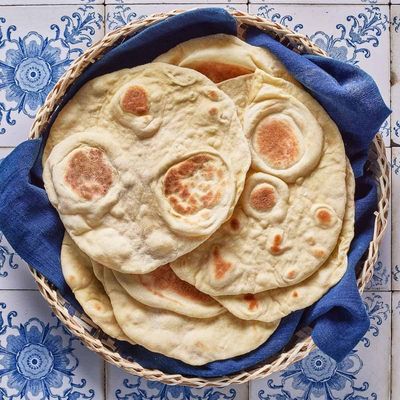
The paper-thin flatbread of the Caucasus, on UNESCO's Intangible Cultural Heritage list since 2014, and the bread that wraps every grilled meat from Yerevan to Baku. You make a dough from just three things (flour, water and salt) that is firmer than a pasta dough and smoother than a bread dough. Thirty minutes' rest under a damp cloth lets the gluten relax enough to roll. The dough divides into eight balls, each rolled paper-thin (you should be able to read newsprint through the sheet before it goes in the pan). Onto a heavy dry skillet over high heat for sixty to ninety seconds per side, just long enough to puff and blister. Stack the cooked sheets under a clean tea towel as you go so they stay pliable. Eaten the same day, torn around grilled meat, wrapped around kebabs, used as a plate, used as a napkin.
Tahdig
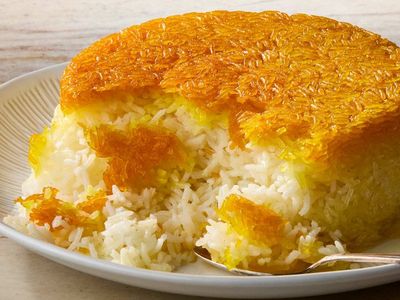
Basmati rice is rinsed and soaked. It is parboiled briefly in salted water (al dente), drained. The pot is heated with butter, oil and saffron-water. A layer of yogurt-and-rice mixture forms the crust at the bottom; the rest of the rice is piled on top in a mound. The lid is wrapped in a tea towel; everything steams for 45 minutes; the bottom crisps. Inverted onto a platter, the golden tahdig sits on top.
More like this
Mafé
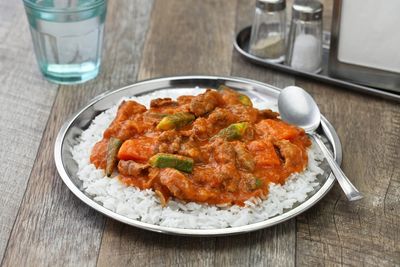
Bone-in beef or lamb is browned, then simmered with onions, garlic, tomato and stock. Smooth peanut butter is whisked in halfway and the stew thickens to a velvety coating. Chunks of cassava, sweet potato and cabbage cook in the sauce towards the end. Serve over plain steamed white rice.
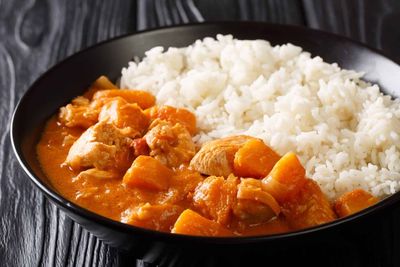
Domoda
Chicken thighs (or lamb) are browned, onions and tomato cooked down with garlic and a single whole chilli, then the meat simmers in stock until tender. A loose peanut paste is stirred in for the final 20 minutes, kept thin enough to ladle. Sweet potato or pumpkin softens in the sauce. A spoon of lime juice at the end balances the richness.
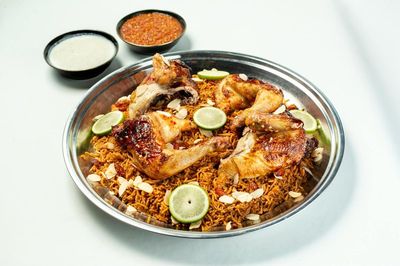
Kabsa
Saudi Arabia's national dish, the one platter you'll meet at almost every gathering from family lunch through wedding banquet. You brown chicken pieces or lamb shoulder hard in a heavy pot, then build a base of onion, garlic and ginger softened in the same fat, with tomato and a spoonful of baharat (or a dedicated kabsa spice mix) blooming until the kitchen fills with cardamom and cinnamon. The protein simmers in tomato and stock until it's tender and pulling away from the bone, then long-grain rice goes in to cook absorption-style in the same liquid, drinking up every layer of flavour the broth carries. You finish with almonds toasted in butter, raisins plumped briefly, and a fresh salsa of tomato, onion, chilli and parsley spooned on the side to cut the richness. Eaten communally from the centre platter, with hands or a long spoon.
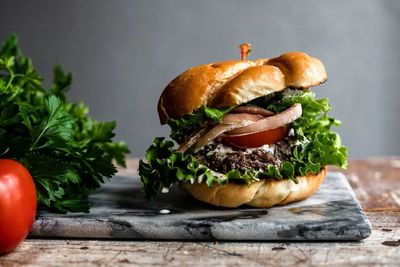
Kofta Burger
Lebanese kofta, sometimes spelled kafta, is minced lamb (often with a little beef) seasoned with grated onion, parsley and the warm spice blend known variously as baharat, sabaa baharat or seven-spice: allspice, black pepper, cinnamon, cloves, nutmeg, cumin and coriander. Traditionally it is moulded around flat metal skewers and grilled over charcoal at a mangal, where it sears fast and stays juicy. Shaping the same mince into a patty for a flatbread sandwich is a natural extension and one you will find in Beirut bakeries and Levantine takeaways from Sydney to Detroit. What makes this burger taste authentic and not just a "Middle-Eastern-spiced lamb burger" is the grated onion: pulled across a box grater so it dissolves into the mince and seasons every gram from the inside, releasing moisture as it cooks. Squeezing out the excess liquid first keeps the patty from falling apart. The sauce is a loosened tahini-yoghurt, tart with lemon and garlic, and the contrast comes from sumac-dusted onions whose sharp, almost berry-like sourness cuts through the lamb's richness. Wrap it in toasted khobz or a soft brioche, depending on the occasion. Difficulty is low. The only skill is restraint with the mince: knead just enough to bind, no more.