American

Mainstream American cooking shaped by waves of immigration and regional invention. The South gives buttermilk fried chicken, biscuits, pecan pie and barbecue; the Midwest gives meatloaf and apple pie; New England gives clam chowder; the West gives tacos, burritos and sourdough. Butter, bacon and brown sugar lean heavy; the Big Mac and the bagel both belong here.

67 recipes

Browse by section

Recipes

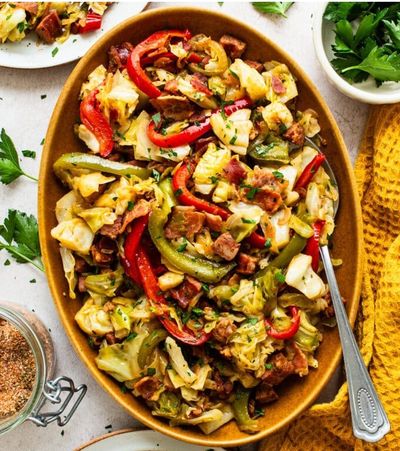
Bacon Fried Cabbage and Sausage

Bacon Fried Cabbage and Sausage

A heartier descendant of Southern fried cabbage and its more substantial sibling, this version is a complete dinner rather than a side. Bacon fat is the carrier through every step: it crisps first, then andouille browns in the rendered fat, then onion and bell peppers caramelise, then cabbage steams down. The result tastes deeply smoked and just slightly sweet (from the brown sugar and the caramelised onion), with a sharp Dijon-and-vinegar tang cutting through the richness and Cajun seasoning bringing warmth across the back. Texturally it's a stir-up: tender cabbage with crisp bacon edges, andouille bite-pieces with their snap intact, peppers softened but not collapsed. Smell when the bacon hits the pan starts the dish off correctly. Not difficult but a 35-minute project that wants the pan to stay hot throughout. A Southern weeknight dinner across the Carolinas and Georgia, traditionally with cornbread on the side to mop the bacon juices; the dish lives in the same neighbourhood as Hoppin' John and red beans and rice without being either.
50 minutes Serves6
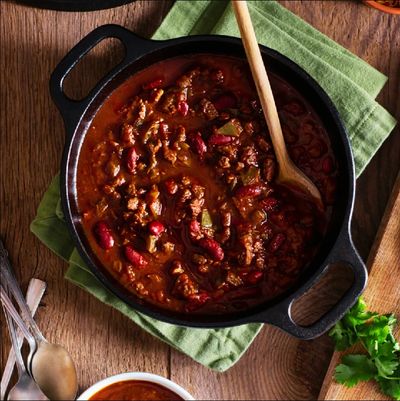
Beef Chili

Beef Chili

The American household chili, sitting somewhere between Texas-style "no beans" purism and Cincinnati-style "chili over spaghetti" eccentricity, this one has beans, isn't sweetened with cinnamon, and lands solidly in the middle of the bell curve. The flavour is a Tex-Mex spice rack working in concert: chili powder (the broad warmth), cumin (the earthy backbone), smoked paprika (the deep smoke), chipotle powder (the slow-burn heat), brown sugar (a quiet balance), garlic powder (the savoury underline). Fire-roasted tomatoes are the technical detail that lifts this above a generic chili, charring the tomatoes before canning adds a roasted note that ordinary diced tomatoes can't supply. Texture is chunky and brothy rather than thick-and-pasty (this isn't a chili-mac chili), with kidney beans giving substance and pieces of bell pepper still holding their bite. Smell is cumin and smoked paprika on browned beef. Genuinely easy and incredibly forgiving, chili is one of the few dishes that's better the day after it's made, so it tolerates a longer simmer if you have it. American cold-weather bowl food, eaten across every state from Texas to New York, with regional toppings (sour cream, cheese, raw onion, cornbread, oyster crackers) that say more about the cook than the dish.

45 minutes Serves8-10
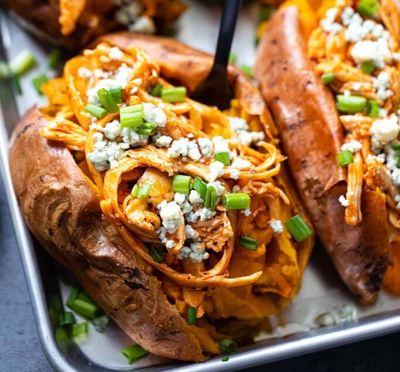
Buffalo Chicken Stuffed Sweet Potatoes

Buffalo Chicken Stuffed Sweet Potatoes

A lighter remix of the classic Buffalo wings format: the same flavour trio (Frank's RedHot, chicken, blue cheese) without the deep-fryer and without the celery sticks. The sweet potato is the smart move, the natural sugar in a roasted sweet potato is exactly the right counter to Frank's sharp vinegar heat, where a plain baked Russet would just be neutral background. The blue cheese plays its usual cooling-funky role, providing salt and creaminess to bridge the sweet potato underneath and the fiery chicken on top. Three textures stacked: soft caramelised sweet potato flesh, juicy shredded chicken in sauce, cool crumbled blue cheese. Smell is roasted sweet potato hitting Frank's. Genuinely easy weeknight cooking, and even easier with the rotisserie-chicken shortcut: 10 minutes of active work, an hour of mostly-passive oven time. A modern American casual-dinner dish (no traditional roots; it emerged from food blogs and meal-prep culture in the 2010s), and one of the cleaner examples of remixing a bar food into a weeknight meal without losing the flavour identity.

1 hour 10 minutes Serves4
Buttermilk Fried Chicken

Buttermilk Fried Chicken

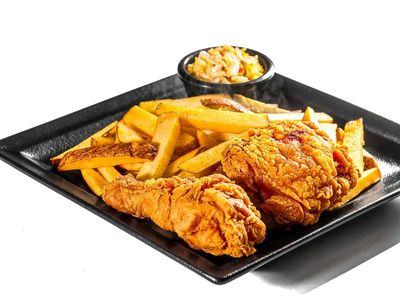
The Southern Sunday dinner that defined a region. You start the night before, sinking bone-in chicken pieces into a buttermilk brine spiked with hot sauce and garlic so the acid tenderises the meat and the seasoning works its way deep. The next day comes the double-dredge: a roll through heavily-seasoned flour, a brief dip back in the buttermilk, then another roll through the flour, which is what gives the finished bird its craggy, almost lacy crust. Into 175°C oil for twelve to fifteen minutes per piece, turned every few minutes so the crust browns evenly. You're done when the coating is deep mahogany and a thermometer in the thigh reads 75°C. Drain on a wire rack rather than paper so the steam escapes and the crust stays shattering. Eat hot with a stack of pickles, a soft biscuit and a bottle of hot sauce on the table; cold the next day at the kitchen counter is its own justified American ritual.

40 minutes Serves4
Buttermilk Pancakes

Buttermilk Pancakes

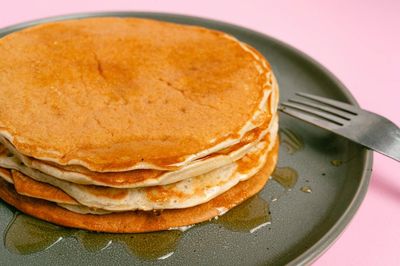
Tall, soft, caramel-coloured pancakes that pour into the kind of weekend breakfast you don't rush. You whisk the dry ingredients in one bowl, the wet (buttermilk, eggs, melted butter, a thread of vanilla) in another, then combine briefly and stop while lumps are still visible. Smooth batter develops gluten and gives you chewy, dense rounds rather than the cloud-soft stack you're after. Ten minutes' rest lets the baking powder and bicarb start working with the buttermilk's acid, which is where the lift comes from. You cook them on a medium-low pan with a small knob of butter, and you flip when bubbles dot the surface and the edges look set. Stack three high, drown in butter and maple syrup, scatter berries if there are any in the fridge. Sunday breakfast, slow morning, second pot of coffee.

30 minutes Serves12
Chicken Piccata Meatballs

Chicken Piccata Meatballs

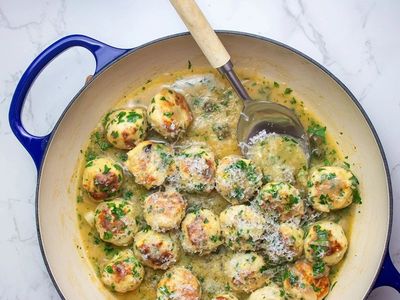
Chicken piccata, the Italian-American mid-century classic of pounded chicken cutlets in a lemon-butter-caper pan sauce, reshaped into meatball form, which trades the precise look of cutlets for a juicier, more forgiving texture. The flavour is unmistakably piccata: butter as the body of the sauce, lemon as the brightness, capers as the salty-vinegary punctuation. Underneath sits a chicken meatball lightened by ricotta (it keeps the lean ground chicken from going dry and dense) and parmesan, with parsley, garlic, smoked paprika and a pinch of red pepper flakes lifting the seasoning. The meatballs themselves stay tender because the mix isn't overworked and because they finish cooking in the sauce rather than the pan. Smell is melted butter, lemon and capers, the same smell every Italian-American restaurant kitchen has on a Tuesday lunch service. Easy enough for a weeknight, restrained enough not to feel like a stand-in dish; the technique is essentially "make meatballs, build pan sauce, return meatballs". Serves over pasta, rice or crusty bread to mop the sauce.

45 minutes Serves4
Club Sandwich

Club Sandwich

The diner triple-decker reworked with a poached egg sitting on top - what an American sandwich shop would call a club with eggs, and what a French brunch menu would simply serve as the house club. Two slices of buttered, toasted bread layered with sliced grilled chicken, crisp smoked bacon, shredded iceberg dressed in mayo and a sharp pinch of onion, ripe tomato brightened with vinaigrette, and the soft poached eggs draped over the top so the yolks break into everything underneath. The pleasure is in the layering: a different texture in every bite, the bread crisp enough to hold structure but soft enough to give. You build it carefully, slice it on the diagonal, and pin the halves together with toast picks so the whole tower stays upright on the plate. Lunch counter at noon, light supper after a long afternoon, eaten with chips on the side and an extra napkin within reach.

15 minutes Serves2
Creamy Clam Soup

Creamy Clam Soup

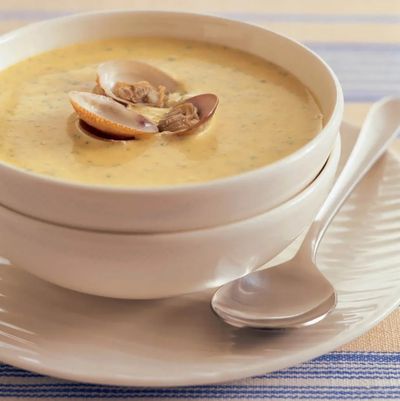
A creamy clam soup that takes the New England chowder format and smooths it out into something closer to a French bisque. You steam fresh clams open in a covered pot, strain the briny liquor (which is half the dish's flavour), then soften onion, leek, carrot and swede in butter before pouring the stock back in with a handful of short-grain rice. The rice cooks down to nothing visible but thickens the soup naturally, which is why this version comes out velvet-smooth after a turn in the blender. Cream goes in last, off the heat so it doesn't split, and the reserved clam meat drops back into the pan along with chopped parsley. You finish each bowl with a few clams left in their shells balanced on the surface for the look of it. Crusty bread on the side, a sharp white wine in the glass, and a small bowl of black pepper to grind over.

1 hour Serves4
Crispy Honey Garlic Chicken

Crispy Honey Garlic Chicken

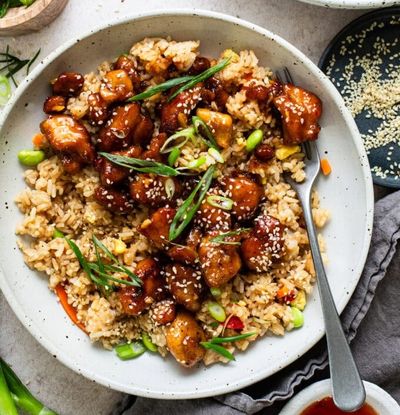
An Asian-American takeout standard reimagined for the home kitchen, with one specific upgrade: 10 cloves of garlic, chopped rather than minced, so the pieces stay visible and bite back. The flavour is the canonical sweet-salty-spicy balance of American Chinese cookery, honey for sweetness, soy for salt and umami, sweet chilli sauce (Mae Ploy or similar Thai bottled brand) for vinegared chilli warmth, garlic for sharpness across the back. Crisp comes from a cornstarch dust on the chicken, which gives a more even, lacier crust than flour does and stays crisp longer once the sauce hits it. The chicken thighs themselves stay juicy because they're cubed, not pounded; the small pieces cook fast and the seasoning penetrates. Smell when the chicken hits the sauce is honey-and-soy hitting hot oil, which is one of the more universally appealing kitchen smells. Easy and fast, active cooking under 20 minutes once the marinade has rested. The dish has no claim to traditional Chinese cookery; it's the product of decades of evolution in American Chinese restaurants and the home-cook adaptations that followed.

1 hour 30 minutes Serves4
Eggs Benedict

Eggs Benedict

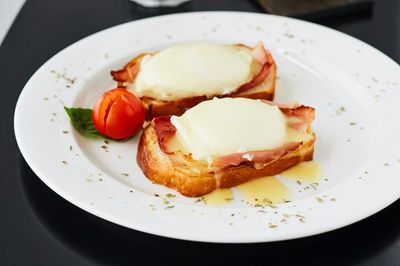
The Sunday brunch icon, and the dish people learn hollandaise for. You build the sauce first, whisking egg yolks with water and lemon over a bain-marie until they ribbon, then drizzling in warm clarified butter while you whisk steady and even until the bowl holds something glossy and thick. The hollandaise will wait for you in a warm spot while you poach the eggs - vinegar in barely-simmering water, a gentle whirlpool, three minutes for a runny yolk - and toast the muffins, and warm the ham. Then everything stacks at speed: muffin, ham, egg, hollandaise spooned generously over, a scatter of chives. You eat immediately, because every component is at its best within a minute of plating and falls off a cliff after five. Looks fancy on a tablecloth; rewards twenty focused minutes of work.

30 minutes Serves4
Hamburger Steaks with Onion Gravy

Hamburger Steaks with Onion Gravy

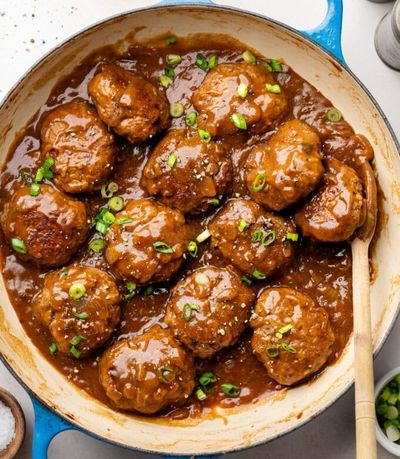
American Southern diner food and a close cousin of "Salisbury steak": browned ground beef patties simmered in a thick brown gravy of slow-cooked onions, beef broth and (the small unembarrassed shortcut) a Lipton Beefy Onion soup packet that does the work of a long-built stock without taking the time. The packet is the dish's signature; carries glutamate depth and dried-onion concentrate that gives the gravy its diner-counter character. Around it, the patties are seasoned bigger than a regular burger, Cajun seasoning, Sazon, garlic paste, Worcestershire, a touch of maple syrup or honey for sweet undertone, so the meat itself carries flavour even before the gravy hits it. The result is salty-savoury-rich, with sweet caramelised onion bite-pieces in the gravy and a meaty depth that just goes on. Smell is browning beef, onions, and gravy. Genuinely easy and a forgiving dinner; the only thing that ruins it is overworking the beef mince (which makes the patties tough). The pairing with mashed potatoes and peas is the Southern Sunday-lunch convention and the way the dish is usually plated.

1 hour 40 minutes Serves6
Honey Chipotle Fried Chicken Sandwich

Honey Chipotle Fried Chicken Sandwich

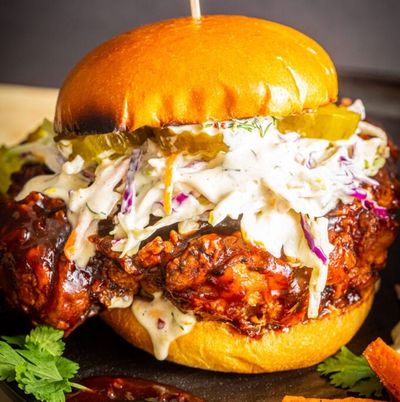
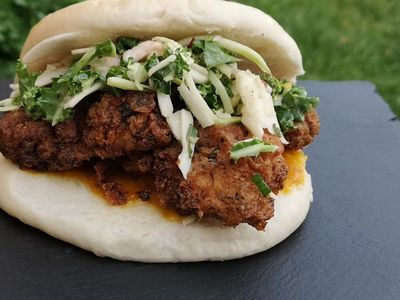
Three flavour systems stacked on a single sandwich: a buttermilk-brined fried chicken thigh (the American Southern foundation), a smoky-sweet chipotle-honey-soy glaze (the modern flavour-bomb that took fast-food fried chicken in the 2010s past plain Buffalo), and a Cajun-lemon-dill aioli slaw with dill pickle chips (the cool, acidic, salt-heavy counter that keeps the sandwich from being a sweetness-overload). The chipotle-honey is the dish's identity, molasses-deep, smoky from canned chipotles in adobo, sticky-sweet from honey and brown sugar, savoury from the soy that grounds it. Pickle juice in the buttermilk brine is the small upgrade that pushes the chicken from good to noticeably better; the salt and acid penetrate the meat and tenderise further than buttermilk alone. Smell is fried chicken with a wave of chipotle-and-honey lifting off the warm bun. Easy enough to make at home and genuinely better than most chain-restaurant versions; this isn't traditional Southern cooking, it's the modern American fried-chicken-sandwich-renaissance dish, the kind of build that emerged from food blogs and Black-American chef culture across the 2010s and 2020s.

4 hours Serves4
Jewish Brisket

Jewish Brisket

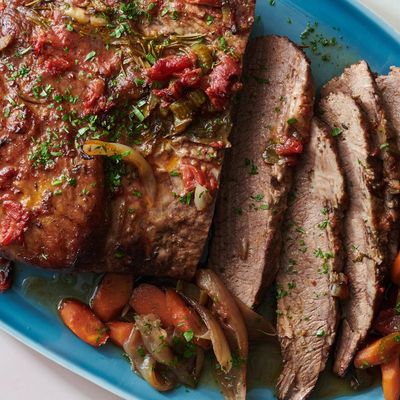
This is the brisket that anchors every Ashkenazi holiday table - Rosh Hashanah dinner, the Passover seder, a Friday-night Shabbat. You sear the meat hard until the surface is mahogany, then build a slow braise on its rendered fat: onions caramelised down to gold, garlic and tomato paste deepened with paprika and brown sugar, wine and stock pulling the lot together. The brisket goes back in fat-side up and the pot disappears into a low oven for three hours plus, until a fork meets no resistance. The trick almost every recipe insists on is the overnight rest. You cool the meat in its sauce, slice it cold against the grain (warm brisket shreds, cold brisket slices clean), then reheat the slices in the sauce before serving. Spoon the onion-rich gravy generously over mashed potato, kasha or buttered egg noodles.

4 hours 20 minutes Serves8
Manhattan Seafood Chowder

Manhattan Seafood Chowder

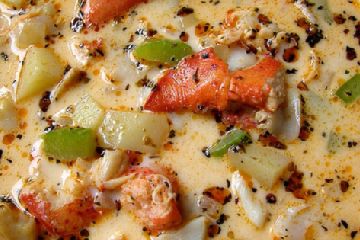
New York's tomato-based answer to New England's milk-and-cream chowder, and the source of a regional argument that has been going on for a hundred years. You start by softening bacon with onion, celery and garlic in butter, then add potatoes, thyme and fish stock and let them simmer until the potatoes are tender. The clams go in next under a lid for a few minutes until they open; you pull most of them out of their shells (keeping a few intact for the look of it) and strain the liquor back into the pot. Then tomato purée, chopped tomatoes, cod and prawns, and a final low simmer of just three minutes so the seafood stays tender. A generous scatter of flat-leaf parsley at the end lifts the lot. Serve with crusty bread to mop the brothy red sauce, and ignore anyone from Boston who tells you it's not a chowder.

45 minutes Serves4
Meatloaf

Meatloaf

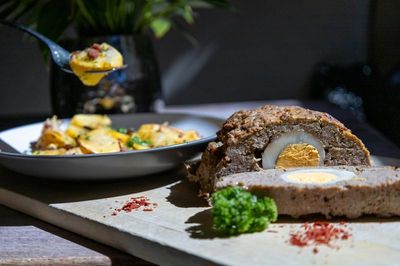
The mid-century Sunday supper that every American household above a certain age has its own version of. You soften onion and garlic in butter and let them cool, soak breadcrumbs in milk to a soft panade (this is the structural trick that keeps the loaf from going dense and bricklike), then mix everything into the beef and pork with egg, Worcestershire, mustard and a handful of fresh herbs. The mix goes loosely packed into a tin so it stays tender rather than tight, brushed thickly with a glaze of ketchup, brown sugar and a touch more Worcestershire, and into a moderate oven for the best part of an hour. You glaze again at the end and let it tan in the heat for fifteen more minutes until the top has gone deep mahogany and slightly tacky. Slice thick and serve with mashed potato and a green vegetable on the side. The leftover slab cold the next day in a sandwich is the dish's quiet second life.

1 hour 35 minutes Serves6
New England Clam Chowder

New England Clam Chowder

The benchmark New England chowder: creamy, milky-white, thickened by potato starch rather than flour, and named in the same regional argument that produces Manhattan's red tomato version up the coast. You steam the clams open in a heavy pot with a splash of water, strain the precious liquor (which is half the dish's flavour) through wet muslin, then start the soup proper with bacon rendered down in oil until golden and sweetly smoky. Onion, garlic and diced potato follow, then the reserved clam liquor and a measure of fish stock, and finally the milk poured in and brought back to a careful boil. You simmer covered until the potatoes are tender, uncover for the last ten minutes to thicken slightly, then stir in cream, the picked clam meat and chopped parsley at the very end with the heat low (cream split in a chowder is a small disaster). A few clams left in their shells on top of each bowl, a handful of oyster crackers on the side, and a winter afternoon's worth of comfort in front of you.

55 minutes Serves4
One-Pot Creamy Beef Pasta

One-Pot Creamy Beef Pasta

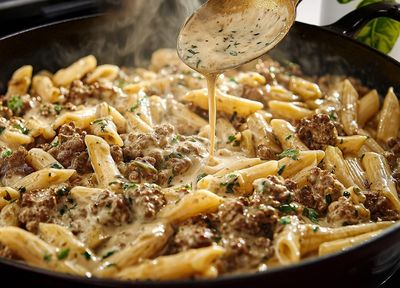
An American weeknight pasta that compresses a Hamburger Helper-style box meal into a single pot, an open package of fresh ingredients, and 35 minutes of low-effort cooking. The trick is that the pasta is cooked directly in the broth (no separate boil, no drain), which means the starch released from the rigatoni stays in the pot and helps thicken the sauce when the cream and cheese are folded in at the end. Flavour is sharp-savoury rather than red-sauce-comforting, sharp white cheddar gives a tangy bite, parmesan adds salty umami, heavy cream binds the lot into something almost like a stovetop mac-and-cheese with ground beef stirred through. Rigatoni's wide ribbed surface clings to the sauce in a way that smoother shapes can't. Smell is browned beef and melted cheese. Genuinely easy and a single pan to wash; the only technical points are using freshly shredded cheese (pre-shredded supermarket bags have anti-caking starches that prevent smooth melting) and letting the off-heat rest do its job. A modern American weeknight staple that emerged from one-pot pasta TikTok and food-blog culture in the 2010s-2020s.

40 minutes Serves6
Philly Cheesesteak

Philly Cheesesteak

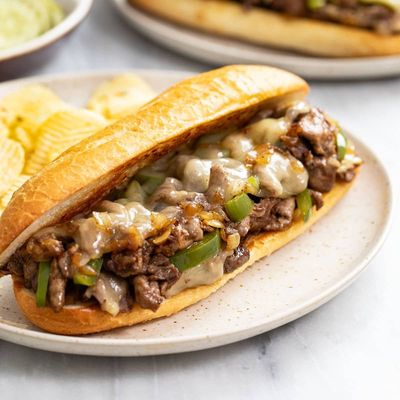
Philadelphia's defining sandwich, and one of the few American dishes where the technique matters more than the recipe. You start by sticking a good ribeye in the freezer until it firms up, because the dish's identity is in the slicing: paper-thin shavings against the grain that you simply cannot get from room-temperature beef. On a wide hot griddle you sweat down onion (and bell pepper or mushrooms if your South Philly conscience allows them) until just past gold, push them to one side, and lay the shaved beef in a single layer on the cleared steel. Sixty seconds in, you start chopping the meat with the spatula edge as it cooks, folding the onions back in, hitting it with salt and pepper. Cheese goes over the top off the heat (provolone for the crowd-pleaser, American singles for the nostalgic drip, Cheez Whiz if you're going strictly by South Philly), and you cover for half a minute to melt. Scooped straight into a soft hoagie roll that's been toasted in the rendered fat. Wrap, fold in half, eat at the counter while the cheese is still hot.

1 hour 27 minutes Serves2
Pulled Pork

Pulled Pork

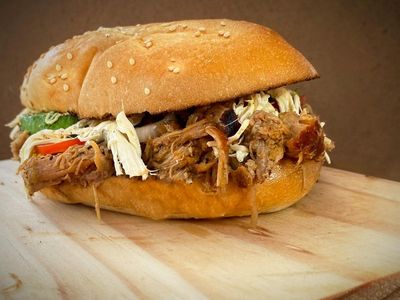
Pulled pork is the slowest, simplest hero of American Southern barbecue. A whole bone-in pork shoulder, often called a Boston butt despite coming from the front of the pig, is rubbed with salt, sugar and spices and left to absorb seasoning overnight. The next morning it goes onto a smoker or a low oven and stays there for eight or nine hours until the collagen has fully broken down and a fork sinks in like wet sand. There are two great traditions: the eastern North Carolina style, where the whole hog is cooked and dressed with a thin cider vinegar and chilli flake sauce; and the Memphis or Kansas City style, where shoulder is the cut of choice and the sauce leans sweeter and tomato-based. The recipe here splits the difference: a Memphis-style sweet-and-savoury rub on the meat, then a sharp Carolina vinegar sauce to dress the pulled strands. The technique is forgiving. Internal temperature is the only thing that really matters, and you are looking for 95 degrees, well past the point where most cookbooks stop. That last twenty degrees is where the connective tissue finally surrenders. Wrap it in foil with a splash of cider when the bark sets, rest it long, and pull it warm. Pile onto a soft white bun with cold slaw, and you have the easiest crowd-feeder in the BBQ canon.

8 hours 20 minutes Serves8
Roast Turkey

Roast Turkey

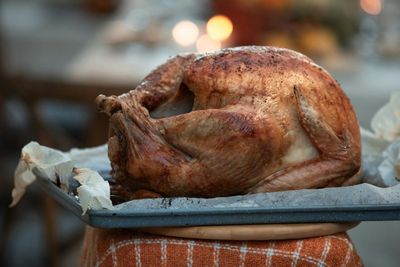
A whole roast turkey is the centrepiece of the American Thanksgiving table and most American Christmas tables too. It is one of the simplest large roasts to cook well as long as you accept two truths: a turkey breast is done at 65°C internal while a turkey thigh is done at 75°C, so you cannot cook them both to perfection by clock alone, and the bird benefits enormously from being dry-brined the day before so the skin dries out and the meat seasons through. The recipe below is the standard American home approach: a 24-hour dry brine with salt, then a herb butter loaded under and over the skin, then roasted at moderate heat (initially low to gently cook the thighs, finished hot to crisp the skin and bring the breast up to temperature). The pan drippings become a quick gravy at the end. This version specifically fills a manifest gap on the Thanksgiving editorial collection where Sunday Roast Chicken has been standing in. Use a 5-6 kg bird for 8-10 people with leftovers; scale brine and butter proportionally for a larger or smaller turkey. Difficulty is moderate; the active work is short but you must commit to the overnight brine and to using a meat thermometer.

27 hours 30 minutes Serves8-10
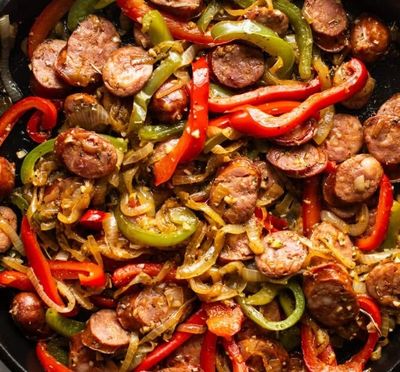
Sausage and Peppers

Sausage and Peppers

The Italian-American skillet basic that nearly everyone forgets about and then rediscovers, the kind of dish you can make on a Tuesday with whatever sausage is in the fridge and have dinner on the table 25 minutes later. The flavour leans on three things: pre-cooked smoked sausage (kielbasa is the gentle option, andouille turns it Cajun, sweet Italian is the traditional Sunday-supper-in-Bensonhurst choice), peppers and onion caramelised until they're sweet and slightly tacky, and a generous amount of fresh garlic added at the end so it scents the dish without burning. Italian seasoning (or herbes de Provence) rounds the herbal note. Smell when the garlic hits hot oil at the end is the moment you know it's nearly done. Easy enough that this is what you cook when you're tired; honest enough that it doesn't suffer for it. The dish has its strongest roots in Southern Italian immigrant kitchens of the early 20th century in New York and New Jersey, where bulk sausage and bulk peppers were both cheap and where the leftovers shoved into a hoagie roll became the lunch the next day.

30 minutes Serves4-6
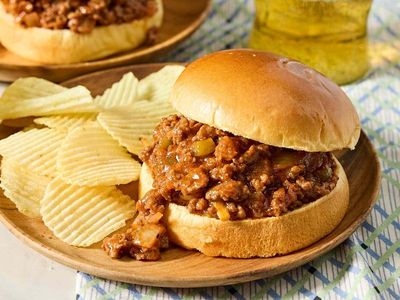
Sloppy Joe

Sloppy Joe

The American school-cafeteria sandwich grown into a proper weeknight dinner. You brown beef mince hard with onion and green pepper until it's deeply caramelised on the bottom of the pan, stir in garlic for a moment, then build the sauce around it: ketchup and tomato purée for body, brown sugar and Worcestershire for sweetness and depth, mustard and cider vinegar for the sharp counter, paprika for the warmth across the back, a splash of beef stock to loosen the lot. You simmer for fifteen minutes or so until the sauce clings to the meat rather than pooling around it (sloppy is allowed, soupy isn't). Taste at the end and adjust: more vinegar if the sweetness has run away, more sugar if the tang is too sharp, more salt if it needs grounding. Pile generous spoonfuls into toasted soft burger buns and eat over the plate, dill pickle in one hand, chips on the side, the small pool of sauce that escapes mopped up at the end with the last corner of bun.

40 minutes Serves4
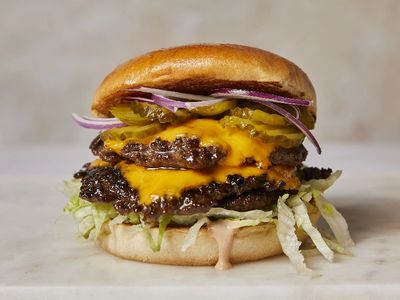
Smashburger

Smashburger

The smashburger is the American griddle cook's answer to a thick pub patty: take a loose ball of fatty ground beef, slap it onto a ripping hot flat-top, and press it paper thin so every square millimetre of meat hits the steel. What you get back is a patty with a brittle, almost potato-chip-like crust on the underside and a juicy, just-cooked interior, all in the space of ninety seconds. The technique came out of small Midwestern diners in the mid-twentieth century, but the modern revival is often credited to George Motz and the wave of regional burger documentation that followed. The Maillard reaction is the entire point here. A thick patty cooked rare on the inside has a thin band of seared flavour; a smashed patty is almost all crust. Pair that with cheap, salty American cheese that melts into the crags, a pillowy potato bun toasted in beef fat, and a sharp pickle, and you have one of the most satisfying things you can cook at home in under twenty minutes. Difficulty is low, but two details matter: the pan must be properly hot before the beef touches it, and you must only press once, in the first ten seconds. Anything more and you squeeze out the juices you worked to keep.

25 minutes Serves4
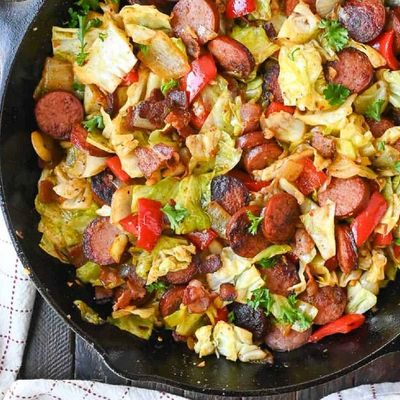
Southern Fried Cabbage and Sausage

Southern Fried Cabbage and Sausage

A lighter, faster Southern cabbage dish than its heavier bacon-laden sibling, 30 minutes start to finish, one skillet, a side or a main. The cabbage is the centre of attention here rather than the meat. Two stages of cabbage cooking is the small technical move: half goes in first under a lid and steams down, the rest joins uncovered to keep its bite, so the finished dish has two textures (soft, tender pieces and slightly crisp pieces) rather than uniform mush. Brown sugar cuts the bitter edge that long-cooked cabbage develops; apple cider vinegar brightens the rich fat; Cajun seasoning brings warmth and a small nutmeg pinch deepens it without being identifiable. Andouille or kielbasa rounds provide the smoke and the salt. Smell is browned sausage hitting cabbage. Easy, weeknight-fast, forgiving on quantities. A Southern home-cooking standard from the Carolinas through Texas, where cabbage is a year-round cheap vegetable and smoked sausage is in every fridge; the recipe has dozens of family-specific variants but the brown-sugar-and-vinegar balance is the constant.

30 minutes Serves4-6
Spicy Coconut Fried Chicken Sandwich

Spicy Coconut Fried Chicken Sandwich

A Caribbean reimagining of the American fried chicken sandwich, by Chef Winslow: every part of the sandwich carries coconut in some form, and Scotch bonnet runs through the whole thing as the heat carrier. The chicken thighs marinate in coconut milk and minced Scotch bonnet (the coconut tenderises and mellows, the Scotch bonnet penetrates fierce); the coleslaw is dressed not with mayo but with coconut milk and vinegar (lighter, brighter than a classic slaw); and the bun is Jamaican coco bread, which is a soft enriched bread made with coconut milk in the dough, slightly sweet and pillowy. Mango-Scotch-bonnet sauce on the bun is the fourth coconut-and-bonnet ladle. The flavour is unmistakably Caribbean rather than American Southern, sweet, hot, layered, with the coconut mellowness softening what would otherwise be a punishing heat. Smell is coconut milk hitting hot oil. Not difficult; the timing matters because the slaw wants to chill while the chicken marinates and fries. A modern Black-American chef creation from the 2010s-2020s rebooting the fried chicken sandwich format around Caribbean roots, and one of the cleaner examples of how that tradition has expanded the format.

1 hour 45 minutes Serves3
Super-Crunch Chicken Tenders with d'Ussé Honey Sauce

Super-Crunch Chicken Tenders with d'Ussé Honey Sauce

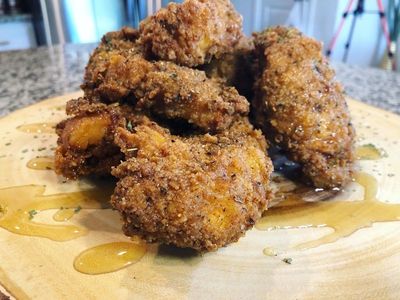
A competition-winning fried tender from chef Jessica Fulks where everything is built around a single textural trick: the dredge is intentionally lumpy, made by drizzling a small amount of buffalo-sauce marinade into the seasoned flour so it forms small craggy clumps the tenders pick up when coated. Those clumps fry up into a deeply uneven, shatter-crispy crust that you simply cannot get from a smooth flour dredge, this is the same technique Korean fried chicken uses, and it's the technique fast-food chains can't replicate at scale. Underneath, the chicken stays juicy because it brined briefly in a high-acid hot-sauce mix. The flour itself is heavily seasoned (salt, cracked pepper, garlic powder, cayenne, paprika, dried basil) so flavour penetrates every craggy edge. The honey-D'ussé sauce on top is the unexpected finish: warm honey thinned with cognac (D'ussé is the spec, but any cognac or brandy works), drizzled over the warm tenders so the alcohol carries the honey deep into the crevices. Smell is fried chicken with a faint burnt-sugar-and-spirits lift. Not hard but the clumpy-flour move is critical; smooth your dredge and you have ordinary tenders. A modern Black-American chef creation that's spread across the chef-driven fried chicken scene of the late 2010s and early 2020s.

1 hour 15 minutes Serves4
Texan Chilli con Carne

Texan Chilli con Carne

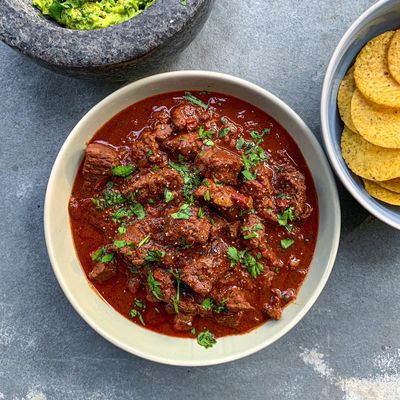
The Texan position on chilli is firm: cubed chuck steak (never ground), no beans, no tomato. The flavour comes from the chillies themselves. Dried whole chillies - ancho for sweetness and body, guajillo for fruitiness, chipotle for smoke - are toasted briefly, soaked in hot stock, then blitzed into a deep red paste. Beef chuck is seared in batches, simmered slow with the paste, ground cumin, dried oregano (Mexican if you can find it), garlic and stock. Cooked for three hours until the beef falls apart on the spoon. Finished with masa harina to thicken slightly, and lime juice to lift. Served with simple sides: cornbread, sour cream, pickled jalapeños, raw onion. Beans on the side if you must, never in the pot.

3 hours 50 minutes Serves6-8
Texas Hot-Link Sausage

Texas Hot-Link Sausage

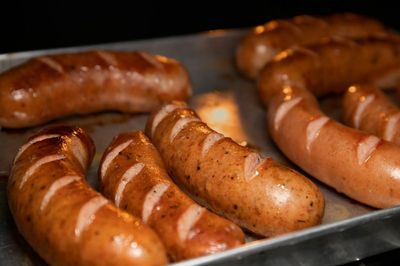
The Texas hot link belongs to East Texas BBQ, a distinct tradition that grew out of the Black-owned grocery store and smokehouse culture of small towns like Pittsburg, Marshall and Tyler. It's a different animal from the Central Texas brisket houses an hour west: meat-market sausage built around aggressive seasoning, heavy on cayenne and black pepper, with a coarser grind than a hot dog and a noticeable beef-and-pork blend. The Pittsburg Hot Link, originating at H.A. Lawrence's in 1898 and still made in the town today, is the most famous version, but every East Texas smokehouse has its own recipe. What unites them is heat (real cayenne heat, not theatre), a deep red colour from sweet and hot paprika, a coarse texture from hand-mixed beef chuck and pork shoulder, and slow smoking over post-oak until the casings turn nearly black. For the home cook without a stuffer or a smoker, the technique adapts well: a mix of coarse-ground beef and pork is seasoned aggressively, stuffed (or formed into skinless coils), then slow-cooked on a covered grill set up for indirect heat with a small handful of wood chunks for smoke. The flavour is direct: hot, peppery, fatty, smoky, with enough garlic and onion to balance. Service in East Texas is purist: sliced or whole on a sheet of butcher paper, with white bread (for the fat), pickles, raw onion, hot sauce and yellow mustard. No barbecue sauce; the seasoning is the seasoning.

3 hours 45 minutes Serves6
Three-Cheese Spinach Manicotti

Three-Cheese Spinach Manicotti

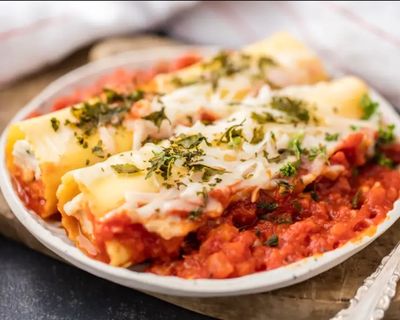
Italian-American baked pasta in the same family as stuffed shells and lasagna, with manicotti's particular advantage: each diner gets clean, individual tube-portions rather than a slice of communal layered bake. The filling is the heart of the dish, ricotta as the soft base, mozzarella for stretch, parmesan for salt and umami, blanched spinach folded through to keep it from going one-note, and fresh herbs (parsley, basil) plus garlic paste, oregano and a pinch of red pepper flakes to lift the whole thing off "white-cheese". Tomato basil sauce underneath and on top, more mozzarella scattered to brown. The bake comes out bubbling around the edges and lightly browned on the cheese top. Smell is the Italian-American canon: tomato, oregano, melted mozzarella. Easy weeknight assembly once you've cooked the shells, with a piping bag making the filling step substantially less frustrating. A staple of red-sauce restaurant menus and Italian-American family dinners since the postwar era; the technique came across with southern Italian immigrants, but the ricotta-and-mozzarella-heavy filling and the jarred tomato basil sauce make this the American version rather than something you'd order in Naples.

40 minutes Serves4-6