

Mongolian

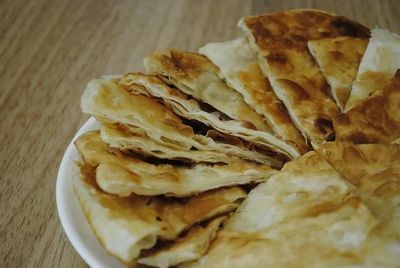
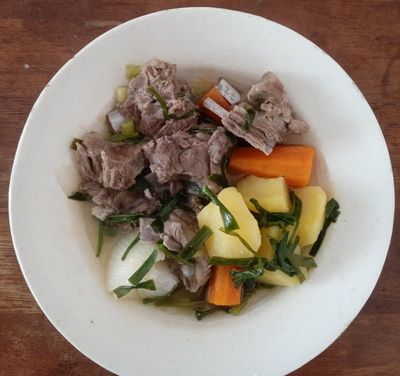
Steppe cuisine - meat-heavy, dairy-rich, fresh-vegetable-light, shaped by nomadic herding. Buuz (steamed mutton dumplings), khuushuur (fried meat pies), tsuivan (hand-cut noodles with mutton) and bansh (small boiled dumplings) anchor the table. Suutei tsai (salty milk tea) is breakfast, lunch and supper. Tsagaan Sar (Lunar New Year) brings stacked towers of boortsog (fried biscuits) and aaruul (dried curd) to communal tables. Influences run from China to the south and Russia to the north.

12 recipes

Browse by section

Recipes

Buuz

Buuz

A simple flour-and-water dough rests until pliable. The filling is finely chopped (or coarsely minced) lamb or beef mixed with very finely chopped onion, garlic, salt and pepper, minimal additional seasoning, since Mongolian buuz prizes the meat's own flavour. Each wrapper rolls thin in the centre, slightly thicker at the edges. A heaped spoon of filling sits in the middle; the edges pleat together to form a small purse with a hole at the top. Steamed for 15-18 minutes; the wrapper turns slightly translucent.

1 hour 18 minutes Serves30
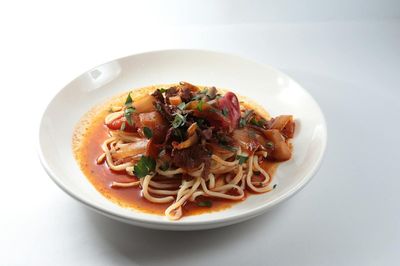
Tsuivan

Tsuivan

A stiff flour-and-water dough rests for 30 minutes, rolls thin, folds and is cut into 3 mm-wide noodle strips. Mutton (fatty) browns in a deep heavy pot; onion, garlic and shredded cabbage cook down on top. A small amount of water goes in (just enough to make steam, not to soup the noodles). The raw noodles are spread on top, the lid clamped on, and everything steams for 15 minutes. At the end, the lid lifts, the contents are tossed together: meat juice and fat coat the noodles.

1 hour 15 minutes Serves4