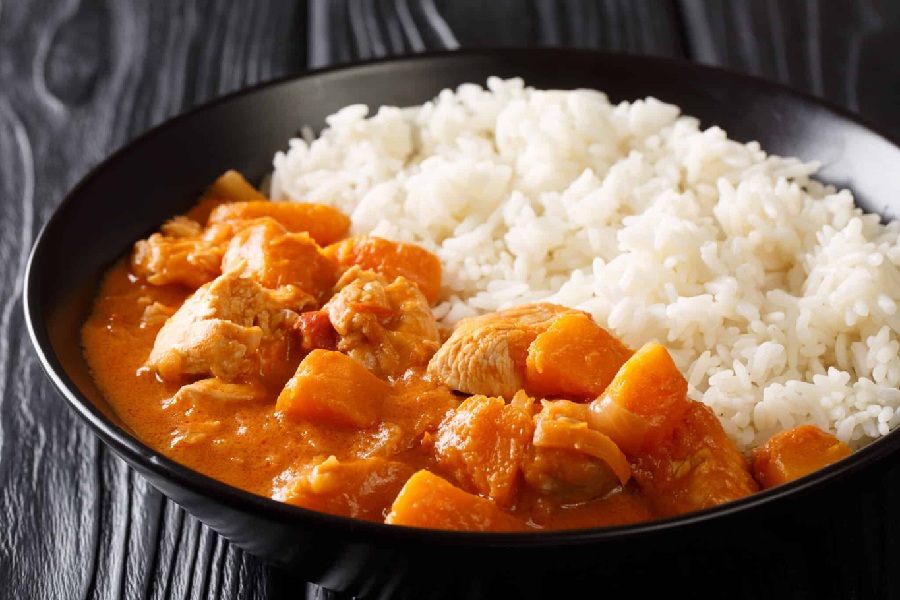
Domoda
The Gambia's national stew: chicken or lamb in a thinner peanut-and-tomato sauce sharpened by lime and tamarind. Poured generously over rice.
Overview
Chicken thighs (or lamb) are browned, onions and tomato cooked down with garlic and a single whole chilli, then the meat simmers in stock until tender. A loose peanut paste is stirred in for the final 20 minutes, kept thin enough to ladle. Sweet potato or pumpkin softens in the sauce. A spoon of lime juice at the end balances the richness.
Ingredients
Stew
- 8 bone-in chicken thighs, skin removed (or 800 g lamb neck, cut in chunks)
- 2 tablespoons vegetable oil
- 2 onions (large, finely chopped)
- 4 garlic cloves (crushed)
- 2 tablespoons tomato purée
- 2 tomatoes (medium, chopped)
- 1 Scotch bonnet chilli (left whole)
- 2 bay leaves
- 1 Maggi cube
- 1 teaspoon ground black pepper
- 1 teaspoon ground white pepper (optional, traditional)
- 1 litre chicken stock
- Salt
Peanut sauce
- 200 g smooth natural peanut butter
- 250 ml hot water
Vegetables
- 1 sweet potato (medium, or 400 g pumpkin, peeled, cut in 3 cm chunks)
- 2 carrots (sliced into thick rounds)
To finish
- 1 lime (juiced)
- 1 tablespoon tamarind paste (optional; see Notes)
To serve
- 400 g long-grain white rice, steamed
- Fresh coriander leaves
Method
Stage 1 - Brown the chicken
- Season the chicken thighs with salt.
- Heat the oil in a wide pot over medium-high heat. Brown the thighs in two batches, 3 minutes a side, until golden. Set aside.
Stage 2 - Build the base
- Lower the heat to medium. Cook the onions in the same pot for 7 minutes until soft.
- Add the garlic and cook 1 minute.
- Stir in the tomato purée and fry for 3 minutes until darker.
- Add the fresh tomatoes, whole chilli, bay leaves, Maggi cube, black and white pepper. Stir and cook 5 minutes until the tomatoes break down.
Stage 3 - Simmer
- Return the chicken with any juices.
- Pour in the stock to cover.
- Bring to a gentle simmer, cover and cook 25 minutes.
Stage 4 - Add peanut and vegetables
- Whisk the peanut butter with the hot water in a bowl until smooth.
- Stir the peanut mixture into the pot. The sauce should be loose; ladle-able rather than spoon-coating. Add a splash of water if it tightens too much.
- Add the sweet potato and carrots.
- Simmer uncovered 20 minutes, until the vegetables are tender and the chicken is falling off the bone.
Stage 5 - Finish
- Stir in the tamarind paste, if using.
- Add the lime juice. Taste and season with salt.
- Discard the whole chilli (or chop a little of it back in if you want heat).
Stage 6 - Serve
- Heap rice into bowls. Ladle the stew generously over the top with plenty of sauce.
- Scatter coriander leaves.
Notes
- Lighter than mafé: Domoda uses about a third less peanut butter and more liquid than mafé. The sauce should pool, not coat.
- Tamarind for the trademark sourness: Authentic domoda often uses bitter tomato (jakhatu) for its citrusy edge; tamarind is the easiest substitute outside West Africa. Lime alone also works.
- Skin off the chicken: Skin renders too much fat into a peanut sauce and turns it greasy. Remove it.
- Pumpkin or sweet potato: Either is traditional; pumpkin breaks down a little and helps thicken, sweet potato holds its shape.
Variations
Lamb domoda: Use neck or shoulder, brown longer (8 minutes per batch), and extend the first simmer to 50 minutes before adding peanut and vegetables. Bitter aubergine: Add 200 g of cubed African aubergine (or regular aubergine with a teaspoon of mustard powder) for an authentic edge.
Serving
Serve with: A wide pile of steamed white rice in a shallow bowl, sauce ladled around. Garnish with: Fresh coriander leaves and a lime wedge on the side.
Storage
- Keeps 3 days refrigerated.
- Freezes well 2 months.
- Reheat gently with extra stock or water to loosen the sauce.
More like this
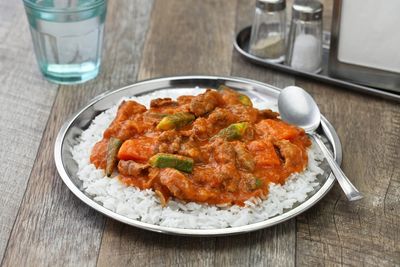
Mafé
Bone-in beef or lamb is browned, then simmered with onions, garlic, tomato and stock. Smooth peanut butter is whisked in halfway and the stew thickens to a velvety coating. Chunks of cassava, sweet potato and cabbage cook in the sauce towards the end. Serve over plain steamed white rice.
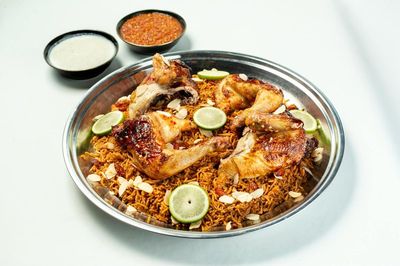
Kabsa
Saudi Arabia's national dish, the one platter you'll meet at almost every gathering from family lunch through wedding banquet. You brown chicken pieces or lamb shoulder hard in a heavy pot, then build a base of onion, garlic and ginger softened in the same fat, with tomato and a spoonful of baharat (or a dedicated kabsa spice mix) blooming until the kitchen fills with cardamom and cinnamon. The protein simmers in tomato and stock until it's tender and pulling away from the bone, then long-grain rice goes in to cook absorption-style in the same liquid, drinking up every layer of flavour the broth carries. You finish with almonds toasted in butter, raisins plumped briefly, and a fresh salsa of tomato, onion, chilli and parsley spooned on the side to cut the richness. Eaten communally from the centre platter, with hands or a long spoon.
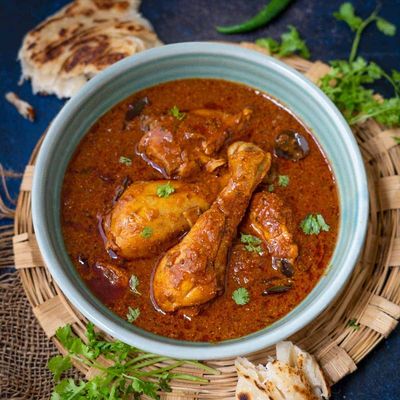
Andhra Chicken Curry
Chicken thighs are marinated briefly with turmeric, ginger-garlic paste, yogurt and a pinch of red chilli. A dry-roast of poppy seeds, sesame seeds, coconut, fennel, coriander and dried red chillies is ground with a splash of water into a coarse paste. The base is built with shallots, curry leaves and tomato; the chicken is browned in stages; and the masala paste is folded in for the long, gentle simmer. Tamarind and a curry-leaf temper finish.
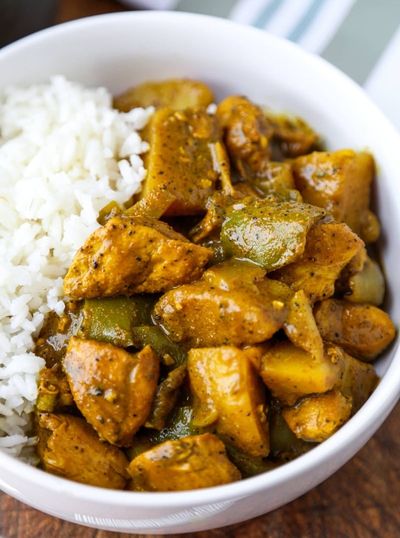
Authentic Jamaican Curry Chicken
Jamaican curry sits in its own corner of the global curry map: heavier on turmeric and allspice than Indian Madras, lighter on cumin, and built on a technique called "burning the curry" that gives the dish its character. The technique is exactly what it sounds like, dry curry powder hits hot oil and is stirred for 30 seconds until it darkens from yellow to deep gold and smells like toasted spice. That move concentrates the flavours and removes any raw edge. The finished stew is bright yellow stained slightly orange, savoury and aromatic rather than searingly hot, with thyme and a whole pierced Scotch bonnet scenting the gravy without flooring it. Smell: bloomed curry powder, allspice, browned chicken fat. Not difficult, but requires confidence in the 30-second bloom (under-do it and the dish is flat; over-do it and you have to start over). A Sunday-dinner staple across Jamaica and the diaspora, served over white rice with the gravy spooned generously over.