Desserts

3 recipes

Pakhlava (Azerbaijani)

Pakhlava (Azerbaijani)

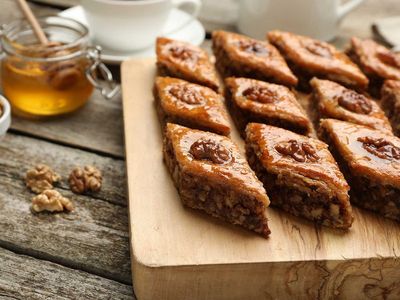
The Azerbaijani take on the pan-Caucasus pastry that goes by half a dozen names across the region. You make an enriched dough from flour, butter, milk, egg yolks and yeast, then roll it into eight layers stacked with a heavy filling of crushed walnuts spiced with cardamom and saffron between each one. The top gets scored in the traditional diamond pattern, brushed with saffron-tinted egg yolk so it bakes to a deep amber, and a single walnut pressed into the centre of each diamond as a marker. Forty-five minutes at 180°C, then a saffron-honey syrup poured generously over while it's still hot from the oven. The trick the recipe insists on is the overnight rest before slicing; that's when the syrup absorbs fully and the layers set so the diamonds cut cleanly. Eaten at Novruz, weddings and feast days, with strong black tea on the side.
2 hours 50 minutes Serves20-24
Sheker Chorek

Sheker Chorek

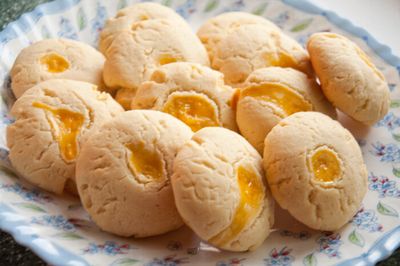
Azerbaijan's everyday tea cookie, the soft melt-in-the-mouth shortbread that sits on a plate in every household for any visitor who drops by. You cream butter with icing sugar for a full four minutes until it's pale and almost mousse-like (the long cream is where the texture comes from), beat in egg yolks one at a time with vanilla last, then fold in flour gently because overworking turns them tough. Thirty minutes in the fridge to firm up enough to handle, then you pinch off walnut-sized balls, press each one lightly flat with your thumb, brush with egg-yolk glaze, and scatter sesame or nigella seeds on top. Twenty minutes at 170°C until the surface is the colour of pale honey. Eat slightly warm with strong black tea, or once cooled with a small cup of cardamom coffee.

1 hour 15 minutes Serves20
Shekerbura

Shekerbura

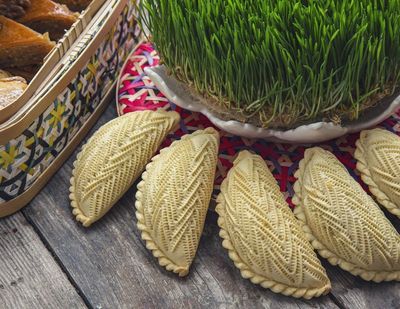
The crescent pastry that marks Novruz, the Persian new year celebrated across Azerbaijan in the third week of March, baked alongside two other ritual sweets (pakhlava and goghal). You make a short milk-and-egg dough and rest it for an hour, while you grind walnuts fine but not powdered (texture matters) and mix them with caster sugar and ground cardamom for the filling. The dough rolls thin to two millimetres, cuts into nine-centimetre circles, and gets a mound of filling on one half before the other half folds over to make a half-moon. The edge crimps with a fork or, traditionally, with a small pinching tool called a maqqaş that gives the rim a decorative wheat-sheaf pattern. Bake at 180°C for twenty-five minutes until pale gold, dust with icing sugar while still warm. Strong tea, a family table, the spring equinox in the air.

2 hours 25 minutes Serves24