Mauritian

An Indian Ocean creole cuisine layered over French colonial bones, with Indian (Tamil and Bhojpuri), Chinese (Hakka), African and Malagasy strands woven through every meal. Dholl puri (split-pea flatbread eaten as a wrap) is the street icon; rougaille (the Creole tomato sauce), cari ourite (octopus curry), mine frite (Hakka noodles) and biryani all share the table. Thyme, ginger, garam masala, curry leaves and lime work alongside French herbs; cane sugar and island rum close the meal.

5 recipes

Cari Poulet Et Pomme de Terre

Cari Poulet Et Pomme de Terre

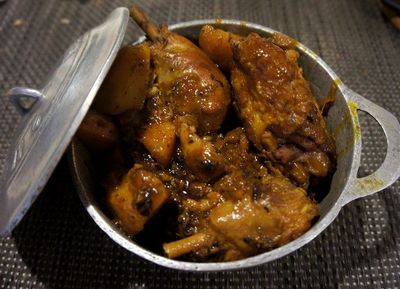
Mauritian cuisine is a layered conversation between Indian, African, Chinese and French traditions, and cari poulet is one of its clearest expressions. The Creole community took the Indian template of a wet curry and rebuilt it with local fresh herbs, particularly thyme and curry leaves grown in the yard, plus tomato, and a masala that is gentler and more aromatic than its mainland Indian cousins. Chicken on the bone is browned for fond, then potatoes are added and the whole pot is simmered in a curry-leaf and tomato gravy until the meat is falling off the bone and the potatoes are creamy on the outside but holding shape. The colour leans red-brown from paprika and turmeric rather than the bright yellow of a Punjabi-style curry. Heat is moderate, intended to complement rice and a chilli-based satini, not overwhelm them. For a home cook the difficulty is low to moderate; the only real demand is patience while the masala blooms in the oil at the start, which is what gives the dish its depth. Serve over plain steamed rice with a coriander satini and a spoon of green chilli pickle, the classic Mauritian Sunday plate.
1 hour 5 minutes Serves4
Dholl Puri

Dholl Puri

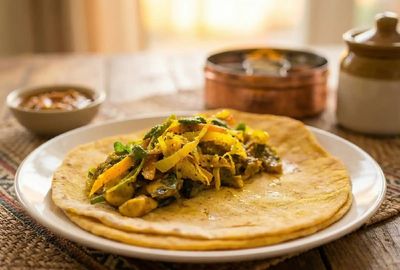
Dholl puri is the bread, not the wrap. What you are making is a soft, lightly elastic flatbread with a stuffing of cooked, drained, finely ground yellow split peas seasoned with turmeric, cumin and a little salt. The dough is wrapped around the filling like a stuffed paratha, then rolled out paper-thin (a real Mauritian dholl puri vendor rolls them so thin you can read newsprint through them) and cooked dry on a hot tawa with just a brush of oil. The challenge is keeping the filling completely dry; any moisture and the dholl ruptures when you roll it. Mauritians eat dholl puri folded in half or quartered around a small spoonful each of cari gros pois (butter bean curry), rougaille (tomato sauce) and either a coriander satini or a fiery mazavaroo chilli paste. This recipe focuses on the flatbreads themselves with a short note on the typical filling so you can put together a proper plate at home. Difficulty is moderate: the dough handling takes practice but it is forgiving and a slightly thicker first attempt still tastes excellent.

5 hours 15 minutes Serves4
Octopus Curry (Cari Ourite)

Octopus Curry (Cari Ourite)

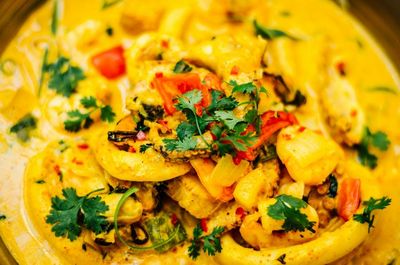
Cari ourite is the dish that turns up at every Mauritian fisherman's Sunday lunch, and at every Creole restaurant on the south coast. The technique is to braise octopus low and slow in a tomato-and-onion masala that leans on fresh thyme and a finishing pinch of garam masala instead of the heavier dried-spice masalas you find in cari boeuf or cari poulet. Octopus has a sweet, slightly mineral flavour that needs space, so the seasoning is restrained: thyme for aroma, tomato for body, ginger and garlic for the base, mild curry powder for depth, garam masala right at the end for top-note warmth. The tentacles cook for around 45 minutes (small octopus) to an hour (larger). The biggest variable is the octopus itself; small frozen octopus, sold cleaned at most fishmongers and many supermarkets, is reliable and the freezing actually helps tenderise the flesh. Difficulty is moderate; the cook is mostly passive once the masala is built. Serve with plain steamed rice and a satini cotomili (coriander chutney) or a spoon of pickled chilli. A simple green salad with vinaigrette on the side keeps it honest.

1 hour 25 minutes Serves4
Rougaille Saucisse

Rougaille Saucisse

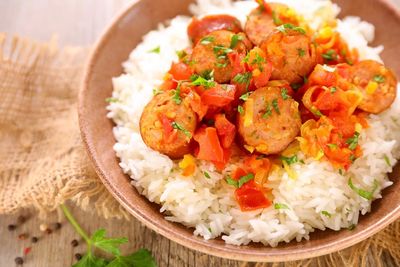
Rougaille is the workhorse tomato sauce of Mauritian Creole cooking, used as a condiment with dholl puri, as a sauce for fried fish, and (most often) as the base of a one-pot meal with sausage, salt cod or eggs. The structure is simple but specific: onion softened slowly in oil, then ginger, garlic, chilli and fresh thyme bloomed in that oil, then a long-cooked mound of ripe tomatoes broken down until the oil splits and the sauce darkens. No curry powder, no garam masala, no coconut milk; rougaille belongs to the Creole rather than the Indo-Mauritian tradition, and its identity is the herbal punch of thyme and ginger against tomato. Rougaille saucisse, the version with smoked Mauritian-style sausages, is the textbook home preparation. Use any decent smoked, coarse-cut pork sausage; in the UK, smoked chipolatas or Polish kielbasa are good stand-ins. Difficulty is low and the cook is mostly passive. Serve with rice, a few leaves of bredes (sauteed greens) and a chilli pickle on the side.

55 minutes Serves4
Vindaye Poule

Vindaye Poule

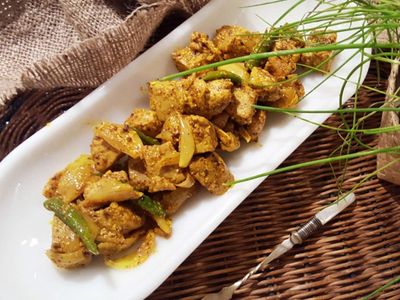
Vindaye, sometimes written vindaille, is a Mauritian cousin of the Goan vindaloo and the wider Portuguese-Indian vinha d'alhos tradition: meat or fish preserved in vinegar, garlic and spice. On Mauritius it has settled into something very particular, defined by a bright yellow paste of ground mustard seeds, turmeric, ginger and garlic, and almost always served cold or at room temperature. The dish was historically made with octopus or fish caught off the lagoon, both of which keep beautifully in the acid bath; vindaye poule, the chicken version, is the more everyday weekday or picnic preparation. The chicken is poached first, then dressed in the paste with sliced onions, slivered ginger and green chillies, and left overnight for the flavours to settle. By morning the vinegar has cut through the fat, the mustard has bloomed, and the dish is sharp, fragrant and refreshing in a way that hot curry simply isn't. It is not difficult for a home cook, but it requires planning: vindaye eaten the day it's made tastes raw, almost unbalanced. Twelve to twenty-four hours in the fridge is what makes it a Mauritian classic.

12 hours 50 minutes Serves4