Trinidadian

Caribbean cooking with a strong South Asian (Indo-Trinidadian) inflection. Trinidad's curry powders are heavier on roasted geera (cumin) and lighter on turmeric than Jamaican blends; the bunjay ("fry-down") technique cooks meat in concentrated spices with no liquid. Doubles (chickpea-filled flatbreads), pelau (one-pot rice with pigeon peas), curry duck, oil down (breadfruit braise with coconut milk), and sada roti anchor the table. Caribbean green seasoning (chadon beni, parsley, garlic, scallion) is the universal marinade.

5 recipes

Bunjay-Style Curry Chicken

Bunjay-Style Curry Chicken

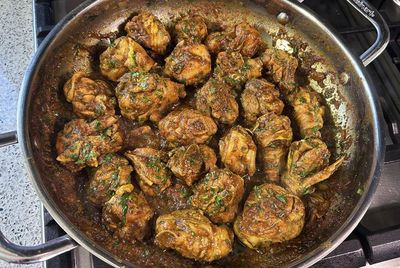
A dry curry rather than a saucy one, "bunjay" is Trinidadian patois for "fry-down", the technique of cooking meat in its own juices until the gravy completely disappears and the spices coat the surface of the meat in a sticky, glaze-like crust. The flavour is concentrated rather than diluted; nothing's been thinned with water or coconut milk, so what you taste is bone-in chicken, rendered chicken fat, and toasted spice. The spice mix is the East Indian Trinidadian signature: turmeric for colour and earth, roasted geera (toasted cumin, ground) for nuttiness, anchar masala for tang, regular curry powder for breadth. The pan oil splits and separates around the chicken at the end, which is the visual cue you're looking for. Smell when the curry powder hits hot oil is deeply aromatic, almost incense-like. Not difficult but it requires attention during the cook-down phase; if you walk away the curry burns onto the bottom of the pan. A Trinidadian household staple, eaten across the country with white rice and dhal, and a clean example of how Indian indentured labourers' descendants in the Caribbean evolved a distinct curry tradition over 150 years.
2 hours 50 minutes Serves6
Buss-Up-Shut Roti with Curry

Buss-Up-Shut Roti with Curry

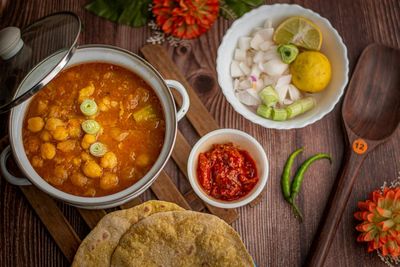
Buss-up-shut, also called paratha roti, is the flaky-layered Trinidadian roti that takes its English name from "burst-up shirt", a buss-up-shut roti is one that has been beaten the moment it comes off the tawa until it explodes into soft, irregular shreds. It is descended from the South Asian paratha, brought by indentured Indian labourers in the 19th century and rebuilt in Trinidad with a softer, more elastic dough and a finishing technique that is uniquely local. The recipe here covers the roti itself, which is the demanding part, with a short Trini channa-aloo curry on the side so you have a proper plate to scoop with. The layering technique (rolling, brushing with oil, coiling, resting, rolling out) is what creates the laminated, flaky structure. The beating step uses two wooden spatulas (called "klappers" in some roti shops) and looks dramatic but is straightforward. Difficulty is moderate; the dough is forgiving but the rolling-and-coiling step needs a little practice. Once you have a feel for it, you will make this every fortnight.

2 hours 15 minutes Serves4
Curry Smelts

Curry Smelts

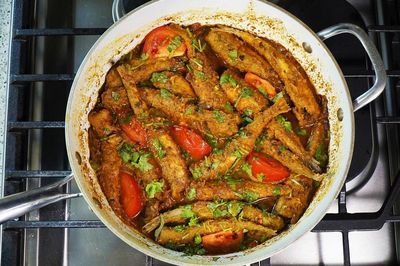
Trinidadian comfort food that brings together the East Indian and Afro-Caribbean strands of Trini cookery in one pan: small whole fried fish (a West African and Caribbean coastal habit) drowned in a Trinidadian East Indian curry sauce. The fish are smelts, sardines or whitebait, whole, head-on, eaten with a small bite to remove the spine. Once fried they sit crisp; when the curry sauce hits, the outer crust softens slightly and absorbs the gravy while the centre stays meaty. The sauce is the dish's signature: roasted geera (dry-toasted cumin) gives a smoky, nutty depth that pre-ground supermarket cumin can't touch, anchar masala adds a fermented-tangy edge (it's the Trinidadian pickled-mango spice mix), and Caribbean curry powder rounds the warmth. Whole pierced Scotch bonnet scents without flooring. Smell when the spices bloom in hot oil is heavy and pungent in the best possible way. Not difficult but it's a two-pan dance, so timing matters. A daily-cookery dish across Trinidad and Tobago and the Indo-Trinidadian diaspora, eaten with steamed rice or with sada roti torn and used as a scoop.

50 minutes Serves5
Pelau

Pelau

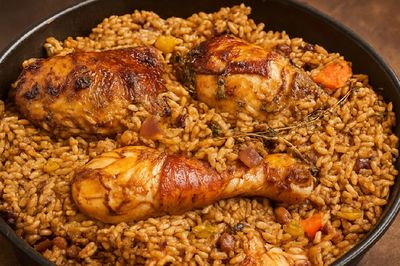
Pelau is the Trinidadian one-pot, a meld of West African jollof technique with South Asian pilau influence and a uniquely Caribbean step: caramelising brown sugar in hot oil until it foams and turns dark mahogany, then dropping the seasoned chicken straight in so the meat takes on the colour and the slightly bitter-sweet edge of burnt sugar. This is the signature move of Trinidadian "browning" and it is what makes pelau pelau and not pilaf. Coconut milk, pigeon peas (gungo peas in some other islands), thyme, garlic and a whole Scotch bonnet finish the build. The rice cooks through the whole pot so it absorbs the chicken juices, coconut and burnt sugar, and the finished dish is mid-brown, glossy, mildly sweet, slightly spicy and packed with chicken on the bone. It is not difficult but the burnt-sugar step requires nerve: the sugar needs to go well past caramel into something that smells almost burnt, otherwise the pelau will be too sweet rather than savoury-deep. Cook in a heavy pot with a tight lid and resist stirring once the rice is in. Serve with coleslaw or a sharp green salad, a slick of pepper sauce and a slice of fried plantain.

1 hour 40 minutes Serves6
Trinidadian Curry Goat

Trinidadian Curry Goat

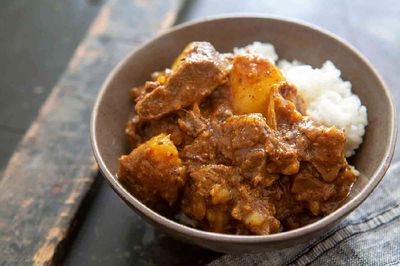
Trinidadian curry goat sits in a quiet rivalry with Jamaican curry goat, but the two are different dishes. Jamaican curry goat is built on Madras-style curry powder, scotch bonnet and allspice with little coconut and a wetter finish. Trinidadian curry goat is built on a fresh blend of green seasoning (a herb-and-aromatic puree of culantro, thyme, garlic, chives and onion), Caribbean curry powder (which leans heavily on amchar masala and roasted geera), and the bunjay technique of frying the curry paste in oil until it splits before the meat goes in. The result is a darker, herbier, drier curry that hugs the bone rather than pooling around it. Kid goat is the preferred meat; older mutton-goat works but takes longer. UK home cooks can usually find kid goat at Caribbean butchers, Halal butchers and many Asian supermarkets in the chilled or frozen section. Bone-in pieces are essential for flavour and gelatin. Lamb shoulder on the bone makes an honest substitute. Difficulty is low to moderate; the cook is mostly long and passive once the curry is bunjayed. Serve with paratha-style "buss-up-shut" roti, dhalpuri roti, white rice, or coconut rice.

4 hours 5 minutes Serves6