Snacks

3 recipes

Alur Chop

Alur Chop

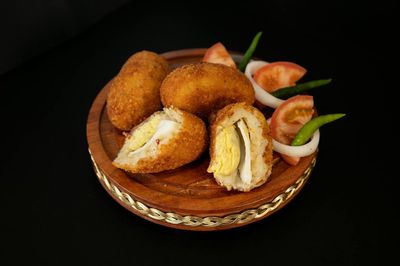
Alur chop (alu meaning potato, chop being a Bengali loan-word for a fried cutlet, inherited from the British "chop") is the workhorse of Bengali street snacks: every tea stall, every train platform, every late-afternoon adda has a stack of these warming under a glass cover. The construction is two layers. The inner mash is heavily seasoned: boiled potato folded through fried onion, ginger, green chilli, roasted cumin and a measured punch of Bengali bhaja moshla (a dry-roasted spice blend of cumin, coriander and dried chilli). Some versions add a few peanuts or roasted chana dal for crunch; in Kolkata the mash often includes a slick of mustard oil for fragrance. The outer shell is a thin chickpea-flour batter, the same family as beguni and piyaju, fried hot so it sets into a thin crisp casing rather than a heavy crust. The trick is contrast: a shell crisp enough to crackle, a centre soft and yielding and a touch wet from the onion. They are sold individually wrapped in newspaper for a few rupees and eaten standing up, often with muri puffed rice and a small dollop of kasundi (Bengali fermented mustard sauce) on the side. A monsoon and winter snack above all, when the cold air makes the hot oil and the inside-warm chop feel particularly right.
55 minutes Serves4
Beguni

Beguni

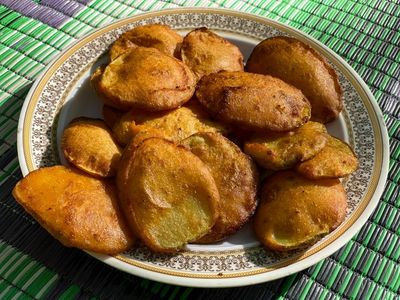
Beguni (from begun, the Bengali word for brinjal/eggplant) is the simplest of the great Bengali pakoras: long thin slices of aubergine, dipped in seasoned chickpea-flour batter and deep-fried. Done well, the contrast is everything, a shatteringly crisp shell with the lightly bitter, custard-soft eggplant inside. It is the defining iftar fritter across Bangladesh, where it appears every evening during Ramadan alongside piyaju (onion fritters) and chickpea ghugni; in West Bengal it is the tea-stall companion of muri and a monsoon-day comfort food. The technique is short on ingredients but particular: the eggplant must be salted first to draw out bitter water and prevent the slice from absorbing oil; the batter must be just thick enough to coat the back of a spoon, with the texture of double cream; and the oil must be hot enough (around 180 C) that the batter sets instantly into a crisp shell. The traditional fat is mustard oil heated until just smoking, then cooled briefly to take the raw edge off; this gives beguni its characteristic mustardy back-note. Nigella seeds (kalonji) in the batter are non-negotiable in Bangladesh, they pop slightly in the hot oil and give the fritter its distinctive aroma. Eat immediately, with a few slivers of raw onion, a green chilli and a wedge of lime.

1 hour 5 minutes Serves4
Jhal Muri

Jhal Muri

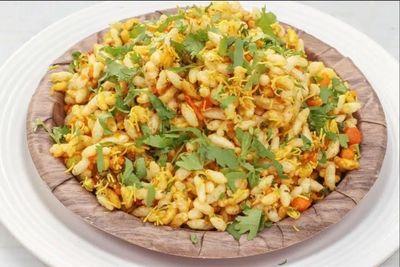
Jhal muri (literally "spicy puffed rice") is the most democratic snack in Bengal: assembled in seconds from a tin trunk by a muriwala, tipped into a rolled-newspaper cone, and eaten standing on a pavement for the price of a few rupees. The base is muri (puffed rice), and everything else is built around the principle of contrast. Raw mustard oil is the soul of the dish, sharp and nasal and slightly bitter; without it you have a salad, not jhal muri. The vegetables stay raw and crunchy, onion, green chilli, cucumber, tomato, chopped into tiny dice so each spoonful gets one of each. Peanuts and chana chur (or sev) add fat and crunch; black salt and chaat masala add the funky-tangy depth that makes Indian street snacks addictive. The lime goes in last so the puffs don't soften. This is a dish where technique matters less than ingredient quality: muri must be crisp (refresh in a dry pan if it's gone soft), mustard oil must be the proper pungent kind, and the lime must be fresh. It is everywhere in Bengal, tea-time at home, train platforms, the Maidan on a winter afternoon, and there is no recipe in any cookbook that quite captures the feel of it being mixed in front of you in a paper cone.

10 minutes Serves2