Mojo Pork
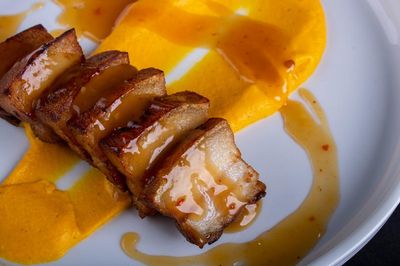
Mojo, pronounced moh-ho, is the foundational citrus and garlic marinade of Cuban cooking, and lechon asado al mojo, a whole pig or shoulder marinated in it and roasted slowly, is the centrepiece of Christmas Eve dinners across Cuba and the Cuban diaspora in Miami, Tampa and beyond. The defining ingredient is naranja agria, the sour or bitter orange, whose juice is sharper and more aromatic than regular orange and which provides the acid backbone of the marinade. If you cannot find sour oranges, the universal substitute is two parts fresh orange juice to one part lime juice, with a splash of grapefruit if you have it. The rest of the mojo is generous: a head of garlic crushed into paste, dried oregano (Cuban oregano if possible, regular Mediterranean otherwise), cumin, salt and good olive oil. The pork shoulder is stabbed all over and the marinade pushed deep into the flesh, then left overnight so the acid begins to break down the muscle fibres. The roast itself is forgiving: low and slow, fat-side up, until the meat pulls apart with a fork and the skin crackles. Leftovers become the heart of a Cuban sandwich, layered with ham, Swiss cheese, mustard and pickles in pressed bread. Difficulty is low. The only thing to plan for is time: the marinade needs overnight, and the roast takes most of an afternoon.