Baghali Polo Ba Mahiche
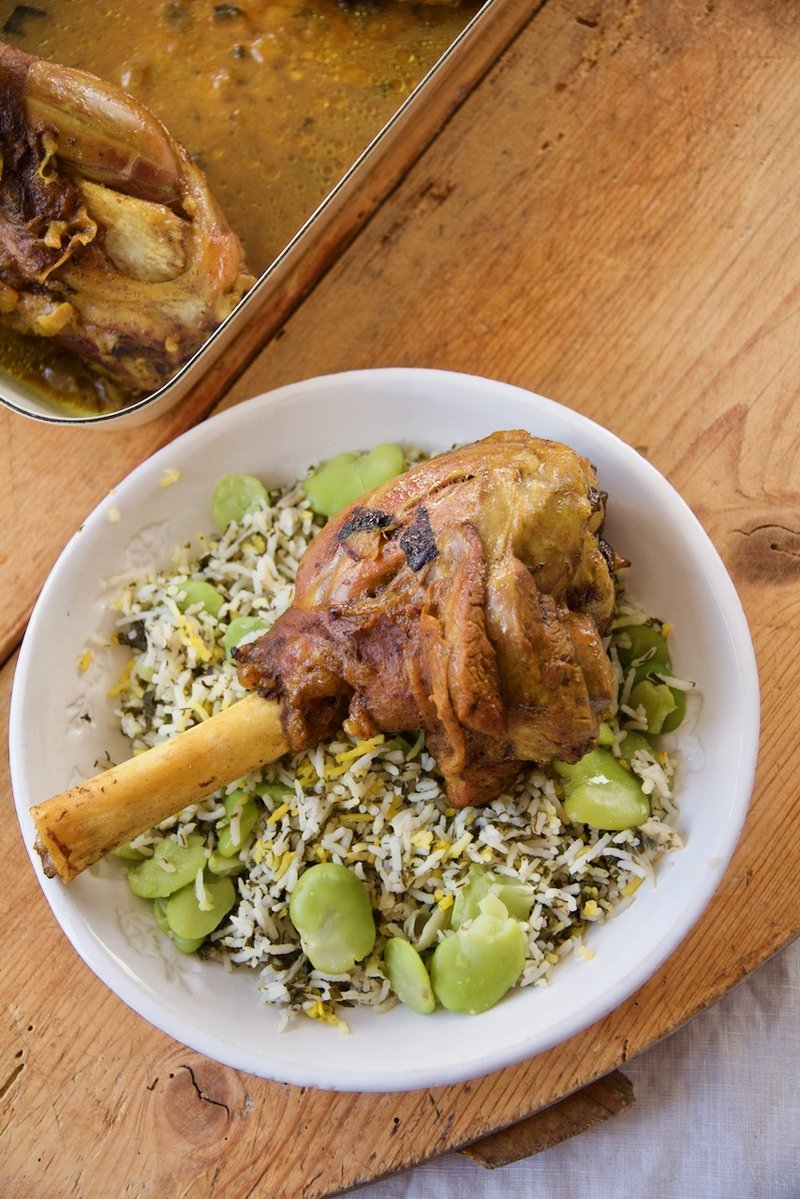
A Persian feast plate: dill-and-broad-bean rice with a saffron tahdig, served alongside slow-braised lamb shanks. A Nowruz dish.
Overview
Lamb shanks brown hard; cook for 2 hours 30 minutes with onion, garlic, turmeric, cinnamon and saffron in a covered pot with a small amount of stock until fork-tender. Meanwhile, basmati rinses and soaks for 1 hour. Frozen (or fresh, podded) broad beans simmer briefly until tender; the rice parboils for 6 minutes in heavily salted water; drains. The rice layers in the cooking pot with the broad beans, dill and saffron: bottom oil-and-rice for tahdig; then a mixed layer of rice + beans + dill; another rice-and-bean-and-dill layer; topped with rice and saffron-water; lid-wrapped-in-towel; steam for 40 minutes. Plated with the lamb shanks alongside.
Ingredients
Lamb shanks
- 4 lamb shanks (about 350 g each)
- 3 tablespoons sunflower oil
- 2 onions (large, sliced)
- 6 garlic cloves (crushed)
- 2 teaspoons ground turmeric
- 1 teaspoon ground cinnamon
- 2 teaspoons salt
- ½ teaspoon black pepper
- 1 large pinch saffron threads (soaked in 4 tablespoons hot water)
- 500 ml light lamb (or chicken stock)
- 2 tablespoons tomato paste (optional)
Rice
- 500 g basmati rice
- 3 tablespoons salt (for the parboil)
- 3 tablespoons sunflower oil
- 60 g unsalted butter
- 1 large pinch saffron threads (soaked in 4 tablespoons hot water)
- 250 g podded broad beans (fresh or frozen, defrosted)
- 1 large bunch fresh dill (chopped fine - about 80 g)
Method
Stage 1 - Sear and braise the lamb
- Heat oven to 160°C (140°C fan).
- Heat 3 tablespoons oil in a wide ovenproof lidded pot over medium-high.
- Pat shanks dry; season with salt and pepper.
- Brown shanks 4 minutes per side, deep colour. Lift to a plate.
- Reduce heat to medium; add onion to the same pot.
- Cook 10 minutes until soft and gold.
- Add garlic, turmeric, cinnamon and salt; cook 30 seconds.
- Add tomato paste (if using); stir 1 minute.
- Return shanks; pour in stock; add saffron-water.
- Bring to a simmer; cover; transfer to the oven.
- Braise 2 hours 15 minutes. Turn the shanks once at the 1-hour mark.
- Lift off the lid; cook 15 minutes more uncovered to reduce the sauce.
Stage 2 - Rinse and soak rice
- Rinse basmati until the water runs clear.
- Cover with cold water and 1 tablespoon salt; soak 1 hour.
Stage 3 - Broad beans
- If using fresh: bring a pot of water to a boil; cook beans 3 minutes; drain.
- If frozen: defrost.
- Pop beans out of their thin skins (the inner bright-green bean is what you want) - fiddly but worth it.
Stage 4 - Parboil rice
- Bring 3 litres water + 3 tablespoons salt to a boil.
- Drain soaked rice; add to the boiling water.
- Cook 5-6 minutes - outside cooked, centre still firm.
- Drain into a sieve; rinse briefly with lukewarm water.
Stage 5 - Layer for steaming
- Wash and dry the rice-cooking pot (or use a new one).
- Add 3 tablespoons oil and 30 g butter to the bottom; heat over medium until bubbling.
- Add 2 large spoons of plain rice to the bottom as an even layer (this will be the tahdig).
- Drizzle 1 tablespoon of saffron-water over.
- In a wide bowl, gently mix the remaining rice with the broad beans and chopped dill.
- Spoon the rice-bean-dill mixture over the tahdig layer in a heap (cone shape).
- Poke 5 holes through the rice cone with the handle of a wooden spoon (steam vents).
- Dot the remaining 30 g butter around the top.
- Drizzle the remaining saffron-water across.
Stage 6 - Steam
- Wrap the lid in a tea towel; clamp on the pot.
- Cook over low heat 35-40 minutes - bottom forms tahdig, rice steams fluffy.
Stage 7 - Plate
- Spoon rice onto a wide platter, fluffing it gently.
- Lift the tahdig out as a disc with a flat spoon (or break into pieces); place to one side.
- Set the lamb shanks alongside; spoon some of the reduced sauce over them.
Stage 8 - Serve
- Eat with a wedge of lemon; some Persian families serve with maast (plain yogurt) on the side.
Notes
- Pop the bean skins: Inner green bean only. The tough outer skin makes the dish chewy. Yes, it's tedious; yes, it matters.
- Dill in abundance: Fresh, chopped fine, generous quantity. Dried dill is a poor substitute. The dish is named for the rice's herb, not the meat - get it right.
- Cloth-wrapped lid: Standard Persian rice technique; absorbs condensation and keeps the rice fluffy.
Storage
- Lamb shanks refrigerate 4 days; reheat covered in sauce at 160°C 25 minutes.
- Rice best fresh; reheats in a covered pan with a splash of water.
- Both freeze separately for 2 months.
More like this
Chelo Kabab Koobideh
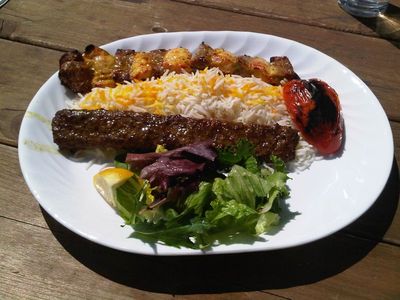
Mince mixes with very finely-grated onion (squeezed dry), salt, pepper, turmeric and a hit of saffron-water. The mixture chills, then forms onto wide flat skewers in long sausage shapes. Charcoal grills are traditional; a hot grill pan or barbecue works at home. The kababs grill for 3-4 minutes per side; whole tomatoes char alongside; rice piles on the plate; everything assembles together.
Zereshk Polo Ba Morgh
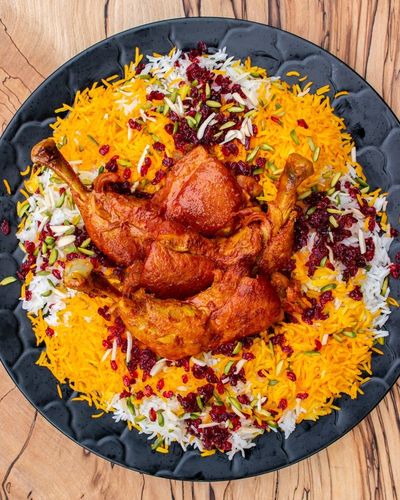
Basmati rice rinses thoroughly; soaks for 1 hour in salted water. Bone-in chicken (thighs and drumsticks) browns; cooks for 45 minutes with onion, turmeric, tomato paste, cinnamon, saffron and a splash of water until tender and the sauce thick. Rice parboils for 6 minutes in heavily salted water; drains. The Persian rice technique: a layer of yogurt-rice (or just oil and rice) goes in the bottom of the pot to form tahdig; remaining rice mounds on top in a cone; a cloth-wrapped lid clamps on; cooks for 40 minutes over low heat. Meanwhile, zereshk berries are rinsed (they're salty), sautéed in butter with a touch of sugar and saffron. Plated with the rice spread out, chicken nestled on top, and zereshk-and-nuts scattered across.
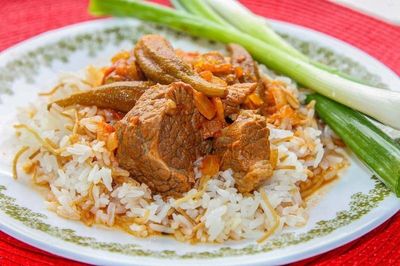
Bamia Iraqi
Lamb shoulder is browned hard; onion is softened; garlic, baharat and tomato paste join. Stock, tamarind, dried lime and tinned tomato deglaze. The lamb is braised for 75 minutes. Small whole okra goes in the last 25 minutes (long enough to soften, short enough not to disintegrate). Taqliya, crushed garlic and coriander sizzled in oil, is drizzled over at the end.
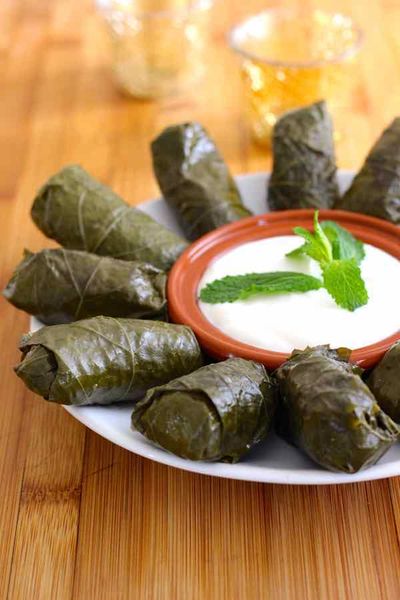
Dolma (Azerbaijani Stuffed Vine Leaves)
Azerbaijan's stuffed vine leaves, claimed as the national dish in 2017 and added to UNESCO's list of Intangible Cultural Heritage. You start by soaking brined vine leaves in warm water for twenty minutes to leach out the salt, then build a filling of raw lamb mince with rinsed short-grain rice, finely chopped onion, fresh mint and dill, butter, salt and pepper. Each leaf gets a teaspoon of filling and rolls into a tight cigar. The rolls pack in a single layer in a heavy pot, then a second and third layer perpendicular to the first, like a brickwork pattern that holds them together as they cook. Stock and a splash of sumac water pour in to barely cover, an inverted plate weighs everything down so the dolma keep their shape, and the lot simmers slowly for fifty minutes. Plated on a platter with thick garlic yogurt alongside for dipping.