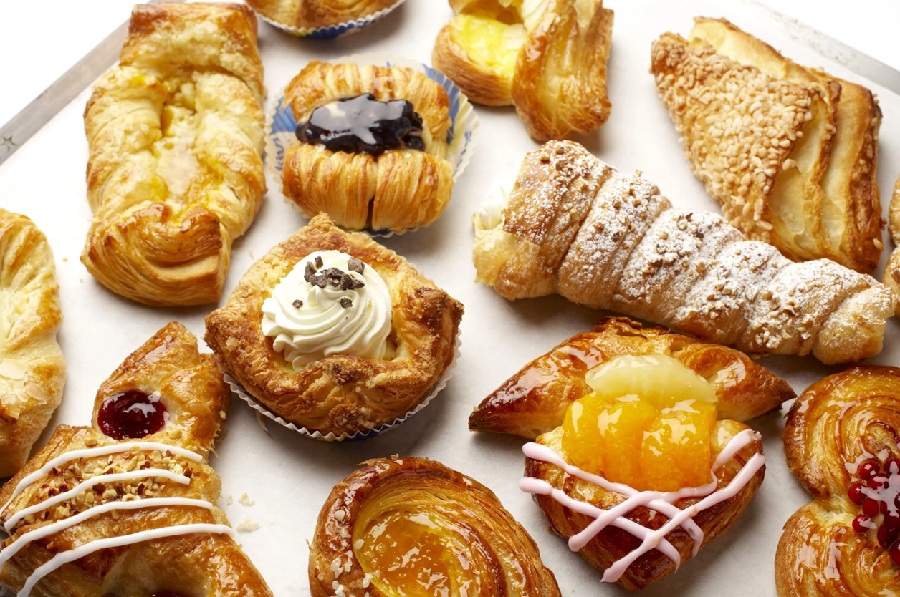
French Patisserie Course
Patisserie is really a course on putting things together. Once you have the pastry, the creams and the meringues from the other courses, this is where they meet: tarts, cakes, petit fours, set creams, mousses. We'll spend most of the time on how to compose a dessert; the components are covered elsewhere.
Overview
French patisserie is a layered tradition. Each finished dessert is built from a small number of foundational doughs, creams and meringues, combined in different ways. A mille-feuille is puff pastry + creme patissiere + glaze. A tarte au citron is sweet-short pastry + lemon curd. A paris-brest is choux + praline cream. A souffle au chocolat is custard base + meringue. The doughs and creams themselves are covered in their own courses; this course is about composing them.
The advantage of having the foundations in place: once you can make sweet-short pastry and creme patissiere, you can make a fruit tart, a custard tart, a flan, and any of the smaller tartlets. Once you can make choux and creme patissiere, you can make profiteroles, eclairs, religieuse, and gateau saint-honore. The patisserie canon is combinatorial.
Course Outline
How To Compose
- Composing a Dessert: the principles of building a finished patisserie from the doughs and creams. How they balance: textures, temperatures, flavours.
The Finished Forms
- Classical Cakes: opera, mille-feuille, gateau saint-honore, paris-brest, fraisier. The named cakes of the patisserie counter.
- Tarts: tarte au citron, tarte tatin, tarte aux fruits, tarte au chocolat, tarte normande. Sweet-short pastry plus a filling.
- Petit Fours: macarons, financiers, madeleines, palmiers, friands. Small bites for after-dinner coffee.
- Set Creams and Mousses: creme brulee, creme caramel, panna cotta, chocolate mousse, fruit mousse. Egg-yolk and dairy compositions.
The Foundations (Covered in Other Courses)
The patisserie canon rests on three other courses:
Pastry
- Shortcrust Pastry
- Sweet Short Pastry (pate sucree)
- Puff and Rough Puff
- Choux Pastry
- Filo Pastry
- Croissant and Danish
Eggs
- Custards (creme anglaise, creme patissiere, creme caramel, creme brulee)
- Meringues (French, Italian, Swiss)
- Souffles
Bread-Pastry Crossover
- Enriched Doughs (brioche, challah, hot cross buns, panettone)
Most of the technique work happens in those courses. This course assumes you've read them.
What Patisserie Is Not
The course is about the classical French canon. It is NOT about:
- Cake decoration (icing, piping skills): that's a different craft.
- Chocolate work (tempering, ganache for moulded chocolate): a specialist topic deserving its own course.
- Plated restaurant desserts (the modern composed plate with gels, foams, dehydrated elements): newer school, different rules.
- Bread (covered in the bread course, even where it crosses into patisserie via brioche and croissant).
What it IS about: the form-by-form study of patisserie classics, with cross-references to the technique courses that cover the components.
The Three Skills of Patisserie
If you want to learn patisserie, three skills cover most of what you need:
- Pastry handling. Rolling sweet-short, blind-baking, lifting cleanly. See pastry course.
- Cream-making. Creme anglaise, creme patissiere, creme chantilly. The five-base creams of the patisserie kitchen. See custards.
- Composition. Knowing what goes with what, when to add height, when to add contrast. See Composing a Dessert.
The rest is recipes.
Where to Start
- New to patisserie: Composing a Dessert first. The framework for thinking about how things go together.
- Want to make a specific dessert: jump to the relevant form page above (tarts, cakes, petit fours, set creams).
- Want the techniques first: go back to the pastry and eggs courses; this course assumes them.
Some Defining French Patisserie
The dishes the course refers back to:
Cakes
- Gateau Saint-Honore: choux + caramel + creme chiboust.
- Mini Croquembouche: tower of caramel-coated choux puffs.
- Chocolate Roulade: rolled sponge with chocolate cream.
Tarts
- Lemon Tart: the canonical tarte au citron.
- Apple Tart: the everyday tarte aux pommes.
- Tarte Tatin: upside-down caramelised apple tart.
- Apple Turnover: chausson aux pommes, puff pastry filled.
Set Creams and Mousses
Souffles
Petit Fours and Smaller
Where Next
- Composing a Dessert: the framework.
- Classical Cakes: the named cakes.
- Tarts: the tart family.
- Pastry course: the doughs underneath patisserie.
- Eggs course: the creams, meringues and souffles.
Recipes mentioned here
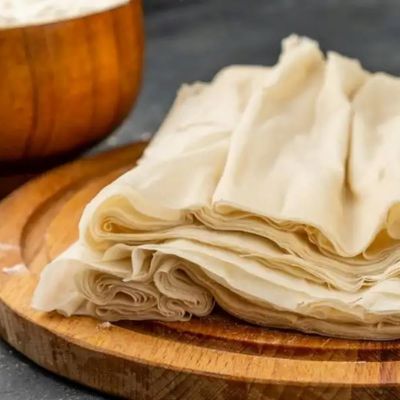
Filo Pastry
Filo pastry is an extraordinarily thin, delicate dough that requires skill and patience to master but rewards the effort with its ethereal, crispy layers. Unlike laminated doughs, filo is stretched by hand to transparent thinness, creating a unique texture. Its versatility allows it to be used for both sweet and savory preparations, showcasing fillings visually while providing a delicate crunch.
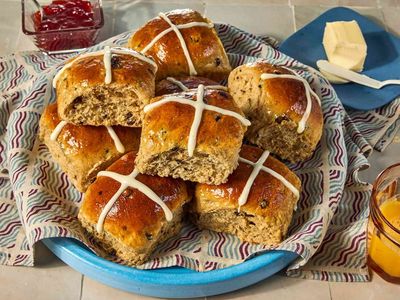
Hot Cross Buns
A yeasted dough enriched with milk, butter, an egg and a little sugar, spiced with cinnamon, nutmeg and mixed spice, scented with orange and lemon zest. Currants and chopped mixed peel folded in. Two rises (one in the bowl, one on the tray as 12 close-packed buns), a cross piped on with a flour-and-water paste, baked to deep gold, brushed with warm sugar glaze straight from the oven. Eaten warm or split and toasted.
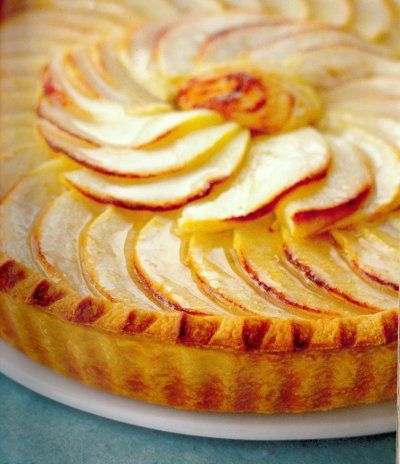
Apple Tart
This apple tart features a buttery sweet shortcrust pastry filled with a vanilla-scented apple compote and topped with delicately arranged baked apple slices. It is best served barely cool with a spoonful of cream or crème fraîche to complement the caramelised fruit.
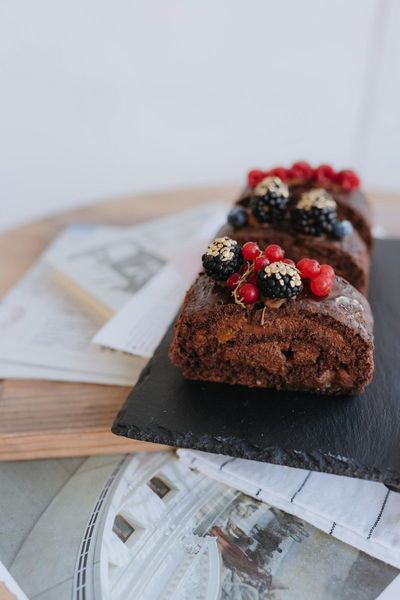
Chocolate Roulade
An elegant and impressive dessert of crispy meringue rolled around a rich chocolate filling, creating a beautiful spiral when sliced. The contrast between the light, airy meringue and the dense, silky chocolate filling provides the perfect balance of textures and flavors in this sophisticated French-inspired creation.
More like this
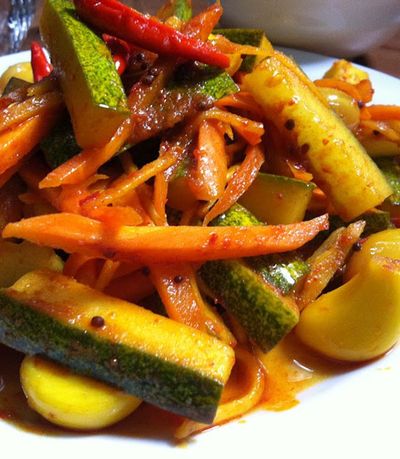
Acar Timun
Cucumber, carrot, shallot, chilli prep into thin slices or matchsticks. Salt rests for 10 minutes to draw moisture, drains. A simple dressing of vinegar, sugar, water and ginger whisks together. Vegetables toss with the dressing; rest for 1 hour at room temperature. Eats cool, never refrigerated cold; the texture suffers.
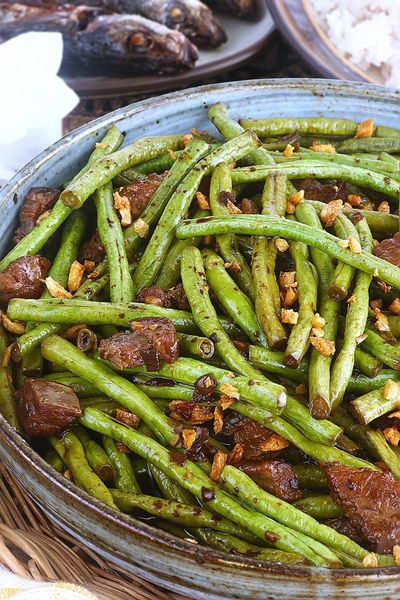
Adobong Sitaw
Garlic browns in oil; long beans toss in to colour briefly. Soy and vinegar pour in with bay and peppercorns; the beans braise covered until tender. Lid off; the liquid reduces to a glaze. Salt at the end, not the start, since soy is salty enough.
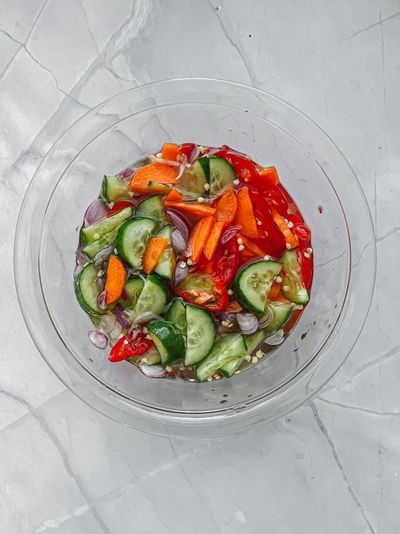
Ajad
A simple syrup of rice vinegar, palm sugar, water and salt is brought to a gentle simmer to dissolve the sugar, then cooled. Cucumber, shallot and chilli are sliced thin and combined in a small bowl. The cooled syrup is poured over. Rested for 10-15 minutes for the vegetables to wilt slightly into the dressing. Served in small individual ramekins as a dip, OR in a larger bowl as a side, with peanuts sprinkled on top.
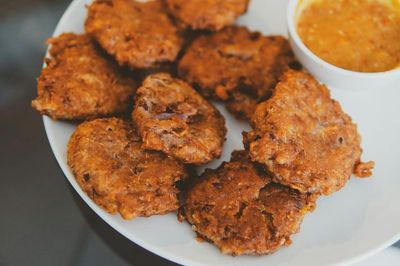
Akara
Dried black-eyed beans soak briefly to loosen the skins; the skins rub off (this is the key step, skin-on akara is bitter and grey). The peeled beans go into a blender with onion, Scotch bonnet and just enough water to make a thick batter (not a paste). The batter is whipped by hand or with a wooden spoon for 5 minutes until light and aerated, this is what makes akara fluffy rather than dense. Spoonfuls drop into 175°C oil and fry for 3-4 minutes per side until golden. Drained on paper. Eaten hot.