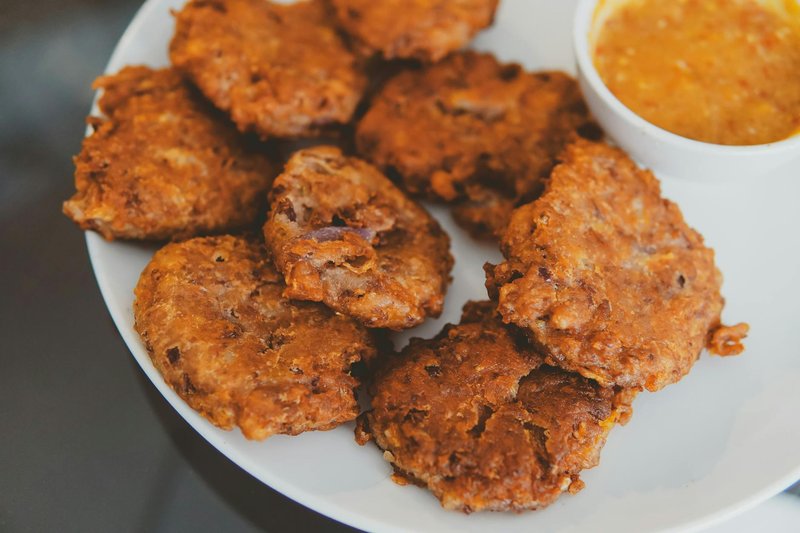
Akara
Nigeria's breakfast fritter: peeled black-eyed beans whipped fluffy with onion and Scotch bonnet, then deep-fried in spoonfuls.
Overview
Dried black-eyed beans soak briefly to loosen the skins; the skins rub off (this is the key step, skin-on akara is bitter and grey). The peeled beans go into a blender with onion, Scotch bonnet and just enough water to make a thick batter (not a paste). The batter is whipped by hand or with a wooden spoon for 5 minutes until light and aerated, this is what makes akara fluffy rather than dense. Spoonfuls drop into 175°C oil and fry for 3-4 minutes per side until golden. Drained on paper. Eaten hot.
Ingredients
- 300 g dried black-eyed beans
- 1 red onion (small, rough chunks)
- 1 Scotch bonnet chilli (to taste - deseeded for less heat)
- 80-120 ml water (to blend, used sparingly)
- 1 teaspoon salt
- ½ teaspoon ground white pepper (optional - traditional in some regions)
- 1 litre vegetable oil (for deep-frying)
To serve (optional)
- Pinch of flaky salt
- Pepper sauce (or chilli oil)
Method
Stage 1 - Soak and peel
- Place beans in a bowl; cover with hot water; soak 30 minutes.
- Drain. Working in batches in a large bowl of cool water, rub the beans firmly between your palms - the skins lift off and float.
- Pour off the water with the skins. Add fresh water and repeat 2-3 times until most skins are gone.
- Drain.
Stage 2 - Blend
- In a powerful blender, combine the peeled beans, onion chunks, Scotch bonnet and 80 ml of water.
- Blend on high until completely smooth - 2-3 minutes. The batter should be the consistency of thick pancake batter - not runny, not stiff. Add 1-2 tablespoons more water if needed.
Stage 3 - Whip
- Tip the batter into a wide bowl.
- Add salt and white pepper (if using).
- Whip with a wooden spoon (or stand mixer paddle) for 5 minutes - the batter visibly lightens in colour and increases slightly in volume. This air is what gives akara its fluff.
Stage 4 - Test the batter
- Drop a small spoonful into a glass of cold water. If it floats, the batter has enough air. If it sinks, whip another 2 minutes and re-test.
Stage 5 - Fry
- Heat the oil in a wide deep pan to 175°C.
- Working in batches of 6-8, scoop heaped tablespoons of batter and gently drop into the oil. Use a second spoon to slide them off cleanly.
- Fry 3-4 minutes per side, turning once, until deep golden brown.
- Lift onto kitchen paper.
- Don't crowd - the oil temperature drops too far.
Stage 6 - Serve
- Eat warm, while still crisp.
- A pinch of flaky salt; a small bowl of pepper sauce for dipping.
- The classic Nigerian breakfast pairing is akara with akamu (a slightly sour corn porridge) or with hot fluffy bread.
Notes
- Skinned beans are essential: Skin-on beans make a grey, bitter, dense akara. The peeling step is non-negotiable. Pre-peeled black-eyed beans are sold at some African shops if you want to skip this stage.
- Air, not water: The fluff comes from whipping air into the batter, not from adding water. The float-test in cold water tells you when there's enough air.
- Don't overload with onion: A small amount of onion adds sweetness. Too much makes the batter watery and the fritters greasy.
Storage
- Best within 30 minutes of frying.
- Refrigerate cooked akara 2 days; reheat in a 180°C oven 5 minutes (microwaving makes them rubbery).
- Freeze raw batter? No - the air is lost. Freeze cooked fritters and reheat in the oven.
More like this
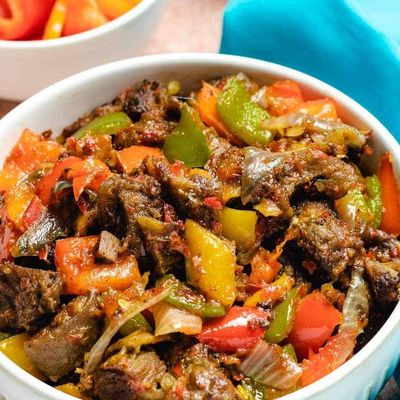
Asun (Spicy Smoky Goat Meat)
Goat meat (bone-in pieces, ideally) simmers in water with onion, garlic, bay, salt and bouillon till tender (45 min). Lifts out; pats dry; grills over high heat (or under a hot grill / on a griddle pan) till charred (8-10 min). Pepper base: scotch bonnet, red pepper, onion, garlic blitz to paste; sautés in oil with curry powder, thyme, ginger till fragrant. Charred meat tosses in the pepper paste; cooks for 5 minutes more; tops with fresh chopped onion. Eats hot.

Fish Roll
Dough: flour, butter, sugar, salt, baking powder, egg, milk, mixes to a smooth firm dough. Rests for 30 min. Filling: tinned sardines mash with sautéed onion, chilli, curry powder, thyme, salt. Dough divides; each portion rolls to a 12 cm circle; filling pipes or spoons in a line down the centre; dough rolls around the filling into a cigar; ends pinch sealed. Deep-fries for 5 minutes at 170°C till deep gold.
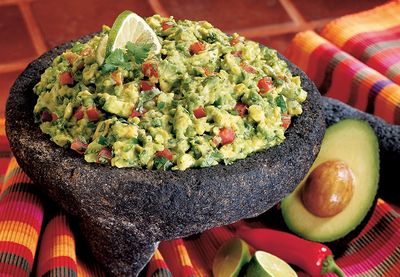
Guacamole
Avocados halve, scoop out, mash chunky (not smooth, texture matters). Onion finely chops, jalapeño deseeds and chops, coriander chops. Lime juice, salt, mix. Eat immediately or press cling film flat onto the surface to slow oxidation.
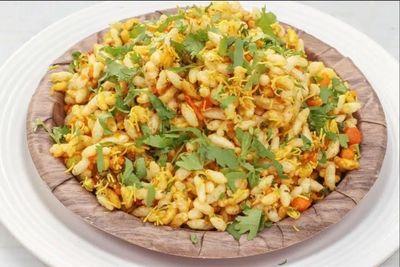
Jhal Muri
Jhal muri (literally "spicy puffed rice") is the most democratic snack in Bengal: assembled in seconds from a tin trunk by a muriwala, tipped into a rolled-newspaper cone, and eaten standing on a pavement for the price of a few rupees. The base is muri (puffed rice), and everything else is built around the principle of contrast. Raw mustard oil is the soul of the dish, sharp and nasal and slightly bitter; without it you have a salad, not jhal muri. The vegetables stay raw and crunchy, onion, green chilli, cucumber, tomato, chopped into tiny dice so each spoonful gets one of each. Peanuts and chana chur (or sev) add fat and crunch; black salt and chaat masala add the funky-tangy depth that makes Indian street snacks addictive. The lime goes in last so the puffs don't soften. This is a dish where technique matters less than ingredient quality: muri must be crisp (refresh in a dry pan if it's gone soft), mustard oil must be the proper pungent kind, and the lime must be fresh. It is everywhere in Bengal, tea-time at home, train platforms, the Maidan on a winter afternoon, and there is no recipe in any cookbook that quite captures the feel of it being mixed in front of you in a paper cone.