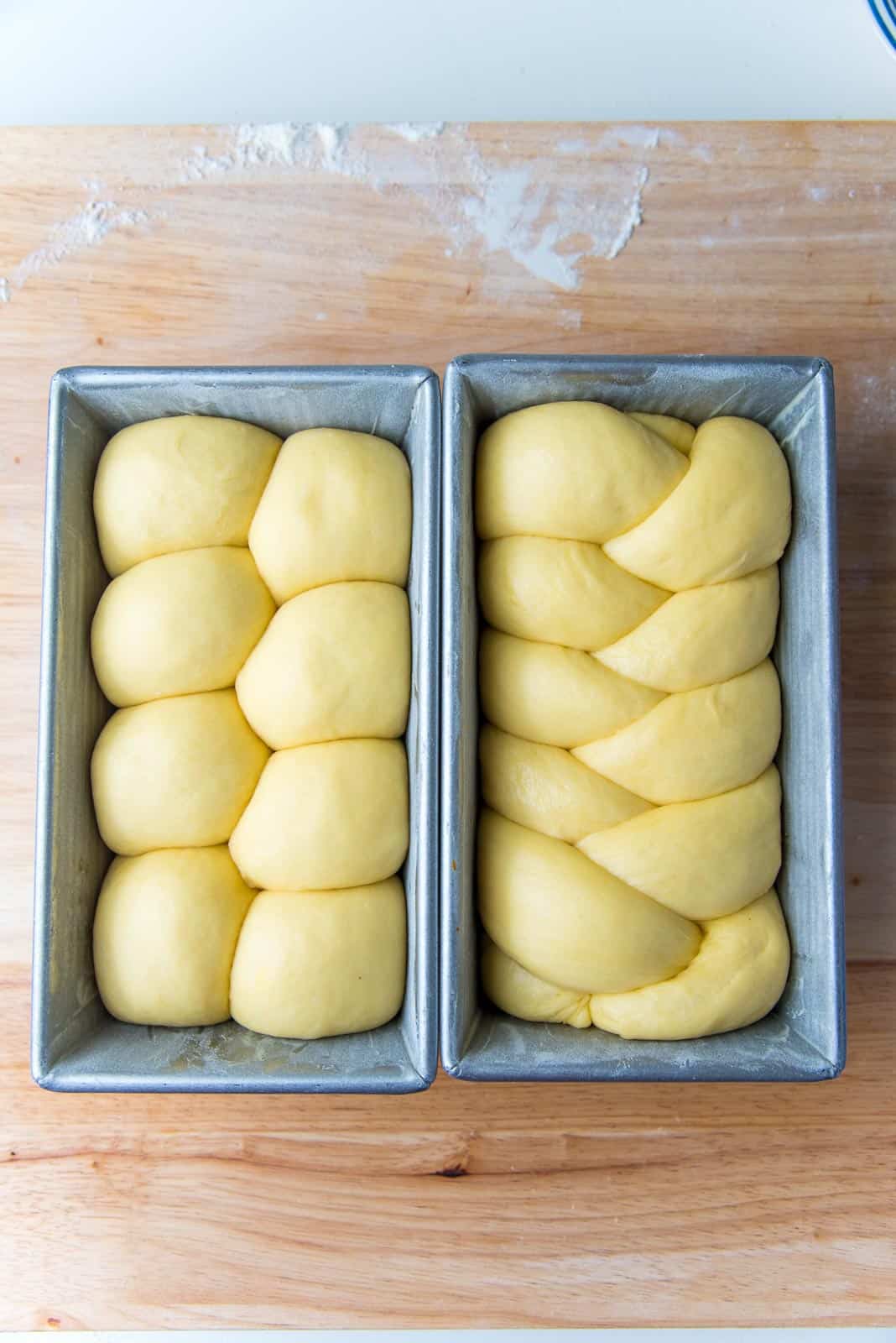
Enriched Doughs
Butter, eggs, sugar, sometimes milk: enrich a plain bread dough with these and it becomes brioche, challah, hot cross buns, panettone. The dough is a bit fussier, the rise a bit slower, but the reward is a soft tender crumb that lasts for days. We'll cover what each addition does and how to keep it all behaving.
Overview
A lean dough is just flour, water, salt and yeast. An enriched dough adds some combination of butter, eggs, milk, sugar and sometimes extras like dried fruit, citrus zest or chocolate. The result is a softer, richer, sweeter bread (brioche, challah, hot cross buns, panettone). The trade is a slower rise (sugar and fat both inhibit yeast) and a more demanding bake (sugar burns).
The classic enriched doughs:
- Brioche Dough: the French standard, equal weight butter to flour, almost pastry.
- Challah: the Jewish Sabbath bread, eggs but no butter, braided.
- Hot Cross Buns: spiced, fruited, fragrant.
- Pistachio Babka Buns: a filled, twisted, sweet enriched dough.
What Each Enrichment Does
Butter
The classic fat. Adds richness, browns the crust, tenderises the crumb. Coats the gluten strands, which means less elastic dough and a softer texture.
Effect on the rise: slows yeast somewhat (yeast prefers low-fat environments). The more butter, the slower the rise. A 50% butter brioche takes 4-5 hours to bulk-ferment where a lean dough takes 90 minutes.
When to add: most enriched recipes add butter AFTER the initial gluten is developed. The order is: mix flour, water, eggs, sugar, yeast. Knead 5 minutes until gluten starts forming. Then add butter in small pieces, knead another 10-15 minutes until fully incorporated. Adding all the butter at the start coats the flour proteins and prevents gluten from developing.
Eggs
Add fat, richness, colour (yolks) and structure (whites). The yolk fat tenderises like butter; the white protein adds extra gluten-like support and gives the crumb a slight sponginess.
Egg-rich doughs (challah, brioche) bake to a deep golden colour and stay tender for days because the egg fat retards staling.
Effect on the rise: minimal direct effect, but the added solids slow the dough by about 15-20%.
Sugar
Tenderises (sugar molecules interfere with gluten cross-linking), browns (Maillard and caramelisation reactions), sweetens, feeds the yeast.
Effect on the rise: small amounts (5% of flour weight) actually speed the rise by feeding the yeast. Large amounts (15%+ of flour weight) slow it dramatically: the high osmotic pressure dehydrates the yeast cells.
The trade: more sugar makes the bread taste sweeter and brown more, but the rise takes longer and you need more yeast. Hot cross buns at 12% sugar use double the yeast of a lean dough.
Milk
Replaces some or all of the water. Adds fat (full-fat milk only), lactose (a slow-fermenting sugar), and proteins that soften the crumb.
A milk dough has a tighter, more cake-like crumb than a water dough and stays soft longer. Hokkaido milk bread and Japanese white milk bread are the canonical examples.
Other Enrichments
- Honey: browns more aggressively than sugar, adds floral note, hygroscopic (keeps bread moist).
- Dried fruit: soaked first (otherwise pulls moisture from the dough), folded in at the end of bulk fermentation.
- Citrus zest: added with the flour at the mix stage; oils mingle through the dough.
- Cinnamon, cardamom, saffron: classic spice enrichments. Powdered spices go in with the flour; whole spices go in steeped milk or syrup.
Handling the Slower Rise
Enriched doughs need more yeast and more time than lean doughs. Two adjustments:
Double the yeast. A lean dough uses 1% of flour weight in instant yeast (5 g per 500 g flour). Brioche uses 2-3% (10-15 g per 500 g).
Bulk-ferment longer. Plan for 2-3 hours at room temperature for a typical enriched dough, sometimes 4-5 for the richest. Cold-proving overnight is helpful for both flavour development and timing flexibility.
The finger-poke test still works. The dough should spring back slowly when ready, just like a lean dough. See Proving.
Mixing Enriched Doughs
The order matters more than for lean doughs.
Standard enriched method:
- Warm the milk (if using) gently. Whisk in the yeast and a pinch of the sugar. Wait 5 minutes for the yeast to activate (small bubbles on top).
- In a large bowl: flour, remaining sugar, salt, eggs.
- Pour in the milk-yeast mixture. Mix with a wooden spoon until a rough dough comes together.
- Knead 5 minutes on the bench, or 3 minutes in a stand mixer with a dough hook. The gluten is starting to develop.
- Add the butter in small pieces, kneading or mixing until each piece is fully incorporated before adding the next.
- Continue kneading until the dough passes the window-pane test (see Gluten). For brioche-level enrichment, this takes 15-20 minutes by hand.
- The finished dough is soft, slightly tacky, and very smooth. It will slap audibly on the bench as you work it. This is correct.
If the dough is breaking apart and butter is leaking out, the room is too warm or the kneading is too aggressive. Move to a cool spot, work more gently, and finish in the fridge if needed.
Baking Enriched Doughs
Bake at a moderate oven temperature, lower than for lean doughs.
- Lean dough: 220-240°C
- Light enrichment (challah, dinner rolls): 180-200°C
- Heavy enrichment (brioche): 170-180°C
The reason: sugar burns. At lean-bread temperatures, the surface of a brioche turns black before the interior cooks. Lower heat lets the inside come up while the outside browns gently.
Egg wash before baking gives the classic deep-bronze sheen. Whisk 1 egg yolk with 1 tablespoon of milk or cream, brush lightly. Apply just before baking.
Internal temperature at the end should be at least 88°C for an enriched dough (lower than 95°C for lean because the egg and fat slow the moisture loss).
Where the Line Sits
Enriched dough becomes "cake" somewhere between 25% and 50% butter (relative to flour weight).
| Recipe | Butter % | Eggs | Sugar % | Yeast % | Category |
|---|---|---|---|---|---|
| Lean white bread | 0 | 0 | 0-2 | 1.0 | Bread |
| Dinner rolls | 5-10 | 1 | 5-8 | 1.5 | Bread |
| Challah | 0 | 4 | 7-10 | 2.0 | Bread (egg-rich) |
| Hot cross buns | 10 | 1 | 12 | 2.5 | Sweet bread |
| Classic brioche | 30-50 | 4 | 8-12 | 2.5 | Brioche |
| Brioche de Nanterre | 50+ | 6 | 10 | 3.0 | Almost cake |
| Stollen / Panettone | 25-35 | 3 | 15-20 | 3.0 | Sweet bread |
Brioche at 50% butter is the upper edge of what is recognisably bread. Past that, the dough is more pastry than loaf.
Common Mistakes
The dough is greasy and breaking up. Butter was added too quickly, or the room is too warm. Chill the dough 30 minutes, then resume gentle kneading.
The crust burned but the inside is raw. Oven temperature too high. Drop to 170°C and bake longer.
The crumb is dense and tight. Under-fermented. Enriched doughs are slow; double the bulk-ferment time and check the finger-poke test before shaping.
The bread tastes flat for the richness. Under-salted. Enriched doughs need a slightly higher salt percentage (2.5% of flour) to balance the sugar and richness.
The dough is impossible to shape because it is too soft. Cold-prove it overnight first. Cold enriched dough handles much better than warm.
Where Next
- Hydration: enriched doughs run lower hydration because eggs and butter add liquid fat.
- Gluten: the window-pane test is even more important here.
- Proving: doubling the yeast and lengthening the prove is the standard adjustment.
- Scoring: some enriched loaves are scored (brioche) and some are braided (challah) instead.
- Brioche Dough: the canonical heavy-enrichment recipe.
- Pistachio Babka Buns: a filled, twisted enriched dough.
Recipes mentioned here
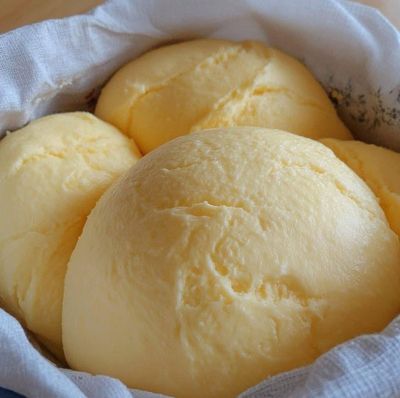
Brioche Dough
The quintessential French enriched yeast dough featuring butter and eggs for unmatched richness and tender crumb. This silky, golden dough is the foundation for elegant brioches, pastries, and breakfast breads. The long refrigeration develops flavor and makes the dough easier to shape. A showstopper on any breakfast or dessert table.
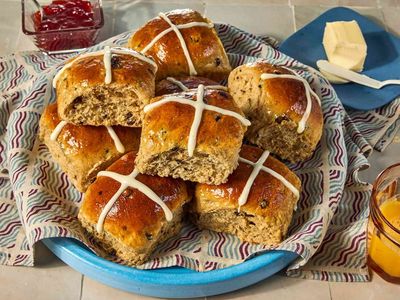
Hot Cross Buns
A yeasted dough enriched with milk, butter, an egg and a little sugar, spiced with cinnamon, nutmeg and mixed spice, scented with orange and lemon zest. Currants and chopped mixed peel folded in. Two rises (one in the bowl, one on the tray as 12 close-packed buns), a cross piped on with a flour-and-water paste, baked to deep gold, brushed with warm sugar glaze straight from the oven. Eaten warm or split and toasted.
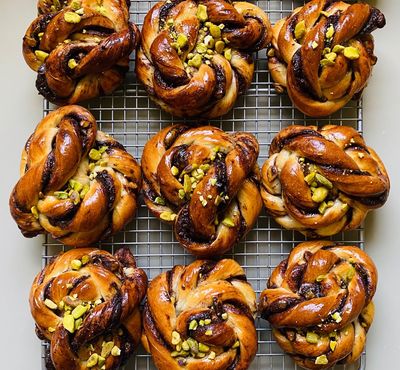
Pistachio Babka Buns
A rich babka dough - milk, butter, egg, sugar, yeast - kneaded until silky, given a short warm rise, then cold-proofed overnight to deepen the flavour. The filling is a date paste loosened with hot water, spiked with cinnamon, scattered with chopped pistachios. The dough rolls into a long rectangle, gets the filling spread across, rolls back into a log and cuts into seven 5 cm spirals. The spirals go cut-side up in a round cake tin, rise until they touch, and bake hot. A honey-and-sugar syrup brushed over the buns as they leave the oven sets the top tacky-sweet.
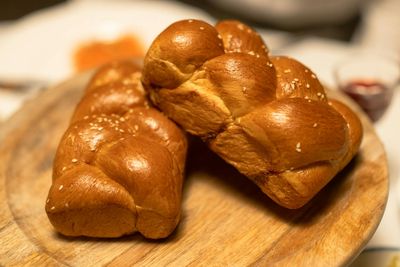
Challah
Strong bread flour worked with eggs, honey, oil, salt and warm water until the dough is smooth and elastic. Two long rises, the first slack and the second tight after braiding. A six-strand braid if you're showing off, three-strand if you want the loaf made before the candles. Brushed with egg yolk for the lacquer-deep crust, scattered with sesame or poppy seeds, baked until the bottom sounds hollow when tapped.
More like this
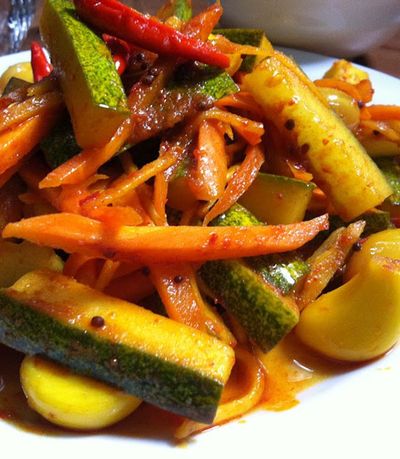
Acar Timun
Cucumber, carrot, shallot, chilli prep into thin slices or matchsticks. Salt rests for 10 minutes to draw moisture, drains. A simple dressing of vinegar, sugar, water and ginger whisks together. Vegetables toss with the dressing; rest for 1 hour at room temperature. Eats cool, never refrigerated cold; the texture suffers.
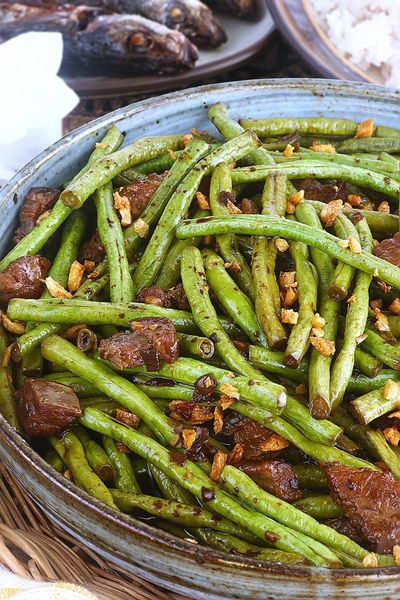
Adobong Sitaw
Garlic browns in oil; long beans toss in to colour briefly. Soy and vinegar pour in with bay and peppercorns; the beans braise covered until tender. Lid off; the liquid reduces to a glaze. Salt at the end, not the start, since soy is salty enough.
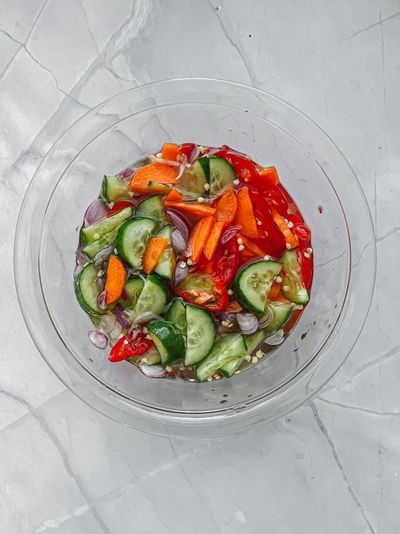
Ajad
A simple syrup of rice vinegar, palm sugar, water and salt is brought to a gentle simmer to dissolve the sugar, then cooled. Cucumber, shallot and chilli are sliced thin and combined in a small bowl. The cooled syrup is poured over. Rested for 10-15 minutes for the vegetables to wilt slightly into the dressing. Served in small individual ramekins as a dip, OR in a larger bowl as a side, with peanuts sprinkled on top.
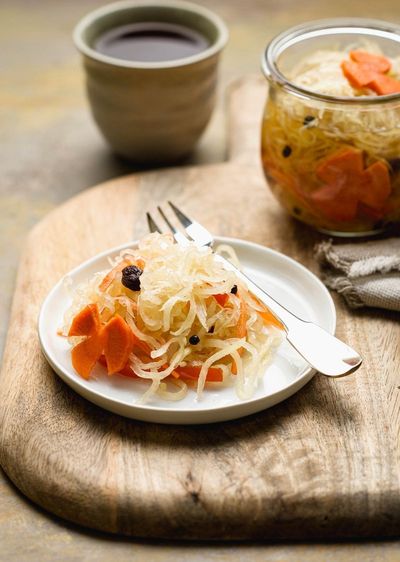
Atchara
Green papaya is peeled, seeded and shredded on a coarse grater. Carrot, ginger, garlic, red pepper, onion and raisins are all prepared in matching shreds. The vegetables are salted and rested for 1 hour to draw water; rinsed and squeezed dry. A syrup of cane vinegar, sugar and whole peppercorns simmers for 5 minutes. Hot syrup is poured over the vegetables in a sterilised jar. The jar is sealed, cooled and refrigerated overnight before eating. Improves over the following week.