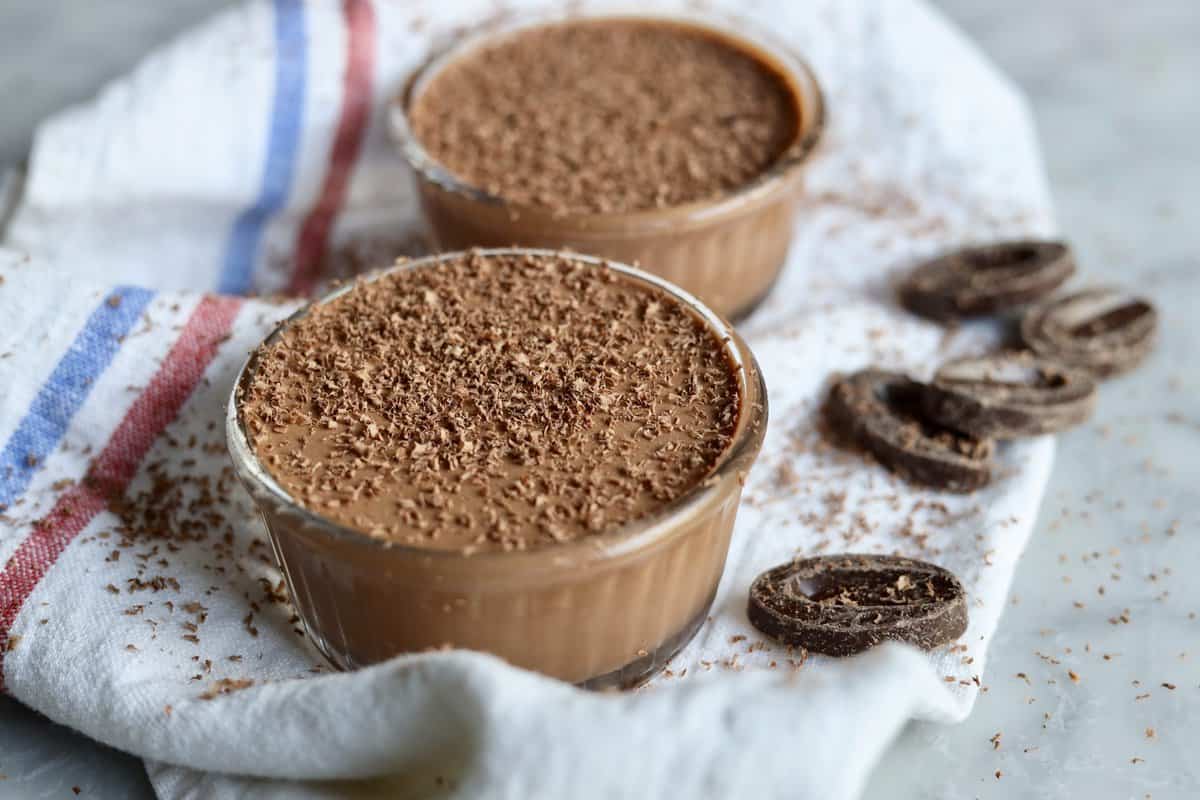
Set Creams and Mousses
The desserts where cream is the whole point. Creme brulee, creme caramel, panna cotta, chocolate mousse, bavarois. The underlying technique (yolks, dairy, a setting agent, gentle heat) is covered in the [eggs course / custards](../eggs/custards.md) page. This one's about turning those creams into something you'd plate up.
Overview
Set creams and mousses sit at the cream-rich end of patisserie. No pastry, no sponge; just an aerated or set-firm cream as the entire dessert.
Three setting mechanisms cover the family:
- Cooked yolks. The proteins coagulate at 75-82 C and thicken the cream into a custard. Creme brulee, creme caramel, baked custards.
- Gelatin. Set by gelatin leaves bloomed in water and stirred into the warm cream. Panna cotta, bavarois, jellied mousses.
- Aeration. Stiffly-whipped cream or whipped egg whites folded into a flavoured base. Chocolate mousse, fruit mousse, parfait.
Each mechanism gives a different texture. The cooked-yolk family is dense, custardy, set firm. The gelatin family is wobbly, lighter, dome-able. The aeration family is light, airy, almost foam.
The Cooked-Yolk Family
Creme Brulee
A chilled, dense egg-yolk-and-cream custard, topped with a torched-sugar lid. The sugar lid shatters when tapped with a spoon; the cool custard underneath is rich and silky.
The technique is in the custards page. The form is a 4-ramekin baked custard, refrigerated overnight, sugared and torched just before serving.
The classical flavours: vanilla (the original), coffee, ginger, lemon-zest.
See: Creme Brulee, Ginger Creme Brulee.
Creme Caramel
Same family as creme brulee but with a caramel layer at the bottom of each ramekin. Inverted onto a plate to serve; the caramel becomes a sauce around the custard.
Whole eggs (not just yolks) are used; the custard is set firmer than creme brulee and holds its shape when turned out.
See: Coffee Creme Caramel.
Pots de Creme
A French version of baked custard, made in small lidded pots. Richer and silkier than creme caramel, no caramel layer. Often chocolate or coffee flavoured.
Floating Islands (Iles Flottantes)
The strangest of the family. A poached meringue floats on a pool of creme anglaise; the meringue is shaped into a quenelle and gently cooked in milk or water. The contrast: soft cool custard underneath, light cool meringue on top, often with a thin caramel thread drizzled over.
See: Floating Islands.
The Gelatin Family
Panna Cotta
Italian, not French, but the technique crossed the border. Cream + sugar + gelatin + vanilla. Set in a mould; turned out to serve as a dome.
The classical pairing: panna cotta + a fruit coulis. Berries, peach, passion fruit, coffee.
Bavarois (Bavarian Cream)
A creme anglaise enriched with gelatin and folded with whipped cream. Sets firm enough to mould and turn out. The classical filling for charlottes.
The flavour variations are endless: chocolate, vanilla, fruit (raspberry, strawberry), coffee, liqueur (Grand Marnier, Cointreau).
Jellied Fruit Mousses
A fruit purée + gelatin + sometimes whipped cream + sometimes Italian meringue, set in a mould. Light, dome-shaped, brightly coloured.
See: Lime Mousse, Apricot Cognac Mousse, Chestnut Creme.
The Aerated Family
Chocolate Mousse
The classic. Two main methods:
Method 1: French (egg whites)
- Dark chocolate melted with butter.
- Egg yolks whisked into the warm chocolate.
- Egg whites whipped to stiff peaks, folded in.
- Optional: a small amount of whipped cream folded in for extra softness.
- Refrigerated 4+ hours.
The texture is light, airy, almost foam-like. Eats with a single spoon.
Method 2: Italian (whipped cream)
- Dark chocolate melted.
- Whipped cream folded in.
- No egg whites; no eggs at all.
The texture is denser, richer, more cream-forward. Holds its shape longer.
The French method is classical; the Italian method is easier and slightly more stable. Both are correct.
See: Chocolate Mousse.
Fruit Mousse
Fruit purée + Italian meringue + whipped cream. The result is a light fruit foam that sets if it includes gelatin, or stays soft if not.
See: Lime Mousse, Raspberry Mousse, Apricot Cognac Mousse.
Parfait
A French parfait is a frozen mousse: aerated cream-and-yolk-and-flavour mixture, frozen without churning. The egg yolks prevent ice crystals from forming. Lighter than ice cream but with similar coldness.
See: Anise Parfait, Limoncello Parfait.
Souffle (Hot)
Technically aerated, technically cooked. Covered in detail in the souffles page. The bridge between cream-aeration and baked custard.
How to Choose
For a dinner-party menu where you want one dessert from this family:
- Want impressive and dramatic: Creme brulee. The torched-sugar moment.
- Want elegant and turn-out-able: Panna cotta. Wobbly, beautifully simple.
- Want chocolate-rich: Chocolate mousse. Decadent.
- Want light and refreshing: Fruit mousse. Light, bright, fruit-forward.
- Want to use up egg whites: A floating island (uses both yolks for anglaise and whites for the meringue).
The Universal Plating
A set cream or mousse needs a textural contrast on the plate. Without it the dessert is just smooth. Standard accompaniments:
- A tuile or shortbread biscuit for crunch.
- A fruit coulis as a sauce pool.
- A scatter of fresh berries.
- A dust of cocoa or icing sugar.
- A sprig of mint or microgreen.
- A spoonful of compote.
Pick one or two; don't crowd the plate.
Common Mistakes
The cream didn't set. Not enough gelatin (for the gelatin family), or under-cooked (for the cooked-yolk family). For gelatin: 2 leaves per 200 ml cream is the rule. For cooked: take to coat-the-back-of-spoon consistency, no less.
The cream set rubbery. Too much gelatin, or over-cooked. For gelatin: less next time. For cooked: pull at 82 C max.
The mousse collapsed. Egg whites or cream not whipped enough, or over-folded so the air came out. Stiff peaks (not soft) for whites; medium-stiff for cream; fold gently.
The chocolate seized when cream was added. Cold cream + hot chocolate breaks the emulsion. Warm the cream to lukewarm before adding to chocolate. Or pour the hot chocolate onto cool cream gradually.
The bavarois separated when turned out. Insufficient gelatin, or under-set. Test the firmness by tilting the mould; it should hold completely flat.
The torched sugar lid is cloudy. Too much sugar in too thick a layer; the heat couldn't penetrate to caramelise. Sprinkle a thin even layer; torch evenly.
Where Next
- Eggs course / Custards: the cooked-yolk technique.
- Eggs course / Meringues: the meringue base used for fruit mousses.
- Composing a Dessert: the framework for matching texture and temperature.
- Tarts: the alternative dessert form.
- Patisserie Course landing: back to the main course.
Recipes mentioned here
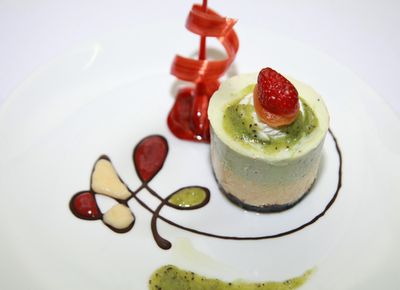
Anise Parfait
A glamorous chilled parfait infused with the sophisticated anise flavor of Ricard or Pernod, served in a frozen ring and garnished with fresh berries and colorful fruit coulis. This frozen confection offers the lightness of whipped cream with the richness of egg custard, making it an elegant choice for formal dinners without requiring last-minute oven work.
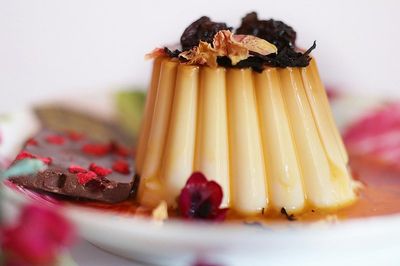
Coffee Creme Caramel
An elegant custard-based crème caramel delicately infused with ground coffee, providing subtle bitterness and depth that balances the sweet caramel coating and silky custard. The coffee and caramel pairing creates a sophisticated flavor profile suitable for dinner parties and special occasions.
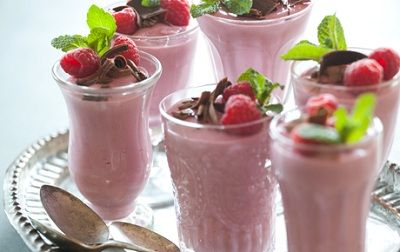
Raspberry Mousse
A light and fruity mousse that lets the pure, bright flavor of raspberry shine through, combined with airy Italian meringue and whipped cream for a luxurious texture. This elegant dessert celebrates the essence of raspberries without overwhelming them with other flavors or fussy presentation.
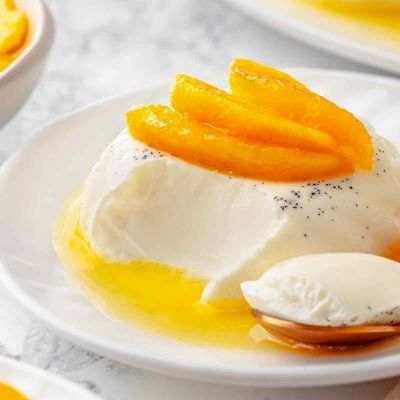
Panna Cotta
Powdered gelatin blooms in cold milk 5 minutes. Double cream, the remaining milk, sugar and a vanilla pod (split and scraped) heat gently to just under a simmer, never to a boil. Off heat, the bloomed gelatin stirs in until dissolved. The mixture strains through a sieve into 6 small ramekins or dariole moulds. Refrigerated for 4-6 hours (ideally overnight) until set. To serve: briefly dip each mould in hot water; invert onto a plate; spoon over the berry compote.
More like this
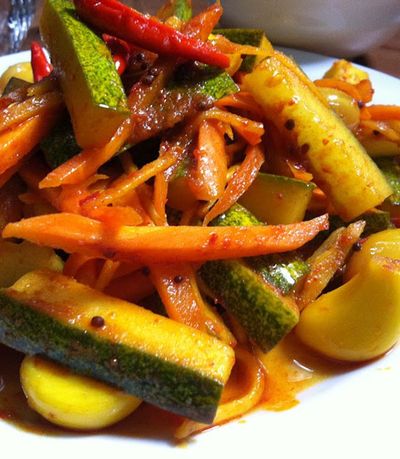
Acar Timun
Cucumber, carrot, shallot, chilli prep into thin slices or matchsticks. Salt rests for 10 minutes to draw moisture, drains. A simple dressing of vinegar, sugar, water and ginger whisks together. Vegetables toss with the dressing; rest for 1 hour at room temperature. Eats cool, never refrigerated cold; the texture suffers.
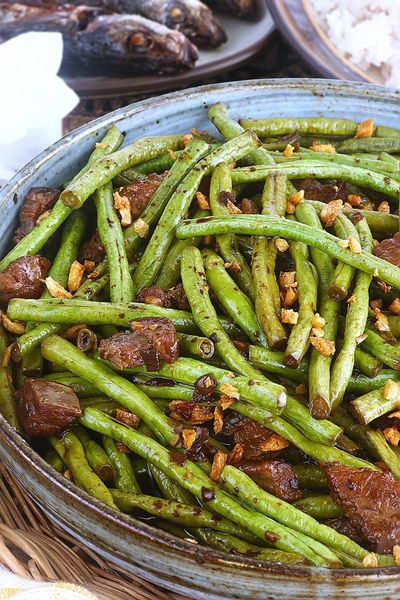
Adobong Sitaw
Garlic browns in oil; long beans toss in to colour briefly. Soy and vinegar pour in with bay and peppercorns; the beans braise covered until tender. Lid off; the liquid reduces to a glaze. Salt at the end, not the start, since soy is salty enough.
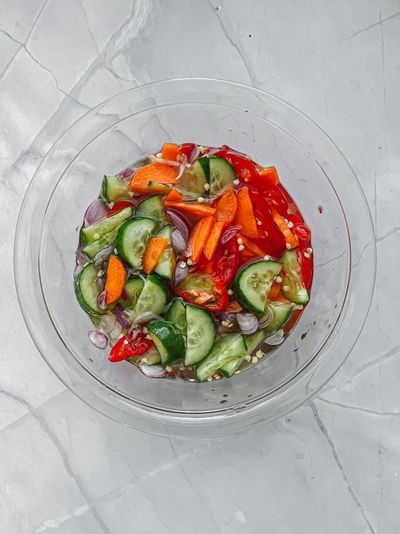
Ajad
A simple syrup of rice vinegar, palm sugar, water and salt is brought to a gentle simmer to dissolve the sugar, then cooled. Cucumber, shallot and chilli are sliced thin and combined in a small bowl. The cooled syrup is poured over. Rested for 10-15 minutes for the vegetables to wilt slightly into the dressing. Served in small individual ramekins as a dip, OR in a larger bowl as a side, with peanuts sprinkled on top.
Atchara
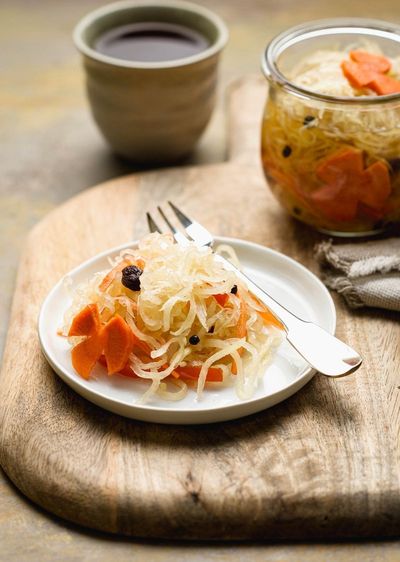
Green papaya is peeled, seeded and shredded on a coarse grater. Carrot, ginger, garlic, red pepper, onion and raisins are all prepared in matching shreds. The vegetables are salted and rested for 1 hour to draw water; rinsed and squeezed dry. A syrup of cane vinegar, sugar and whole peppercorns simmers for 5 minutes. Hot syrup is poured over the vegetables in a sterilised jar. The jar is sealed, cooled and refrigerated overnight before eating. Improves over the following week.