Tarts
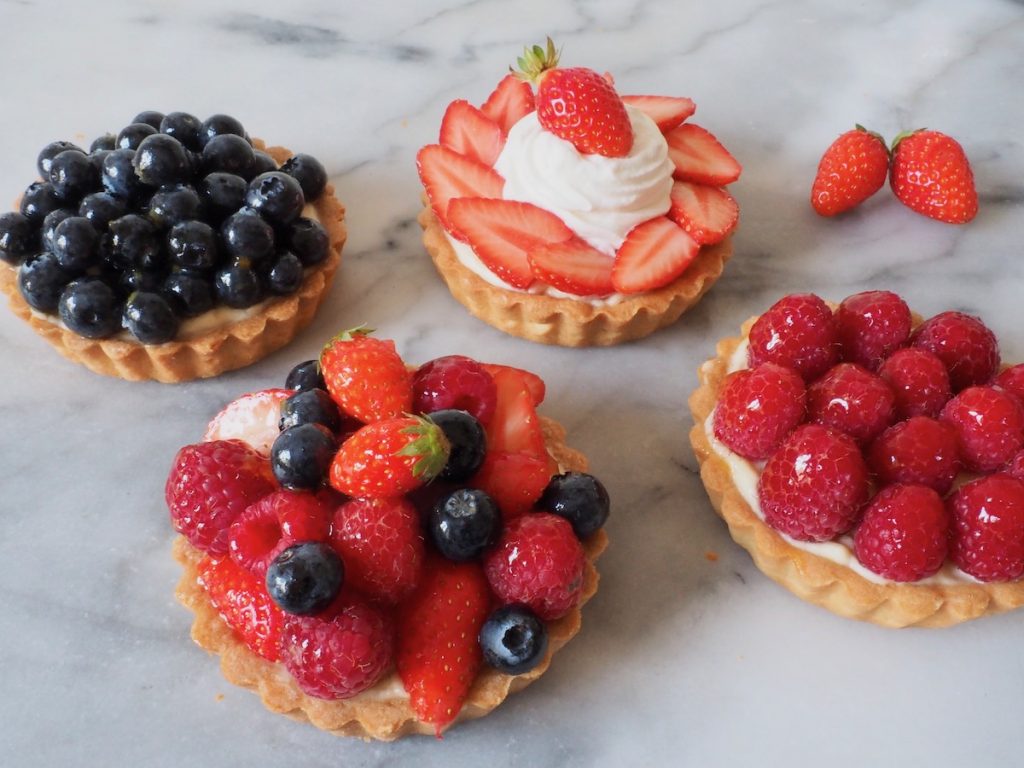
Tarts are the easiest patisserie to make properly at home. A sweet-short shell, a filling, sometimes a glaze, and you have something that wouldn't look out of place in a Paris window. Lemon, fruit, chocolate, custard, almond, caramelised apple: the variations are wide and the technique stays the same.
Overview
Tarts are the most home-cook-friendly patisserie. The structure is fixed: a blind-baked sweet-short pastry shell, plus a filling. The variations come from the filling. Once you can make a clean blind-baked shell (see sweet short pastry), the tart canon opens.
This page covers the main categories of classical French tart, with cross-references to the canonical recipes for each.
The Universal Shell
For a standard 22-24 cm tart shell, blind-baked, ready to fill:
- 250 g sweet short pastry
- Rolled to 3-4 mm thick
- Lined in a tart tin, refrigerated 30 minutes
- Blind-baked with paper and beans at 190 C for 15 minutes
- Beans removed, returned for 5-10 minutes to fully bake (cool completely before filling)
- For wet fillings: brushed with beaten egg white and returned to oven 2 min to seal
This is the universal starting point for every tart in this section.
Curd Tarts (Lemon, Lime, Passion Fruit)
The classical citrus tart. Lemon curd poured into a cooled shell, baked briefly to set, cooled.
The lemon curd
For one 22-24 cm tart:
- 175 g caster sugar
- 4 medium eggs + 2 extra yolks
- 150 ml lemon juice (from 4-5 lemons)
- Zest of 2 lemons
- 175 g unsalted butter (cubed, cold)
Method
- Whisk eggs, yolks, sugar in a heatproof bowl. Add lemon juice and zest.
- Place over a simmering bain-marie. Stir constantly with a wooden spoon or rubber spatula.
- Cook for 12-15 minutes, until thick enough to coat the back of the spoon (the creme anglaise test).
- Off heat, beat in the cold butter cubes one at a time. The butter melts into the warm curd, enriching it.
- Pass through a fine sieve to remove the zest pulp.
- Pour into the pre-baked shell. Smooth.
- Refrigerate 4 hours minimum.
For a slightly set curd (the French style): bake the filled tart at 110 C for 15-20 minutes after pouring; it sets to a custard-like firmness. For a soft set: don't bake; refrigerate longer.
See: Lemon Tart recipe.
Variants
- Tarte au citron meringuee: lemon tart topped with Italian meringue, torched golden. Adds sweet to balance sour.
- Tarte au passion: replace half the lemon juice with passion fruit pulp.
- Tarte au lime: all lime, plus a touch of lime zest in the pastry.
Fruit Tarts (Aux Fruits)
The patisserie counter classic. Sweet short pastry, filled with creme patissiere, topped with arranged fresh fruit, glazed with apricot jelly.
Build
- Blind-baked sweet short shell.
- Cooled.
- 250 g creme patissiere spread evenly in the shell (about 1.5 cm deep).
- Fresh fruit arranged on top in concentric circles or a pattern. Common combinations:
- Strawberries halved
- Raspberries with blueberries
- Mango slices with kiwi
- Stone fruit (peach, apricot) cut into wedges
- Apricot glaze brushed over the fruit (warmed apricot jam thinned with a little water, strained).
- Refrigerated 30 minutes before slicing.
The patissiere prevents the fruit from soaking the pastry; the glaze keeps the fruit from drying out.
Tarte Tatin
Upside-down caramelised apple tart. A French invention from the late 1800s. Apples are caramelised in butter and sugar in the pan, puff pastry is laid over the top, then baked. To serve, inverted onto a plate so the caramelised apples are on top.
Method
- 6-8 firm dessert apples (Cox or Granny Smith), peeled, cored, halved.
- In a heavy ovenproof pan (cast-iron, copper), make a dry caramel: 100 g caster sugar melted to amber.
- Off heat, dot 100 g butter into the caramel.
- Arrange the apple halves cut-side up in the caramel, snug together.
- Cook on low heat for 15-20 minutes; the apples soften and caramelise.
- Roll out puff pastry to a disc slightly larger than the pan.
- Lay over the apples; tuck the edges down into the pan.
- Bake at 200 C for 25-30 minutes until the pastry is golden.
- Cool 10 minutes.
- Invert onto a plate (this is the dramatic moment; expect a small amount of hot caramel to escape).
The apples are now on top, glistening with caramel. Serve warm with creme fraiche or vanilla ice cream.
See: Tarte Tatin recipe.
Tarte Normande (Apple Custard)
A Norman classic. Apple slices in a sweet short shell, custard poured over, baked.
Build
- Blind-baked shell (par-baked only; the bake will finish in the oven).
- Fan of thinly-sliced apple in the shell.
- Custard mixture: 200 ml double cream + 100 ml milk + 3 egg yolks + 50 g caster sugar + 1 tablespoon Calvados + 1 teaspoon vanilla.
- Pour over the apples; the custard fills the gaps and creates a layer over the top.
- Sprinkle with caster sugar.
- Bake at 180 C for 35-40 minutes; the custard sets, the top browns.
- Cool to room temperature.
Tarte au Chocolat (Chocolate)
The simplest chocolate tart. A blind-baked shell + a chocolate ganache filling, set, served cold.
Build
- Blind-baked shell, cooled.
- Ganache: 200 g good dark chocolate (70%) chopped finely; pour over 200 ml hot double cream. Wait 2 min, then stir until smooth.
- (Optional) Beat in 20 g cold butter and 1 tablespoon dark rum for shine.
- Pour into the shell. Refrigerate 4 hours.
Serve at room temperature, not cold. The ganache sets in the fridge but eats best warm. Take out 30 minutes before serving.
See: Chocolate Raspberry Tart for a tart that pairs the ganache with fresh raspberries.
Tarte aux Pommes (The Classic Apple Tart)
Differs from tarte normande in that there's no custard; it's just apples on pastry.
Build
- Blind-baked shell.
- Apple compote (peeled, cored apples cooked down with a touch of sugar, butter and Calvados; about 30 minutes; mashed roughly).
- Compote spread in the shell.
- Thinly-sliced raw apples fanned over the top in overlapping rows.
- Brushed with melted butter and dusted with caster sugar.
- Baked at 180 C for 25 minutes; the top apples brown and crisp.
- Optionally glazed with apricot jam.
See: Apple Tart.
Frangipane Tarts
The almond-cream tart. Frangipane is creamed butter + sugar + eggs + ground almonds + flour. Filled into a sweet short shell with fruit pressed in, baked. The almond cream sets around the fruit.
Build
- Blind-baked shell.
- Frangipane: 100 g soft butter + 100 g caster sugar + 2 eggs + 100 g ground almonds + 30 g flour.
- Spread in the shell.
- Sliced fresh fruit (peach, apricot, plum, fig, pear) pressed gently into the frangipane.
- Baked at 180 C for 30-35 minutes until golden on top and just set.
The classical pairings: apricot frangipane, pear frangipane, raspberry frangipane.
See: Apricot Tart, Apple Passion Fruit Tart.
Lemon-Meringue and Variations
Hybrid tarts that combine multiple components.
- Tarte au citron meringuee: lemon tart + Italian meringue torched on top.
- Lemon-orange meringue pie: Levantine variation with orange in the curd.
See: Lemon Orange Meringue Pie.
Common Mistakes Across All Tarts
The pastry is soggy. Either under-baked, or filled too soon. Always blind-bake to deep gold; cool before filling. For wet fillings, egg-wash the still-warm shell and return to the oven 2 minutes to seal.
The curd / custard cracked. Over-baked. Pull the tart while the centre still wobbles slightly; it sets as it cools.
The fruit on top looks shrivelled. Used unripe or refrigerated fruit. Best fruit is room-temperature and ripe. Slice and arrange just before serving; brush with glaze to retain freshness.
The chocolate ganache cracked when cut. Set too cold. Take the tart out of the fridge 30 min before serving; the ganache softens to its right texture.
Tarte tatin: the caramel hardened. Too long between caramelisation and inverting, or inverted onto a cold plate. Warm the serving plate slightly first; invert promptly after cooling 10 min.
Where Next
- Classical Cakes: the larger composed cakes.
- Set Creams and Mousses: cream-centred desserts.
- Pastry course / Sweet Short: the shell technique.
- Eggs course / Custards: the curd and patissiere technique.
- Patisserie Course landing: back to the main course.
Recipes mentioned here
Apple Tart
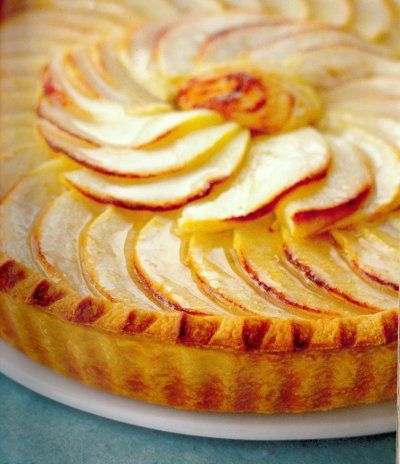
This apple tart features a buttery sweet shortcrust pastry filled with a vanilla-scented apple compote and topped with delicately arranged baked apple slices. It is best served barely cool with a spoonful of cream or crème fraîche to complement the caramelised fruit.
Apricot Tart
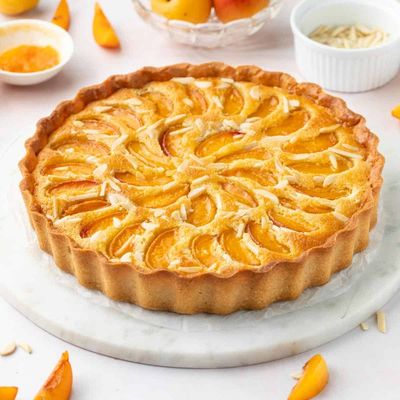
This apricot tart uses a sweet shortcrust pastry shell filled with crème pâtissière and a decorative arrangement of ripe apricot halves. It is best served warm or at room temperature, glazed lightly to bring out the fruit's sweetness.
Lemon Tart
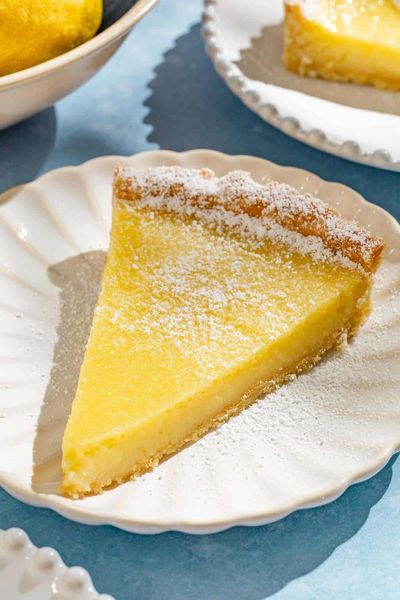
Sweet shortcrust pastry blind-bakes to set the base. A custard of eggs, sugar, lemon juice, zest and butter cooks gently to a smooth glossy curd. The curd pours into the still-warm shell, the tart bakes briefly to set, cools fully. Served plain or with a dusting of icing sugar.
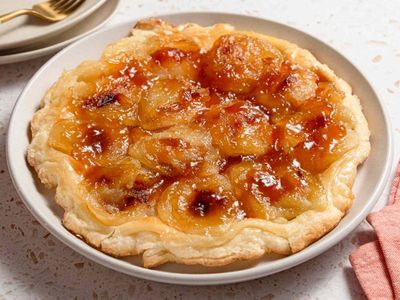
Tarte Tatin
A puff pastry round (homemade or all-butter shop-bought) is cut to fit the pan; refrigerated. In a 24 cm heavy ovenproof frying pan (cast iron or copper Tatin pan), sugar caramelises directly with butter to a deep amber syrup. Off heat, peeled and halved (or quartered) apples, preferably a firm tart variety like Granny Smith, Braeburn or Cox, pack tightly into the pan rounded-side-down on the caramel. Returns to medium heat for 5 minutes to start the apples cooking. The pastry drapes over the top, edges tucked in around the apples. Baked at 200°C for 30-35 minutes until the pastry is deep golden. Rests for 5 minutes; then carefully inverted onto a flat serving plate (the dramatic moment). Glazed-amber apples sit on top of crisp pastry.
More like this
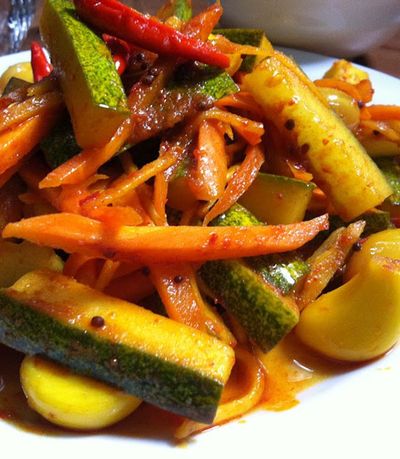
Acar Timun
Cucumber, carrot, shallot, chilli prep into thin slices or matchsticks. Salt rests for 10 minutes to draw moisture, drains. A simple dressing of vinegar, sugar, water and ginger whisks together. Vegetables toss with the dressing; rest for 1 hour at room temperature. Eats cool, never refrigerated cold; the texture suffers.
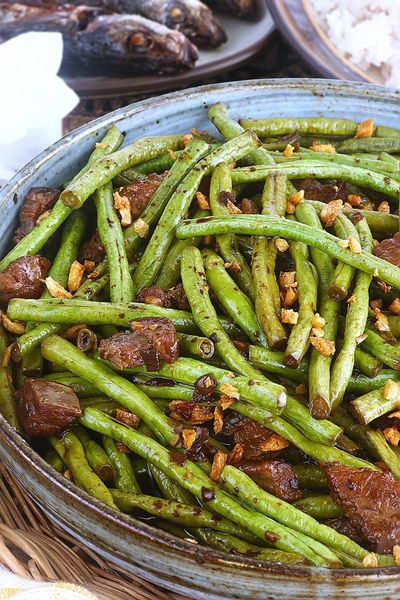
Adobong Sitaw
Garlic browns in oil; long beans toss in to colour briefly. Soy and vinegar pour in with bay and peppercorns; the beans braise covered until tender. Lid off; the liquid reduces to a glaze. Salt at the end, not the start, since soy is salty enough.
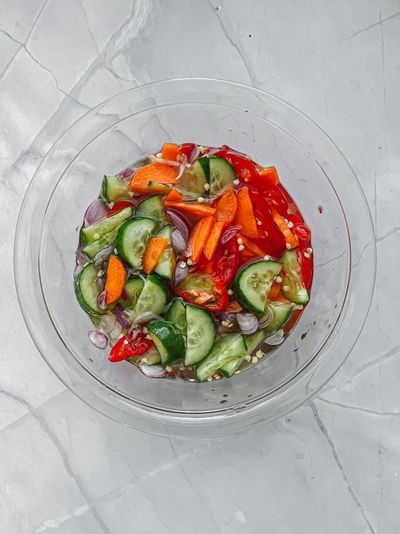
Ajad
A simple syrup of rice vinegar, palm sugar, water and salt is brought to a gentle simmer to dissolve the sugar, then cooled. Cucumber, shallot and chilli are sliced thin and combined in a small bowl. The cooled syrup is poured over. Rested for 10-15 minutes for the vegetables to wilt slightly into the dressing. Served in small individual ramekins as a dip, OR in a larger bowl as a side, with peanuts sprinkled on top.
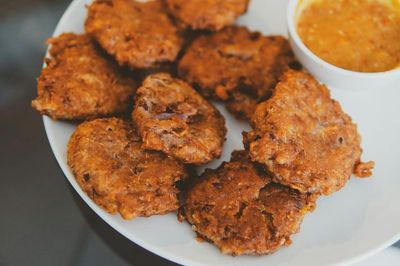
Akara
Dried black-eyed beans soak briefly to loosen the skins; the skins rub off (this is the key step, skin-on akara is bitter and grey). The peeled beans go into a blender with onion, Scotch bonnet and just enough water to make a thick batter (not a paste). The batter is whipped by hand or with a wooden spoon for 5 minutes until light and aerated, this is what makes akara fluffy rather than dense. Spoonfuls drop into 175°C oil and fry for 3-4 minutes per side until golden. Drained on paper. Eaten hot.