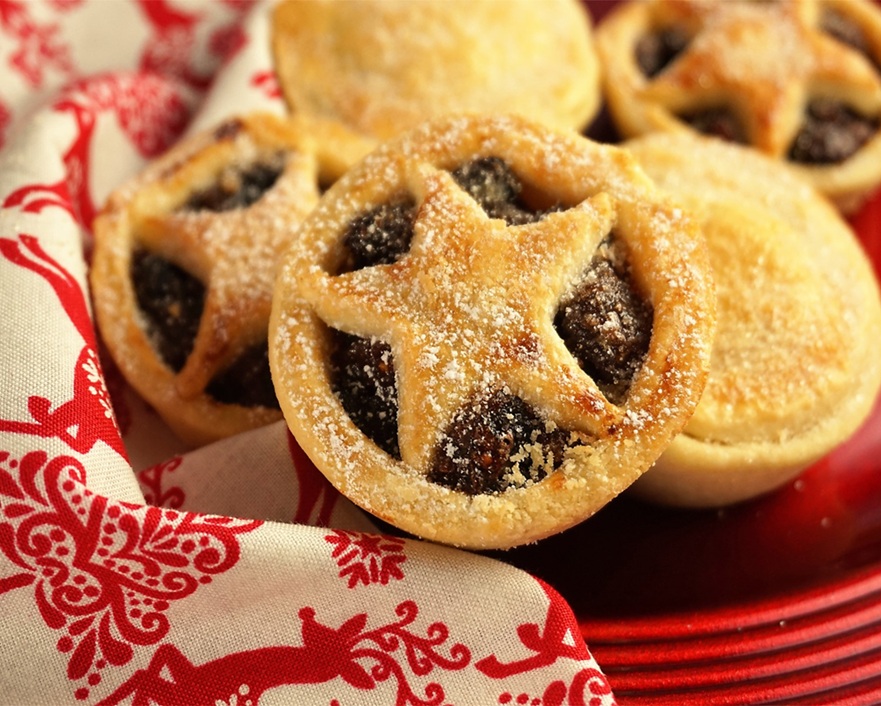
Sweet Short Pastry
Pate sucree is shortcrust's dressier cousin. Sugar in the dough gives it a biscuit-snap when baked, an egg gives it richness, and the case it makes is the one you see under every glossy fruit tart in a patisserie window. A little fussier to handle than plain shortcrust, but the pay-off is real.
Overview
Sweet short (pate sucree, or pate sablee at its richest) is the dessert cousin of shortcrust. The difference is sugar. Sugar makes the dough behave differently: it browns more deeply, it tenderises further, and it makes the dough more fragile to handle. The pay-off is a finished case with a snap-when-bitten, almost-biscuit texture that holds creams and fruit beautifully.
The basic ratio shifts. Classical pate sucree is roughly:
- 250 g plain flour
- 125 g butter (cold, cubed)
- 100 g icing sugar
- 1 medium egg
- 1 small pinch fine sea salt
- 1/2 teaspoon vanilla extract (optional)
Notice: more sugar than water (the egg replaces the water of shortcrust), the use of icing sugar (caster sugar leaves a slight grit), and the explicit vanilla. Some recipes add a tablespoon of ground almonds for richness; others use only egg yolks for a deeper colour. Variations are the rule, not the exception.
The Two Methods
Two classical ways to mix the dough: the rub-in (like shortcrust) and the cream-in (like cake). They produce slightly different textures.
Method 1: Rub-In (Pate Brisee Sucree)
Like shortcrust but with sugar added. Crumblier, more rustic.
- Sift flour, icing sugar and salt into a large bowl.
- Add cold cubed butter. Rub in until the mixture resembles coarse breadcrumbs with small butter speckles.
- Beat the egg lightly with the vanilla in a small bowl.
- Make a well in the centre. Add the beaten egg.
- Use a butter knife to cut the egg through the dry mix.
- Bring together by hand, pressing once or twice. Do not knead.
- Wrap, flatten to a disc, chill 1 hour.
Method 2: Cream-In (Pate Sucree)
Cream butter and sugar first, then add flour. Smoother, more uniform, less crumbly. The patisserie standard.
- Beat 125 g soft butter with 100 g icing sugar until pale and creamy (2-3 minutes with a wooden spoon or stand mixer).
- Beat in the egg until smooth.
- Add 1 teaspoon vanilla. Stir.
- Sift in 250 g flour. Fold gently with a spatula until just combined; the dough should be soft and slightly sticky.
- Turn onto a lightly floured surface. Bring together quickly. Wrap, flatten to a disc, chill at least 2 hours (this dough is softer than the rub-in version and needs more rest before rolling).
The cream-in method gives a slightly more uniform dough that rolls more cleanly. The rub-in gives a crisper, sandier crumb. Both work for the same applications; pick by preference.
Rolling and Lining
Sweet short is more fragile than shortcrust. The sugar makes it more prone to cracking.
- Roll between two sheets of baking parchment if it cracks on a floured bench. The parchment supports the fragile sheet and stops it sticking.
- Roll thinner than shortcrust (2-3 mm) for tartlets, 4 mm for a full tart.
- Lift into the tin by peeling away the top parchment, draping the dough onto the tin (using the bottom parchment to support it), then pressing into place.
- If it tears, patch with offcuts. The seam will be invisible after baking.
Blind Baking
Almost every sweet short application is blind-baked, then filled cold (a curd, a creme, a fruit topping). Method as for shortcrust:
- Line with paper and beans.
- Bake at 180-190°C for 15 minutes.
- Remove paper and beans.
- Return for 5-10 minutes until deep gold (the sugar makes this colour deeper and faster than shortcrust).
- Cool completely before filling.
For very wet fillings (lemon curd, ganache, custard): brush the still-warm par-baked shell with beaten egg white. The egg seals the surface so moisture cannot soak through.
Variations
Pate Sablee (Sandier)
More butter, less liquid. Replaces the egg with just an egg yolk and a tablespoon of cream. Produces an even shorter, more crumbly, almost shortbread-like texture.
- 250 g flour
- 175 g butter
- 100 g icing sugar
- 1 egg yolk
- 1 tablespoon double cream
- pinch salt
Cream-in method only (rub-in would not bind without enough liquid). Best for tartlets where the case is almost a biscuit in its own right.
Pate Sucree au Cacao (Chocolate)
Substitute 30 g of the flour with 30 g cocoa powder. The dough darkens dramatically. Pair with a vanilla creme patissiere for the classic chocolate-vanilla mille tartelette.
Pate Sucree aux Amandes (Almond)
Add 50 g ground almonds with the flour. Slightly nuttier, slightly heavier, holds heavier fillings (poached pear, almond cream) well.
Common Mistakes
The dough is too soft to roll. Insufficient rest. Sweet short needs longer rest than shortcrust (the egg keeps it softer). Chill another hour and try again.
The shell cracked during the blind bake. Stretched into the tin. Press, do not stretch. Patch with offcuts; the seam disappears.
The shell is dark brown at the edges, pale in the middle. Too much heat from the top of the oven, or oven hotter than 180. Drop temperature, move to a lower rack.
The shell is pale and undercooked at the centre. Under-baked. Sweet short needs the full bake (15 min + 5-10 uncovered) to fully crisp. The colour at the base is the cue, not the colour at the rim.
The pastry tastes bland. Forgot the salt, or used flavourless butter. Salt makes the sweetness pop; high-quality cultured butter (lurpak, etc.) makes a noticeable difference.
The pastry is greasy. Butter melted during handling. Work cooler or chill more often.
Where Next
- Shortcrust Pastry: the savoury cousin.
- Puff and Rough Puff: laminated pastry, the next family.
- Sweet Short Pastry recipe: canonical recipe with exact quantities.
- Flan Pastry: a slightly richer sweet short.
- Pastry Course landing: back to the main course.
More like this
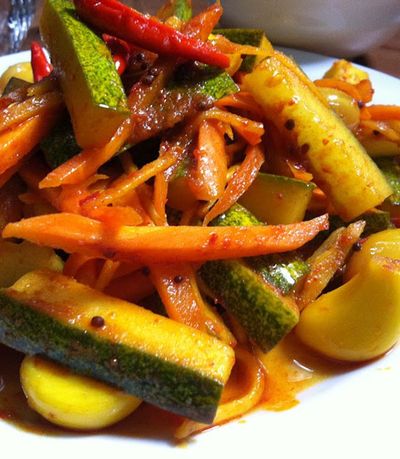
Acar Timun
Cucumber, carrot, shallot, chilli prep into thin slices or matchsticks. Salt rests for 10 minutes to draw moisture, drains. A simple dressing of vinegar, sugar, water and ginger whisks together. Vegetables toss with the dressing; rest for 1 hour at room temperature. Eats cool, never refrigerated cold; the texture suffers.
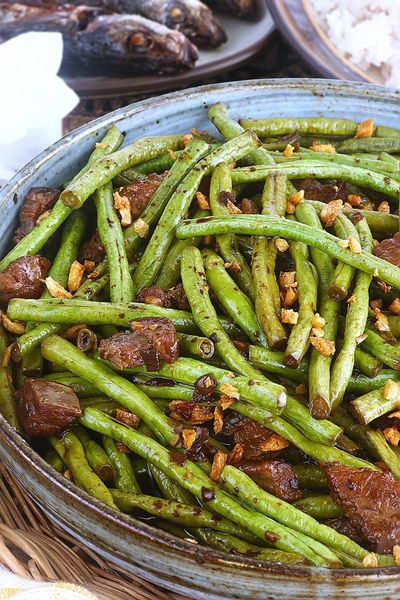
Adobong Sitaw
Garlic browns in oil; long beans toss in to colour briefly. Soy and vinegar pour in with bay and peppercorns; the beans braise covered until tender. Lid off; the liquid reduces to a glaze. Salt at the end, not the start, since soy is salty enough.
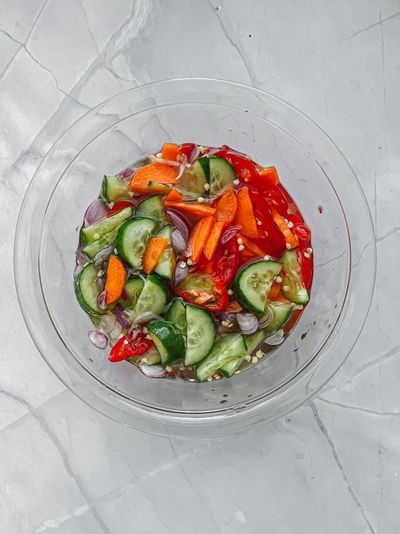
Ajad
A simple syrup of rice vinegar, palm sugar, water and salt is brought to a gentle simmer to dissolve the sugar, then cooled. Cucumber, shallot and chilli are sliced thin and combined in a small bowl. The cooled syrup is poured over. Rested for 10-15 minutes for the vegetables to wilt slightly into the dressing. Served in small individual ramekins as a dip, OR in a larger bowl as a side, with peanuts sprinkled on top.
Akara
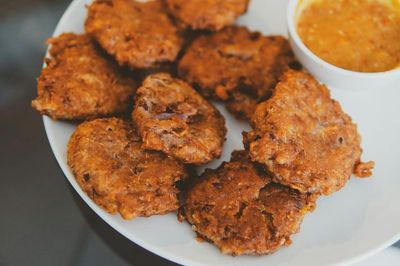
Dried black-eyed beans soak briefly to loosen the skins; the skins rub off (this is the key step, skin-on akara is bitter and grey). The peeled beans go into a blender with onion, Scotch bonnet and just enough water to make a thick batter (not a paste). The batter is whipped by hand or with a wooden spoon for 5 minutes until light and aerated, this is what makes akara fluffy rather than dense. Spoonfuls drop into 175°C oil and fry for 3-4 minutes per side until golden. Drained on paper. Eaten hot.