Composing a Dessert
Once you understand the bits a French dessert is made of (texture, temperature, colour, flavour balance), you stop following recipes and start adapting them. This page is the framework: what to think about, what to combine, when to say "that's enough."
Overview
A finished French dessert is rarely one thing. It's a small composition of two to five elements: a base (pastry or sponge), a cream (custard, mousse, ganache), a fruit or chocolate accent, sometimes a meringue or a streusel for texture, sometimes a sauce for the plate.
The art is making the elements work together. A pavlova is meringue + cream + fruit; the meringue is sweet and chewy, the cream is rich and soft, the fruit is sharp and juicy. Each one needs the others to be in balance. Remove the fruit and the pavlova is one-note sweet. Remove the cream and the meringue is hard work to eat.
This page covers the four dimensions that govern composition:
- Texture contrast. Crisp + soft + creamy + cold + warm = the four-or-five-texture rule.
- Temperature contrast. Warm pastry + cold cream is more interesting than uniform-temperature.
- Flavour balance. Sweet, sour, bitter, salt; the same balance principles as savoury food.
- Visual balance. Colour, height, shape on the plate.
1. Texture Contrast
The single most important principle. A good dessert has at least three distinct textures.
The four classic textures
- Crisp: baked pastry edges, tuile, caramel shards, candied nuts.
- Soft: sponge, brioche, jelly.
- Creamy: mousse, set cream, ice cream, ganache.
- Juicy/wet: fresh fruit, sauce, coulis.
A pavlova is crisp meringue + creamy cream + juicy fruit. A tarte tatin is crisp pastry + soft caramelised apple + creamy cream alongside (the ice cream or creme fraiche). An eclair is crisp choux + creamy patissiere + crisp glaze (chocolate or fondant) again. Each has the contrast.
Same-texture desserts are boring. A bowl of mousse is creamy and only creamy; the seasoned cook adds a tuile, a coulis, a dust of cocoa.
The textures-with-the-cream rule
When the centrepiece is creamy (mousse, set cream, ice cream), pair with something crunchy:
- Mousse + tuile.
- Creme brulee + the torched-sugar crust (the crunch is built-in).
- Panna cotta + biscotti.
- Ice cream + caramel shards.
When the centrepiece is crisp (a tart shell, baked pastry), pair with something soft and creamy:
- Tart + creme patissiere underneath the fruit.
- Mille-feuille + creme chantilly between the layers.
- Choux + creme patissiere inside.
2. Temperature Contrast
Most French desserts use temperature contrast deliberately.
Warm pastry + cold cream
- Apple tart warm from the oven + creme fraiche or vanilla ice cream cold.
- Tarte tatin warm + cold cream.
- Souffle warm + ice cream cold on top (the contrast brings the dessert to life).
- Hot chocolate fondant + cold ice cream.
Cold dessert + warm sauce
- Cold mousse + warm chocolate sauce.
- Cold ice cream + warm caramel.
- Cold pavlova + warm berry compote (sometimes; the cold-on-cold version is more common).
The temperature contrast makes the eating more interesting. The same dessert at uniform temperature reads as flat.
When NOT to use temperature contrast
- Creme brulee: the cold cream + cold crisp top is the point. Don't warm.
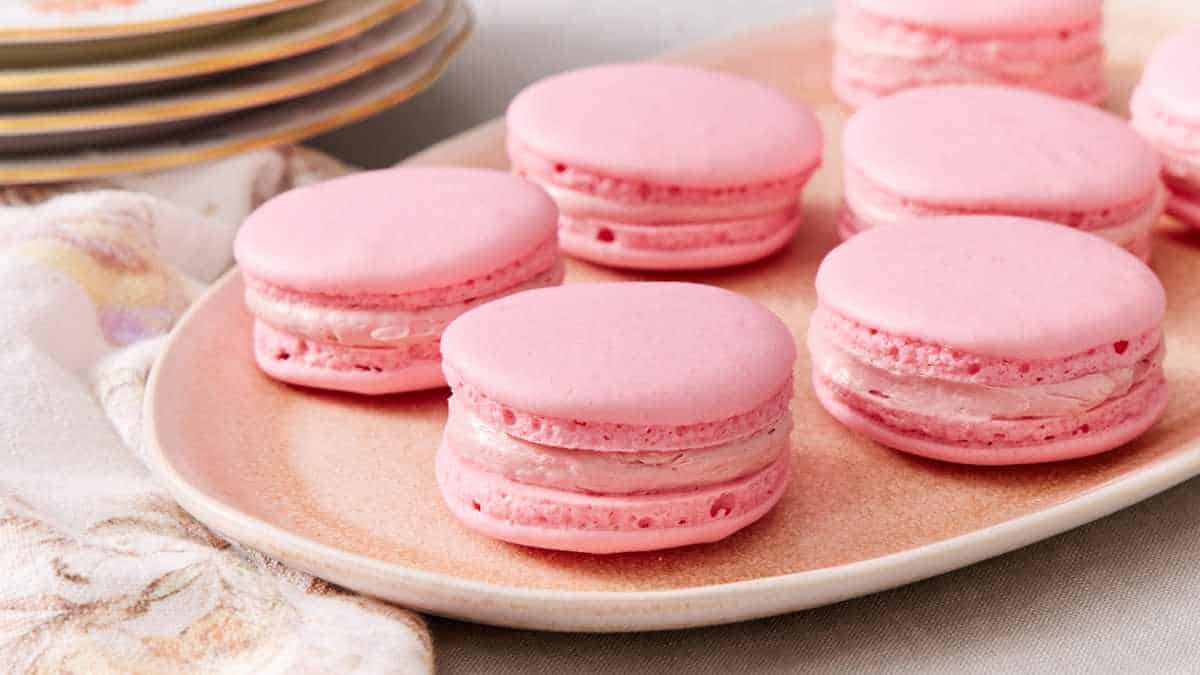
- Macaron: room temperature throughout. Warming the cream filling makes it weep.
- Most petit fours: room temperature is correct.
3. Flavour Balance
The same principles as savoury food, with sweet instead of salt as the centre. The four corners:
- Sweet: sugar, honey, fruit, chocolate.
- Sour: citrus, vinegar (rarely in pastry but sometimes), sour cream, berries.
- Bitter: dark chocolate (high cocoa), coffee, caramel cooked dark, cocoa powder.
- Salty: the pinch of salt in every pastry, fleur de sel finishing, salted caramel.
A good dessert hits at least three of these. A lemon tart is sweet + sour. A salted caramel pot is sweet + bitter + salt. A flourless chocolate cake is sweet + bitter (the dark chocolate). A pavlova with passion fruit is sweet (meringue, cream) + sour (passion fruit) + a pinch of salt in the meringue.
When the dessert is one-note
- All sweet (sponge cake with sugar glaze): boring. Add a sour fruit (raspberry) or bitter (cocoa) accent.
- All bitter (a bar of 90% chocolate): unpleasant. Add a sweet element (caramel) or sour (cherry).
- All sour (a lemon curd alone): too sharp. Add a sweet meringue, or pair with a sweet shortbread.
The balance is what makes the dessert eat-able for a portion-sized helping, not just a single bite.
4. Visual Balance
Patisserie also operates at a visual level. The plate is part of the dessert.
Height
A flat plate of food is boring. Most patisserie creates height: a tower of choux, a slice of mille-feuille on its edge, a quenelle of ice cream perched on top.
Colour
The classic French dessert is restrained in colour: cream, gold, brown, with one accent. A lemon tart is gold (pastry) + pale yellow (curd) + maybe a small berry as accent. A chocolate mousse is dark brown with maybe a gold leaf or a raspberry. Too much colour reads as cluttered or childish.
Negative space
Restaurant plating uses negative space deliberately. A small composed dessert at the centre of a large plate reads as elegant. Home plating can copy this for effect: a slice on a smaller plate looks more controlled than the same slice on a dinner plate.
Shape
Asymmetric or off-centre placement looks more considered than centred. A long rectangular slice running diagonally on the plate looks intentional; the same slice laid square reads as everyday.
Worked Example: Composing a Lemon Pavlova
If you wanted to build a lemon pavlova, the components might be:
| Element | Texture | Temperature | Flavour | Role |
|---|---|---|---|---|
| French meringue base | Crisp shell, soft inside | Room temp | Sweet | The structure |
| Lemon curd | Smooth, creamy | Cold | Sweet-sour | The main flavour |
| Whipped cream | Soft, fluffy | Cold | Sweet, neutral | The richness |
| Lemon zest | Crunchy bits | Room temp | Sour, aromatic | The brightness |
| Mint leaves | Soft, fresh | Cold | Bitter-aromatic | The herb-lift |
That's five textures (crisp, soft, creamy, crunchy, fresh) plus two temperatures (room, cold) plus three flavour notes (sweet, sour, bitter-aromatic) plus visual variety (gold meringue, yellow curd, white cream, yellow zest, green mint).
The result is a complete dessert. Drop any one element and it gets simpler; drop two and it gets boring; drop three and it's hardly a dessert.
The Inverse: Simplifying
The opposite skill is also worth knowing: making a dessert with as few elements as possible. The classics here:
- A bowl of berries with creme fraiche. Two elements; perfect on a summer evening.
- A square of dark chocolate with espresso. Bitter + bitter, but balanced because both are short of sweet.
- Fresh fruit at peak season. A single perfect peach with nothing on it is sometimes the dessert.
Patisserie doesn't have to be complicated. The framework above tells you when to add elements; sometimes it tells you when to take them away.
Where Next
- Tarts: the tart family.
- Classical Cakes: the named cakes that demonstrate composition.
- Set Creams and Mousses: the cream centre of many desserts.
- Petit Fours: the small-scale composition.
- Patisserie Course landing: back to the main course.
Recipes mentioned here
Pavlova
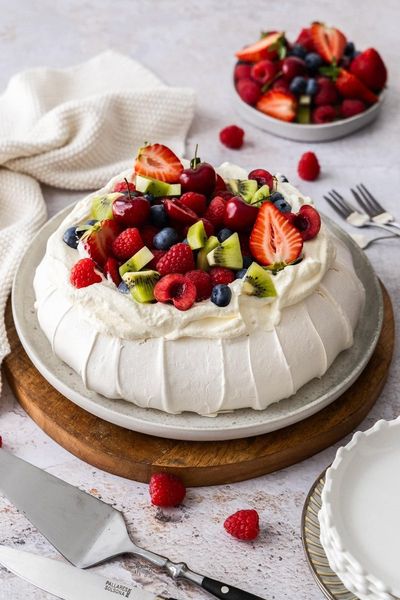
The easiest spectacular dessert you can make, and the one thing Australia and New Zealand still argue about ownership of. You whip egg whites with caster sugar to stiff glossy peaks, then fold in cornflour and a splash of white wine vinegar (those two are the trick to the marshmallow centre that defines a real pavlova against an ordinary meringue). Spread into a wide circle on parchment, edges built slightly higher than the middle so they can hold the cream later, and bake low and slow until the outside has crisped to a pale biscuit colour and the inside stays soft. The shell cools completely (which can take an hour) before you top it. Crown it warm and the cream weeps and the meringue weeps with it. Whipped cream piled in the centre, fresh seasonal fruit on top: berries, passionfruit, mango, kiwi, whatever is in season. Cut at the table, watch the shell shatter, eat with a small pile of pulp running down the spoon.
Panna Cotta
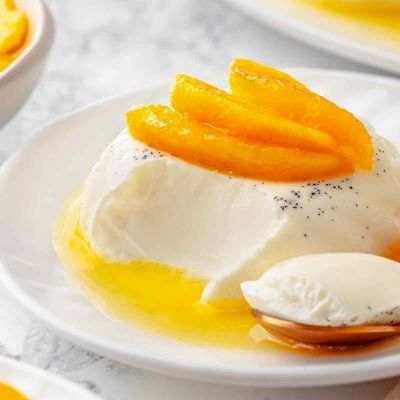
Powdered gelatin blooms in cold milk 5 minutes. Double cream, the remaining milk, sugar and a vanilla pod (split and scraped) heat gently to just under a simmer, never to a boil. Off heat, the bloomed gelatin stirs in until dissolved. The mixture strains through a sieve into 6 small ramekins or dariole moulds. Refrigerated for 4-6 hours (ideally overnight) until set. To serve: briefly dip each mould in hot water; invert onto a plate; spoon over the berry compote.
Chocolate Sauce
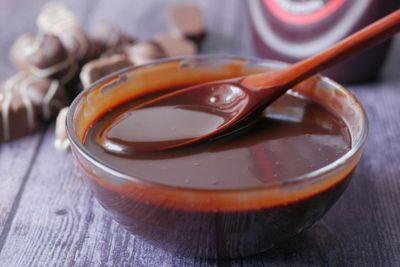
A rich, silky chocolate sauce balancing 70% dark chocolate's subtle bitterness with sugar and cream's sweetness. Butter mounting at the end creates luxurious glossy finish. This fundamental dessert sauce adapts to various preparations with elegant sophistication.
More like this
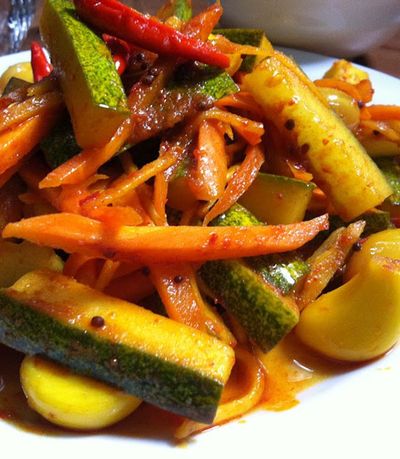
Acar Timun
Cucumber, carrot, shallot, chilli prep into thin slices or matchsticks. Salt rests for 10 minutes to draw moisture, drains. A simple dressing of vinegar, sugar, water and ginger whisks together. Vegetables toss with the dressing; rest for 1 hour at room temperature. Eats cool, never refrigerated cold; the texture suffers.
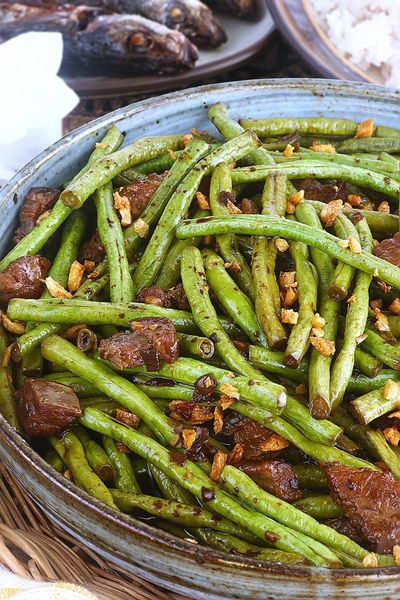
Adobong Sitaw
Garlic browns in oil; long beans toss in to colour briefly. Soy and vinegar pour in with bay and peppercorns; the beans braise covered until tender. Lid off; the liquid reduces to a glaze. Salt at the end, not the start, since soy is salty enough.
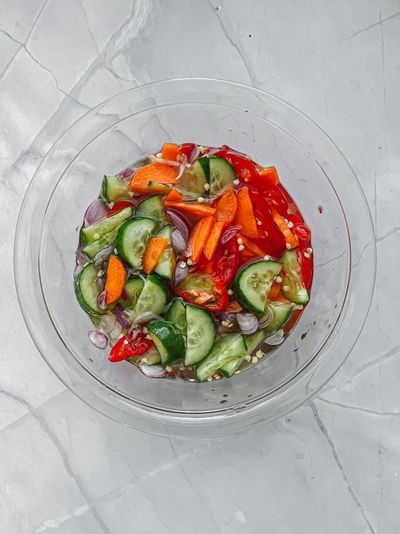
Ajad
A simple syrup of rice vinegar, palm sugar, water and salt is brought to a gentle simmer to dissolve the sugar, then cooled. Cucumber, shallot and chilli are sliced thin and combined in a small bowl. The cooled syrup is poured over. Rested for 10-15 minutes for the vegetables to wilt slightly into the dressing. Served in small individual ramekins as a dip, OR in a larger bowl as a side, with peanuts sprinkled on top.
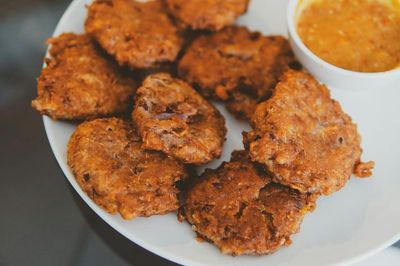
Akara
Dried black-eyed beans soak briefly to loosen the skins; the skins rub off (this is the key step, skin-on akara is bitter and grey). The peeled beans go into a blender with onion, Scotch bonnet and just enough water to make a thick batter (not a paste). The batter is whipped by hand or with a wooden spoon for 5 minutes until light and aerated, this is what makes akara fluffy rather than dense. Spoonfuls drop into 175°C oil and fry for 3-4 minutes per side until golden. Drained on paper. Eaten hot.