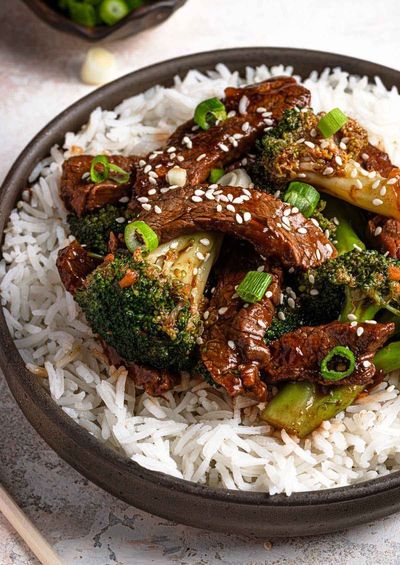
Beef and Broccoli
Sliced beef velvets briefly in cornflour and soy, broccoli florets blanch to bright green, and the lot stir-fries hard with garlic and ginger in a soy-oyster-rice-wine sauce. Served over steamed rice.
Chinese
Tap a chip to add another filter, or use Clear all below.
Sliced beef velvets briefly in cornflour and soy, broccoli florets blanch to bright green, and the lot stir-fries hard with garlic and ginger in a soy-oyster-rice-wine sauce. Served over steamed rice.
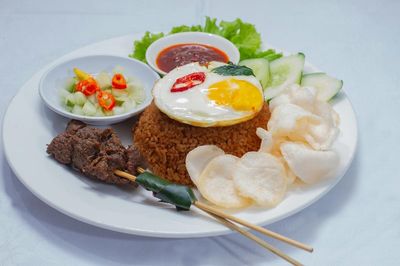
Indonesia's national fried rice, traditionally a way to put yesterday's leftovers to work and now a fixture from street stalls to weeknight kitchens. Beef mince keeps the cooking time short, while kecap manis, soy, shrimp paste and a crumbled stock cube layer the savouriness from four directions. The trick is pressing the rice into the wok and leaving it alone long enough to pick up a proper char before tossing.
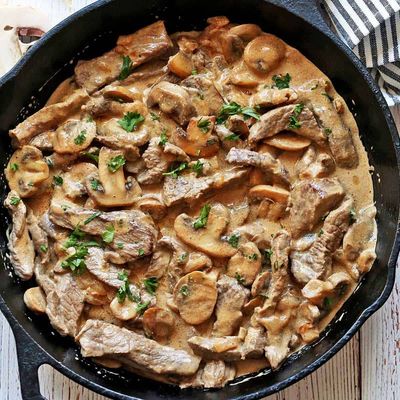
Strips of fillet or sirloin sear hard in a hot pan and lift out so they don't overcook. Onion and mushrooms cook in the same pan with butter; brandy or wine deglazes; mustard, stock and soured cream make the sauce. The beef returns at the end to warm through, off the heat to keep it pink.
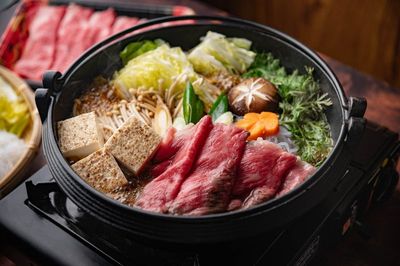
A wide shallow pot is brushed with beef fat, the warishita sauce (soy-mirin-sake-sugar) is poured in, then thinly sliced beef and a colourful array of vegetables, tofu and shirataki noodles are added in batches as people eat. Each piece dips in raw egg yolk before going in the mouth. A portable hob at the table is traditional but not required.
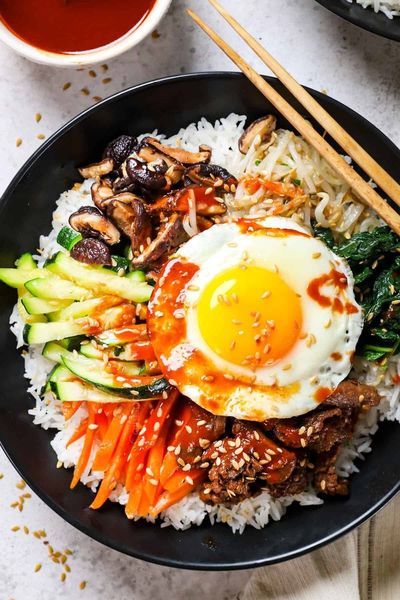
Each vegetable cooks separately and gets dressed with sesame oil, garlic and soy. They arrange in colourful piles around a mound of rice; an egg fries on top. Gochujang sauce on the side. Diners mix vigorously before eating.
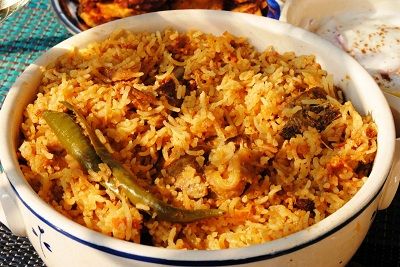
Biryani represents the height of Indian culinary technique: multiple components prepared separately with precision, then assembled in layers where flavors permeate through steam cooking. This isn't a one-step rice dish; rather, it's an architectural construction where yogurt-marinated lamb develops tenderization and flavor, then cooks slowly with warm spices and tomato, while basmati rice is independently flavored with saffron infusion and whole spices. Upon assembly, the two elements marry through steam, creating a unified dish where lamb and rice are inseparable in flavor. Traditionally cooked during festivals and royal celebrations, biryani requires patience and multiple steps but rewards with sophistication.
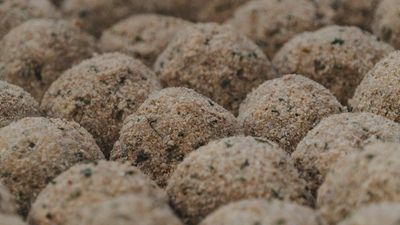
Boudin filling combines pork shoulder, pork liver (optional, traditional), cooked rice, onion, celery, garlic, parsley, green onion, cayenne, salt, pepper. Either bought ready-made boudin (casings removed) or made from scratch by simmering then mincing pork shoulder with the aromatics. Filling rolls into walnut-sized balls; chills for 30 min so they hold shape. Dredges in flour, egg, then seasoned breadcrumbs. Deep-fries for 3-4 minutes at 175°C.
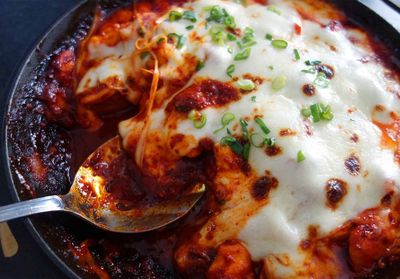
Boneless chicken thighs cube small; marinate for 1 hour in gochujang, gochugaru, soy, garlic, ginger, sugar and sesame oil. Pan-grill in a wide cast-iron skillet over medium-high until the sauce caramelises and the chicken is just cooked. Off heat, generous mozzarella scatters across the top; cover briefly or finish under a grill to melt. Top with sesame seeds and spring onions.
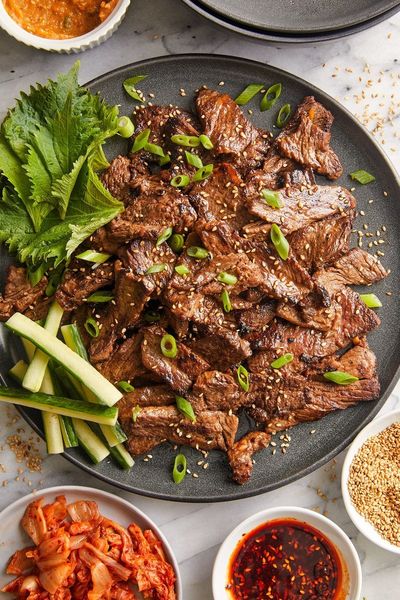
Rib-eye or sirloin sliced paper-thin sits in a marinade of soy, brown sugar, sesame oil, garlic, ginger and grated Asian pear (or apple), then sears hard in a screaming-hot pan or on a BBQ. Served wrapped in lettuce leaves with rice and ssamjang.
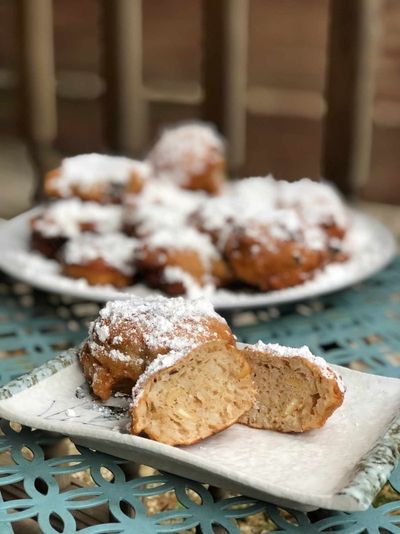
Cooked long-grain rice (slightly over-cooked, soft) mashes lightly with sugar, beaten egg, milk, vanilla and a pinch of nutmeg. Flour and baking powder fold through to a thick batter. Rest for 30 minutes. Drop tablespoons into 175°C oil; fry for 2-3 minutes per side until deep gold. Drain; dust with icing sugar.
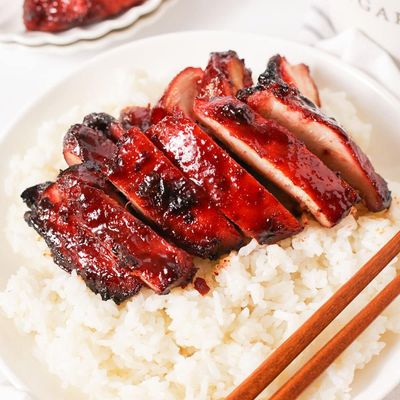
This is summer-BBQ adaptation of the lacquered red roast meats that hang in the windows of Cantonese siu mei shops. The marinade borrows from char siu (hoisin, soy, Shaoxing wine, five-spice, fermented bean curd, garlic, ginger) but pulls back on the sugar slightly because chicken does not need as much sweetness as pork shoulder. Bone-in skin-on thighs are the right cut: they stay juicy on the grill, the skin renders down and crisps, and the bones give the meat shape. A two-stage glaze does the rest. The thighs cook over indirect heat first to render the fat and set the meat, then move directly over the coals for the last few minutes while a honey-maltose mixture is brushed on repeatedly. Every brush of glaze caramelises, blackens slightly at the edges, then gets brushed again. The result is sticky-shiny with a smell that is half five-spice, half woodsmoke. Difficulty is low if you control your heat. A two-zone fire (one side coals piled high, the other side empty) is the only real requirement; on a gas grill, two burners on full and one off does the same job. Serve sliced over plain rice with sliced cucumber and a spoon of chilli oil, or stuffed into bao with hoisin and spring onion.
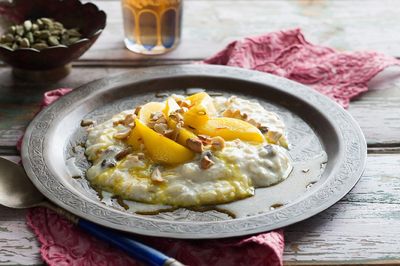
An elegant and refined rice pudding infused with the warm, floral notes of cardamom, set in a caramel-coated mold like a crème caramel for elegant presentation. The subtle spice and tender rice create a comforting yet sophisticated dessert that feels both nostalgic and luxurious.
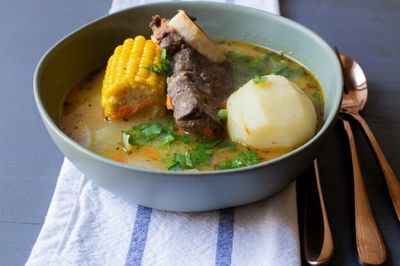
The Chilean Sunday-lunch one-pot, the soup-stew that turns up on every kitchen table from Santiago to Patagonia. You brown bone-in beef shin to colour, then drop it into a simple broth of onion, garlic, oregano and cumin and simmer slowly for ninety minutes until the meat is tender and the broth has built depth. The vegetables go in for the last twenty-five minutes - a thick chunk of pumpkin, a section of corn-on-the-cob, a whole potato, a handful of green beans - each piece kept whole because the cazuela is meant to arrive in the bowl looking like a still life. Rice or vermicelli cooks separately in a ladle of the broth and joins at the very end. Served in deep bowls with chopped coriander and a wedge of lime, the steam rising while you eat. Comfort food at its plainest and deepest.
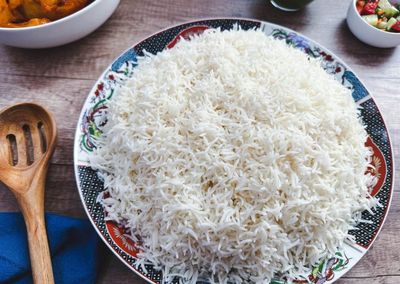
Chalow is Afghanistan's foundational rice method, and once you have it down you can build any Afghan rice dish on top of it (kabuli pulao starts from a chalow base, for example). The technique is parboil-then-steam. Long-grain basmati rinses thoroughly until the water runs almost clear, soaks for half an hour, then boils hard in plenty of salted water for five or six minutes (the grains should be 70% cooked: soft outside, just a touch firm in the middle). Drain, return to a dry pot, drizzle a little oil over the top, clamp the lid on with the heat at its absolute lowest for twenty minutes (this is the dum). What comes out is rice with separate, fluffy grains and a thin gold crust on the bottom of the pot. The crust is the cook's reward; scrape it up and eat it first.
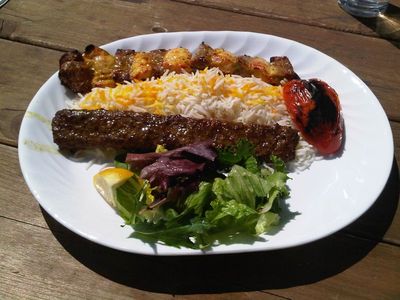
Mince mixes with very finely-grated onion (squeezed dry), salt, pepper, turmeric and a hit of saffron-water. The mixture chills, then forms onto wide flat skewers in long sausage shapes. Charcoal grills are traditional; a hot grill pan or barbecue works at home. The kababs grill for 3-4 minutes per side; whole tomatoes char alongside; rice piles on the plate; everything assembles together.
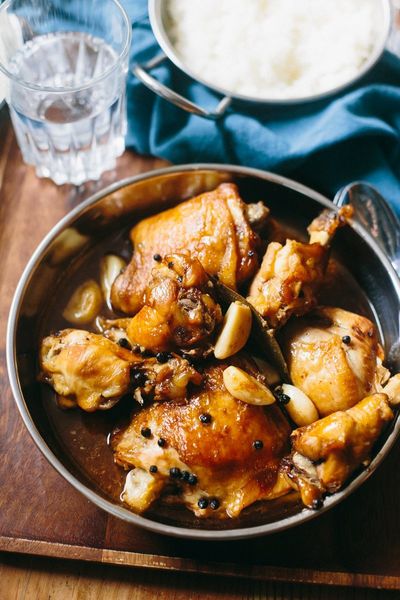
Chicken thighs and drumsticks simmer in a 1:1:1 mix of soy sauce, vinegar and water with garlic, peppercorns and bay. The chicken cooks through; the sauce reduces; the meat browns at the edges. That's the entire dish. Served over rice with a few extra spoonfuls of sauce.
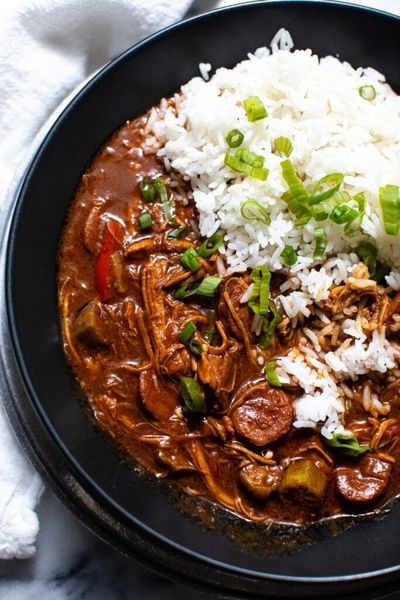
The everyday Cajun household gumbo, without the seafood and ceremony of its bigger cousin: just chicken and andouille in a deep mahogany roux, simmered three hours until everything has melted into the broth. Where the full Cajun gumbo demands a 30-minute dark-chocolate roux, this one wants 15-20 minutes at medium, the roux still goes dark, just not as obsessively so, and the duck fat or bacon fat (the traditional choice) gives it a richer base than vegetable oil would. Tomato paste and a splash of tomato puree push this slightly Creole (Cajun purists would call this version "off-the-bayou Creole"; the Cajun-vs-Creole distinction is real but blurry, and most Louisiana families have one foot in each tradition). Filé powder is the canonical thickener, added in two stages, half during the simmer to dissolve and thicken, half at the end for the characteristic sassafras flavour. Smell is dark roux and smoked sausage, with thyme and bay drifting through. Genuinely a once-a-week or once-a-Sunday family meal across south Louisiana, where the rotisserie-chicken shortcut is now the practical way home cooks build this without spending a full day at the stove. Eats over white rice with hot sauce and the gumbo deepens spectacularly overnight.
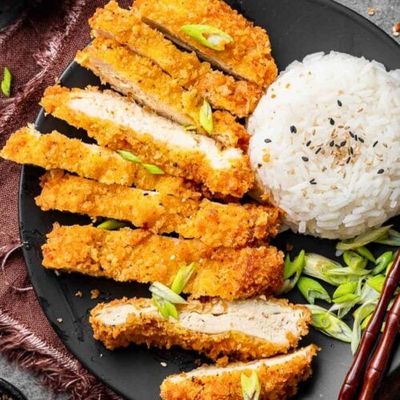
Chicken breasts are flattened, dredged in flour, egg and panko, then shallow-fried until the crust is deep golden and shatteringly crisp. Served sliced over rice with shredded cabbage and a katsu sauce built on Worcestershire and ketchup.

Chicken piccata, the Italian-American mid-century classic of pounded chicken cutlets in a lemon-butter-caper pan sauce, reshaped into meatball form, which trades the precise look of cutlets for a juicier, more forgiving texture. The flavour is unmistakably piccata: butter as the body of the sauce, lemon as the brightness, capers as the salty-vinegary punctuation. Underneath sits a chicken meatball lightened by ricotta (it keeps the lean ground chicken from going dry and dense) and parmesan, with parsley, garlic, smoked paprika and a pinch of red pepper flakes lifting the seasoning. The meatballs themselves stay tender because the mix isn't overworked and because they finish cooking in the sauce rather than the pan. Smell is melted butter, lemon and capers, the same smell every Italian-American restaurant kitchen has on a Tuesday lunch service. Easy enough for a weeknight, restrained enough not to feel like a stand-in dish; the technique is essentially "make meatballs, build pan sauce, return meatballs". Serves over pasta, rice or crusty bread to mop the sauce.
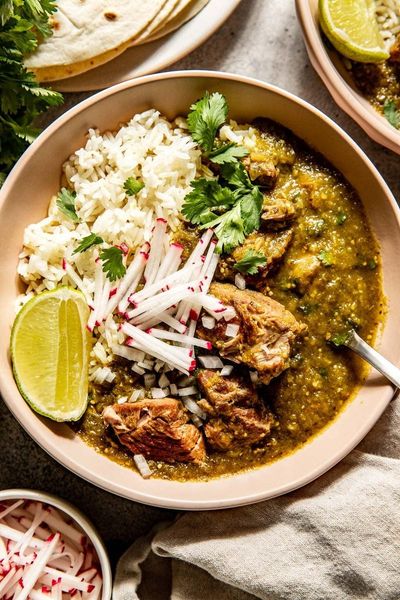
Tomatillos, poblanos, jalapeños, garlic and onion roast under the grill until blackened in spots. Blended with coriander and lime to a green salsa. Pork shoulder cubes brown hard in a heavy pot, then simmer for 90 minutes in the green salsa with cumin, oregano and stock until the pork is fork-tender. Eaten with tortillas.