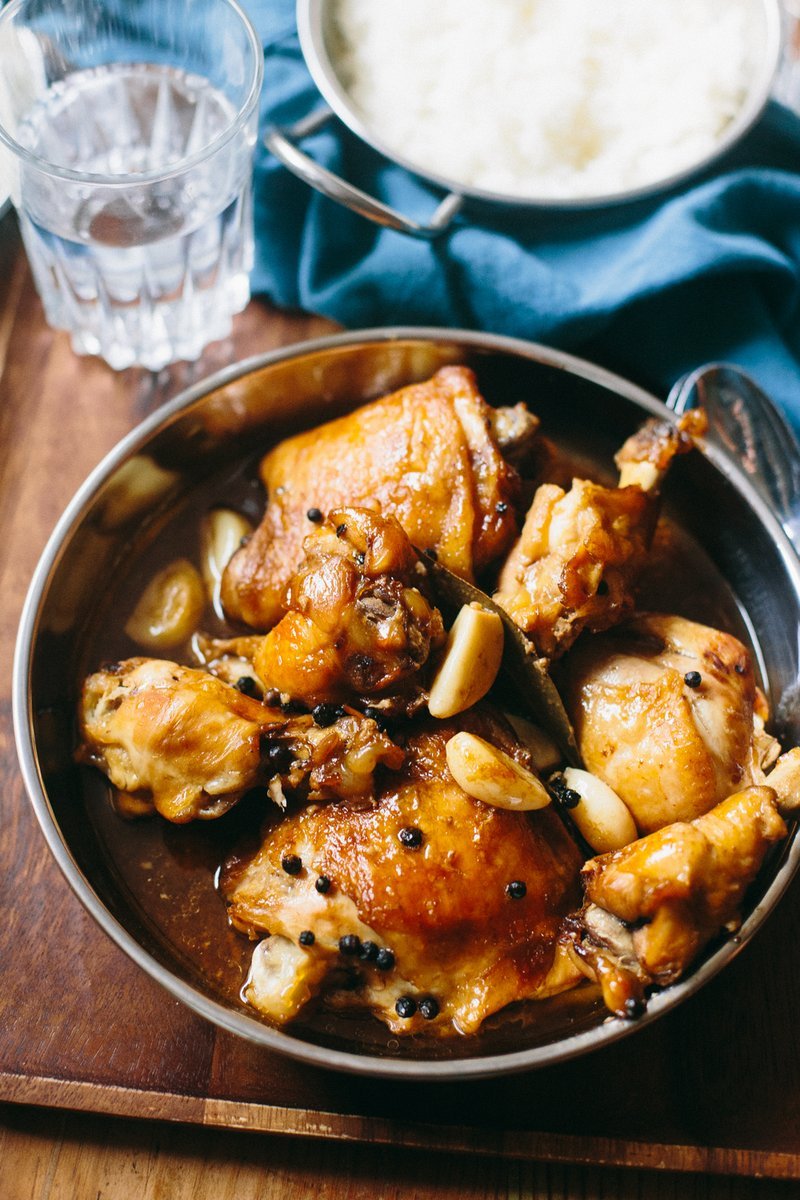
Chicken Adobo
The Filipino national dish: chicken simmered in soy sauce, vinegar, garlic and bay until the sauce reduces to a glossy, salty-sour glaze. The simplest serious dish you'll cook. Adobo means "marinade" in Spanish; here it's the cooking method, not the marinade.
Overview
Chicken thighs and drumsticks simmer in a 1:1:1 mix of soy sauce, vinegar and water with garlic, peppercorns and bay. The chicken cooks through; the sauce reduces; the meat browns at the edges. That's the entire dish. Served over rice with a few extra spoonfuls of sauce.
Ingredients
- 1 kg chicken thighs and drumsticks (bone-in, skin on)
- 100 ml soy sauce
- 100 ml white wine vinegar (or cane vinegar)
- 100 ml water
- 6 garlic cloves (crushed)
- 1 teaspoon black peppercorns
- 3 bay leaves
- 1 tablespoon brown sugar (optional)
- 1 tablespoon vegetable oil (for browning)
- Cooked white rice, to serve
- 2 spring onions (sliced, to finish)
Method
Stage 1 - Marinate (optional)
- Combine the soy, vinegar, garlic, peppercorns and bay in a large bowl with the chicken.
- Marinate at room temperature for 30 minutes (or skip this and cook straight away - adobo works either way).
Stage 2 - Simmer
- Tip everything into a heavy pan; add the water and brown sugar.
- Bring to a simmer; cover and cook 25 minutes, turning the chicken halfway, until cooked through and tender.
Stage 3 - Reduce
- Lift the chicken out; uncover the pan.
- Reduce the cooking liquid over high heat for 5-8 minutes until glossy and slightly thickened.
Stage 4 - Brown
- While the sauce reduces, heat the oil in a separate frying pan.
- Fry the chicken pieces skin-side down for 3-4 minutes until the skin is crisp and deep brown.
Stage 5 - Serve
- Return the chicken to the reduced sauce; turn to coat.
- Serve over rice; spoon extra sauce over.
- Scatter spring onions on top.
Notes
- Don't stir during the simmer: The vinegar needs to cook slowly without agitation; stirring keeps it sharp. Leave it alone.
- Cane vinegar is traditional: Available at Filipino or Asian grocers; gives a slightly sweeter, more aromatic sour note. White wine vinegar is fine.
- Brown the chicken at the end, not start: Adobo's chicken poaches first, browns last; the order is opposite to most stews and gives the characteristic glossy meat.
Storage
- Improves overnight. Keeps 4 days refrigerated; the flavour deepens.
- Freezes 3 months.
More like this
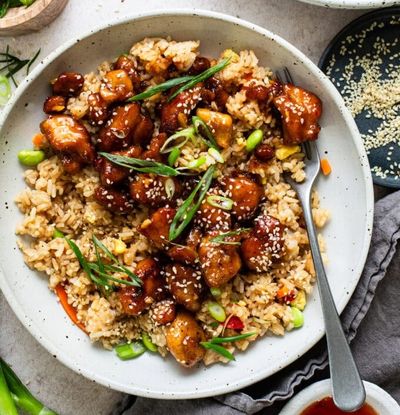
Crispy Honey Garlic Chicken
An Asian-American takeout standard reimagined for the home kitchen, with one specific upgrade: 10 cloves of garlic, chopped rather than minced, so the pieces stay visible and bite back. The flavour is the canonical sweet-salty-spicy balance of American Chinese cookery, honey for sweetness, soy for salt and umami, sweet chilli sauce (Mae Ploy or similar Thai bottled brand) for vinegared chilli warmth, garlic for sharpness across the back. Crisp comes from a cornstarch dust on the chicken, which gives a more even, lacier crust than flour does and stays crisp longer once the sauce hits it. The chicken thighs themselves stay juicy because they're cubed, not pounded; the small pieces cook fast and the seasoning penetrates. Smell when the chicken hits the sauce is honey-and-soy hitting hot oil, which is one of the more universally appealing kitchen smells. Easy and fast, active cooking under 20 minutes once the marinade has rested. The dish has no claim to traditional Chinese cookery; it's the product of decades of evolution in American Chinese restaurants and the home-cook adaptations that followed.
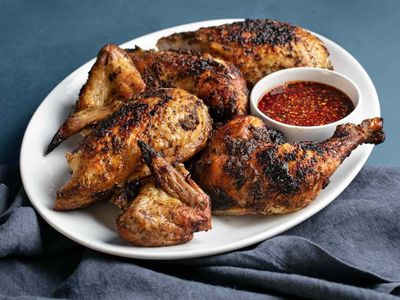
Gai Yang
Gai yang ("grilled chicken") is one of the cornerstones of Isaan cooking, the cuisine of north-eastern Thailand that has spread across the whole country and into Thai restaurants worldwide. The defining flavour is coriander root, an ingredient barely used in Western cooking but central to Thai marinades. Pounded in a granite mortar with garlic, white peppercorns and a pinch of salt, it forms an aromatic paste that's then mixed with fish sauce, oyster sauce and a touch of sugar. The chicken is butterflied (spatchcocked) so it lies flat on the grill, marinated for at least 4 hours, then cooked slowly over moderate charcoal. The proper Isaan technique is patient: 30 minutes or more, turning often, sometimes pressed flat between two bamboo splints, so the skin slowly crisps and the meat takes on smoke without burning. The flavour is savoury-funky from fish sauce, peppery-warm from white pepper, deeply garlic-and-herb from the paste, with no chilli in the marinade itself; heat comes from the dipping sauce. Difficulty is low for the home cook: a good mortar or a small food processor makes the paste in 2 minutes, butterflying a chicken is a single cut down the backbone, and any covered grill or kettle does the cooking. Eaten by hand with balls of sticky rice and dipped into nam jim jaew, the toasted-rice-and-tamarind dipping sauce.
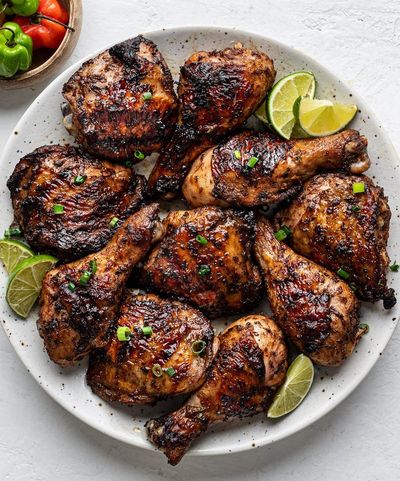
Jerk Chicken
A wet jerk paste: scotch bonnet chillies, garlic, ginger, spring onions, thyme, allspice (whole or ground), brown sugar, soy sauce, lime, oil, salt and pepper, pureed in a blender. The chicken (bone-in skin-on thighs and drumsticks, or spatchcocked whole bird) marinates for 12 hours minimum. Slow-grilled over indirect heat with a pile of pimento wood chips or allspice berries on the coals for the signature smoke; alternatively, an oven-bake at 180°C with a final blast under the grill, supplemented with allspice in the marinade.
Cantonese BBQ Chicken
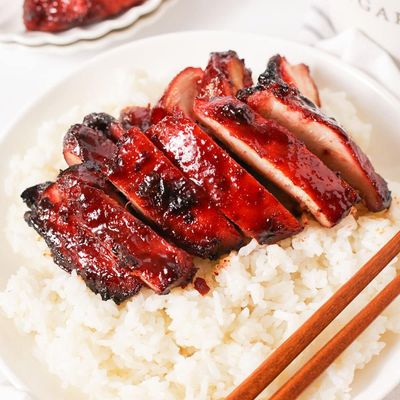
This is summer-BBQ adaptation of the lacquered red roast meats that hang in the windows of Cantonese siu mei shops. The marinade borrows from char siu (hoisin, soy, Shaoxing wine, five-spice, fermented bean curd, garlic, ginger) but pulls back on the sugar slightly because chicken does not need as much sweetness as pork shoulder. Bone-in skin-on thighs are the right cut: they stay juicy on the grill, the skin renders down and crisps, and the bones give the meat shape. A two-stage glaze does the rest. The thighs cook over indirect heat first to render the fat and set the meat, then move directly over the coals for the last few minutes while a honey-maltose mixture is brushed on repeatedly. Every brush of glaze caramelises, blackens slightly at the edges, then gets brushed again. The result is sticky-shiny with a smell that is half five-spice, half woodsmoke. Difficulty is low if you control your heat. A two-zone fire (one side coals piled high, the other side empty) is the only real requirement; on a gas grill, two burners on full and one off does the same job. Serve sliced over plain rice with sliced cucumber and a spoon of chilli oil, or stuffed into bao with hoisin and spring onion.