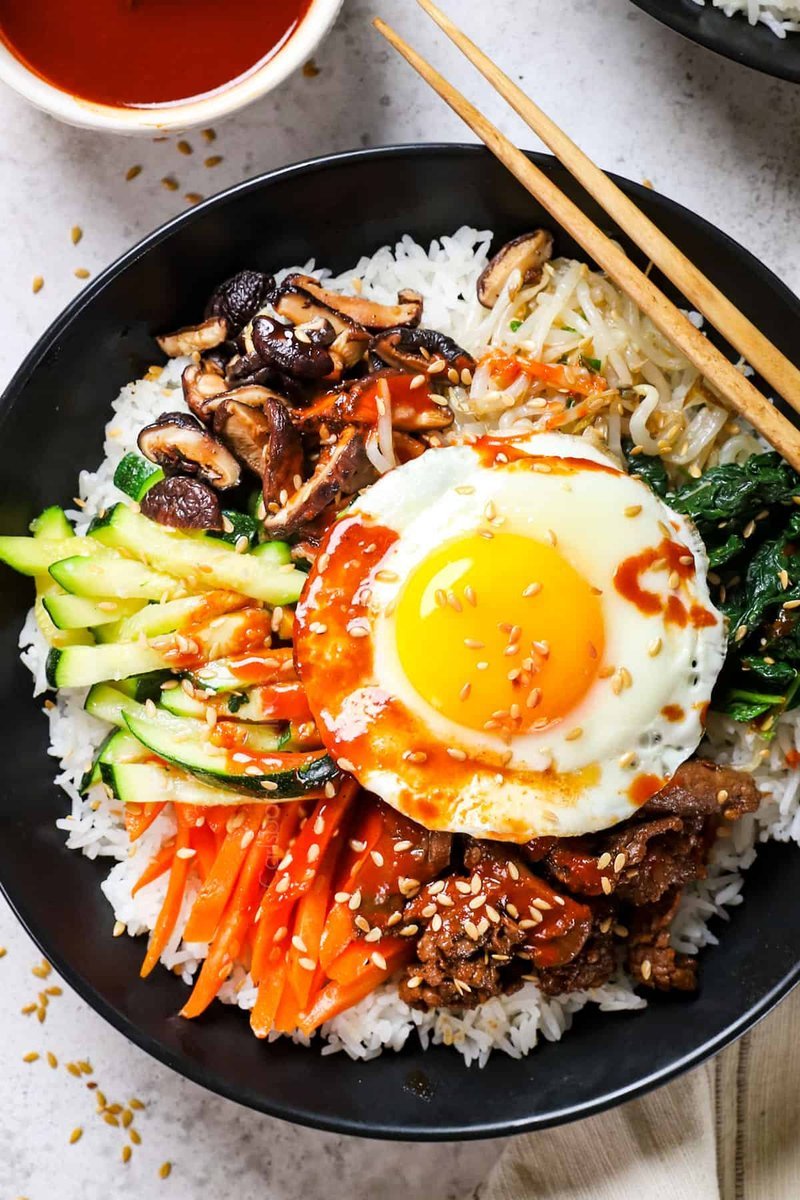
Bibimbap
Korean rice bowl: warm rice topped with sautéed and seasoned vegetables in groups, a fried egg, optional bulgogi, and a generous spoon of gochujang sauce. The diner mixes everything at the table - bibim means "mixed", bap means "rice".
Overview
Each vegetable cooks separately and gets dressed with sesame oil, garlic and soy. They arrange in colourful piles around a mound of rice; an egg fries on top. Gochujang sauce on the side. Diners mix vigorously before eating.
Ingredients
Rice
- 300 g short-grain rice (cooked according to packet instructions)
Vegetables
- 200 g spinach
- 200 g bean sprouts
- 1 carrot (julienned)
- 200 g shiitake (or chestnut mushrooms, sliced)
- 1 courgette (small, julienned)
Seasoning (used across vegetables)
- 4 tablespoons toasted sesame oil
- 4 garlic cloves (crushed)
- 4 tablespoons soy sauce
- 4 teaspoons toasted sesame seeds
- Salt
Beef (optional)
- 200 g rib-eye (or sirloin, very thinly sliced)
- 1 tablespoon soy sauce
- 1 tablespoon sugar
- 1 teaspoon sesame oil
- 1 garlic clove (crushed)
To assemble
- 4 eggs
- 1 tablespoon vegetable oil
Gochujang sauce
- 4 tablespoons gochujang
- 2 tablespoons toasted sesame oil
- 2 tablespoons rice vinegar
- 1 tablespoon honey
- 1 tablespoon water
Method
Stage 1 - Sauce
- Whisk all gochujang sauce ingredients in a small bowl.
Stage 2 - Vegetables (each separate)
- Blanch the spinach 30 seconds; squeeze dry, chop, dress with 1 teaspoon sesame oil, ¼ teaspoon garlic, ½ teaspoon soy, sesame seeds, salt.
- Blanch the bean sprouts 2 minutes; drain, dress same as spinach.
- Sauté the carrot in 1 teaspoon sesame oil for 2 minutes; salt lightly.
- Sauté the courgette in 1 teaspoon sesame oil for 3 minutes; salt lightly.
- Sauté the mushrooms in 1 teaspoon sesame oil with ½ teaspoon garlic and 1 teaspoon soy for 5-6 minutes.
Stage 3 - Beef (if using)
- Marinate the beef in the soy, sugar, sesame oil and garlic for 10 minutes.
- Stir-fry in a hot dry pan for 2-3 minutes until cooked.
Stage 4 - Eggs
- Heat the oil in a non-stick pan; fry the eggs sunny-side up.
Stage 5 - Assemble
- Mound rice in deep bowls.
- Arrange the vegetables in colourful piles around the edge, beef in another pile.
- Slide an egg on top.
- Put a generous spoonful of gochujang sauce on the side.
Stage 6 - Mix and eat
- At the table: drizzle the sauce over, then mix vigorously with a spoon until everything is combined and the egg yolk coats the rice.
Notes
- Each vegetable separate: This is what defines bibimbap. The discrete colours and textures matter; one undifferentiated stir-fry isn't the same dish.
- Gochujang is the heart: Korean fermented red chilli paste; available in any Korean or major Asian shop. Sriracha isn't a substitute.
- Stone bowl bibimbap: A traditional dolsot version cooks the rice into a crisp crust on the bottom of a hot stone bowl. Worth investing in one if this becomes regular.
Storage
- Components keep separately for 2 days. Don't pre-mix; reheat rice and warm vegetables fresh, add a fresh egg.
More like this
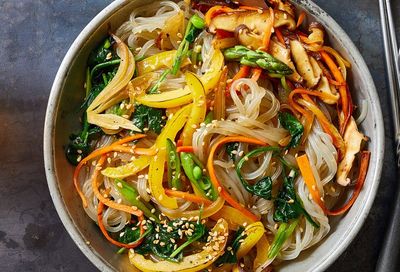
Japchae
Sweet potato glass noodles (dangmyeon) boil and toss in a soy-sesame sauce. Vegetables (spinach, carrot, mushrooms, onion, peppers) sauté separately to keep their colour and texture, and beef stir-fries fast. Everything tosses together with the sauced noodles and a final sesame finish.
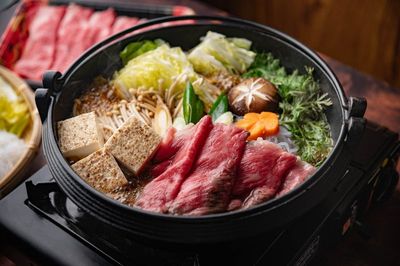
Beef Sukiyaki
A wide shallow pot is brushed with beef fat, the warishita sauce (soy-mirin-sake-sugar) is poured in, then thinly sliced beef and a colourful array of vegetables, tofu and shirataki noodles are added in batches as people eat. Each piece dips in raw egg yolk before going in the mouth. A portable hob at the table is traditional but not required.
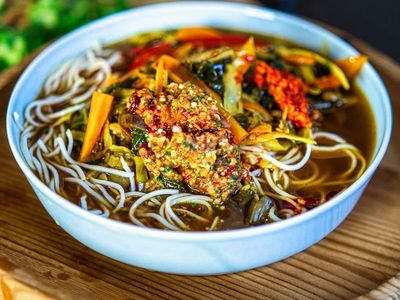
Thukpa
A simple wheat-flour dough rests while a clear, ginger-and-garlic-forward broth simmers with beef (standing in for yak), Sichuan peppercorn and a tomato. The dough is rolled and cut into thin noodles, or, if you prefer, store-bought egg noodles. Vegetables and greens go in at the end; fresh coriander and chilli on top. Honest, restorative, not fancy.
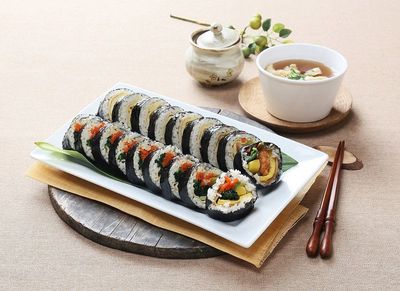
Gimbap
Rice cooks, dresses with sesame oil and salt while still warm. Fillings prep separately: carrots julienne and stir-fry briefly with salt; spinach blanches, drains, dresses with garlic, salt and sesame oil; egg cooks as a thin omelette, slices into strips; pickled yellow radish (danmuji) cuts into long strips; protein (ham, beef bulgogi, tuna mayo, fishcake) preps to size. Each gim sheet (toasted seaweed) lays on a bamboo mat; rice spreads thin over two-thirds of the sheet; fillings line in the centre; the mat rolls everything tightly. Cut into 12 slices per roll. Brushed with sesame oil; sprinkled with sesame seeds.