Buldak
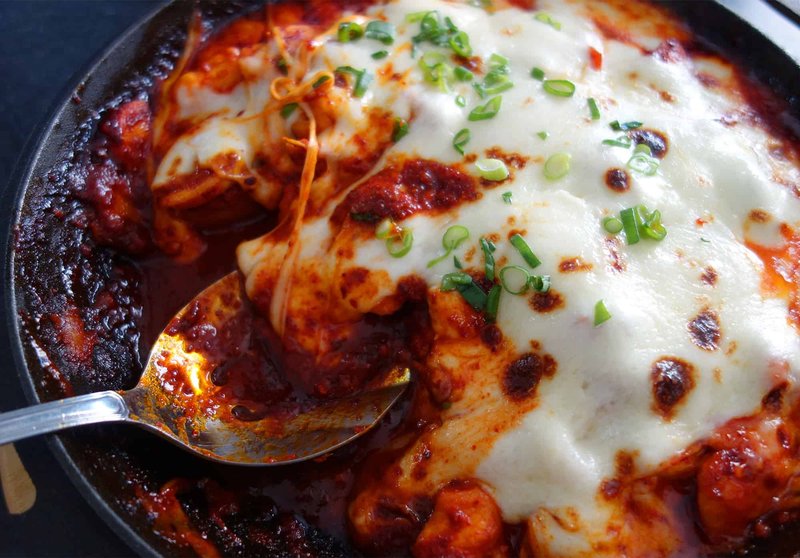
Korea's fire chicken: boneless thighs marinated in a vivid red sauce of gochujang, gochugaru, soy and garlic, pan-grilled hot, topped with melted mozzarella.
Overview
Boneless chicken thighs cube small; marinate for 1 hour in gochujang, gochugaru, soy, garlic, ginger, sugar and sesame oil. Pan-grill in a wide cast-iron skillet over medium-high until the sauce caramelises and the chicken is just cooked. Off heat, generous mozzarella scatters across the top; cover briefly or finish under a grill to melt. Top with sesame seeds and spring onions.
Ingredients
Marinade
- 800 g boneless skinless chicken thighs (cut into 3 cm chunks)
- 4 tablespoons gochujang (Korean chilli paste)
- 2 tablespoons gochugaru (Korean chilli flakes)
- 3 tablespoons soy sauce
- 3 tablespoons soft brown sugar
- 2 tablespoons mirin (or rice wine)
- 1 tablespoon honey
- 6 garlic cloves (crushed)
- 1 thumb fresh ginger (grated)
- 1 tablespoon sesame oil
- 1 tablespoon vegetable oil
To cook
- 2 tablespoons vegetable oil
Topping
- 250 g grated mozzarella (low-moisture, full-fat)
- 2 spring onions (sliced thin)
- 1 tablespoon toasted sesame seeds
- 1 sheet roasted seaweed (cut into thin strips, optional)
To serve
- Steamed white rice
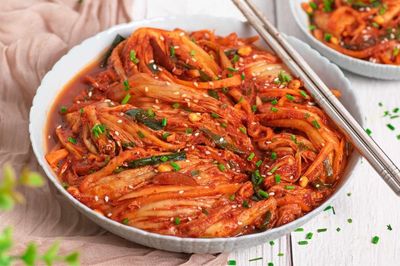
- Kimchi (Cabbage)
- Lettuce leaves (for wrapping, optional)
Method
Stage 1 - Marinate
- Whisk all marinade ingredients (except the chicken) to a thick red paste.
- Add the chicken; turn to coat.
- Refrigerate 1 hour, ideally 2-3.
Stage 2 - Cook
- Heat the 2 tablespoons of oil in a wide cast-iron pan over medium-high heat.
- Add the marinated chicken in a single layer with all the marinade.
- Cook 10-12 minutes, stirring occasionally, until the chicken is just cooked and the sauce has reduced, caramelised and clings.
Stage 3 - Cheese
- Reduce heat to low. Scatter the mozzarella over the top.
- Cover with a lid (or hood with a metal bowl) 2 minutes, or finish under a hot grill 3 minutes, until the cheese is melted and just starting to bubble.
Stage 4 - Top
- Scatter spring onions, sesame seeds and seaweed strips.
Stage 5 - Serve
- Bring the pan to the table.
- Serve with steamed rice, kimchi, and lettuce leaves to wrap chicken-and-cheese bites if you want.
Notes
- Heat level: Gochugaru and gochujang together pack a real punch. Cut both by half for a milder version - still recognisably buldak.
- Low-moisture mozzarella: Fresh mozzarella weeps water and dilutes the sauce. Use the supermarket block / pre-grated kind.
- Cast-iron is the right pan: Holds heat for the caramelisation step. A regular non-stick works but the sauce reduces less crisply.
Storage
- Best fresh. Refrigerate 2 days; reheat in a pan.
More like this
Dak Galbi
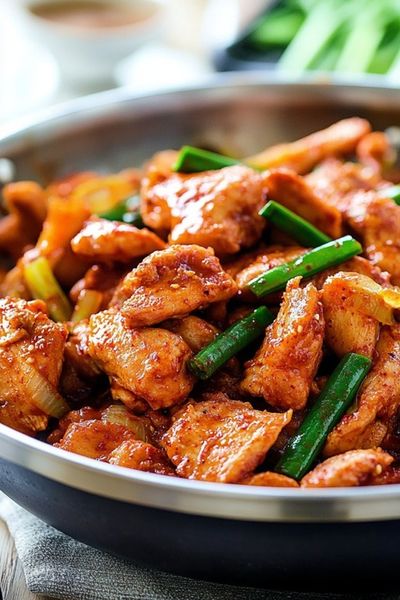
Boneless chicken thighs cube up and marinate in a gochujang-soy-garlic-ginger paste with mirin and sugar. They stir-fry hard with onion, sweet potato chunks, cabbage and Korean rice cakes (tteok). Often finished with cheese melted over for the modern variant; classic version skips it.
Cantonese BBQ Chicken
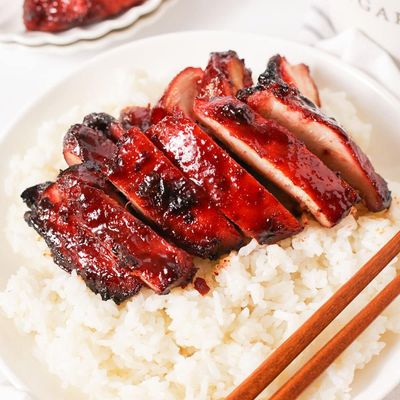
This is summer-BBQ adaptation of the lacquered red roast meats that hang in the windows of Cantonese siu mei shops. The marinade borrows from char siu (hoisin, soy, Shaoxing wine, five-spice, fermented bean curd, garlic, ginger) but pulls back on the sugar slightly because chicken does not need as much sweetness as pork shoulder. Bone-in skin-on thighs are the right cut: they stay juicy on the grill, the skin renders down and crisps, and the bones give the meat shape. A two-stage glaze does the rest. The thighs cook over indirect heat first to render the fat and set the meat, then move directly over the coals for the last few minutes while a honey-maltose mixture is brushed on repeatedly. Every brush of glaze caramelises, blackens slightly at the edges, then gets brushed again. The result is sticky-shiny with a smell that is half five-spice, half woodsmoke. Difficulty is low if you control your heat. A two-zone fire (one side coals piled high, the other side empty) is the only real requirement; on a gas grill, two burners on full and one off does the same job. Serve sliced over plain rice with sliced cucumber and a spoon of chilli oil, or stuffed into bao with hoisin and spring onion.
Korean Fried Chicken
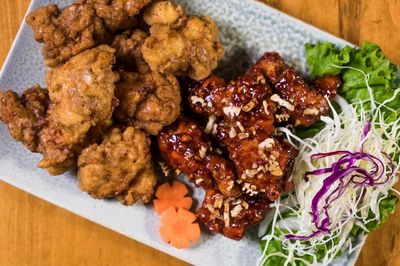
Chicken wings (or boneless thighs) get a light cornflour-and-flour coating and fry low and slow first to cook through. They cool, then fry hot and fast for the crisp. The sauce is a quick reduction of gochujang, gochugaru, soy, garlic, ginger, honey and rice vinegar; the just-fried chicken tosses in the sauce and gets eaten immediately.
Samgyeopsal
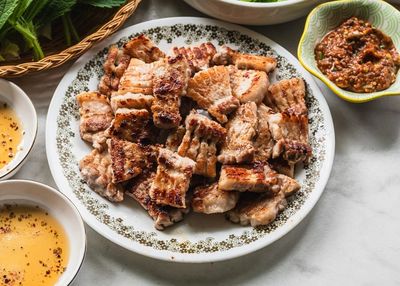
Samgyeopsal, literally "three-layered flesh" after the visible stripes of meat and fat, is the most beloved grill-at-the-table meal in South Korea. It is not a marinade-heavy preparation: the entire point is the quality of the pork belly itself, sliced thick and grilled fresh over charcoal or a hot griddle while everyone sits around the table with side dishes, garlic, and a pile of lettuce leaves. The eating ritual is as important as the cooking. You take a leaf of lettuce or sesame perilla, lay on a piece of grilled belly fresh off the heat, add a smear of ssamjang (a thick, savoury paste of doenjang fermented soybean paste and gochujang chilli paste), a sliver of raw garlic grilled briefly in the pork fat, maybe a strand of spring onion salad, then wrap the whole thing tight, pop it into your mouth in one bite, and chase it with a shot of soju. Korean restaurants do not slice the belly for you at the table on purpose: the host or eldest cuts it with kitchen scissors as it cooks, in messy diagonals, which is part of the relaxed, social character of the meal. Difficulty is low; the cook is essentially supervision and a pair of tongs. The skill is in the side dishes (banchan) and the pacing. Sourcing matters: ask for skin-off pork belly cut between 1 ½ and 2 cm thick. Thin belly burns; thicker belly stays juicy.