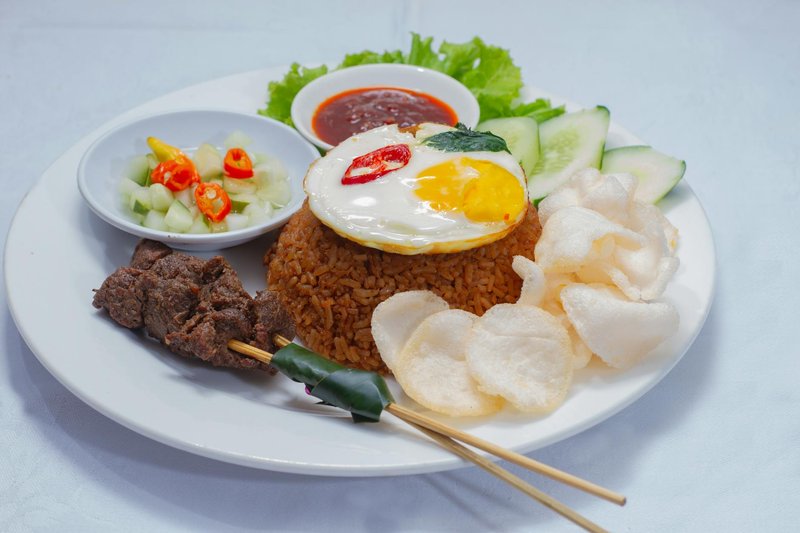
Beef Nasi Goreng
Nasi goreng (literally "fried rice") is Indonesia's national rice dish, traditionally made with whatever is on hand and a slick of kecap manis.
Overview
Indonesia's national fried rice, traditionally a way to put yesterday's leftovers to work and now a fixture from street stalls to weeknight kitchens. Beef mince keeps the cooking time short, while kecap manis, soy, shrimp paste and a crumbled stock cube layer the savouriness from four directions. The trick is pressing the rice into the wok and leaving it alone long enough to pick up a proper char before tossing.
Ingredients
Stir-Fry
- 2 tablespoons vegetable oil (plus 1 extra teaspoon)
- 250 grams beef mince (ground beef)
- 1 onion (sliced)
- 3 garlic cloves (finely chopped)
- 1 long red chilli (finely chopped)
- ½ teaspoon shrimp paste
- 1 beef stock cube (crumbled)
- 4 cups cooked rice (preferably day-old)
- 2 tablespoons soy sauce
- 2 teaspoons kecap manis (or sweet dark soy sauce)
To Serve
- ¼ cup fried shallots
- Sliced cucumber
- Sliced tomato
- Sambal oelek
Method
Stage 1 - Sear the Beef
- Heat the 2 tablespoons of vegetable oil in a wok over high heat.
- Add the beef mince and press it into the wok in a single layer.
- Sear undisturbed for 4 to 5 minutes to develop a deep crust.
- Flip, break up and stir-fry until almost cooked through.
Stage 2 - Build the Aromatics
- Add the sliced onion and stir-fry for 3 minutes, until softened.
- Add the garlic and chilli and stir-fry for another 30 seconds.
Stage 3 - Stir-Fry the Rice
- Push everything to one side of the wok and add the extra teaspoon of oil to the empty side.
- Add the shrimp paste and move it through the oil to dissolve, then mix it through the rest of the ingredients.
- Stir in the crumbled beef stock cube.
- Add the rice, soy sauce and kecap manis.
- Stir-fry until the rice is well coated and heated through.
- Remove from the heat and divide between serving bowls.
Stage 4 - Plate Up
- Sprinkle each bowl with fried shallots.
- Serve with cucumber, tomato and a spoonful of sambal oelek on the side.
Notes
- Day-old rice: Cold rice fries far better than freshly cooked. The grains are drier and don't clump in the wok. Spread fresh rice out and chill for at least an hour if you can't wait until the next day.
- Searing the mince: Pressing the beef into the wok and leaving it untouched develops a real crust. Resist the urge to stir for the first few minutes.
- Shrimp paste: ½ teaspoon is enough to add the funky umami that sets nasi goreng apart from a generic fried rice.
Variations
Chicken nasi goreng: Replace the beef with diced chicken thigh; cook the same way but stir-fry rather than sear. Vegetarian: Drop the beef and stock cube; bulk up with mushrooms or tofu, and use vegetarian "fish" sauce in place of shrimp paste. Top with a fried egg: Crown each bowl with a sunny-side-up egg; the runny yolk emulsifies into the rice.
Serving
Serve with: A wedge of lime, prawn crackers, and extra sambal at the table Garnish with: A handful of finely sliced spring onion or a fresh red chilli
Storage
- Keeps 2 days refrigerated; reheat in a hot wok with a splash of water
- Not recommended for freezing, as the rice texture suffers
- Garnishes (cucumber, tomato) should be added fresh each time
More like this
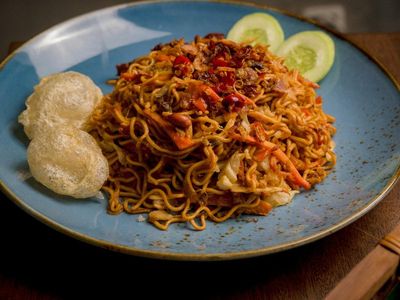
Indonesian Mee Goreng
Fresh egg noodles tossed in a glossy, sweet-savoury sauce of kecap manis, soy, ketchup, sesame oil and shrimp paste, with pork, prawns, cabbage and bean sprouts. The dish is finished with thin egg ribbons and a scatter of spring onion. Quick to cook once the components are prepped, but rewards a properly hot wok and a sauce mixed in advance.
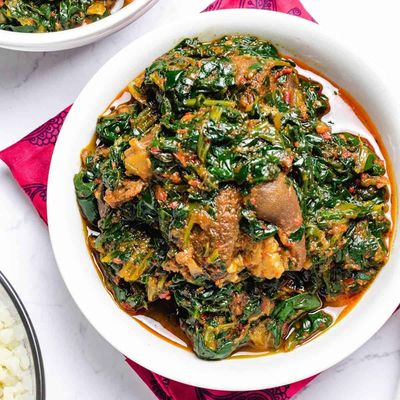
Efo Riro
Beef (or goat, or prawns) parboils briefly. Smoked fish soaks. A pepper paste of red bell pepper, Scotch bonnet, onion and tomato blitzes in the blender. Palm oil heats; the pepper paste fries for 10 minutes until reduced and the oil rises. Stock, meat, smoked fish, ground crayfish and iru go in; simmers for 15 minutes. Spinach goes in last, wilts in 5 minutes. Served with rice, eba, fufu or pounded yam.
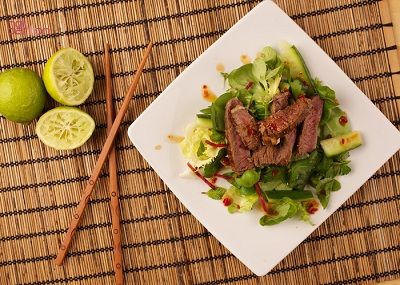
Go Bo Hoi an
Go Bo Hoi An is a piquant Vietnamese beef salad featuring thinly sliced seared beef tossed with crisp vegetables, fresh herbs, and a bright tamarind-lime dressing. This dish has delicate undertones of lime and garlic which carry through the tamarind flavours perfectly. The combination of tender beef, crunchy vegetables, aromatic herbs, and crispy rice papers creates a textural and flavourful celebration of Vietnamese cuisine. Quick to make but requires advance preparation, ensure the salad, dressing, and toppings are made and ready to use before cooking the beef.
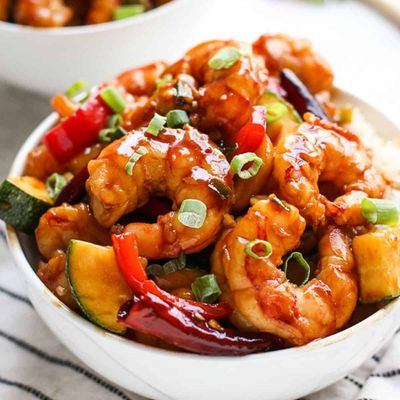
Kung Pao Shrimp
Kung pao (gongbao) shrimp is the seafood cousin of the classic Sichuan gongbao jiding, named for the 19th-century governor-general Ding Baozhen whose title was Gong Bao. Where the chicken version uses diced meat, the shrimp version keeps the prawns whole or halved so they curl into bright pink commas around the chillies and peanuts. The flavour profile is the signature Sichuan "lychee" balance: a touch of sweetness from sugar, sourness from black vinegar, salt and umami from soy, and the warm tingle (ma la) of toasted Sichuan peppercorn paired with the smoky bite of dried er jing tiao chillies. This is a fast dish, fundamentally a wok exercise: every ingredient must be prepped and lined up before the heat goes on, because once the chillies hit the oil you have maybe ninety seconds before everything is overcooked. Difficulty is moderate for a home cook with a working wok and high burner; the trick is keeping the chillies dark red and fragrant without scorching them black, and pulling the shrimp out the moment they curl. Served over plain rice it is one of the most rewarding ten-minute meals in the repertoire.