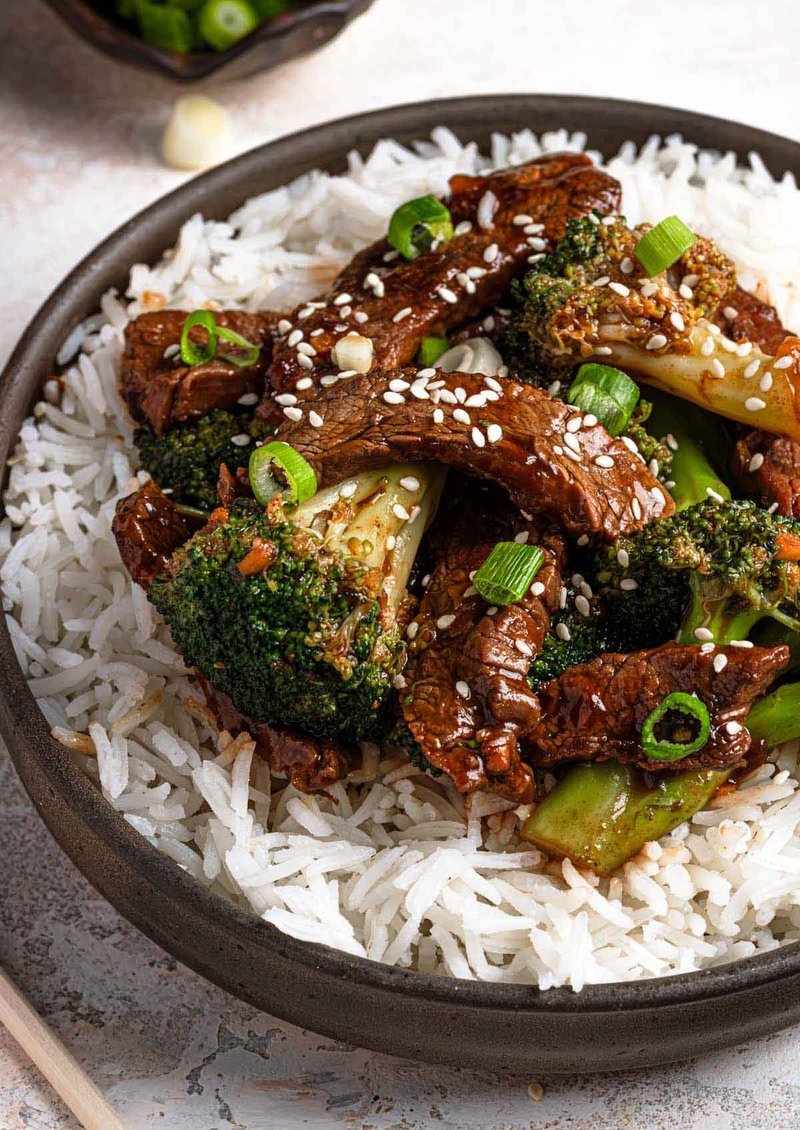
Beef and Broccoli
Cantonese-American takeaway classic: thinly sliced beef stir-fried with broccoli in a glossy soy-oyster sauce. Fifteen minutes start to finish; the kind of weeknight dinner that beats a ten-quid takeaway and tastes more like home.
Overview
Sliced beef velvets briefly in cornflour and soy, broccoli florets blanch to bright green, and the lot stir-fries hard with garlic and ginger in a soy-oyster-rice-wine sauce. Served over steamed rice.
Ingredients
Beef
- 500 g rib-eye, sirloin (or rump, sliced thin against the grain)
- 1 tablespoon soy sauce
- 1 tablespoon Shaoxing rice wine (or dry sherry)
- 1 tablespoon cornflour
- 1 teaspoon sugar
Sauce
- 4 tablespoons oyster sauce
- 2 tablespoons soy sauce
- 1 tablespoon Shaoxing rice wine
- 1 teaspoon sugar
- 1 teaspoon toasted sesame oil
- 100 ml chicken stock (or water)
- 1 teaspoon cornflour
Stir-fry
- 1 head broccoli (cut into florets, stems peeled and sliced)
- 3 tablespoons vegetable oil
- 4 garlic cloves (crushed)
- 1 thumb fresh ginger (grated)
- 4 spring onions (cut into 4 cm pieces)
- Cooked rice, to serve
Method
Stage 1 - Marinate the beef
- Toss the sliced beef with the soy, rice wine, cornflour and sugar.
- Let sit while you prep the rest.
Stage 2 - Sauce
- Whisk all sauce ingredients in a small bowl.
Stage 3 - Blanch broccoli
- Bring a pot of water to the boil; salt lightly.
- Blanch the broccoli for 90 seconds; drain and refresh under cold water (locks in colour).
Stage 4 - Stir-fry
- Heat 2 tablespoons of oil in a wok over high heat until smoking.
- Add the beef in a single layer; sear 1 minute, then stir-fry 1 minute more. Remove.
- Add the remaining oil; stir-fry the garlic, ginger and white parts of the spring onion for 30 seconds.
- Add the broccoli; toss for 1 minute.
- Return the beef; pour in the sauce.
- Toss vigorously for 1-2 minutes until the sauce thickens and coats everything.
- Stir in the spring onion greens.
Stage 5 - Serve
- Plate over rice.
Notes
- Slice beef thin and against the grain: The single biggest factor in tenderness for stir-fries.
- Smoking-hot wok: Wok hei (the breath of the wok) is the smoky char on the ingredients. Mid-temperature gives a wet stew.
- Blanch the broccoli: Stir-fry alone keeps it raw in the centre; pre-blanching gives the bright bite.
Storage
- Best fresh. Keeps 1 day refrigerated; reheat in a hot pan with a splash of water.
More like this
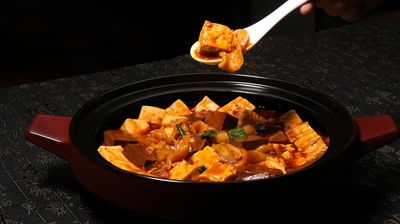
Mapo Tofu
Silken tofu cubes are blanched briefly in salted water (firms slightly and seasons). Pork mince is fried hard in oil; doubanjiang and douchi join, cooking to release oil; garlic, ginger, chilli flakes and ground Sichuan peppercorn are toasted briefly. Stock is poured in; tofu is slipped in; gentle simmer for 5 minutes; cornflour slurry thickens. Spring onions and a final dusting of ground Sichuan peppercorn finish.
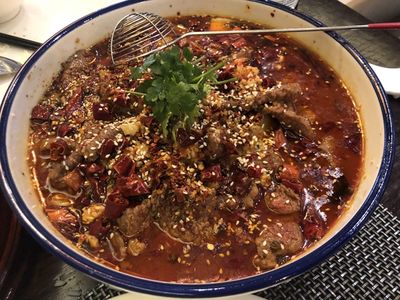
Shuizhu Niurou
Two sensations at once: the bright, immediate burn of dried chilli (la) sitting under the slow numbing-electric prickle of Sichuan peppercorn (ma). That mala pair is the whole point. Beneath that, the broth is salty and fermented-funky from doubanjiang, the deep umami of broad-bean paste that's been aged for months in clay vessels. The hot oil pour at the table is theatre but it does real work: it blooms the dried chillies and Sichuan peppercorn powder right before you smell them, so the aroma arrives in a wave. Texturally: gloriously tender silk-thin beef slices (the cornflour-and-egg-white marinade is what keeps them that way), crisp-on-the-edge bok choy or bean sprouts wilting under the heat, oil swimming on top. Easier than its restaurant-banquet reputation suggests once you have doubanjiang and Sichuan peppercorns in the pantry; the technique is mostly "don't overcook the beef" and "pour the oil while it's smoking". Originates in 1930s Chongqing as a riverboat-worker's dish, water and chillies were cheap, lean cuts of beef tough, then spread through Sichuan in the 1980s as the wider mala movement caught hold.
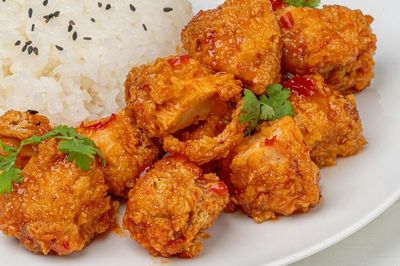
General Tso’s Chicken
This iconic American-Chinese dish combines deep-fried chicken with a sweet, spicy, and slightly tangy sauce. General Tso's chicken exemplifies the bold flavours of outside China Chinese cooking, where heat from dried chillies, sweetness from sugar, and complexity from vinegar create a sauce that is bold yet balanced. Restaurant-quality results require proper oil temperature and crispy, well-coated chicken.
Chicken and Peanut
When cooking Chinese food, it's essential to think about the flavours and textures of ingredients working in harmony. Juicy chicken combined with succulent baby corn, tender vegetables, and salty, crunchy cashew nuts create a balanced dish where each element complements the others. A glossy sauce ties everything together without overwhelming delicate flavours.