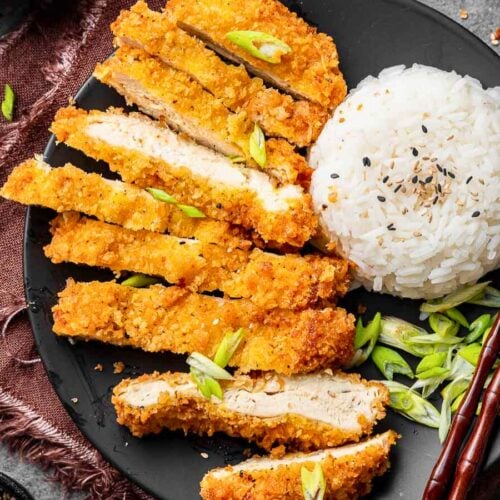
Chicken Katsu
Panko-crumbed chicken cutlet shallow-fried golden, sliced and served with a sweet-savoury katsu sauce. The Japanese answer to schnitzel; ubiquitous in Tokyo lunch counters and now British high streets.
Overview
Chicken breasts are flattened, dredged in flour, egg and panko, then shallow-fried until the crust is deep golden and shatteringly crisp. Served sliced over rice with shredded cabbage and a katsu sauce built on Worcestershire and ketchup.
Ingredients
Chicken
- 4 chicken breasts (about 600 g)
- 4 tablespoons plain flour
- 2 eggs (beaten)
- 150 g panko breadcrumbs
- salt
- pepper
- 4 tablespoons vegetable oil for shallow-frying
Katsu sauce
- 4 tablespoons tonkatsu sauce, OR
- 4 tablespoons Worcestershire sauce
- 4 tablespoons ketchup
- 2 teaspoons soy sauce
- 2 teaspoons sugar
To serve
- 300 g cooked Japanese short-grain rice
- ¼ small white cabbage (very finely shredded)
- 1 lemon (cut into wedges)
Method
Stage 1 - Prep the chicken
- Place each chicken breast between sheets of cling film and bash with a rolling pin until 1 ½ cm thick.
- Season generously with salt and pepper.
Stage 2 - Bread
- Set up three plates: flour, beaten egg, panko.
- Coat each breast in flour (shake off excess), dip in egg, then press firmly into the panko on both sides.
- Set on a tray.
Stage 3 - Fry
- Heat the oil in a wide pan over medium heat (panko burns at high heat before the chicken cooks through).
- Fry the chicken for 3-4 minutes a side until deep golden and cooked through (75°C in the centre).
- Drain on a wire rack (paper towels make the bottom soggy).
Stage 4 - Serve
- Slice each cutlet into 2 cm strips on the diagonal.
- Mound rice on each plate; pile shredded cabbage alongside.
- Place the sliced katsu over the rice, drizzle with sauce, and serve with a lemon wedge.
Notes
- Pound for even thickness: A breast that varies from 3 cm to 1 cm cooks unevenly; bash it flat first.
- Medium heat, not hot: Panko browns fast. Patience over 6-8 minutes gives crisp coating and cooked-through chicken.
- Wire rack to drain: Paper towels trap steam and soften the underside; a rack lets it stay crisp.
Storage
- Best eaten immediately. Keeps 1 day refrigerated; reheat in a 180°C oven for 8 minutes (don't microwave; the crust goes soggy).
More like this
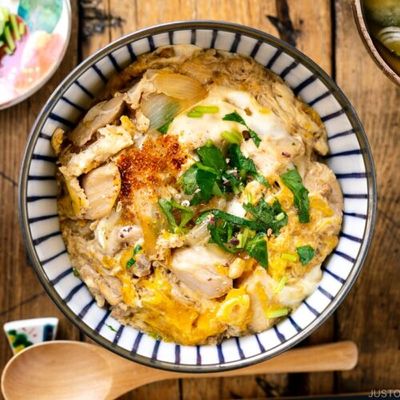
Oyakodon
Chicken thigh chunks simmer in dashi-mirin-soy broth with sliced onion until tender, beaten egg is poured in and sets in soft curds, and the lot slides over rice. The egg should still be slightly runny when the heat is turned off.
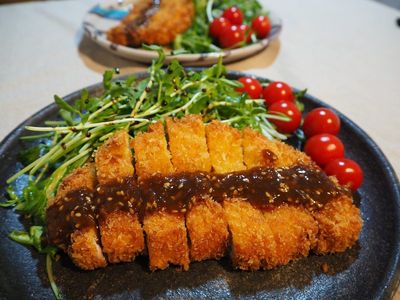
Tonkatsu
Thick pork loin steaks are scored, seasoned, breaded with flour-egg-panko, and shallow-fried until the crust is shatter-crisp. Served with cabbage so finely shredded it's practically a slaw, and a sticky-sweet katsu sauce.
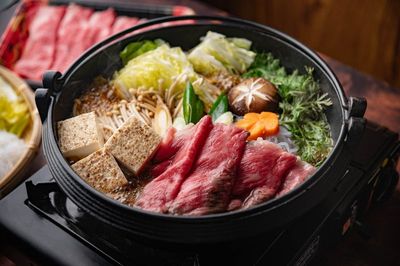
Beef Sukiyaki
A wide shallow pot is brushed with beef fat, the warishita sauce (soy-mirin-sake-sugar) is poured in, then thinly sliced beef and a colourful array of vegetables, tofu and shirataki noodles are added in batches as people eat. Each piece dips in raw egg yolk before going in the mouth. A portable hob at the table is traditional but not required.
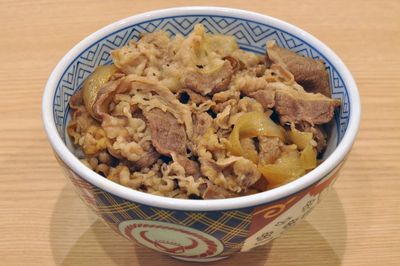
Gyudon
Thinly sliced beef simmered briefly in dashi with mirin, sake, soy and sugar, alongside sliced onion. The whole pile spooned over rice with the broth. Topped with pickled ginger and a soft-boiled egg if you like.