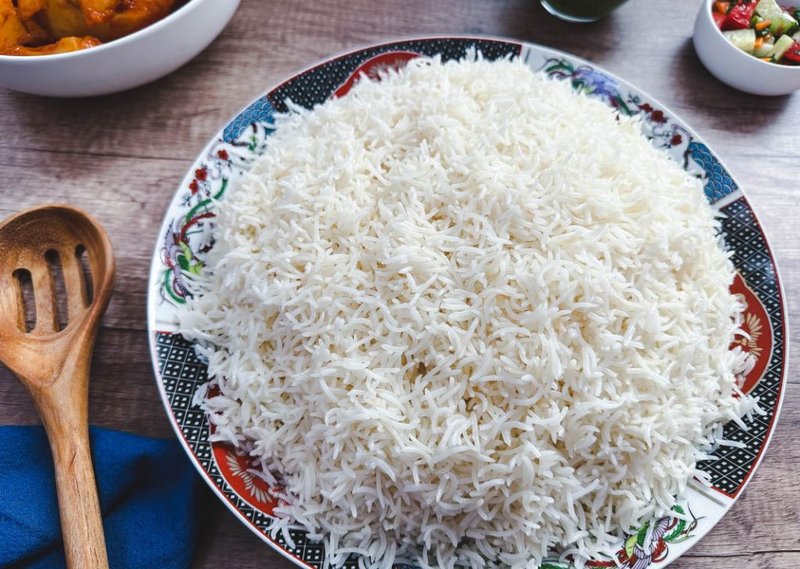
Chalow
The plain Afghan white rice: basmati par-boiled, drained, then steam-finished in a covered pot with oil and salt. The canvas for kebabs and stews.
Overview
Chalow is Afghanistan's foundational rice method, and once you have it down you can build any Afghan rice dish on top of it (kabuli pulao starts from a chalow base, for example). The technique is parboil-then-steam. Long-grain basmati rinses thoroughly until the water runs almost clear, soaks for half an hour, then boils hard in plenty of salted water for five or six minutes (the grains should be 70% cooked: soft outside, just a touch firm in the middle). Drain, return to a dry pot, drizzle a little oil over the top, clamp the lid on with the heat at its absolute lowest for twenty minutes (this is the dum). What comes out is rice with separate, fluffy grains and a thin gold crust on the bottom of the pot. The crust is the cook's reward; scrape it up and eat it first.
Ingredients
- 400 g basmati rice
- 2 litres water (for the par-boil)
- 1 tablespoon salt (for the par-boil)
- 3 tablespoons vegetable oil (or ghee)
- ½ teaspoon salt (for the dum)
Method
Stage 1 - Rinse and soak
- Rinse the rice in 3-4 changes of cold water until the water runs almost clear.
- Cover with cold water by 5 cm; soak 30 minutes.
- Drain.
Stage 2 - Par-boil
- Bring 2 litres of water to a hard boil; add the tablespoon of salt.
- Tip in the drained rice.
- Boil 5-6 minutes until the grains are 70% cooked (a grain crushed between thumb and finger should have a chalky core).
- Drain immediately into a sieve; rinse briefly with hot water.
Stage 3 - Dum (steam)
- Wipe the pot dry; return to medium heat.
- Drizzle 2 tablespoons of the oil over the bottom.
- Tip the par-boiled rice back in; smooth into a mound.
- Drizzle the remaining oil over the top; sprinkle the ½ teaspoon salt.
- Wrap the lid with a clean tea towel (catches condensation); cover tight.
- Reduce heat to the lowest setting; steam 20 minutes undisturbed.
Stage 4 - Serve
- Lift the lid; fluff gently with a fork.
- Tip onto a wide platter - the gold crust comes out last.
Notes
- Long-grain basmati only: Short-grain rice cooks short and sticky; chalow is built on long separate grains.
- 70% par-boil is the trick: Underdone in the boil, finished by steam. Cooking through in the boil gives mush after the dum.
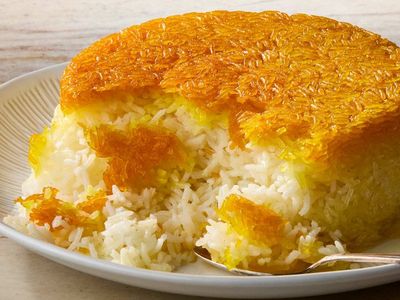
- The crust (tahdig-style): Less dramatic than Persian tahdig because no yogurt or potato is used, but a thin gold layer forms on the bottom from the oil. The most-prized portion.
Storage
- Refrigerate 3 days; reheat covered with a tablespoon of warm stock.
- Don't freeze.
More like this
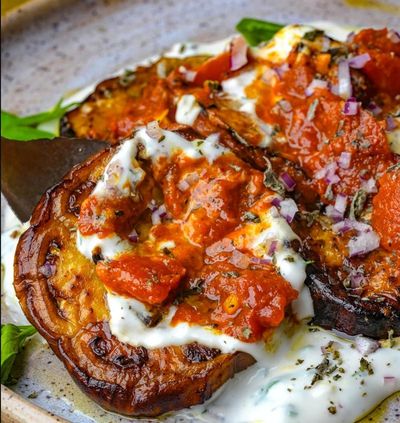
Borani Banjan
Borani banjan is an Afghan aubergine dish that does the same work as a moussaka or a melitzanosalata: pan-fried aubergine slices, a quick spiced tomato sauce, and a generous lid of garlic-and-mint yogurt that bridges all the warm and cold elements. The aubergine slices salt and sweat for half an hour first (which keeps them from drinking too much oil) before they fry hard in olive oil until golden and silky. Onion and tomato cook to a quick sauce with turmeric and a kick of chilli. The aubergine and sauce layer in a wide dish, then the chaka (yogurt whisked with garlic and salt) spoons over the whole thing while it is still warm. Scatter dried mint and drizzle olive oil to finish. Eat warm or at room temperature, with bread.
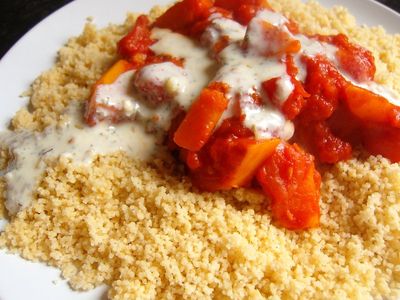
Kadu Bouranee
Kadu bouranee is Afghanistan's sweet-and-savoury pumpkin dish: cubes of butternut squash or pumpkin braised slowly with onion and a touch of sugar until they collapse, plated under cold garlic-and-mint yogurt while the pumpkin is still warm. The temperature contrast is the whole pleasure of the dish. You brown the pumpkin briefly in oil with chopped onion, add sugar, tomato and a splash of stock, then cover and cook low until the pumpkin is completely yielding to a spoon (around forty minutes). Spoon into a wide dish, blanket with garlic yogurt (chaka) straight from the fridge, scatter dried mint over the top. Eat with naan, scooping pumpkin and yogurt up together.
Salata Afghani
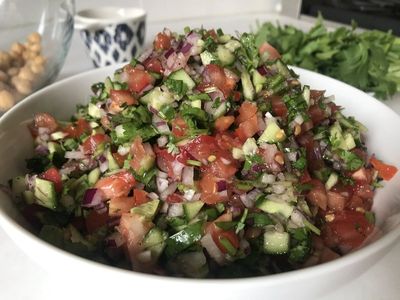
Salata afghani is the salad that goes alongside every Afghan main, no exceptions: tomato, cucumber and red onion diced fine and even, dressed with lemon, olive oil and dried mint, scattered with fresh coriander. The technique is in the cut. Everything dices the same size (about 5 mm) so a spoonful gives you a clean mouthful of all three vegetables. Whisk the dressing of lemon juice, olive oil, dried mint, salt and a small green chilli; toss it through the diced vegetables at the last minute (the salt draws a little water out and the flavours mingle without dissolving the cucumber). Fresh coriander goes on top right before serving.
Arroz Blanco Hondureño
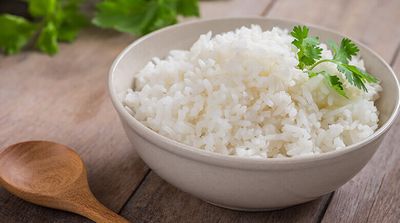
Long-grain rice is toasted briefly in oil with onion, garlic and sometimes a small piece of bell pepper. Hot water and salt go in; the pot is covered tightly and the rice cooks undisturbed for 18 minutes. Five minutes' rest off the heat finishes the steaming. The grains stay separate.