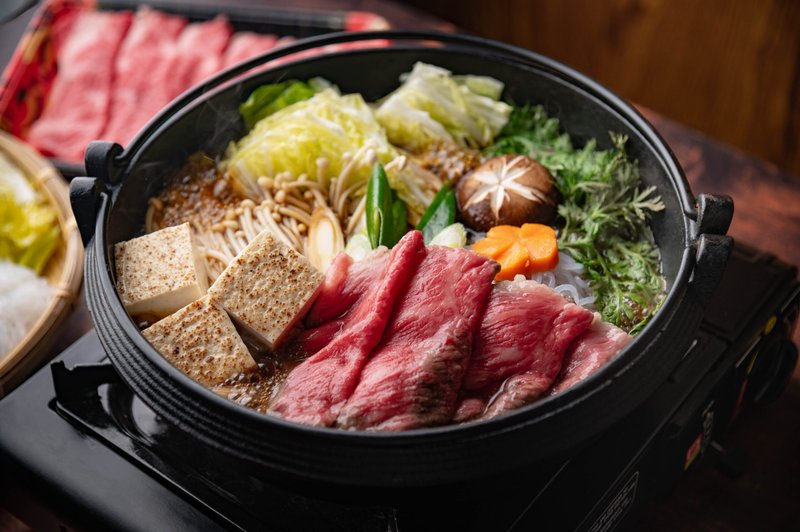
Beef Sukiyaki
Hot-pot beef cooked at the table in a sweet soy broth, with tofu, greens, mushrooms and noodles. Diners dip each piece in a beaten raw egg before eating. Communal, celebratory, very Japanese.
Overview
A wide shallow pot is brushed with beef fat, the warishita sauce (soy-mirin-sake-sugar) is poured in, then thinly sliced beef and a colourful array of vegetables, tofu and shirataki noodles are added in batches as people eat. Each piece dips in raw egg yolk before going in the mouth. A portable hob at the table is traditional but not required.
Ingredients
Warishita sauce
- 200 ml soy sauce
- 200 ml mirin
- 100 ml sake
- 4 tablespoons caster sugar
- 200 ml dashi
To cook
- 600 g thinly sliced beef rib-eye (or sirloin, paper-thin)
- 1 small piece beef suet (or 1 tablespoon vegetable oil)
- 4 spring onions (cut into 4 cm pieces)
- 200 g shiitake (or chestnut mushrooms, sliced)
- 100 g enoki mushrooms (separated)
- 200 g firm tofu (cut into 2 cm cubes)
- ½ Chinese cabbage (cut into 4 cm pieces)
- 1 bunch chrysanthemum greens (or spinach), trimmed
- 200 g shirataki noodles (rinsed)
To serve
- 4 raw egg yolks (in individual bowls)
- Cooked Japanese short-grain rice
Method
Stage 1 - Mix the sauce
- Whisk all the warishita ingredients together. Set aside.
Stage 2 - Set up the pot
- Heat a wide shallow cast-iron pan or sukiyaki pot over medium-high heat.
- Rub the bottom with the suet (or wipe with oil).
- Brown a few slices of beef briefly in the fat to start.
Stage 3 - Build the simmer
- Pour in about a third of the warishita sauce.
- Arrange a portion of vegetables, tofu and noodles in the pan in groups (don't mix them).
- Lay slices of beef on top of the vegetables.
- Simmer 2-3 minutes until the beef is just cooked.
Stage 4 - Serve
- Each diner picks pieces from the pan, dips in their bowl of beaten raw egg yolk, and eats over a bowl of rice.
- Top up the pot with more sauce, vegetables and beef as the level drops.
Notes
- Raw egg dip: Use the freshest eggs you can find. Pasteurised eggs if you're nervous; the dip is what makes sukiyaki sukiyaki.
- Don't crowd the pan: Sukiyaki cooks at the table over time, not all at once. Add as you eat.
- Chrysanthemum greens: Hard to find outside Japanese grocers; spinach is the closest substitute (add late so it just wilts).
Storage
- Eat immediately at the table; the dish is the experience. Leftovers can be reheated but lose their character.
More like this
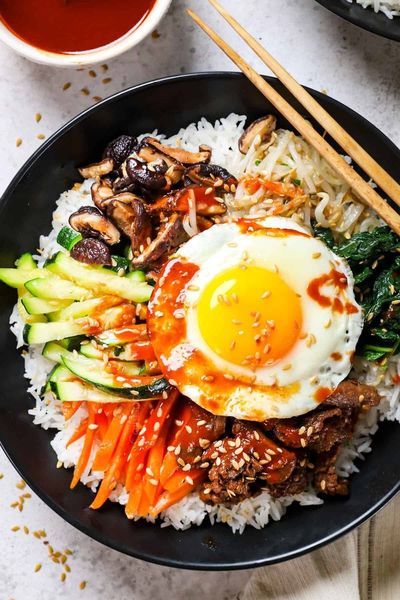
Bibimbap
Each vegetable cooks separately and gets dressed with sesame oil, garlic and soy. They arrange in colourful piles around a mound of rice; an egg fries on top. Gochujang sauce on the side. Diners mix vigorously before eating.
Gyudon
Thinly sliced beef simmered briefly in dashi with mirin, sake, soy and sugar, alongside sliced onion. The whole pile spooned over rice with the broth. Topped with pickled ginger and a soft-boiled egg if you like.
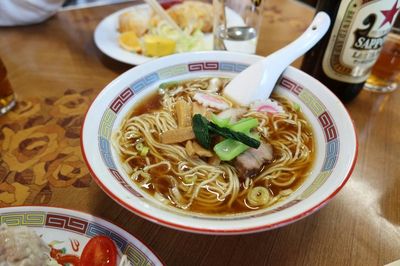
Shoyu Ramen
Of the four main ramen styles, shoyu (soy) is the cleanest and most aromatic, leaning on a clear roasted-chicken broth rather than the milky richness of tonkotsu or the heavy punch of miso. The technique splits the work: a long, gentle simmer with kombu and shiitake builds the broth, and a separate seasoning sauce called tare goes in bowl by bowl at the end. That last step is what lets you tune the saltiness without compromising the broth's clarity.
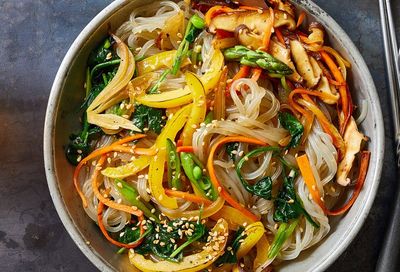
Japchae
Sweet potato glass noodles (dangmyeon) boil and toss in a soy-sesame sauce. Vegetables (spinach, carrot, mushrooms, onion, peppers) sauté separately to keep their colour and texture, and beef stir-fries fast. Everything tosses together with the sauced noodles and a final sesame finish.