Amok Trey

Amok Trey

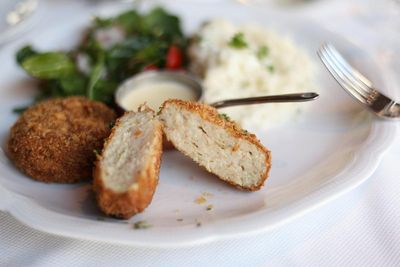
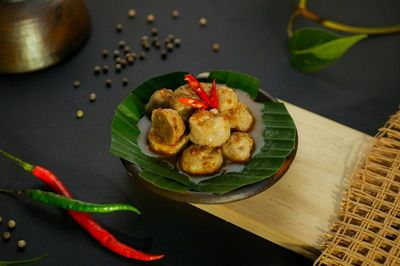
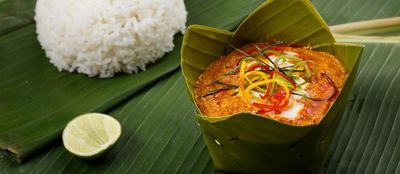
Cambodia's national dish, the centrepiece of any Khmer feast and the proper-occasion food across the country. You start by pounding kroeung fresh in a mortar (the paste of lemongrass, galangal, turmeric, garlic, shallots, kaffir lime zest and coriander root that defines Khmer cooking, and that no shop-bought paste comes close to matching). The kroeung fries briefly to bloom its aromatics, coconut cream and stock loosen it, and eggs whisk in to set the eventual custard. Chunks of firm white fish fold through with chopped greens (traditionally noni leaves, with spinach or chard standing in), and the whole mix spoons into banana-leaf cups (or small ramekins). Twenty minutes in a steamer turns the custard just-set around the soft fish, and the banana leaves perfume everything. Served from the parcels with steamed rice and a wedge of lime.
Cambodian 55 minutes Serves4
Andhra Chicken Curry

Andhra Chicken Curry

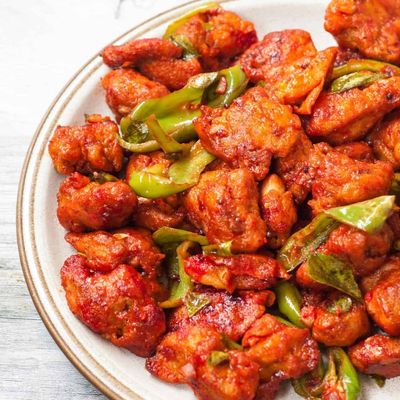
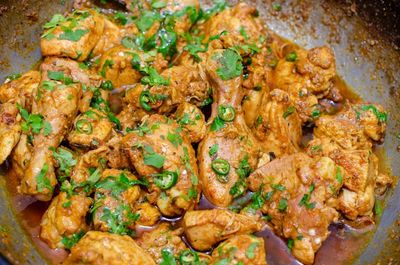
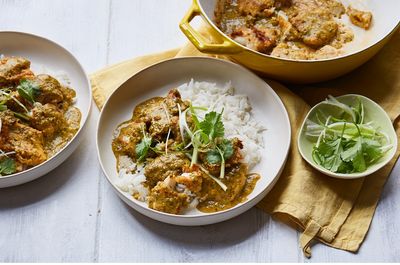
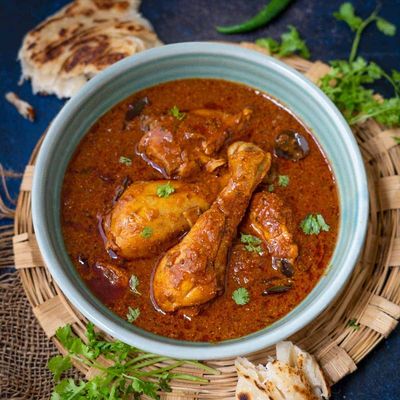
Chicken thighs are marinated briefly with turmeric, ginger-garlic paste, yogurt and a pinch of red chilli. A dry-roast of poppy seeds, sesame seeds, coconut, fennel, coriander and dried red chillies is ground with a splash of water into a coarse paste. The base is built with shallots, curry leaves and tomato; the chicken is browned in stages; and the masala paste is folded in for the long, gentle simmer. Tamarind and a curry-leaf temper finish.

Indian 1 hour 35 minutes Serves4-6
Bunjay-Style Curry Chicken

Bunjay-Style Curry Chicken

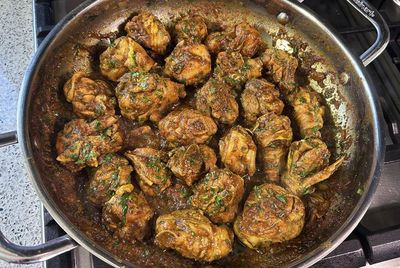
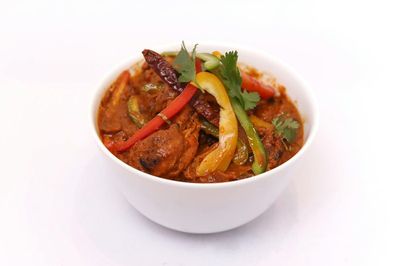
A dry curry rather than a saucy one, "bunjay" is Trinidadian patois for "fry-down", the technique of cooking meat in its own juices until the gravy completely disappears and the spices coat the surface of the meat in a sticky, glaze-like crust. The flavour is concentrated rather than diluted; nothing's been thinned with water or coconut milk, so what you taste is bone-in chicken, rendered chicken fat, and toasted spice. The spice mix is the East Indian Trinidadian signature: turmeric for colour and earth, roasted geera (toasted cumin, ground) for nuttiness, anchar masala for tang, regular curry powder for breadth. The pan oil splits and separates around the chicken at the end, which is the visual cue you're looking for. Smell when the curry powder hits hot oil is deeply aromatic, almost incense-like. Not difficult but it requires attention during the cook-down phase; if you walk away the curry burns onto the bottom of the pan. A Trinidadian household staple, eaten across the country with white rice and dhal, and a clean example of how Indian indentured labourers' descendants in the Caribbean evolved a distinct curry tradition over 150 years.

Trinidadian 2 hours 50 minutes Serves6
Buss-Up-Shut Roti with Curry

Buss-Up-Shut Roti with Curry

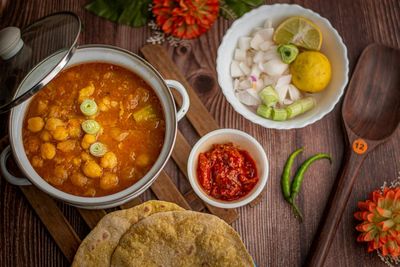
Buss-up-shut, also called paratha roti, is the flaky-layered Trinidadian roti that takes its English name from "burst-up shirt", a buss-up-shut roti is one that has been beaten the moment it comes off the tawa until it explodes into soft, irregular shreds. It is descended from the South Asian paratha, brought by indentured Indian labourers in the 19th century and rebuilt in Trinidad with a softer, more elastic dough and a finishing technique that is uniquely local. The recipe here covers the roti itself, which is the demanding part, with a short Trini channa-aloo curry on the side so you have a proper plate to scoop with. The layering technique (rolling, brushing with oil, coiling, resting, rolling out) is what creates the laminated, flaky structure. The beating step uses two wooden spatulas (called "klappers" in some roti shops) and looks dramatic but is straightforward. Difficulty is moderate; the dough is forgiving but the rolling-and-coiling step needs a little practice. Once you have a feel for it, you will make this every fortnight.

Trinidadian 2 hours 15 minutes Serves4
Chicken Satay with Peanut Sauce

Chicken Satay with Peanut Sauce

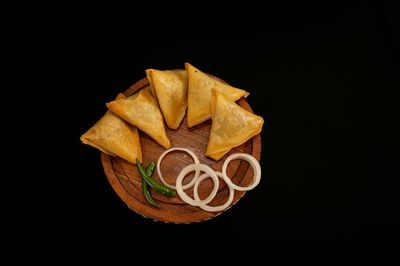
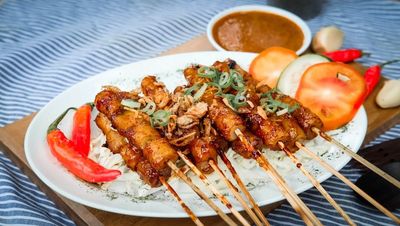
I’m a big fan of Thai chicken satay with peanut sauce. Although it isn’t necessary, it is best to marinate the chicken for at least a day. You could get away with 30 minutes but a longer marinating time will get you much tastier results. As the chicken soaks up that incredible marinade, it not only tenderizes it but makes it much juicier when cooked. This recipe could be used with thinly sliced pork or beef, both are also popular at Thai restaurants and takeaways. Pork is the meat of choice in Thailand but chicken is the most popular in the UK. I also like to serve this dish with cucumber and chilli relish.

Starters 35 minutes Serves6
Coconut Rice

Coconut Rice

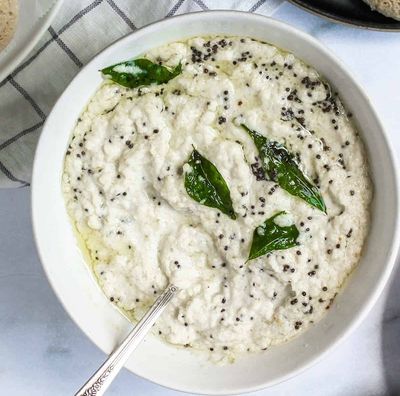
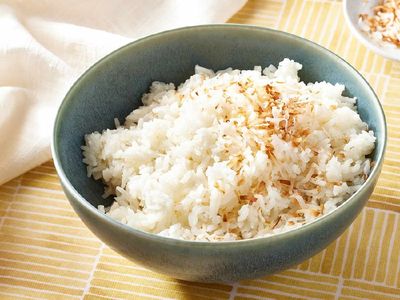
Coconut rice represents the intersection of technique and flavor in Indian cooking. The tempering of mustard and cumin seeds in hot oil releases their volatile aromatics, which then permeate the rice as it cooks. Curry leaves contribute herbaceous depth without overwhelming the dish. Coconut cream adds richness and subtle sweetness, creating a rice that's inherently interesting yet supportive of spiced dishes. The final resting period is crucial, steam completes the cooking while the flavors meld. This rice should taste aromatic with individual grains remaining separate.

Sides 5 minutes Serves600
Curry Smelts

Curry Smelts

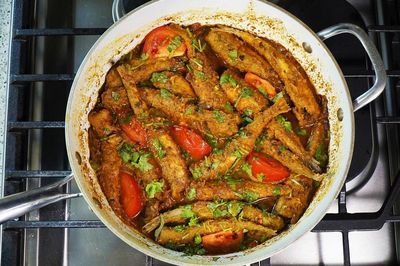
Trinidadian comfort food that brings together the East Indian and Afro-Caribbean strands of Trini cookery in one pan: small whole fried fish (a West African and Caribbean coastal habit) drowned in a Trinidadian East Indian curry sauce. The fish are smelts, sardines or whitebait, whole, head-on, eaten with a small bite to remove the spine. Once fried they sit crisp; when the curry sauce hits, the outer crust softens slightly and absorbs the gravy while the centre stays meaty. The sauce is the dish's signature: roasted geera (dry-toasted cumin) gives a smoky, nutty depth that pre-ground supermarket cumin can't touch, anchar masala adds a fermented-tangy edge (it's the Trinidadian pickled-mango spice mix), and Caribbean curry powder rounds the warmth. Whole pierced Scotch bonnet scents without flooring. Smell when the spices bloom in hot oil is heavy and pungent in the best possible way. Not difficult but it's a two-pan dance, so timing matters. A daily-cookery dish across Trinidad and Tobago and the Indo-Trinidadian diaspora, eaten with steamed rice or with sada roti torn and used as a scoop.

Trinidadian 50 minutes Serves5
Green Curry BBQ Aubergine

Green Curry BBQ Aubergine

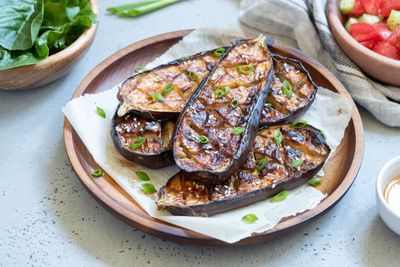
This is a BBQ side built on the flavour profile of Thai green curry rather than a Thai curry itself. The marinade is essentially a small batch of green curry sauce reduced down until thick and clinging, then cooled and rubbed into wedges of aubergine that sit in it overnight. By morning the cut surfaces have drunk in coconut, paste, fish sauce, palm sugar, lime leaf and basil; by the time they hit the grill, the flesh has half-pickled and the surface is coated in a paste that caramelises beautifully over hot coals. The grill does the rest. Direct high heat blackens the marinade into sticky-black patches while the inside steams under its own glaze and softens to spoon-tender. Difficulty is low. The only patience involved is overnight in the fridge. Serve as a centrepiece on a BBQ platter alongside grilled meats, or as a vegetarian main with sticky rice, a wedge of lime and a scatter of Thai basil. It is rich, smoky, gently sweet, salty and herbaceous all at once, with the unmistakable green-curry note running through every bite.

Sides 37 minutes Serves4
Jamaican Goat Curry

Jamaican Goat Curry

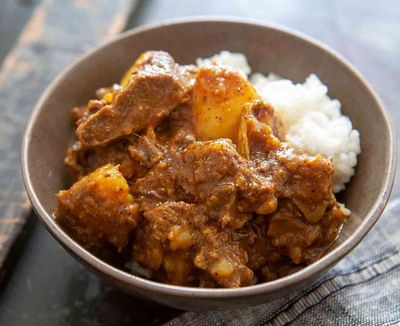
A deep, brick-yellow gravy stained with turmeric and allspice (called pimento in Jamaica, confusingly, nothing to do with the pepper of the same English name). The taste is layered: the curry powder hits first, then the slow heat of Scotch bonnet, then a sweet-piney back-note from allspice and thyme that's unmistakably Caribbean rather than Indian. The goat is the point; bone-in shoulder or leg, braised until the bones loosen and the connective tissue melts into the gravy and gives it body without any flour or roux. Patient cooking but not difficult: brown the meat, bloom the curry powder until it darkens to brown, then leave it alone for two hours. The whole pierced Scotch bonnet sits in the pot scenting the gravy and is fished out before it ruptures, so the heat stays controllable. Came to Jamaica via Indian indentured labourers in the 1840s, then got reshaped by what the island already had: thyme, pimento, scotch bonnet, and the Saturday-evening habit of putting a pot on to braise for Sunday lunch. Day-2 goat curry is better than day-1, which is why every Jamaican grandmother starts it on a Saturday.

Jamaican 4 hours 55 minutes Serves4-6
← Prev Page 1 of 3 Next →