Coconut Chutney
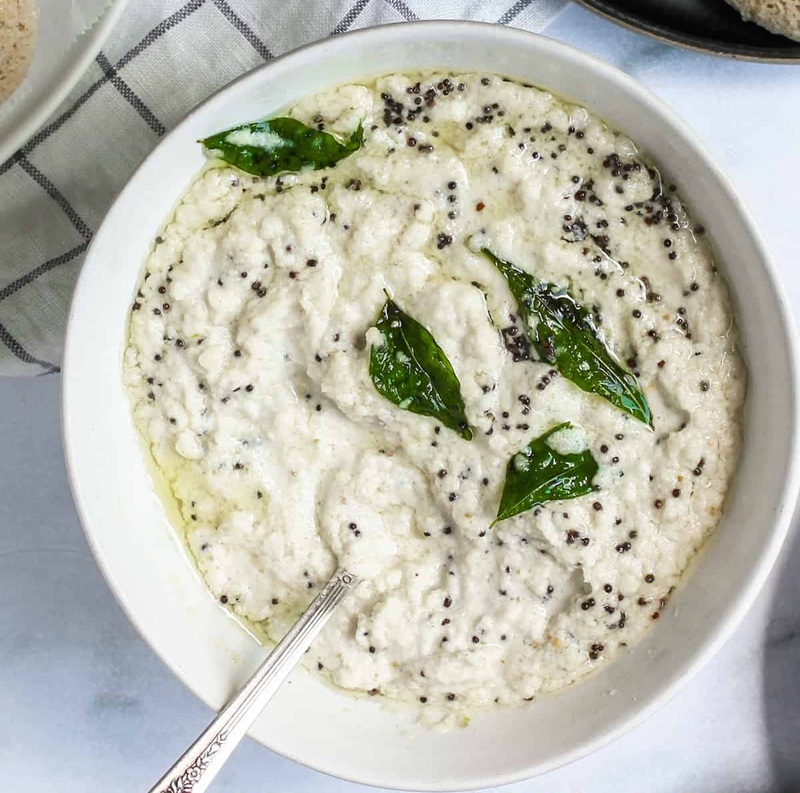
The South Indian breakfast chutney: fresh coconut ground with green chilli, ginger and roasted gram, finished with a hot mustard-and-curry-leaf temper. Goes with dosa, idli and vada.
Overview
Fresh coconut is ground with green chilli, ginger, roasted gram and a small splash of water into a smooth paste. The chutney is finished with a tempering of mustard seeds, dried red chilli, curry leaves and asafoetida in hot oil, poured over the white chutney for a striking visual and aromatic contrast.
Ingredients
Chutney
- 100 g fresh grated coconut (or 80 g desiccated, rehydrated in 6 tablespoons of warm water)
- 2 tablespoons soaked cashews
- 2-3 green chillies
- 15 g fresh ginger
- A small handful of fresh coriander (optional)
- 1 teaspoon salt (to taste)
- 100 ml water (to grind)
- 1 teaspoon tamarind paste (or juice of ½ lime)
Temper
- 1 tablespoon coconut oil (or sesame oil)
- 1 teaspoon black mustard seeds
- 1 dried red chilli (broken in half)
- 1 teaspoon urad dal (split black gram, white)
- 15 fresh curry leaves
- A pinch of asafoetida (hing)
Method
Stage 1 - Grind the chutney
- Place the grated coconut, soaked cashews, green chillies, ginger, coriander (if using), salt and tamarind in a blender.
- Add 100 ml of water.
- Blend to a smooth paste; add another tablespoon or two of water if needed to keep the blade turning.
- Taste and adjust salt and chilli.
- Tip into a serving bowl.
Stage 2 - Temper
- Heat the coconut oil in a small pan over medium-high heat.
- Add the mustard seeds; when they pop, add the dried red chilli and urad dal.
- Cook for 30-40 seconds until the urad dal turns golden.
- Pull from the heat; add the curry leaves and asafoetida (they'll crackle).
Stage 3 - Combine
- Pour the hot tempering oil over the white chutney.
- Don't stir; let the diner mix the two with their first scoop.
- Serve at room temperature with dosa, idli or vada.
Notes
- Fresh coconut beats desiccated: The chutney loses some of its character with dried coconut, but rehydrating in warm water for 10 minutes before blending is the best compromise.
- Urad dal in the temper: This is the South Indian signature. The dal turns into tiny golden nuggets that pop when bitten.
- Asafoetida at the end: Always added off the heat. Direct contact with high heat turns it bitter.
Storage
- Best eaten the day it's made.
- Refrigerate up to 2 days; the temper loses its crispness and the colour darkens, but the flavour holds.
More like this
Coconut Rice
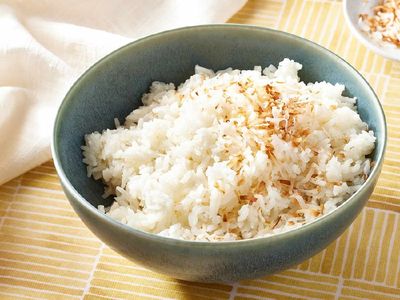
Plain steamed rice (often last night's leftovers) is the base. A hot temper of mustard seeds, urad dal, chana dal, cashews, dried red chilli and curry leaves is bloomed in coconut oil, then fresh grated coconut is folded in and warmed through. The rice is tossed through everything off the heat, so the grains stay separate and pick up flavour rather than soften.
Chicken Ceylon
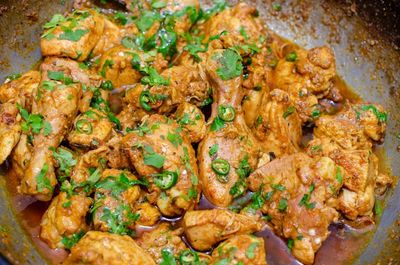
A bright and spicy Sri Lankan-inspired curry with a curry-house spin, featuring aromatic spices, coconut, and fresh curry leaves. It works beautifully as a banquet dish and can be extra hot with extra bird’s eye chillies and chilli powder. The subtle sweet-tang tuning makes it a favorite with rice and mild dhal.
Lemon Rice
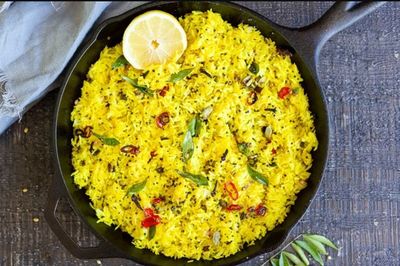
A temper of mustard seeds, chana dal, urad dal, peanuts, dried red chilli and curry leaves is bloomed in sesame oil. Turmeric is stirred in for colour. Cooked, cooled rice is tossed through off the heat, then lemon juice is added at the end so the heat doesn't dull the acidity. Bright lunchbox classic; the dish should taste fresh and tart, not muddled.
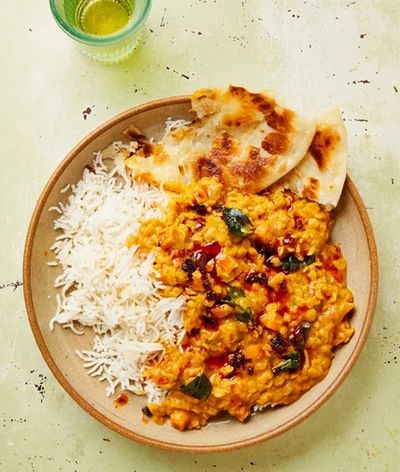
Malaysian Dhal Curry
Yellow split peas (chana dal) simmer with onion, turmeric and tomato until very soft. The lentils break down into a thick soup. Right at the end, a tempering of mustard seeds, curry leaves, dried red chillies, garlic and shallots is poured sizzling-hot over the surface. The aromatic oil seeps through; the dish transforms.