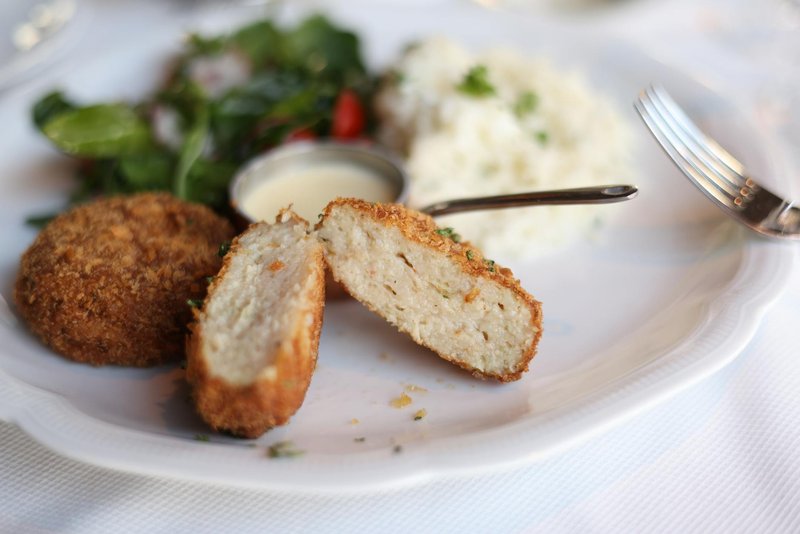
Fishcakes
Thailand's tod mun pla: minced fish blended with red curry paste, kaffir lime leaf and green beans.
Overview
Thai fishcakes (often called ‘tod mun pla’ on menus) are known for their spongy consistency, which I’m not fond of; that sponginess comes from the egg, so I tend to leave it out. Fishcakes are usually deep-fried in street stalls and restaurants, but I find it much easier to shallow-fry them. These are great served with sweet chilli sauce, Thai seafood dipping sauce and/or cucumber and chilli relish.
Ingredients
Protein
- 500g (1lb 2oz) meaty fish fillets, such as lemon sole, cod or salmon, skinned
Aromatics
- 1 tbsp finely chopped coriander (cilantro) (optional)
- 3 lime leaves, stalks removed and finely julienned
- 2 spring onions (scallions), thinly sliced
- 8 green (string) beans, thinly sliced
Seasoning
- 3-4 tbsp Thai Red Curry Paste
- 1 tbsp Thai fish sauce (gluten-free brands are available)
- 1 tbsp lime juice
Sweeteners
- 1 tsp sugar (optional)
Other
- 1 egg (medium, optional)
- 1 tbsp tapioca starch
Fat
- 5 tbsp rapeseed (canola) oil
Method
Stage 1 - Prepare Paste
- Place the fish in a food processor.
- Add the rest of the ingredients up to and including the lime juice. If you are using egg for a spongier fishcake, add it at this point too.
- Blend until you have a fine fish paste. It is worth blending for a few minutes as the heat from your blender will help thicken the paste.
Stage 2 - Mix
- Transfer to a bowl and add the tapioca starch, lime leaves, spring onions (scallions) and beans and mix well with your hand.
- Divide into twelve patties.
- I often fry a spoonful of the paste to test for seasoning, then adjust if necessary.
Stage 3 - Cook
- Heat the oil in a large, non-stick frying pan over a medium heat.
- Fry the fishcakes, in batches of about three or four, for about 2 minutes on one side, then flip over to cook the other side until they are nicely browned and cooked through.
- Each batch should only take about 4 minutes.
- Serve hot.
Notes
- Egg is optional for sponginess.
Serving
Serve hot with sweet chilli sauce, Thai seafood dipping sauce and/or cucumber and chilli relish.
Storage
- Best served immediately; can be kept warm for 10 mins. Refrigerate leftovers for 1 day.
More like this
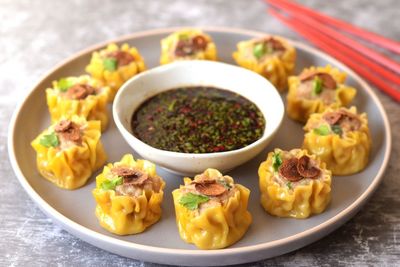
Kanom Jeeb
A filling of minced pork and chopped prawn binds with coriander root (pounded with garlic and white pepper into the traditional Thai "rak pak chee" paste), oyster sauce, soy sauce, sugar, sesame oil, and a beaten egg. The mixture chills for 20 minutes to firm. Square wonton wrappers go around the filling cupcake-style: filling in the centre, edges pulled up and pleated open around the meat, top brushed with a tiny smear of beaten egg and topped with a thin slice of carrot. Steamed in a bamboo basket over boiling water for 8 minutes. Dip is black soy sauce with sliced chilli and rice vinegar.
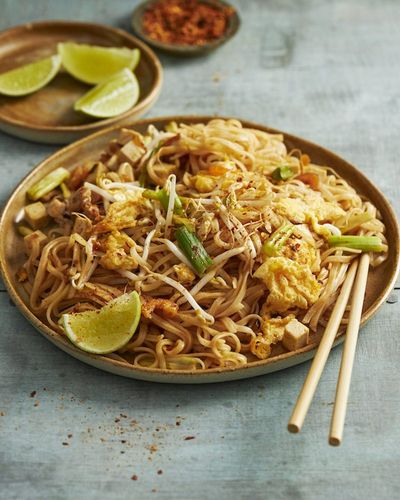
Prawn and Pork Pad Thai
This classic Thai dish of noodles is both aromatic and lightly spicy, serving well as either a main course or a starter. Pad Thai combines stir-fried rice noodles with tender chicken, pork, and prawns in a balanced sauce of curry paste, oyster sauce, and fish sauce. Fresh herbs, crushed peanuts, and a squeeze of lime complete this iconic Thai street food favourite.
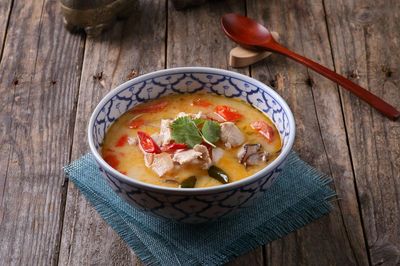
Tom Kha Gai Soup (Chicken, Galangal and Coconut Soup)
Tom kha gai is a popular spicy coconut soup. The tasty broth is more important than what you put into it as a main ingredient, which in this case is chicken, although you could substitute prawns (shrimp) to make tom kha goong, or meaty white fish. You could also leave the meat out and make it into a vegan soup, adding whichever vegetable you like or even fried tofu. If you want to have this as a main dish, you could add other ingredients such as noodles to make the soup more filling.
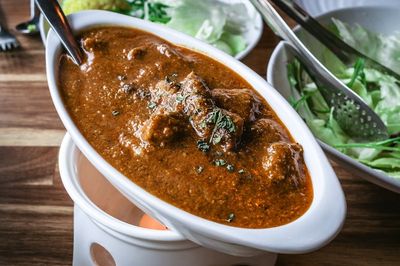
Lamb Achari
A Punjabi-inspired achari curry featuring pickle spices like panch poran and dried chillies, balanced with sweet mango chutney and tangy lime pickle. This dish captures the essence of Indian pickles in a rich, flavorful lamb curry.