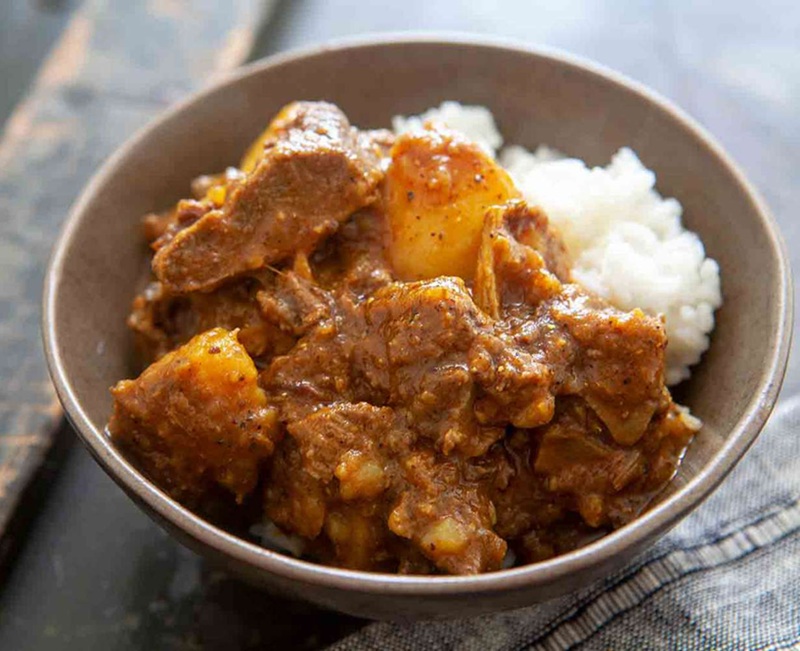
Jamaican Goat Curry
Jamaica's Sunday-lunch curry: bone-in goat slow-braised with Caribbean curry powder, Scotch bonnet, thyme and allspice until the meat slips off the bone.
Overview
A deep, brick-yellow gravy stained with turmeric and allspice (called pimento in Jamaica, confusingly, nothing to do with the pepper of the same English name). The taste is layered: the curry powder hits first, then the slow heat of Scotch bonnet, then a sweet-piney back-note from allspice and thyme that's unmistakably Caribbean rather than Indian. The goat is the point; bone-in shoulder or leg, braised until the bones loosen and the connective tissue melts into the gravy and gives it body without any flour or roux. Patient cooking but not difficult: brown the meat, bloom the curry powder until it darkens to brown, then leave it alone for two hours. The whole pierced Scotch bonnet sits in the pot scenting the gravy and is fished out before it ruptures, so the heat stays controllable. Came to Jamaica via Indian indentured labourers in the 1840s, then got reshaped by what the island already had: thyme, pimento, scotch bonnet, and the Saturday-evening habit of putting a pot on to braise for Sunday lunch. Day-2 goat curry is better than day-1, which is why every Jamaican grandmother starts it on a Saturday.
Ingredients
Goat and marinade
- 1.2 kg bone-in goat shoulder (or leg, cut into 3-4 cm chunks; ask the butcher to chop through the bone)
- 3 tablespoons Caribbean curry powder (Betapac or similar; substitute a Madras + 1 teaspoon ground allspice + 1 teaspoon ground turmeric)
- 1 teaspoon ground allspice (also called pimento)
- 1 teaspoon ground black pepper
- 2 teaspoons sea salt
- 6 sprigs fresh thyme (leaves picked, plus 2 whole sprigs for the pot)
- 4 spring onions (scallions, finely chopped, white and green)
- 6 garlic cloves (minced)
- 30 g fresh ginger (minced)
- 1 Scotch bonnet (deseeded and finely chopped; keep a second one whole for the pot)
- 2 tablespoons vegetable oil
- 1 tablespoon white vinegar
To cook
- 2 tablespoons vegetable oil
- 1 onion (large, sliced)
- 2 tablespoons Caribbean curry powder (extra, for blooming)
- 1 litre chicken stock (or water)
- 2 potatoes (medium, peeled, cut into 3 cm chunks)
- 1 whole Scotch bonnet (left whole, pierced once with a knife - do not break)
- 2 sprigs fresh thyme
- Salt and black pepper, to adjust at the end
To serve
- Rice and peas (see cuisine/jamaican/side-dishes/rice-and-peas.md)
- Fried Plantains
- Lime wedges
- Cold Red Stripe (or similar)
Method
Stage 1 - Marinate the goat
- Put the goat chunks into a large bowl.
- Add the curry powder, allspice, black pepper, salt, picked thyme leaves, spring onion, garlic, ginger, chopped (deseeded) Scotch bonnet, vegetable oil and vinegar.
- Massage everything into the meat with your hands. Wear gloves if you've got a cut anywhere - the Scotch bonnet will find it.
- Cover and refrigerate at least 2 hours; overnight is much better. The marinade penetrates the bone and the curry powder loses its raw edge.
Stage 2 - Brown the goat
- Heat the 2 tablespoons of oil in a heavy Dutch oven or large saucepan over high heat.
- Working in 2 batches so the pot stays hot, lift the goat out of its marinade (reserve the marinade) and brown the chunks on all sides, about 4-5 minutes per batch. Don't overcrowd; you want a dark crust, not a steam-bath.
- Set the browned goat aside on a plate.
Stage 3 - Bloom the curry
- Reduce heat to medium. There should be some fond stuck to the pot - good.
- Add the sliced onion to the same pot. Stir 5 minutes until softened and golden.
- Add the extra 2 tablespoons of curry powder. Stir constantly for 60-90 seconds, scraping the fond. The curry powder should darken from yellow to brown and release a sharp, dusty aroma. Don't let it burn.
Stage 4 - The long braise
- Return the goat and any resting juices to the pot.
- Pour in the reserved marinade scraping the bowl, then the chicken stock until the goat is just covered.
- Add the whole pierced Scotch bonnet and the 2 remaining thyme sprigs.
- Bring to a vigorous boil, then reduce to a low simmer.
- Cover and braise gently for 1 hour 30 minutes.
Stage 5 - Potatoes and reduce
- Add the potato chunks. Stir gently. Replace the lid.
- Continue to simmer 30 minutes more, until the goat is fork-tender (the bones should slip when prodded) and the potato is soft.
- Remove the lid for the last 10 minutes if the gravy is too thin; the potatoes will help thicken it as they break down a bit.
- Fish out the whole Scotch bonnet before it bursts. Taste; adjust salt and add a few cranks of black pepper.
Stage 6 - Serve
- Spoon the goat curry over rice and peas in deep bowls.
- Add a piece of fried plantain on the side.
- Squeeze over a wedge of lime.
Notes
- Goat is the meat: lamb is a workable substitute (use shoulder or shank pieces; reduce braise time to 90 minutes total because lamb is softer than goat). Mutton works similarly. Avoid pre-trimmed, boneless: the bones are what make the gravy.
- Scotch bonnet is the heat: the whole pierced one in the pot delivers fragrance and gentle heat. The chopped (deseeded) one in the marinade is the real fire. For mild palates, skip the chopped one entirely; the whole one alone is enough flavour.
- Caribbean curry powder vs Indian: Caribbean blends are heavier on turmeric and allspice, lighter on cumin. Betapac (yellow tub) is the gold standard. If using an Indian Madras as substitute, the dish is still good but reads as more "curry" and less "Jamaican curry" - close the gap with the extra allspice.
- The fond is everything: scrape the bottom of the pot when blooming the curry powder. The browned bits there are flavour.
- Make a day ahead if you can: the curry deepens overnight. Day-2 goat curry is what every Jamaican grandmother makes for Sunday lunch from Saturday's prep.
Storage
- Keeps 4 days refrigerated; reheats beautifully (the gravy thickens, the flavours marry).
- Freezes 3 months. Thaw overnight in the fridge.
- Don't freeze with the rice and peas - cook those fresh.
Recipes mentioned here
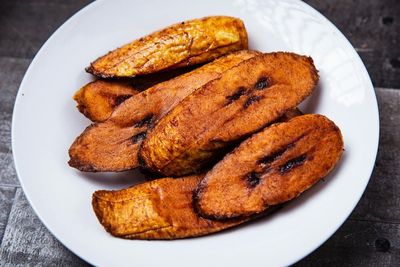
Fried Plantains
Ripe plantains (not the green ones used for tostones) are peeled, sliced thick on the bias, and fried gently in vegetable oil so the natural sugars caramelise without the outsides burning. The result is sweet, slightly chewy, with a soft interior. A light dusting of salt at the end lifts the sweetness. Don't rush the heat: medium-low is the rule.
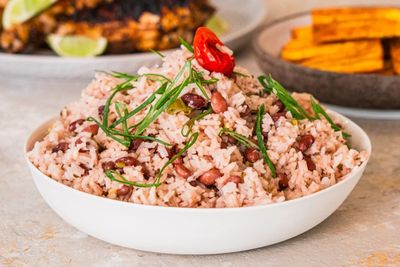
Rice and Peas
Soaked kidney beans simmer with coconut milk, scallion, thyme, garlic, allspice and a whole scotch bonnet (left whole, never pierced). Once tender, rice goes in with stock to top up. The pot is covered; the rice steam-absorbs the bean broth; the scotch bonnet stays whole and is removed before serving.
More like this
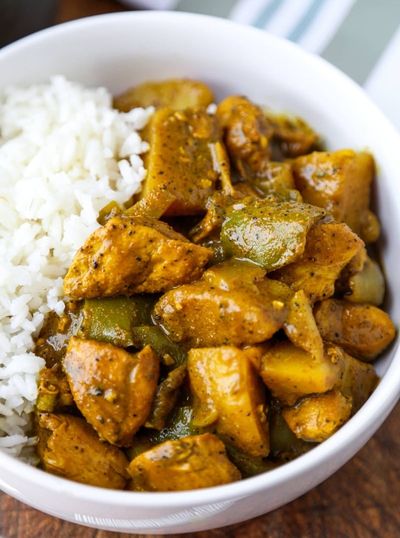
Authentic Jamaican Curry Chicken
Jamaican curry sits in its own corner of the global curry map: heavier on turmeric and allspice than Indian Madras, lighter on cumin, and built on a technique called "burning the curry" that gives the dish its character. The technique is exactly what it sounds like, dry curry powder hits hot oil and is stirred for 30 seconds until it darkens from yellow to deep gold and smells like toasted spice. That move concentrates the flavours and removes any raw edge. The finished stew is bright yellow stained slightly orange, savoury and aromatic rather than searingly hot, with thyme and a whole pierced Scotch bonnet scenting the gravy without flooring it. Smell: bloomed curry powder, allspice, browned chicken fat. Not difficult, but requires confidence in the 30-second bloom (under-do it and the dish is flat; over-do it and you have to start over). A Sunday-dinner staple across Jamaica and the diaspora, served over white rice with the gravy spooned generously over.
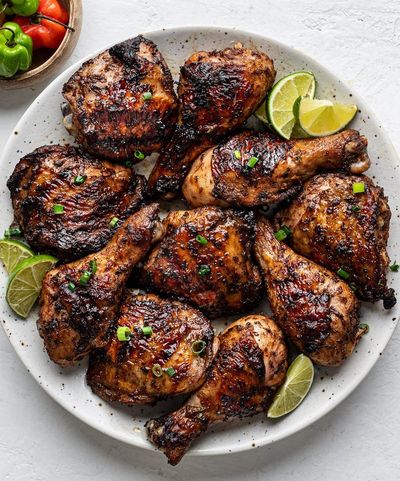
Jerk Chicken
A wet jerk paste: scotch bonnet chillies, garlic, ginger, spring onions, thyme, allspice (whole or ground), brown sugar, soy sauce, lime, oil, salt and pepper, pureed in a blender. The chicken (bone-in skin-on thighs and drumsticks, or spatchcocked whole bird) marinates for 12 hours minimum. Slow-grilled over indirect heat with a pile of pimento wood chips or allspice berries on the coals for the signature smoke; alternatively, an oven-bake at 180°C with a final blast under the grill, supplemented with allspice in the marinade.
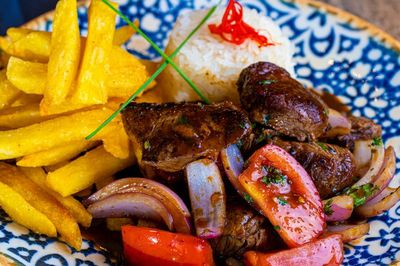
Lomo Saltado
Beef strips are marinated briefly in soy and aji amarillo paste. Fries are cooked separately, pre-fried, set aside. The wok hits high heat; beef is seared in batches; red onion and tomato are added briefly so they keep their bite; soy, vinegar, lime and stock are poured in to sauce. The fries go in last, just before serving, a 30-second toss so they pick up flavour without going soggy.
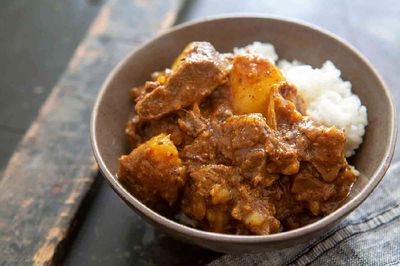
Trinidadian Curry Goat
Trinidadian curry goat sits in a quiet rivalry with Jamaican curry goat, but the two are different dishes. Jamaican curry goat is built on Madras-style curry powder, scotch bonnet and allspice with little coconut and a wetter finish. Trinidadian curry goat is built on a fresh blend of green seasoning (a herb-and-aromatic puree of culantro, thyme, garlic, chives and onion), Caribbean curry powder (which leans heavily on amchar masala and roasted geera), and the bunjay technique of frying the curry paste in oil until it splits before the meat goes in. The result is a darker, herbier, drier curry that hugs the bone rather than pooling around it. Kid goat is the preferred meat; older mutton-goat works but takes longer. UK home cooks can usually find kid goat at Caribbean butchers, Halal butchers and many Asian supermarkets in the chilled or frozen section. Bone-in pieces are essential for flavour and gelatin. Lamb shoulder on the bone makes an honest substitute. Difficulty is low to moderate; the cook is mostly long and passive once the curry is bunjayed. Serve with paratha-style "buss-up-shut" roti, dhalpuri roti, white rice, or coconut rice.