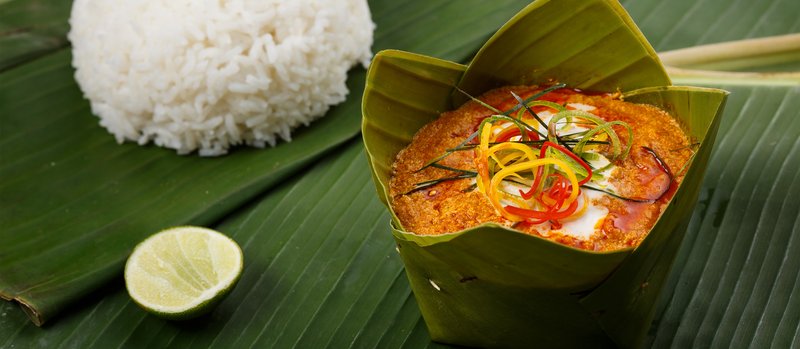
Amok Trey
Cambodia's national dish: fish steamed in a banana-leaf cup with kroeung (the lemongrass-galangal-turmeric paste that defines Khmer cooking), coconut cream and noni leaves. The fish stays soft; the custard thickens around it; the leaves perfume everything. Served from the banana-leaf parcels with rice.
Overview
Cambodia's national dish, the centrepiece of any Khmer feast and the proper-occasion food across the country. You start by pounding kroeung fresh in a mortar (the paste of lemongrass, galangal, turmeric, garlic, shallots, kaffir lime zest and coriander root that defines Khmer cooking, and that no shop-bought paste comes close to matching). The kroeung fries briefly to bloom its aromatics, coconut cream and stock loosen it, and eggs whisk in to set the eventual custard. Chunks of firm white fish fold through with chopped greens (traditionally noni leaves, with spinach or chard standing in), and the whole mix spoons into banana-leaf cups (or small ramekins). Twenty minutes in a steamer turns the custard just-set around the soft fish, and the banana leaves perfume everything. Served from the parcels with steamed rice and a wedge of lime.
Ingredients
Kroeung (curry paste)
- 3 stalks lemongrass (white parts, sliced thin)
- 4 cm galangal (sliced)
- 3 cm fresh turmeric (or 1 ½ teaspoons ground)
- 6 garlic cloves
- 4 shallots
- 2 kaffir limes (or 4 lime leaves, central stems out, finely chopped, zest)
- 1 small bunch coriander roots (cleaned)
- 1 long red chilli
- 1 teaspoon shrimp paste (skip for vegetarian; 1 teaspoon brown miso instead)
Custard
- 600 g white fish fillet (cod, basa, sea bass; cut into 3 cm chunks)
- 250 ml thick coconut cream
- 100 ml fish stock (or water)
- 2 eggs (large)
- 2 tablespoons fish sauce (or vegetarian fish sauce / soy)
- 1 tablespoon palm sugar
- 1 teaspoon salt
- 1 small handful Thai basil (chopped)
- 100 g spinach (or noni leaves, shredded)
To assemble
- 4 banana leaves (cut into 18 cm squares; or use 4 ramekins)
- Hot cooked jasmine rice (to serve)
Topping
- 4 tablespoons coconut cream (extra)
- 1 long red chilli (sliced thin)
- A few kaffir lime leaves (julienned)
Method
Stage 1 - Kroeung
- Pound or blend everything in the kroeung list to a smooth paste, scraping down. A high-speed blender or small food processor with a tablespoon of water works fine.
Stage 2 - Banana-leaf cups (optional)
- Soften banana leaves over a flame for 5 seconds - they turn glossy and pliable.
- Fold each square into a small open box: bring two opposite corners up and pin together; do the same with the other two. Use cocktail sticks. (Skip and use ramekins if simpler.)
Stage 3 - Custard base
- Heat 1 tablespoon vegetable oil in a wok over medium heat.
- Add the kroeung; fry 4-5 minutes until darker and aromatic.
- Pour in the coconut cream and stock; whisk; bring to a simmer.
- Whisk the eggs lightly; pour into the wok off the heat, whisking - they shouldn't curdle but they're not meant to stay liquid either.
- Stir in the fish sauce, palm sugar, salt.
Stage 4 - Fold
- Stir in the spinach (or noni) and the fish chunks gently, just to coat.
Stage 5 - Steam
- Spoon the mixture into the banana-leaf cups or ramekins.
- Set in a steamer over boiling water; cover.
- Steam 18-20 minutes until the custard is set and the fish is cooked through (no pink in the centre).
Stage 6 - Finish
- Drizzle each cup with a teaspoon of extra coconut cream.
- Top with sliced chilli and shredded lime leaves.
- Serve hot with jasmine rice.
Notes
- Kroeung is the dish: The paste is unique to Khmer cooking - different from Thai green or red curry pastes. The galangal-lemongrass-turmeric balance makes it.
- Fish that holds together: Firm white fish - cod, basa, sea bass, halibut - chunks of 3 cm hold up to steaming. Tilapia and barramundi are traditional.
- Banana leaves vs ramekins: Banana leaves give a subtle, tea-like aroma; ramekins are cleaner and easier. Both are valid.
Storage
- Best fresh; the custard separates on reheat. Eat the day it's made.
More like this
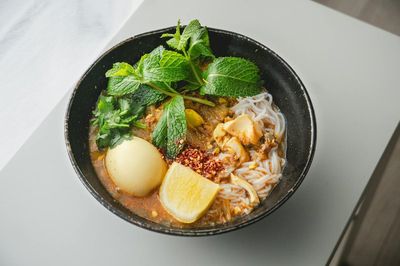
Malaysian Curry Laksa (Laksa Lemak)
A two-part dish: a deeply concentrated prawn-and-chicken stock built from roasted prawn shells, layered with a freshly pounded laksa paste of dried chilli, galangal, lemongrass and candlenuts. The two are joined with coconut cream to create a glossy, fragrant broth that bathes rice vermicelli, tofu puffs and prawns. Finished at the table with sambal, lime, fresh coriander and bean sprouts.
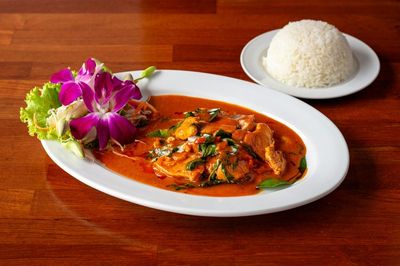
Thai Red Curry
Gaeng phed gai, this classic Thai red curry features tender chicken simmered in a rich, aromatic coconut sauce infused with homemade red curry paste. The chilli paste that forms the basis of this dish has superb flavour and is worth making in quantity, as it's useful in all sorts of spicy dishes. Taking the extra time to pound herbs and spices using a mortar and pestle releases their fragrances perfectly, creating an authentic, restaurant-quality curry.
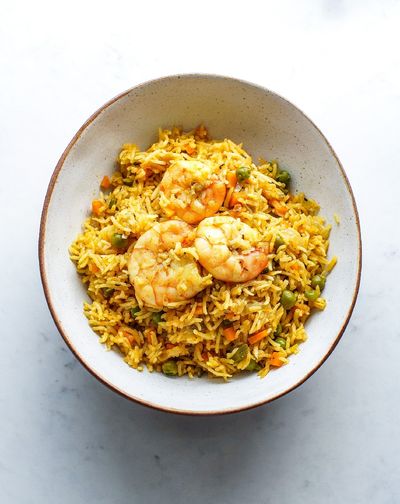
Goan Prawn Pulao
A bright green masala paste of coriander, mint, green chilli, ginger and garlic is ground with a splash of vinegar. Basmati is rinsed, soaked and drained. Whole spices and onion are softened in coconut oil, the prawns briefly seared and lifted out, then the green masala is fried into the onion before the rice is added to toast. Stock goes in for the steam; the prawns return at the end so they don't overcook.
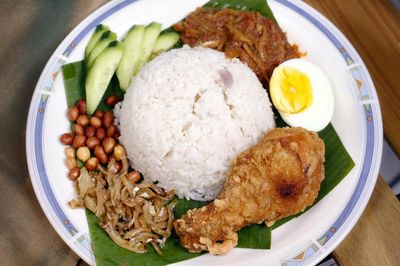
Nasi Lemak
A platter built around fragrant coconut and lemongrass rice, served with a fiery sambal of dried anchovies and rehydrated chillies, then ringed with hard-boiled egg, sliced cucumber and fried peanuts. The sambal does most of the heavy lifting, sweet, sour, smoky and hot. The rice itself is gentle, designed to be a calming counterpoint to everything else on the plate.