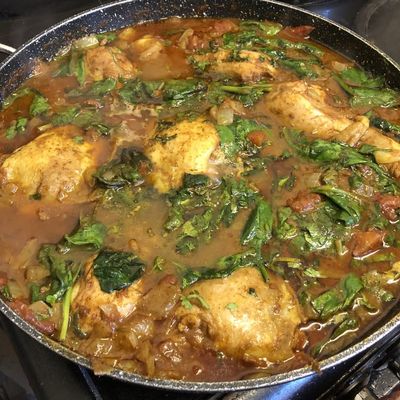
Agra Ginger Chicken
A light, cleansing chicken curry from Agra with fresh ginger, warm spices and bright tomato notes. This vibrant dish is designed to be accessible and fresh, with spinach and lime lifting the finished curry.
Indian
Tap a chip to add another filter, or use Clear all below.
Tap any item to find recipes that use it.
A light, cleansing chicken curry from Agra with fresh ginger, warm spices and bright tomato notes. This vibrant dish is designed to be accessible and fresh, with spinach and lime lifting the finished curry.
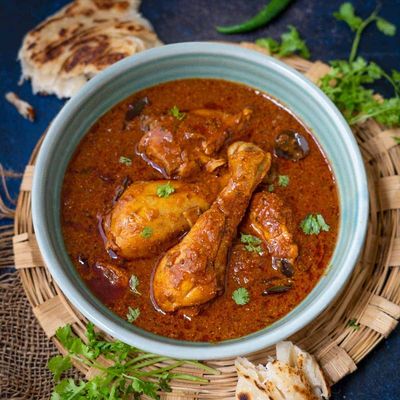
Chicken thighs are marinated briefly with turmeric, ginger-garlic paste, yogurt and a pinch of red chilli. A dry-roast of poppy seeds, sesame seeds, coconut, fennel, coriander and dried red chillies is ground with a splash of water into a coarse paste. The base is built with shallots, curry leaves and tomato; the chicken is browned in stages; and the masala paste is folded in for the long, gentle simmer. Tamarind and a curry-leaf temper finish.
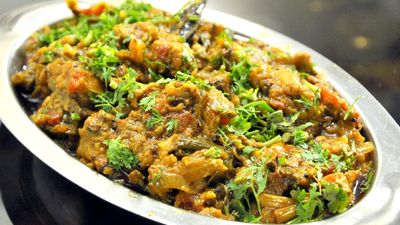
A whole aubergine is charred directly over a gas flame until the skin is blackened and the flesh inside is soft. The charred skin is peeled off and the flesh roughly mashed. A masala of onion, garlic, ginger, green chilli and tomato is cooked down to a thick base, and the smoky aubergine flesh is folded through with a finishing touch of garam masala and coriander. Vegetable-side or vegetarian main; the smoke is what makes it.
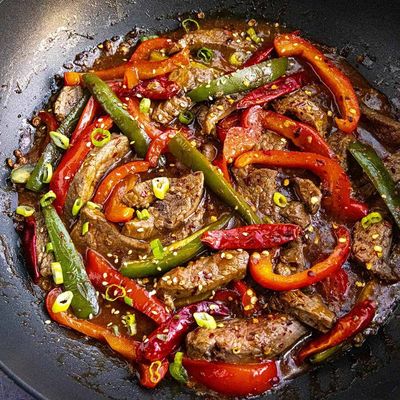
A Burmese curry from the country's Indian-origin community, sitting somewhere between a Madras and a Burmese ohn-no in spice profile. You marinate chunks of beef chuck or shin in turmeric, fish sauce and salt while you fry onions in oil until they're deep brown - that long onion fry is the foundation. The beef browns in the same oil, then ginger-garlic paste, paprika and chilli powder go in, then tomato and water turn it into a stew. Two hours of slow simmer until the meat falls apart at a fork. The signature finish is the see byan, a deep red-orange oil slick that rises to the top of the curry as it reduces, which is what the dish is named for. Eaten with rice or paratha, and a small bowl of pickled vegetable on the side.
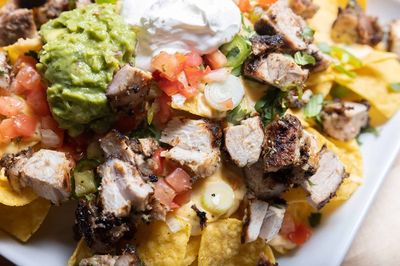
A Caribbean-American fusion that works because both food cultures speak the language of "everything on one tray". The base is American nachos: tortilla chips, melted cheese, black beans. On top sits jerk-marinated chicken thigh, which carries the dish's flavour, allspice, Scotch bonnet, nutmeg, cinnamon, thyme, soy and brown sugar blended into a wet jerk paste, marinated into the meat overnight, then oven-baked and sliced. The fresh element on top is a Trinidadian-style fruit chow: diced mango, pineapple, red bell pepper and red onion dressed with lime juice and cilantro. The chow is what makes this work; without it the nachos are just spicy meat-and-cheese, with it the dish has acid, crunch and sweetness to cut through the richness. Smell is melted cheese hitting jerk seasoning, with a citrus-tropical lift from the chow on top. Not difficult but it's three components running on different timelines, so plan ahead. A modern party-and-Super-Bowl-tray dish rather than something a Kingston grandmother makes, popularised by Caribbean-American food bloggers in the 2010s.
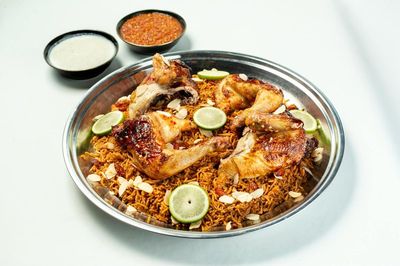
Saudi Arabia's national dish, the one platter you'll meet at almost every gathering from family lunch through wedding banquet. You brown chicken pieces or lamb shoulder hard in a heavy pot, then build a base of onion, garlic and ginger softened in the same fat, with tomato and a spoonful of baharat (or a dedicated kabsa spice mix) blooming until the kitchen fills with cardamom and cinnamon. The protein simmers in tomato and stock until it's tender and pulling away from the bone, then long-grain rice goes in to cook absorption-style in the same liquid, drinking up every layer of flavour the broth carries. You finish with almonds toasted in butter, raisins plumped briefly, and a fresh salsa of tomato, onion, chilli and parsley spooned on the side to cut the richness. Eaten communally from the centre platter, with hands or a long spoon.
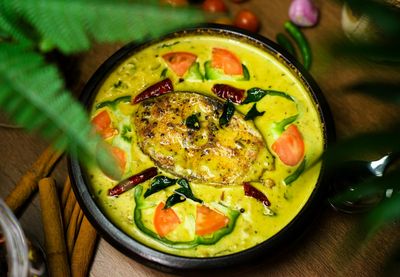
A masala paste of shallot, ginger, garlic and red chilli is bloomed in coconut oil with mustard seeds, fenugreek and curry leaves. Coconut milk is poured in and the curry brought to a simmer, then tamarind water and a tomato are added. The fish goes in last and poaches in the gravy for just long enough to set; over-stirring breaks the pieces.
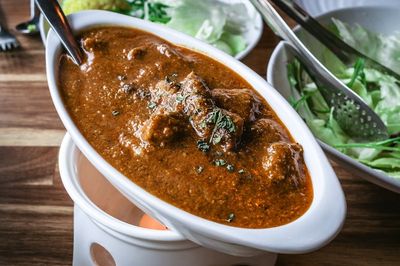
A Punjabi-inspired achari curry featuring pickle spices like panch poran and dried chillies, balanced with sweet mango chutney and tangy lime pickle. This dish captures the essence of Indian pickles in a rich, flavorful lamb curry.
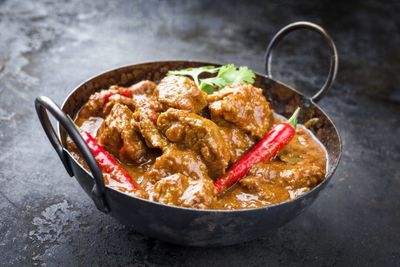
Hot, sharp curry inspired by the cooking of southern India. Reduced tomato base with a heavy dose of chilli powder, mustard seeds, curry leaves and tamarind. Sharper than a vindaloo (no vinegar) but in the same heat range; finished with lime juice and a spoon of mango chutney for sweet contrast.
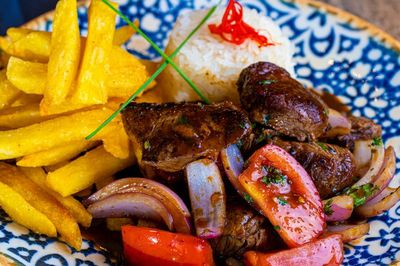
Beef strips are marinated briefly in soy and aji amarillo paste. Fries are cooked separately, pre-fried, set aside. The wok hits high heat; beef is seared in batches; red onion and tomato are added briefly so they keep their bite; soy, vinegar, lime and stock are poured in to sauce. The fries go in last, just before serving, a 30-second toss so they pick up flavour without going soggy.
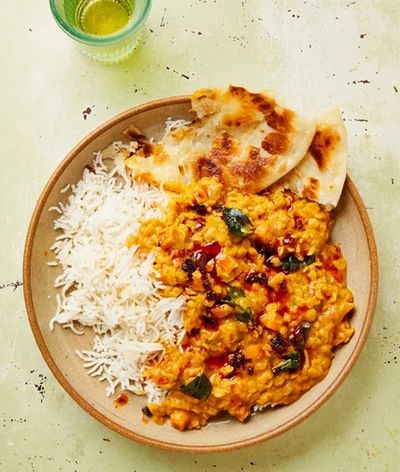
Yellow split peas (chana dal) simmer with onion, turmeric and tomato until very soft. The lentils break down into a thick soup. Right at the end, a tempering of mustard seeds, curry leaves, dried red chillies, garlic and shallots is poured sizzling-hot over the surface. The aromatic oil seeps through; the dish transforms.
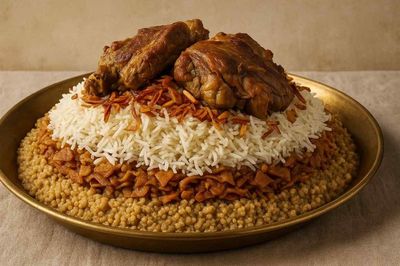
The Saudi gathering platter built for the night when one cut of meat isn't enough. Three proteins share the same pot: lamb shoulder and beef chunks go in first with a kabsa-spiced tomato base for ninety minutes of slow simmer until they're meltingly tender, then chicken pieces drop in for the last thirty-five minutes (their cook time is shorter, so they go in later). The strained meat broth, deeply spiced from everything that has braised in it, becomes the cooking liquid for basmati scented with saffron and dried lime. At the end you arrange all three meats on top of the rice in the same platter and bring the whole thing to the centre of the table. The kind of dish you make for a wedding lunch, an Eid gathering, or the night the extended family arrives unannounced.
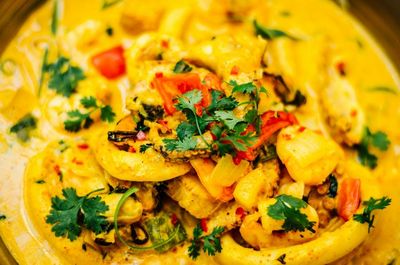
Cari ourite is the dish that turns up at every Mauritian fisherman's Sunday lunch, and at every Creole restaurant on the south coast. The technique is to braise octopus low and slow in a tomato-and-onion masala that leans on fresh thyme and a finishing pinch of garam masala instead of the heavier dried-spice masalas you find in cari boeuf or cari poulet. Octopus has a sweet, slightly mineral flavour that needs space, so the seasoning is restrained: thyme for aroma, tomato for body, ginger and garlic for the base, mild curry powder for depth, garam masala right at the end for top-note warmth. The tentacles cook for around 45 minutes (small octopus) to an hour (larger). The biggest variable is the octopus itself; small frozen octopus, sold cleaned at most fishmongers and many supermarkets, is reliable and the freezing actually helps tenderise the flesh. Difficulty is moderate; the cook is mostly passive once the masala is built. Serve with plain steamed rice and a satini cotomili (coriander chutney) or a spoon of pickled chilli. A simple green salad with vinaigrette on the side keeps it honest.
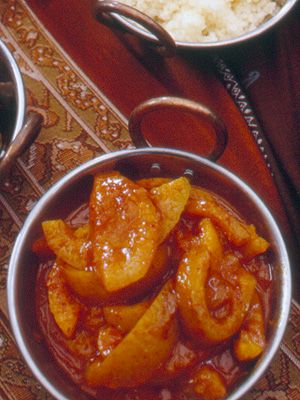
A jewelled preserve capturing summer peaches with warming spice and bright citrus. This complex chutney balances delicate peach sweetness with cinnamon and nutmeg warmth, punctuated by lime zest, creating an elegant accompaniment to game, terrines, and cold meats.
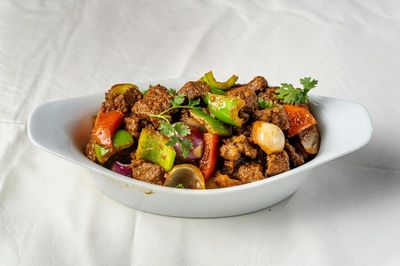
Beef tenderloin or sirloin is cubed small. A spice mix of cumin, coriander, cardamom and cinnamon, Somalia's xawaash, seasons it. The cubes sear quickly in a hot pan with onion and pepper; tomato paste deepens; chilli and butter finish. Coriander piles on at the table.
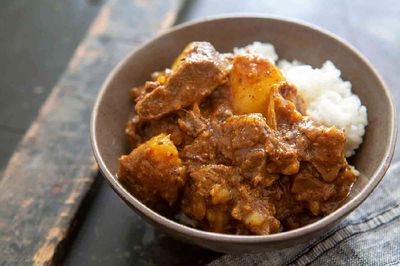
Trinidadian curry goat sits in a quiet rivalry with Jamaican curry goat, but the two are different dishes. Jamaican curry goat is built on Madras-style curry powder, scotch bonnet and allspice with little coconut and a wetter finish. Trinidadian curry goat is built on a fresh blend of green seasoning (a herb-and-aromatic puree of culantro, thyme, garlic, chives and onion), Caribbean curry powder (which leans heavily on amchar masala and roasted geera), and the bunjay technique of frying the curry paste in oil until it splits before the meat goes in. The result is a darker, herbier, drier curry that hugs the bone rather than pooling around it. Kid goat is the preferred meat; older mutton-goat works but takes longer. UK home cooks can usually find kid goat at Caribbean butchers, Halal butchers and many Asian supermarkets in the chilled or frozen section. Bone-in pieces are essential for flavour and gelatin. Lamb shoulder on the bone makes an honest substitute. Difficulty is low to moderate; the cook is mostly long and passive once the curry is bunjayed. Serve with paratha-style "buss-up-shut" roti, dhalpuri roti, white rice, or coconut rice.