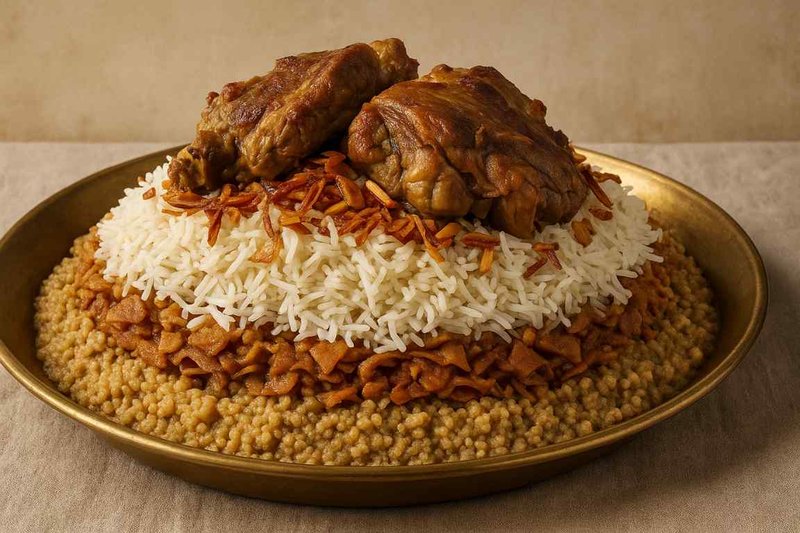
Mathloutha
A Saudi celebration platter: chicken, lamb and beef cooked together on the same spiced basmati rice. Made when one cut isn't enough; eaten communally.
Overview
The Saudi gathering platter built for the night when one cut of meat isn't enough. Three proteins share the same pot: lamb shoulder and beef chunks go in first with a kabsa-spiced tomato base for ninety minutes of slow simmer until they're meltingly tender, then chicken pieces drop in for the last thirty-five minutes (their cook time is shorter, so they go in later). The strained meat broth, deeply spiced from everything that has braised in it, becomes the cooking liquid for basmati scented with saffron and dried lime. At the end you arrange all three meats on top of the rice in the same platter and bring the whole thing to the centre of the table. The kind of dish you make for a wedding lunch, an Eid gathering, or the night the extended family arrives unannounced.
Ingredients
Three meats
- 600 g lamb shoulder (cut into 4 cm chunks)
- 500 g beef shin (or chuck, cut into 4 cm chunks)
- 6 bone-in chicken thighs
Aromatics
- 3 tablespoons vegetable oil
- 2 onions (large, chopped)
- 8 garlic cloves (crushed)
- 1 thumb fresh ginger (grated)
- 2 (400 g) tins chopped tomatoes
- 3 tablespoons tomato puree
- 2 tablespoons kabsa spice mix (or 1 tsp each: ground cumin, coriander, cardamom, black pepper, allspice, cloves, cinnamon)
- 3 dried black limes (loomi, pierced; whole)
- 1 cinnamon stick
- 4 cardamom pods (bruised)
- 2 bay leaves
- 1 ½ teaspoons salt
- 1.8 litres hot water
Rice
- 700 g basmati rice (rinsed; soaked 20 minutes; drained)
- 1 large pinch saffron threads (bloomed in 2 tablespoons hot water)
- 1 teaspoon salt (to taste)
Garnish
- 2 onions (deep-fried until crisp, kept aside)
- 3 tablespoons sliced almonds (toasted)
- 3 tablespoons pine nuts (or pistachios, toasted)
- 4 tablespoons raisins (lightly fried)
- Lemon wedges
- Sahawiq and salata
Method
Stage 1 - Brown the lamb and beef
- Heat the oil in a wide heavy pot.
- Brown the lamb in batches; transfer to a plate.
- Brown the beef in batches; transfer to the plate.
Stage 2 - Build base
- In the same pot, soften the onion 10 minutes.
- Add garlic, ginger, kabsa spice mix, cardamom and cinnamon stick; cook 1 minute.
- Add tomatoes and tomato puree; reduce 8 minutes until thick.
Stage 3 - Slow cook
- Return the lamb and beef; add bay, dried limes and salt; pour over hot water.
- Bring to a simmer; cover; cook on low 1 hour 15 minutes.
- Add the chicken thighs; cook a further 30-35 minutes until all three meats are tender.
Stage 4 - Strain stock
- Lift the meats onto a tray; tent with foil.
- Strain the stock into a measuring jug; you need 1.2 litres. Top up with hot water if short.
Stage 5 - Rice
- Return 1.2 litres of strained stock to a wide pot. Add the drained rice, saffron-water, salt.
- Bring to a boil; reduce heat to lowest; cover; cook 18 minutes.
- Rest off heat (lid on) 5 minutes; fluff with a fork.
Stage 6 - Plate
- Tip the rice onto a wide platter.
- Arrange lamb, beef and chicken on top.
- Scatter fried onions, almonds, pine nuts and raisins.
- Serve with sahawiq, salata and lemon wedges.
Notes
- Why three meats: Saudi hospitality goes wide - serving one meat to guests would be modest, three is generous. Each diner picks what they want.
- Don't rush the simmer: Lamb shin needs 90 minutes minimum; rushing makes chewy meat. Beef joins the lamb; chicken comes in last to keep it moist.
- One pot but better in stages: Cooking the three meats separately is more space-efficient if your pot isn't huge.
Storage
- Refrigerate 4 days; reheat covered.
- Freezes 2 months.
More like this
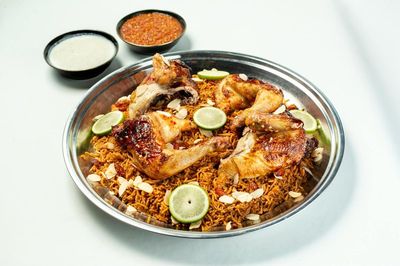
Kabsa
Saudi Arabia's national dish, the one platter you'll meet at almost every gathering from family lunch through wedding banquet. You brown chicken pieces or lamb shoulder hard in a heavy pot, then build a base of onion, garlic and ginger softened in the same fat, with tomato and a spoonful of baharat (or a dedicated kabsa spice mix) blooming until the kitchen fills with cardamom and cinnamon. The protein simmers in tomato and stock until it's tender and pulling away from the bone, then long-grain rice goes in to cook absorption-style in the same liquid, drinking up every layer of flavour the broth carries. You finish with almonds toasted in butter, raisins plumped briefly, and a fresh salsa of tomato, onion, chilli and parsley spooned on the side to cut the richness. Eaten communally from the centre platter, with hands or a long spoon.
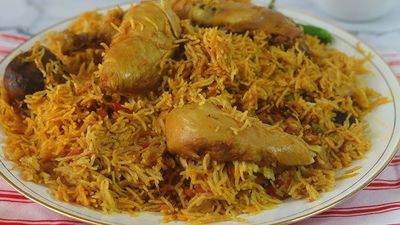
Madghoot
The fast Saudi cousin of mandi, made when you want kabsa-deep flavour but the day doesn't have three hours in it for the meat to cook. You give bone-in lamb a quick wet marinade of crushed tomato, baharat, dried lime, garlic and yogurt (the yogurt tenderises while the spice mix works in), then it goes into a pressure cooker with onion and stock for thirty minutes under pressure, which is what a slow oven would otherwise do in three hours. The cooking liquid gets strained out (it is the dish's stock), basmati cooks absorption-style in it for twelve to fifteen minutes, and the lamb returns on top to rest while the rice steams through. Served straight from the pot with sahawiq (the chilli-coriander relish that shows up on every Khaleeji table) and salata on the side. Weeknight kabsa, basically.
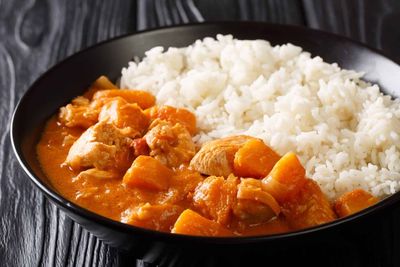
Domoda
Chicken thighs (or lamb) are browned, onions and tomato cooked down with garlic and a single whole chilli, then the meat simmers in stock until tender. A loose peanut paste is stirred in for the final 20 minutes, kept thin enough to ladle. Sweet potato or pumpkin softens in the sauce. A spoon of lime juice at the end balances the richness.
Matoke
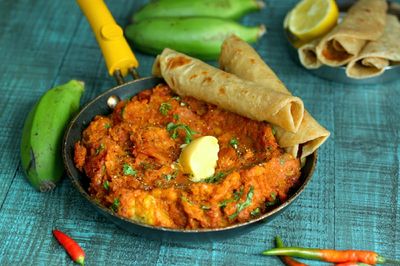
Beef is browned and simmered with onions, garlic, ginger, tomato and a touch of curry powder. Green, unripe plantains are peeled and added to the pot to steam-cook in the sauce until tender. A loose peanut paste is stirred through near the end for body and richness. The whole dish is one pot and built in stages.