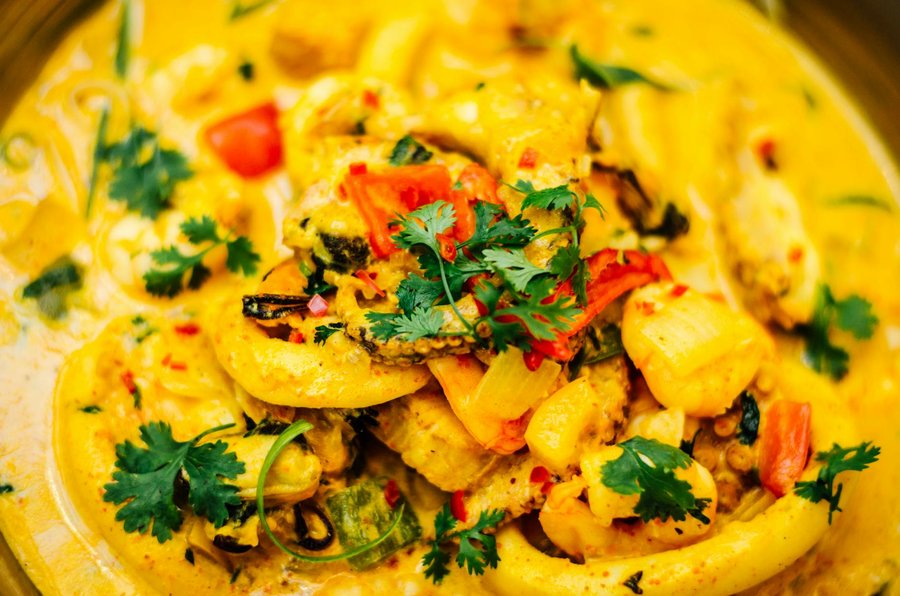
Octopus Curry (Cari Ourite)
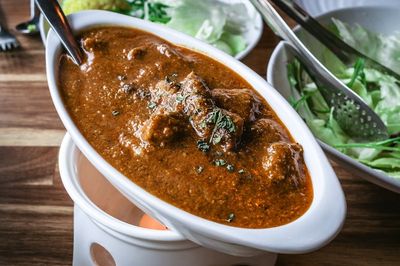
A Mauritian Creole curry: octopus simmered with thyme, tomato and garam masala till the tentacles are tender and the gravy dark, glossy and smoky.
Overview
Cari ourite is the dish that turns up at every Mauritian fisherman's Sunday lunch, and at every Creole restaurant on the south coast. The technique is to braise octopus low and slow in a tomato-and-onion masala that leans on fresh thyme and a finishing pinch of garam masala instead of the heavier dried-spice masalas you find in cari boeuf or cari poulet. Octopus has a sweet, slightly mineral flavour that needs space, so the seasoning is restrained: thyme for aroma, tomato for body, ginger and garlic for the base, mild curry powder for depth, garam masala right at the end for top-note warmth. The tentacles cook for around 45 minutes (small octopus) to an hour (larger). The biggest variable is the octopus itself; small frozen octopus, sold cleaned at most fishmongers and many supermarkets, is reliable and the freezing actually helps tenderise the flesh. Difficulty is moderate; the cook is mostly passive once the masala is built. Serve with plain steamed rice and a satini cotomili (coriander chutney) or a spoon of pickled chilli. A simple green salad with vinaigrette on the side keeps it honest.
Ingredients
Octopus
- 1 kg cleaned octopus (small octopus or a single octopus cut into pieces; frozen is fine and arguably better)
- 1 tbsp white vinegar
- ½ tsp salt
Masala base
- 3 tbsp neutral oil
- 2 onions (medium, finely chopped)
- 6 garlic cloves (minced)
- 20 g fresh ginger (grated)
- 2 sprigs fresh thyme
- 10 fresh curry leaves (optional but traditional)
- 1 green chilli (slit lengthways)
- 3 tomatoes (medium, about 350 g, finely chopped)
- 1 tbsp tomato paste
Spices
- 1 ½ tbsp mild Curry Powder (Mauritian or Madras)
- 1 tsp ground cumin
- ½ tsp ground coriander
- ½ tsp sweet paprika
- ¼ tsp ground turmeric
- 1 tsp Garam Masala (added at the end)
To finish
- 250 ml water (or light fish stock)
- Salt, to taste
- Small handful chopped fresh coriander
- Wedge of lime
Method
Stage 1 - Prepare the octopus
- If using frozen octopus, defrost overnight in the fridge. Rinse under cold water.
- Cut large octopus into 4-5 cm pieces; small octopus can be left whole or halved through the body.
- Bring a large pot of water to a boil with the vinegar and salt. Drop the octopus in and blanch 2 minutes. Drain and pat dry. This firms the flesh and rinses off any iodine bitterness.
Stage 2 - Build the masala
- Heat the oil in a heavy pan or casserole over medium heat.
- Add the onions and cook 8-9 minutes until soft and just golden at the edges.
- Stir in the garlic, ginger, thyme sprigs, curry leaves and slit chilli. Cook 1 minute until fragrant.
- Mix the curry powder, cumin, coriander, paprika and turmeric with 3 tbsp water to make a paste. Stir into the pan and cook 60-90 seconds until the oil shimmers around the edges of the masala. This bloom is what builds the curry's depth.
- Add the tomato paste and stir 1 minute.
Stage 3 - Tomato and braise
- Add the chopped tomatoes and ½ tsp salt. Cover and cook 6-8 minutes, stirring once, until the tomatoes collapse into a thick sauce.
- Uncover and mash any chunks with the back of a spoon.
- Add the blanched octopus, turning each piece through the masala. Cook 3-4 minutes, stirring, so the octopus is coated.
- Pour in the water (or fish stock). Bring to a simmer.
- Cover and braise on low heat for 40-55 minutes, stirring every 15 minutes, until the octopus is fork-tender. Smaller pieces finish faster; check by piercing a tentacle.
Stage 4 - Finish
- Uncover and check the sauce; if too loose, raise the heat and reduce 5 minutes. The gravy should coat the octopus, not pool around it.
- Taste for salt.
- Sprinkle the garam masala over and stir through. Take off the heat.
- Scatter chopped coriander on top.
Notes
- Frozen octopus is your friend: freezing breaks down the muscle fibres, so frozen-then-thawed octopus is more tender than fresh. Look for small octopus or cleaned tentacles at the fishmonger.
- Cleaning fresh octopus: if you have whole fresh octopus, remove the beak from the centre of the tentacles and the ink sac and innards from the body. Rinse well, then rub with coarse salt under cold running water to remove the surface slime. Blanch as above.
- Garam masala at the end: Mauritian Creole cooks add garam masala in the final minute off the heat so its aromatics don't cook away. Stirring it into a hot pan is enough.
- Don't overcook: octopus that is left simmering for too long goes back to rubbery. Check from 40 minutes and stop the moment a tentacle gives easily under a fork.
Variations
Cari ourite ti pwa: Add a handful of cooked white beans or butter beans in the last 10 minutes for a slightly heartier version. Coconut version: A 100 ml splash of coconut milk in the last 5 minutes gives a softer, sweeter gravy. Not classical but common on the west coast.
Serving
Serve over plain steamed rice with a satini cotomili (coriander chutney) and a spoon of chilli pickle. A wedge of lime to squeeze over at the table. A simple green salad with a sharp vinaigrette on the side balances the richness.
Storage
- Tastes even better the next day; the octopus continues to relax and absorb the gravy. Keeps 3 days refrigerated.
- Reheat gently on the hob with a splash of water; do not microwave on high or the octopus will toughen.
- Freezes well up to 2 months. Defrost overnight in the fridge and reheat slowly.
More like this
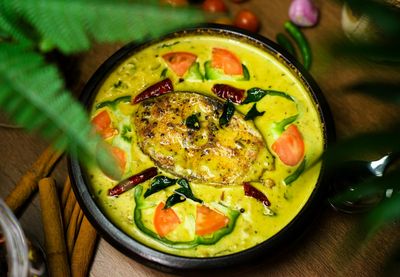
Kerala Fish Curry
A masala paste of shallot, ginger, garlic and red chilli is bloomed in coconut oil with mustard seeds, fenugreek and curry leaves. Coconut milk is poured in and the curry brought to a simmer, then tamarind water and a tomato are added. The fish goes in last and poaches in the gravy for just long enough to set; over-stirring breaks the pieces.
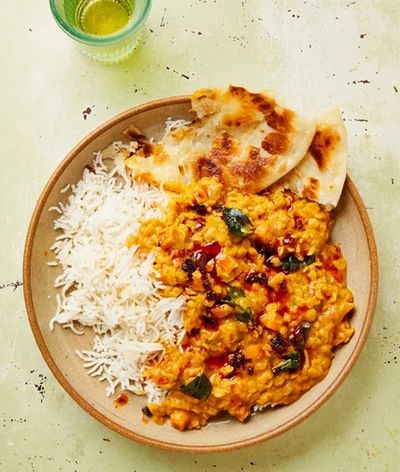
Malaysian Dhal Curry
Yellow split peas (chana dal) simmer with onion, turmeric and tomato until very soft. The lentils break down into a thick soup. Right at the end, a tempering of mustard seeds, curry leaves, dried red chillies, garlic and shallots is poured sizzling-hot over the surface. The aromatic oil seeps through; the dish transforms.
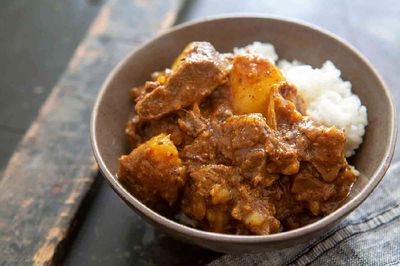
Trinidadian Curry Goat
Trinidadian curry goat sits in a quiet rivalry with Jamaican curry goat, but the two are different dishes. Jamaican curry goat is built on Madras-style curry powder, scotch bonnet and allspice with little coconut and a wetter finish. Trinidadian curry goat is built on a fresh blend of green seasoning (a herb-and-aromatic puree of culantro, thyme, garlic, chives and onion), Caribbean curry powder (which leans heavily on amchar masala and roasted geera), and the bunjay technique of frying the curry paste in oil until it splits before the meat goes in. The result is a darker, herbier, drier curry that hugs the bone rather than pooling around it. Kid goat is the preferred meat; older mutton-goat works but takes longer. UK home cooks can usually find kid goat at Caribbean butchers, Halal butchers and many Asian supermarkets in the chilled or frozen section. Bone-in pieces are essential for flavour and gelatin. Lamb shoulder on the bone makes an honest substitute. Difficulty is low to moderate; the cook is mostly long and passive once the curry is bunjayed. Serve with paratha-style "buss-up-shut" roti, dhalpuri roti, white rice, or coconut rice.
Lamb Achari
A Punjabi-inspired achari curry featuring pickle spices like panch poran and dried chillies, balanced with sweet mango chutney and tangy lime pickle. This dish captures the essence of Indian pickles in a rich, flavorful lamb curry.