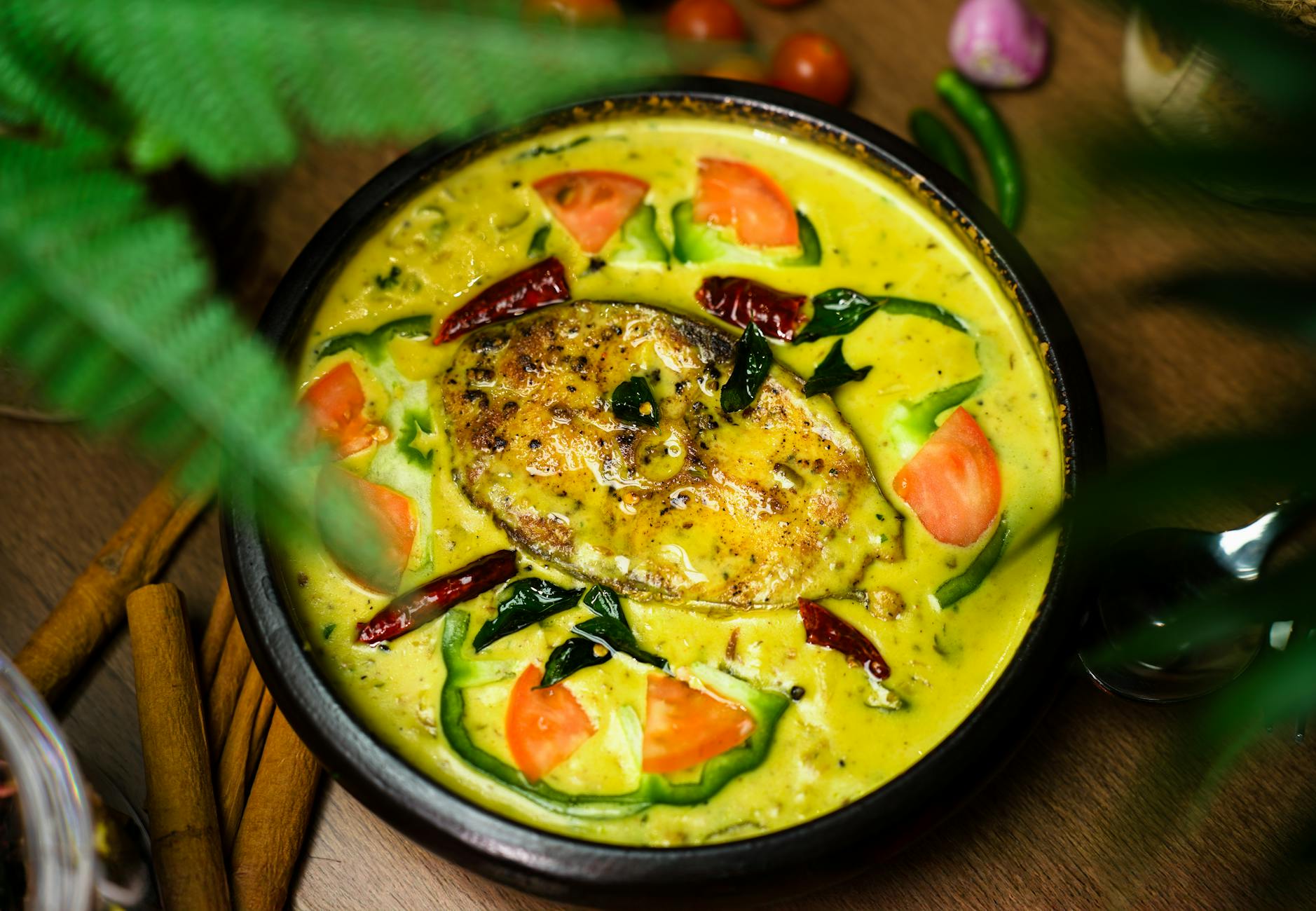
Kerala Fish Curry
Coastal Kerala fish curry: firm white fish simmered in a coconut-and-tamarind gravy fragranced with curry leaves, fenugreek and shallots. Bright red, sharp and rich at once.
Overview
A masala paste of shallot, ginger, garlic and red chilli is bloomed in coconut oil with mustard seeds, fenugreek and curry leaves. Coconut milk is poured in and the curry brought to a simmer, then tamarind water and a tomato are added. The fish goes in last and poaches in the gravy for just long enough to set; over-stirring breaks the pieces.
Ingredients
Fish
- 600 g firm white fish (kingfish, sea bream, hake or pollock; cut into 4 cm pieces)
- ½ teaspoon turmeric
- ½ teaspoon salt
- ½ lime (juice)
Curry
- 3 tablespoons coconut oil
- 1 teaspoon black mustard seeds
- ½ teaspoon fenugreek seeds
- 20 fresh curry leaves
- 6 shallots (thinly sliced) (or 1 small red onion)
- 25 g fresh ginger (finely chopped)
- 6 garlic cloves (finely chopped)
- 2-3 green chillies (slit)
- 2 teaspoons Kashmiri chilli powder (mild, for colour)
- 1 teaspoon ground coriander
- ½ teaspoon turmeric
- 1 tomato (chopped)
- 2 tablespoons tamarind paste (or 1 walnut-sized lump of tamarind soaked in 100 ml hot water and strained)
- 400 ml coconut milk
- 200 ml water
- 1 teaspoon salt (to taste)
To finish
- 10 fresh curry leaves
- 1 tablespoon coconut oil
Method
Stage 1 - Marinate the fish
- Rub the fish pieces with turmeric, salt and lime juice.
- Set aside for 10 minutes.
Stage 2 - Temper
- Heat the coconut oil in a wide, heavy pan over medium heat.
- Add the mustard seeds; when they pop, add the fenugreek seeds and curry leaves.
- Sizzle for 30 seconds.
Stage 3 - Build the masala
- Add the sliced shallots and a pinch of salt.
- Cook for 6-8 minutes until soft and lightly browned.
- Stir in the ginger, garlic and green chilli; cook for 1 minute.
- Add the Kashmiri chilli, ground coriander and turmeric; cook for 30 seconds.
Stage 4 - The gravy
- Add the chopped tomato; cook for 4-5 minutes until soft.
- Pour in the tamarind paste and water; bring to a simmer for 5 minutes.
- Add the coconut milk and salt.
- Bring to a gentle simmer.
Stage 5 - Poach the fish
- Slide the fish into the curry in a single layer.
- Cover and simmer over very low heat for 6-8 minutes, until the fish is just cooked through (don't stir; tilt the pan to baste).
- Taste the gravy and adjust salt.
Stage 6 - Final tempering
- In a small pan, heat the second tablespoon of coconut oil.
- Add the second batch of curry leaves; once they crisp, pour the oil over the curry.
Stage 7 - Serve
- Rest the curry off the heat for 10 minutes (the gravy thickens and the fish settles).
- Serve with steamed rice or appam.
Notes
- Coconut oil is the dish: Vegetable oil works but Kerala fish curry is built around the perfume of coconut oil. The first temper bloom is where the flavour starts.
- Don't stir the fish: Once the fish is in, you tilt the pan, not stir. Stirring breaks the pieces and makes the gravy cloudy.
- Tamarind matters: It's the counter-balance to the coconut milk. Kerala curries are bright with acid; without it the gravy tastes flat.
Storage
- Refrigerate up to 2 days. The flavour improves overnight.
- Don't freeze; the coconut milk separates and the fish gets rubbery.
More like this
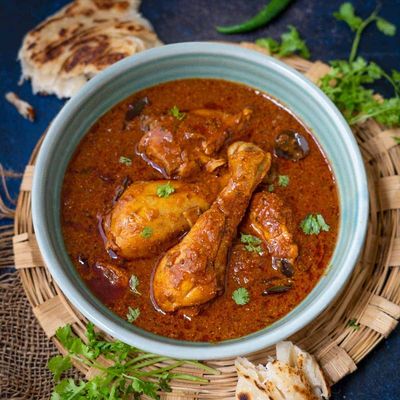
Andhra Chicken Curry
Chicken thighs are marinated briefly with turmeric, ginger-garlic paste, yogurt and a pinch of red chilli. A dry-roast of poppy seeds, sesame seeds, coconut, fennel, coriander and dried red chillies is ground with a splash of water into a coarse paste. The base is built with shallots, curry leaves and tomato; the chicken is browned in stages; and the masala paste is folded in for the long, gentle simmer. Tamarind and a curry-leaf temper finish.
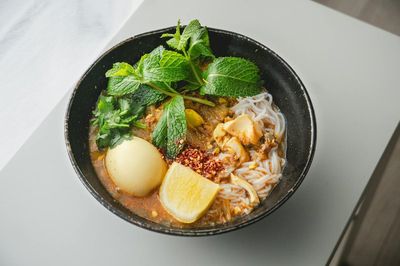
Malaysian Curry Laksa (Laksa Lemak)
A two-part dish: a deeply concentrated prawn-and-chicken stock built from roasted prawn shells, layered with a freshly pounded laksa paste of dried chilli, galangal, lemongrass and candlenuts. The two are joined with coconut cream to create a glossy, fragrant broth that bathes rice vermicelli, tofu puffs and prawns. Finished at the table with sambal, lime, fresh coriander and bean sprouts.
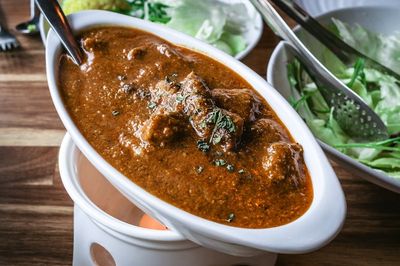
Lamb Achari
A Punjabi-inspired achari curry featuring pickle spices like panch poran and dried chillies, balanced with sweet mango chutney and tangy lime pickle. This dish captures the essence of Indian pickles in a rich, flavorful lamb curry.
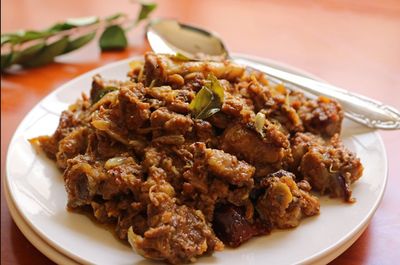
Mutton Sukka
Lamb chunks are braised gently with turmeric, ginger-garlic paste and a small handful of whole spices until tender. A separate pan toasts a Chettinad-style spice blend (black pepper, fennel, coriander, cumin, dried red chillies, fresh grated coconut) and grinds it to a coarse paste. The braised lamb is folded into a base of fried onion and curry leaves, the masala paste added, and the dish cooked uncovered until all the liquid has gone and the spice has caked onto the meat.