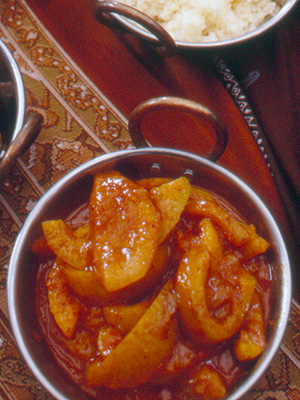
Peach Chutney
Make this chutney during the summer, when peaches are at their best. Serve it with terrines, pâté and cold meats, especially cold roast chicken.
Overview
A jewelled preserve capturing summer peaches with warming spice and bright citrus. This complex chutney balances delicate peach sweetness with cinnamon and nutmeg warmth, punctuated by lime zest, creating an elegant accompaniment to game, terrines, and cold meats.
Ingredients
Base & aromatics
- 60 grams cooking apples (cored, peeled and grated)
- ½ teaspoon salt
- 125 grams very ripe tomatoes (peeled, de-seeded and chopped)
- 60 grams onion (finely chopped)
- 1 clove garlic (crushed)
- 10 grams ginger (finely chopped)
Spices & citrus
- 1 lime (finely pared and chopped, zest)
- 1 lime (juice)
- ½ teaspoon ground cinnamon
- ½ teaspoon ground nutmeg
- ½ teaspoon white pepper
Sugar & liquid
- 150 grams caster sugar
- 150 ml white wine vinegar
- 70 grams flaked almonds
- 500 grams ripe, but firm peaches
Method
Stage 1 - Make base
- Combine all the ingredients except the peaches in a heavy-based saucepan and bring to the boil over a very low heat, stirring from time to time with a wooden spoon.
- Continue to cook for about 30 minutes, giving a stir every 10 minutes, until the mixture is jam-like and syrupy.
- Test by running your finger down the back of the spoon; it should leave a clear trace.
Stage 2 - Prepare & add peaches
- In the meantime, peel the peaches: run the tip of a knife around the circumference, then immerse in a pan of boiling water.
- As soon as the skin starts to lift along the incision, take the peaches out and refresh in iced water.
- Lift out and pull off the skin. Halve and stone the peaches, then either cut the flesh into cubes or strips.
- Add the peaches to the chutney mixture and cook very gently for another 40 minutes, stirring very gently every 10 minutes.
Stage 3 - Jar
- Transfer to a warm, sterilised preserving jar, leave to cool, then seal the jar.
- This will keep in the fridge for up to several weeks.
Notes
- Peaches: Select ripe but firm peaches; overripe fruit becomes mushy and loses its integrity during the long cooking time.
- Lime zest: Fresh lime is essential; dried zest will not provide the same brightness and aromatic qualities.
- Almonds: Flaked almonds add textural contrast and subtle flavour; they soften but remain distinct during cooking.
Serving
Serve with terrines, pâté, cold roasted poultry, and game. Also excellent alongside mature cheeses on a charcuterie board.
Storage
- Keeps refrigerated for up to 3 weeks in sealed jars.
- Does not freeze well; texture and flavour are best preserved through refrigeration.
- Flavours develop over 2-3 days; best eaten after this initial maturation period.
More like this
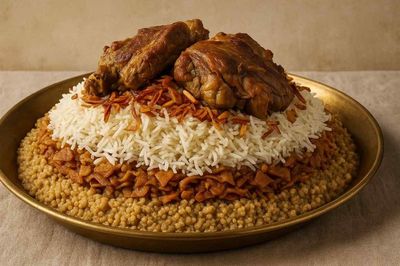
Mathloutha
The Saudi gathering platter built for the night when one cut of meat isn't enough. Three proteins share the same pot: lamb shoulder and beef chunks go in first with a kabsa-spiced tomato base for ninety minutes of slow simmer until they're meltingly tender, then chicken pieces drop in for the last thirty-five minutes (their cook time is shorter, so they go in later). The strained meat broth, deeply spiced from everything that has braised in it, becomes the cooking liquid for basmati scented with saffron and dried lime. At the end you arrange all three meats on top of the rice in the same platter and bring the whole thing to the centre of the table. The kind of dish you make for a wedding lunch, an Eid gathering, or the night the extended family arrives unannounced.
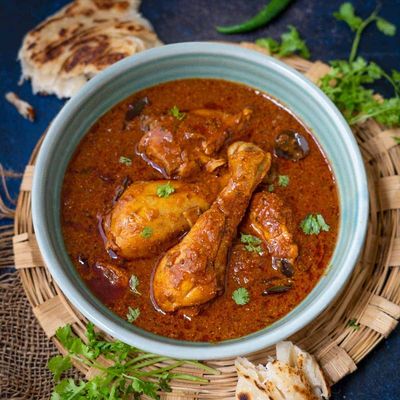
Andhra Chicken Curry
Chicken thighs are marinated briefly with turmeric, ginger-garlic paste, yogurt and a pinch of red chilli. A dry-roast of poppy seeds, sesame seeds, coconut, fennel, coriander and dried red chillies is ground with a splash of water into a coarse paste. The base is built with shallots, curry leaves and tomato; the chicken is browned in stages; and the masala paste is folded in for the long, gentle simmer. Tamarind and a curry-leaf temper finish.
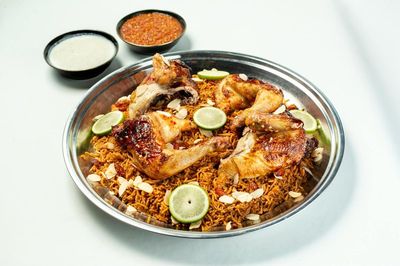
Kabsa
Saudi Arabia's national dish, the one platter you'll meet at almost every gathering from family lunch through wedding banquet. You brown chicken pieces or lamb shoulder hard in a heavy pot, then build a base of onion, garlic and ginger softened in the same fat, with tomato and a spoonful of baharat (or a dedicated kabsa spice mix) blooming until the kitchen fills with cardamom and cinnamon. The protein simmers in tomato and stock until it's tender and pulling away from the bone, then long-grain rice goes in to cook absorption-style in the same liquid, drinking up every layer of flavour the broth carries. You finish with almonds toasted in butter, raisins plumped briefly, and a fresh salsa of tomato, onion, chilli and parsley spooned on the side to cut the richness. Eaten communally from the centre platter, with hands or a long spoon.
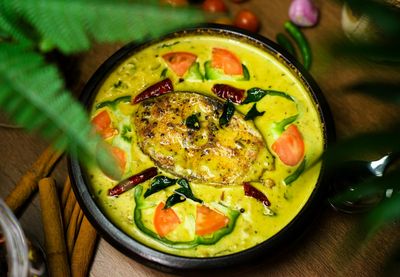
Kerala Fish Curry
A masala paste of shallot, ginger, garlic and red chilli is bloomed in coconut oil with mustard seeds, fenugreek and curry leaves. Coconut milk is poured in and the curry brought to a simmer, then tamarind water and a tomato are added. The fish goes in last and poaches in the gravy for just long enough to set; over-stirring breaks the pieces.