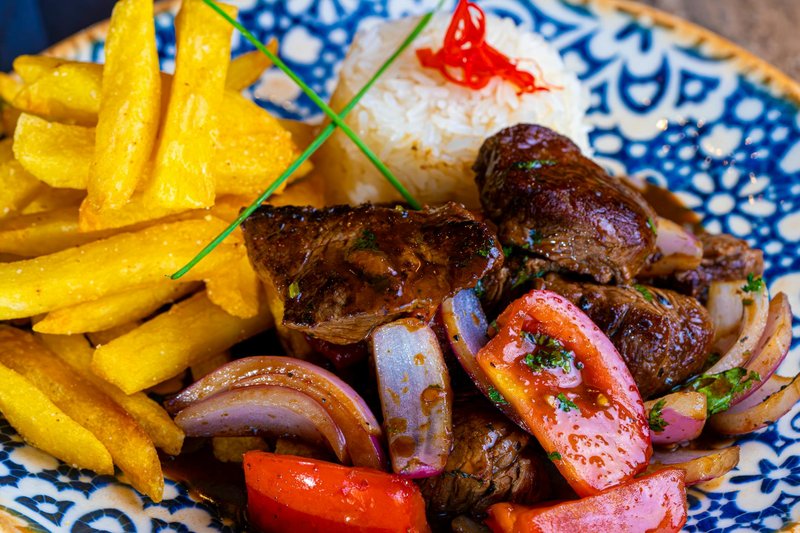
Lomo Saltado
Peru's signature stir-fry: thin strips of beef seared with red onion, tomato, soy sauce and aji amarillo, tossed with crispy fries and fresh coriander.
Overview
Beef strips are marinated briefly in soy and aji amarillo paste. Fries are cooked separately, pre-fried, set aside. The wok hits high heat; beef is seared in batches; red onion and tomato are added briefly so they keep their bite; soy, vinegar, lime and stock are poured in to sauce. The fries go in last, just before serving, a 30-second toss so they pick up flavour without going soggy.
Ingredients
Beef and marinade
- 600 g beef sirloin (or rump, cut into 1 cm strips)
- 2 tablespoons soy sauce
- 1 tablespoon aji amarillo paste (Peruvian; or 2 tsp sambal oelek)
- 4 garlic cloves (crushed)
- 2 cm fresh ginger (grated)
- ½ teaspoon black pepper
- 1 tablespoon vegetable oil
Fries
- 800 g floury potatoes (Maris Piper; cut into 1 cm sticks)
- 800 ml vegetable oil for frying
- Salt
Stir-fry
- 2 tablespoons vegetable oil
- 1 red onion (large, cut into wedges)
- 4 tomatoes (medium, deseeded; cut into wedges)
- 2 long green chillies (sliced)
- 4 tablespoons soy sauce
- 2 tablespoons red wine vinegar
- 2 tablespoons beef stock (or water)
- 1 lime (juice)
- A small bunch of coriander (chopped)
- Black pepper
To serve
- Cooked white rice
Method
Stage 1 - Marinate the beef
- Mix the marinade ingredients; add the beef; rest 15 minutes.
Stage 2 - Fries
- Heat the oil to 165°C in a deep pan.
- Fry the potato sticks in batches 5 minutes until just-tender; drain.
- Heat the oil to 190°C.
- Re-fry the chips 3 minutes until deep golden and crisp.
- Drain on kitchen paper; salt; keep warm.
Stage 3 - Sear the beef
- Heat 1 tablespoon of oil in a wok over the highest heat until smoking.
- Add half the beef in a single layer; sear 60 seconds untouched; toss 30 seconds; lift out.
- Repeat with the rest of the beef.
Stage 4 - Vegetables
- Add the second tablespoon of oil to the wok.
- Add the red onion wedges; toss for 90 seconds (should still have crunch).
- Add the tomato and chillies; toss for 60 seconds.
Stage 5 - Sauce
- Return the beef and any juices.
- Pour in the soy, vinegar and stock; toss for 30 seconds - the sauce should coat without pooling.
- Off the heat, add the lime juice.
Stage 6 - Combine with fries
- Tip the fries into the wok; toss 30 seconds (just to coat - don't let them go soggy).
- Stir in the coriander; grind in pepper.
Stage 7 - Serve
- Pile onto plates with white rice on the side.
Notes
- High heat is the dish: Lomo saltado lives or dies on wok hei (the smoky char from a properly hot wok). Cook in batches if your hob can't sustain the heat.
- Fries last: Adding them earlier turns them limp. They go in for 30 seconds at the end, no more.
- Aji amarillo: A fresh-tasting yellow Peruvian chilli sold as paste at Latin grocers. Sambal or sriracha is a poor but functional substitute.
Storage
- Best fresh; the fries don't reheat. Don't make ahead.
More like this
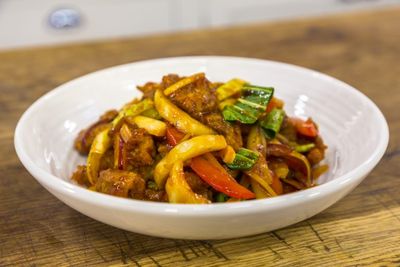
Shapta
Thinly sliced beef marinates briefly in soy, garlic, ginger and a touch of cornflour for tenderness. A hot wok flashes the meat in batches, then onion, capsicum and chillies stir-fry until just beginning to char. Everything tosses back in with a small splash of soy and stock to glaze. Lots of fresh coriander and spring onion to finish.
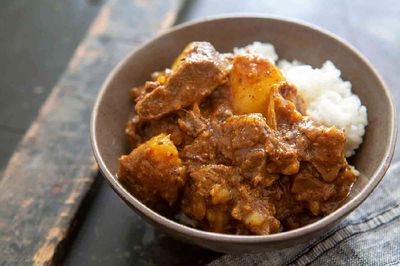
Trinidadian Curry Goat
Trinidadian curry goat sits in a quiet rivalry with Jamaican curry goat, but the two are different dishes. Jamaican curry goat is built on Madras-style curry powder, scotch bonnet and allspice with little coconut and a wetter finish. Trinidadian curry goat is built on a fresh blend of green seasoning (a herb-and-aromatic puree of culantro, thyme, garlic, chives and onion), Caribbean curry powder (which leans heavily on amchar masala and roasted geera), and the bunjay technique of frying the curry paste in oil until it splits before the meat goes in. The result is a darker, herbier, drier curry that hugs the bone rather than pooling around it. Kid goat is the preferred meat; older mutton-goat works but takes longer. UK home cooks can usually find kid goat at Caribbean butchers, Halal butchers and many Asian supermarkets in the chilled or frozen section. Bone-in pieces are essential for flavour and gelatin. Lamb shoulder on the bone makes an honest substitute. Difficulty is low to moderate; the cook is mostly long and passive once the curry is bunjayed. Serve with paratha-style "buss-up-shut" roti, dhalpuri roti, white rice, or coconut rice.
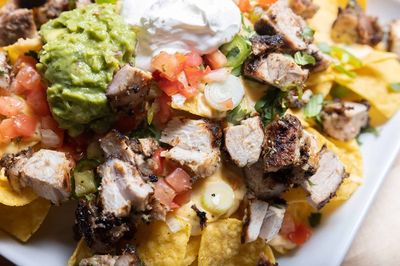
Cheesy Jerk Chicken Nachos
A Caribbean-American fusion that works because both food cultures speak the language of "everything on one tray". The base is American nachos: tortilla chips, melted cheese, black beans. On top sits jerk-marinated chicken thigh, which carries the dish's flavour, allspice, Scotch bonnet, nutmeg, cinnamon, thyme, soy and brown sugar blended into a wet jerk paste, marinated into the meat overnight, then oven-baked and sliced. The fresh element on top is a Trinidadian-style fruit chow: diced mango, pineapple, red bell pepper and red onion dressed with lime juice and cilantro. The chow is what makes this work; without it the nachos are just spicy meat-and-cheese, with it the dish has acid, crunch and sweetness to cut through the richness. Smell is melted cheese hitting jerk seasoning, with a citrus-tropical lift from the chow on top. Not difficult but it's three components running on different timelines, so plan ahead. A modern party-and-Super-Bowl-tray dish rather than something a Kingston grandmother makes, popularised by Caribbean-American food bloggers in the 2010s.
Mafé
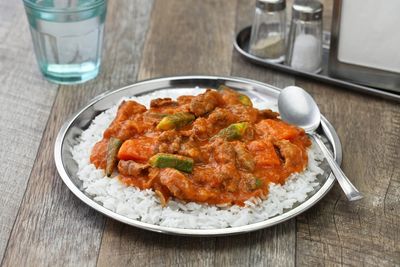
Bone-in beef or lamb is browned, then simmered with onions, garlic, tomato and stock. Smooth peanut butter is whisked in halfway and the stew thickens to a velvety coating. Chunks of cassava, sweet potato and cabbage cook in the sauce towards the end. Serve over plain steamed white rice.