Amok Trey

Amok Trey

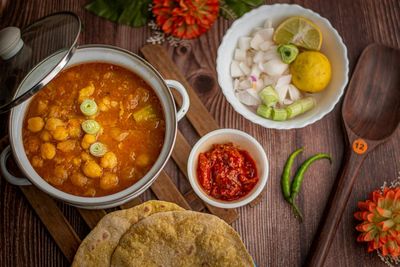
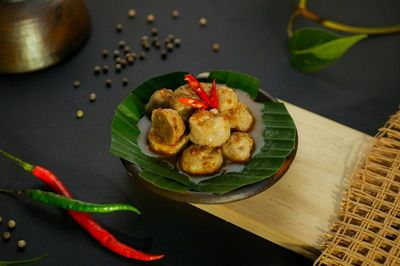
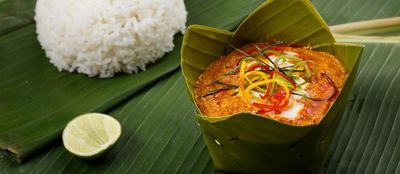
Cambodia's national dish, the centrepiece of any Khmer feast and the proper-occasion food across the country. You start by pounding kroeung fresh in a mortar (the paste of lemongrass, galangal, turmeric, garlic, shallots, kaffir lime zest and coriander root that defines Khmer cooking, and that no shop-bought paste comes close to matching). The kroeung fries briefly to bloom its aromatics, coconut cream and stock loosen it, and eggs whisk in to set the eventual custard. Chunks of firm white fish fold through with chopped greens (traditionally noni leaves, with spinach or chard standing in), and the whole mix spoons into banana-leaf cups (or small ramekins). Twenty minutes in a steamer turns the custard just-set around the soft fish, and the banana leaves perfume everything. Served from the parcels with steamed rice and a wedge of lime.
Cambodian 55 minutes Serves4
Andhra Chicken Curry

Andhra Chicken Curry

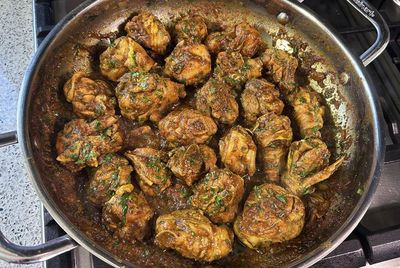
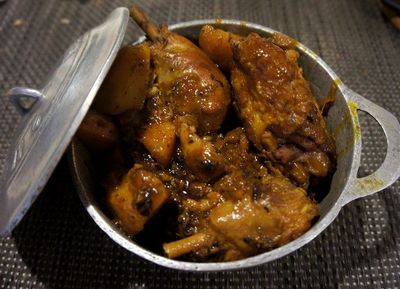
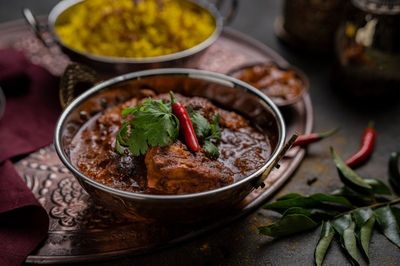
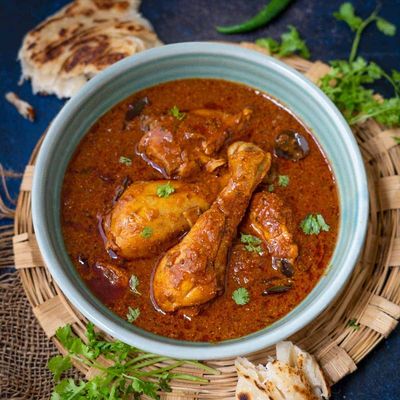
Chicken thighs are marinated briefly with turmeric, ginger-garlic paste, yogurt and a pinch of red chilli. A dry-roast of poppy seeds, sesame seeds, coconut, fennel, coriander and dried red chillies is ground with a splash of water into a coarse paste. The base is built with shallots, curry leaves and tomato; the chicken is browned in stages; and the masala paste is folded in for the long, gentle simmer. Tamarind and a curry-leaf temper finish.

Indian 1 hour 35 minutes Serves4-6
Authentic Jamaican Curry Chicken

Authentic Jamaican Curry Chicken

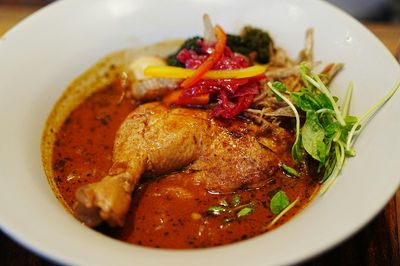
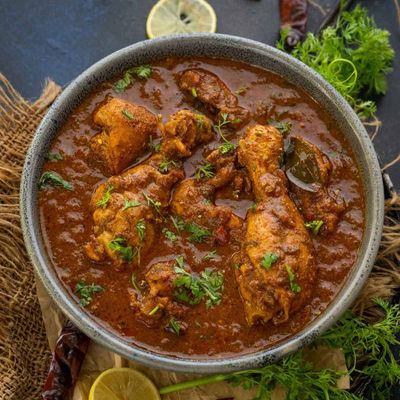
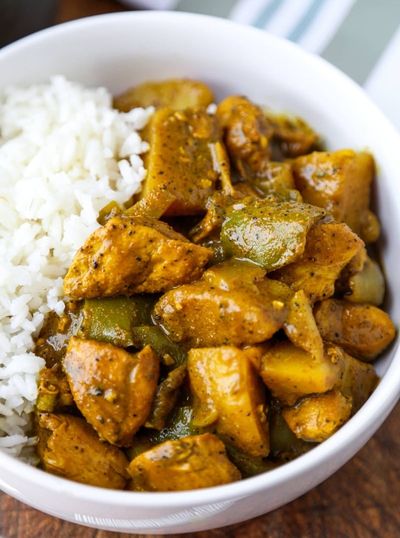
Jamaican curry sits in its own corner of the global curry map: heavier on turmeric and allspice than Indian Madras, lighter on cumin, and built on a technique called "burning the curry" that gives the dish its character. The technique is exactly what it sounds like, dry curry powder hits hot oil and is stirred for 30 seconds until it darkens from yellow to deep gold and smells like toasted spice. That move concentrates the flavours and removes any raw edge. The finished stew is bright yellow stained slightly orange, savoury and aromatic rather than searingly hot, with thyme and a whole pierced Scotch bonnet scenting the gravy without flooring it. Smell: bloomed curry powder, allspice, browned chicken fat. Not difficult, but requires confidence in the 30-second bloom (under-do it and the dish is flat; over-do it and you have to start over). A Sunday-dinner staple across Jamaica and the diaspora, served over white rice with the gravy spooned generously over.

Jamaican 2 hours 30 minutes Serves4
Balti Masala

Balti Masala

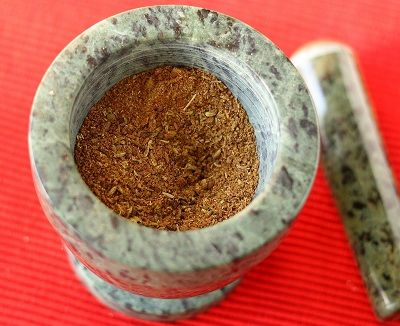
Balti masala is a mild, balanced spice blend designed as the foundation for British-Indian curries. Unlike hot masalas, this blend emphasizes warmth over fire. The whole spices are dry-roasted to develop their individual characters before grinding, creating depth of flavor that pre-ground blends can't match. The cinnamon provides sweetness, coriander seeds contribute earthiness, and cardamom adds aromatics. This is a curry powder that improves with age; it develops better flavor after 1-2 weeks of storage.

Curry Powder 10 minutes Serves200
Bobotie

Bobotie

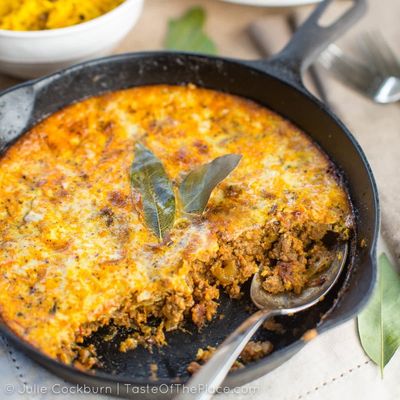
Bread is soaked in milk; mince is browned with onions; curry powder, turmeric and Cape Malay spices bloom. Apricot jam, mango chutney, vinegar and lemon balance the spice with sweet-sour notes. Raisins, toasted almonds and the soaked bread are folded through. The mixture is pressed into a baking dish; eggs are whisked with the leftover milk and poured over; bay leaves are stuck into the surface; the lot is baked until the topping is just-set with a faint wobble.

South African 1 hour 25 minutes Serves6
Bunjay-Style Curry Chicken

Bunjay-Style Curry Chicken

A dry curry rather than a saucy one, "bunjay" is Trinidadian patois for "fry-down", the technique of cooking meat in its own juices until the gravy completely disappears and the spices coat the surface of the meat in a sticky, glaze-like crust. The flavour is concentrated rather than diluted; nothing's been thinned with water or coconut milk, so what you taste is bone-in chicken, rendered chicken fat, and toasted spice. The spice mix is the East Indian Trinidadian signature: turmeric for colour and earth, roasted geera (toasted cumin, ground) for nuttiness, anchar masala for tang, regular curry powder for breadth. The pan oil splits and separates around the chicken at the end, which is the visual cue you're looking for. Smell when the curry powder hits hot oil is deeply aromatic, almost incense-like. Not difficult but it requires attention during the cook-down phase; if you walk away the curry burns onto the bottom of the pan. A Trinidadian household staple, eaten across the country with white rice and dhal, and a clean example of how Indian indentured labourers' descendants in the Caribbean evolved a distinct curry tradition over 150 years.

Trinidadian 2 hours 50 minutes Serves6
Buss-Up-Shut Roti with Curry

Buss-Up-Shut Roti with Curry

Buss-up-shut, also called paratha roti, is the flaky-layered Trinidadian roti that takes its English name from "burst-up shirt", a buss-up-shut roti is one that has been beaten the moment it comes off the tawa until it explodes into soft, irregular shreds. It is descended from the South Asian paratha, brought by indentured Indian labourers in the 19th century and rebuilt in Trinidad with a softer, more elastic dough and a finishing technique that is uniquely local. The recipe here covers the roti itself, which is the demanding part, with a short Trini channa-aloo curry on the side so you have a proper plate to scoop with. The layering technique (rolling, brushing with oil, coiling, resting, rolling out) is what creates the laminated, flaky structure. The beating step uses two wooden spatulas (called "klappers" in some roti shops) and looks dramatic but is straightforward. Difficulty is moderate; the dough is forgiving but the rolling-and-coiling step needs a little practice. Once you have a feel for it, you will make this every fortnight.

Trinidadian 2 hours 15 minutes Serves4
Cari Poulet Et Pomme de Terre

Cari Poulet Et Pomme de Terre

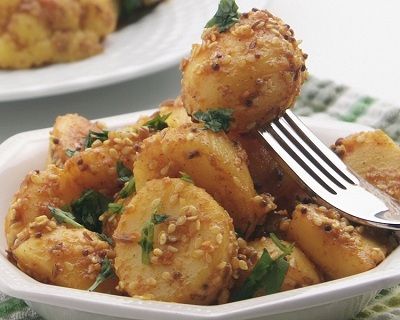
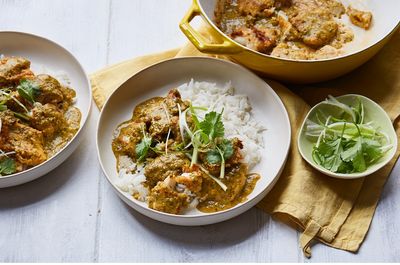
Mauritian cuisine is a layered conversation between Indian, African, Chinese and French traditions, and cari poulet is one of its clearest expressions. The Creole community took the Indian template of a wet curry and rebuilt it with local fresh herbs, particularly thyme and curry leaves grown in the yard, plus tomato, and a masala that is gentler and more aromatic than its mainland Indian cousins. Chicken on the bone is browned for fond, then potatoes are added and the whole pot is simmered in a curry-leaf and tomato gravy until the meat is falling off the bone and the potatoes are creamy on the outside but holding shape. The colour leans red-brown from paprika and turmeric rather than the bright yellow of a Punjabi-style curry. Heat is moderate, intended to complement rice and a chilli-based satini, not overwhelm them. For a home cook the difficulty is low to moderate; the only real demand is patience while the masala blooms in the oil at the start, which is what gives the dish its depth. Serve over plain steamed rice with a coriander satini and a spoon of green chilli pickle, the classic Mauritian Sunday plate.

Mauritian 1 hour 5 minutes Serves4
Chicken Satay with Peanut Sauce

Chicken Satay with Peanut Sauce

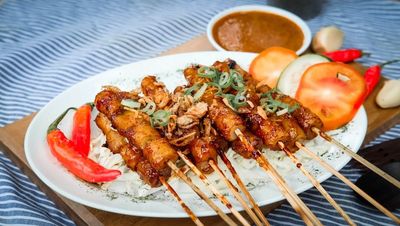
I’m a big fan of Thai chicken satay with peanut sauce. Although it isn’t necessary, it is best to marinate the chicken for at least a day. You could get away with 30 minutes but a longer marinating time will get you much tastier results. As the chicken soaks up that incredible marinade, it not only tenderizes it but makes it much juicier when cooked. This recipe could be used with thinly sliced pork or beef, both are also popular at Thai restaurants and takeaways. Pork is the meat of choice in Thailand but chicken is the most popular in the UK. I also like to serve this dish with cucumber and chilli relish.

Starters 35 minutes Serves6
Curry Smelts

Curry Smelts

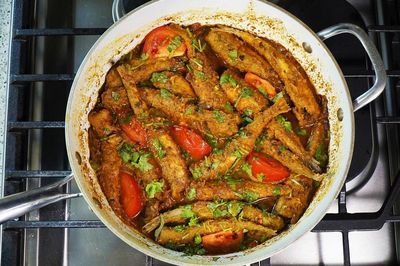
Trinidadian comfort food that brings together the East Indian and Afro-Caribbean strands of Trini cookery in one pan: small whole fried fish (a West African and Caribbean coastal habit) drowned in a Trinidadian East Indian curry sauce. The fish are smelts, sardines or whitebait, whole, head-on, eaten with a small bite to remove the spine. Once fried they sit crisp; when the curry sauce hits, the outer crust softens slightly and absorbs the gravy while the centre stays meaty. The sauce is the dish's signature: roasted geera (dry-toasted cumin) gives a smoky, nutty depth that pre-ground supermarket cumin can't touch, anchar masala adds a fermented-tangy edge (it's the Trinidadian pickled-mango spice mix), and Caribbean curry powder rounds the warmth. Whole pierced Scotch bonnet scents without flooring. Smell when the spices bloom in hot oil is heavy and pungent in the best possible way. Not difficult but it's a two-pan dance, so timing matters. A daily-cookery dish across Trinidad and Tobago and the Indo-Trinidadian diaspora, eaten with steamed rice or with sada roti torn and used as a scoop.

Trinidadian 50 minutes Serves5
← Prev Page 1 of 3 Next →