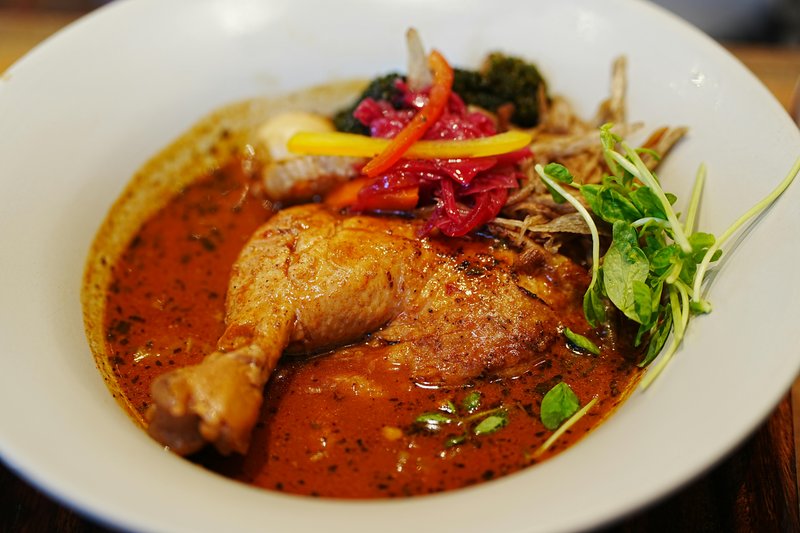
Caribbean Chicken Curry Stew
A Caribbean chicken curry stew: chicken thighs slow-cooked with allspice, thyme, Scotch bonnet and Jamaican curry powder.
Overview
In many Caribbean stew dishes there is an initial step of burning sugar in oil which is used to brown the meat in. This adds a very unique sweetness to the stews from this region and this sweetness paired with the unmistakable flavour (and heat) from the wonderful scotch bonnet chilli is simply astounding. This curry uses curry powder for a fragrant and delicious result that captures the essence of Caribbean cooking.
Serves: 4 Prep Time: 10 minutes
Ingredients
Green Seasoning (Marinade)
- Ginger (5cm)
- 6 cloves of garlic
- 1 tsp salt
- ½ tsp black peppercorns
- 4 spring onions
- Large pinch coriander
- Large pinch parsley
- 1 scotch bonnet (optional, for milder version use a different chilli)
Curry
- 2 tbsp vegetable oil
- 55g brown sugar
- 3 tsp Curry Powder
- 600ml water (or stock)
- 1 bay leaf
- 2 thyme sprigs
- 1 scotch bonnet (whole)
- 1 shot of dark rum
- 900g chicken (thighs, drumsticks, wings, and breasts)
Method
Stage 1 - Prepare & Marinade
- Cut the chicken into thighs, drumsticks, wings, and breast pieces, leaving the skin on.
- Mince together the ginger, garlic, salt, black pepper, green part of the spring onions, parsley, coriander, and scotch bonnet (if using).
- Coat the chicken thoroughly with the green seasoning marinade.
- Marinate for approximately 3 hours (or overnight for deeper flavour).
Stage 2 - Caramelize & Brown
- Heat oil in a large, heavy-bottomed pan over medium heat.
- Add brown sugar and let it melt until it starts to bubble and turns dark in colour.
- It will turn frothy and look almost burnt, this is correct.
- Stir in the curry powder until sizzling and aromatic.
- Place the marinated chicken into the pan and brown in batches, allowing it to darken and crisp.
- Do not overcrowd the pan, each piece should make contact with the base.
Stage 3 - Simmer
- Pour in the water or stock to cover the chicken.
- Add the bay leaf, thyme sprigs, and whole scotch bonnet.
- Bring to a boil, then reduce to a simmer.
- Cook for 30 minutes, stirring occasionally.
- The chicken should be falling away from the bone.
Stage 4 - Finish
- Stir in a shot of dark rum.
- Simmer for another 2-3 minutes.
- Remove the whole scotch bonnet (or leave it in if you enjoy sustained heat).
- Slice the white parts of the reserved spring onions and sprinkle over the chicken.
Notes
- Scotch bonnet heat: The scotch bonnet reaches 100,000-350,000 on the Scoville scale and is THE chilli of the Caribbean. Its fruity heat penetrates meat and stews. Remove it once you reach your desired heat level, or leave it whole and intact for less intense heat.
- Green seasoning: This Caribbean marinade blend is essential, it adds flavour and tenderizes the meat remarkably.
- Sugar caramelization: The burnt sugar adds a unique depth and sweetness essential to Caribbean stews. Don't skip this step.
- Bone-in chicken: Leaving bones and skin on adds tremendous flavour and keeps the meat moist.
- Rum choice: Dark rum adds warmth and complexity; light rum is less flavourful but still acceptable.
Serving
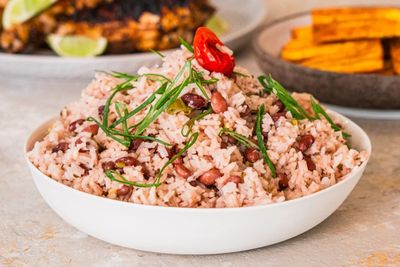
Serve with: Rice and peas, roti, or fried dumplings. Garnish with sliced spring onion whites.
Storage
- Keeps 3 days refrigerated
- Freezes well up to 3 months (remove scotch bonnet before freezing to prevent continued heat development)
- Flavour develops and improves after 24 hours
More like this
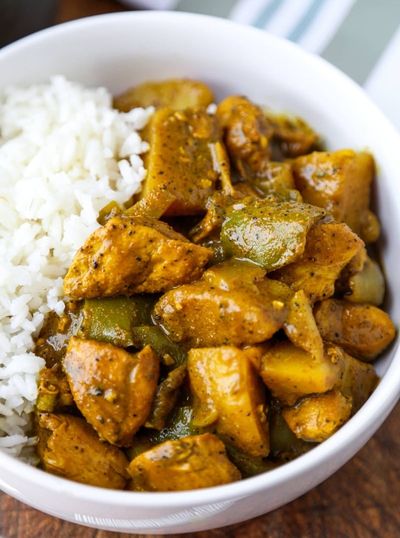
Authentic Jamaican Curry Chicken
Jamaican curry sits in its own corner of the global curry map: heavier on turmeric and allspice than Indian Madras, lighter on cumin, and built on a technique called "burning the curry" that gives the dish its character. The technique is exactly what it sounds like, dry curry powder hits hot oil and is stirred for 30 seconds until it darkens from yellow to deep gold and smells like toasted spice. That move concentrates the flavours and removes any raw edge. The finished stew is bright yellow stained slightly orange, savoury and aromatic rather than searingly hot, with thyme and a whole pierced Scotch bonnet scenting the gravy without flooring it. Smell: bloomed curry powder, allspice, browned chicken fat. Not difficult, but requires confidence in the 30-second bloom (under-do it and the dish is flat; over-do it and you have to start over). A Sunday-dinner staple across Jamaica and the diaspora, served over white rice with the gravy spooned generously over.
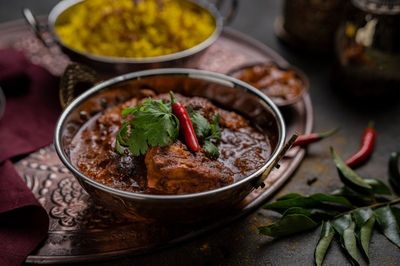
Chicken Methi Curry
Fenugreek-forward chicken methi curry with a rich base sauce and a tangy cream finish. Fresh fenugreek leaves are ideal, but dried kasoori methi can provide the signature aroma, especially in supermarkets where fresh leaves are scarce. This curry is aromatic with anise notes and a subtle bitterness balanced by yoghurt.
Cheesy Jerk Chicken Nachos
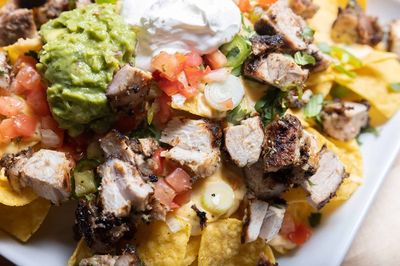
A Caribbean-American fusion that works because both food cultures speak the language of "everything on one tray". The base is American nachos: tortilla chips, melted cheese, black beans. On top sits jerk-marinated chicken thigh, which carries the dish's flavour, allspice, Scotch bonnet, nutmeg, cinnamon, thyme, soy and brown sugar blended into a wet jerk paste, marinated into the meat overnight, then oven-baked and sliced. The fresh element on top is a Trinidadian-style fruit chow: diced mango, pineapple, red bell pepper and red onion dressed with lime juice and cilantro. The chow is what makes this work; without it the nachos are just spicy meat-and-cheese, with it the dish has acid, crunch and sweetness to cut through the richness. Smell is melted cheese hitting jerk seasoning, with a citrus-tropical lift from the chow on top. Not difficult but it's three components running on different timelines, so plan ahead. A modern party-and-Super-Bowl-tray dish rather than something a Kingston grandmother makes, popularised by Caribbean-American food bloggers in the 2010s.
Chicken Chilli Garlic
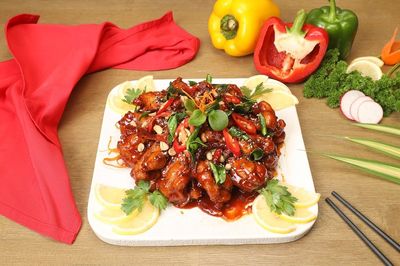
A bold, garlicky curry with a brisk curry-house kick. This jalfrezi-style dish uses plenty of fresh garlic, green chillies, and tandoori tikka, making it spicy but not overwhelming.