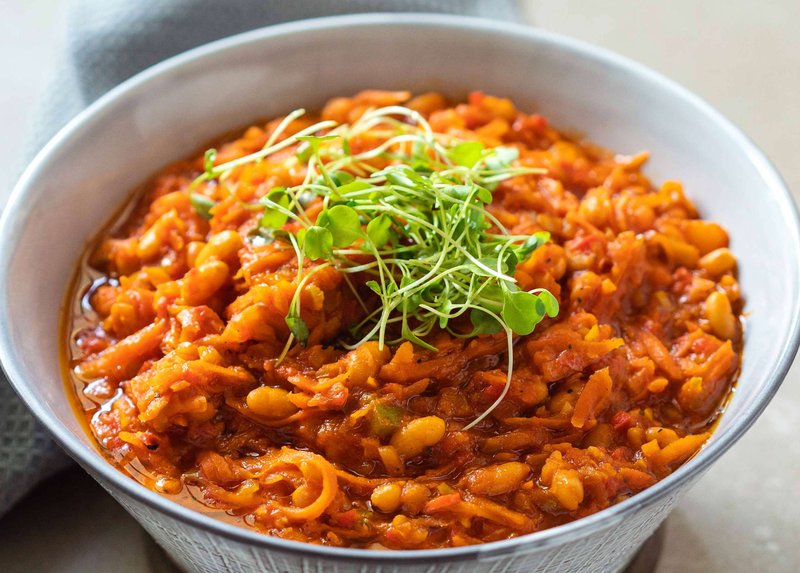
Chakalaka
South Africa's spiced relish: onions, peppers, carrots and chillies fried hot with curry powder, sweetened with baked beans and tomato.
Overview
Onion is softened in oil; garlic, ginger and curry powder bloom. Carrots cook briefly to tender-crisp. Peppers (red and green) and chillies join. Tomatoes simmer everything down. Tinned baked beans go in last with a splash of vinegar to balance. Eaten warm or at room temperature; tastes better the next day.
Ingredients
- 4 tablespoons vegetable oil
- 2 onions (large, chopped)
- 6 garlic cloves (crushed)
- 4 cm ginger (grated)
- 3 carrots (medium, coarsely grated)
- 2 red bell peppers (chopped)
- 1 green bell pepper (chopped)
- 2-3 long green chillies (sliced)
- 2 tablespoons mild Curry Powder
- 1 teaspoon ground turmeric
- 1 teaspoon paprika
- 1 teaspoon dried thyme
- 400 g tin chopped tomatoes
- 1 tablespoon tomato paste
- 400 g tin Baked Beans (in tomato sauce - the standard supermarket kind)
- 2 tablespoons cider vinegar
- 1 ½ teaspoons salt
- ½ teaspoon black pepper
- A small bunch flat-leaf parsley (or coriander, chopped)
Method
Stage 1 - Aromatics
- Heat the oil in a wide heavy pan over medium heat.
- Cook the onions 8 minutes until soft and golden.
- Stir in the garlic and ginger; cook 1 minute.
Stage 2 - Vegetables
- Add the grated carrots; cook 4-5 minutes until starting to soften.
- Add the bell peppers and green chillies; cook 4 minutes.
Stage 3 - Spice
- Stir in the curry powder, turmeric, paprika and thyme; cook 1 minute.
- Add the tomato paste; stir 1 minute.
Stage 4 - Tomatoes
- Pour in the tinned tomatoes; add the salt and pepper.
- Cook 12-15 minutes over medium-low heat until the mixture has reduced and the vegetables are tender but still hold shape.
Stage 5 - Baked beans and finish
- Stir in the baked beans (with their sauce) and the vinegar.
- Cook 3-4 minutes more, gently - don't break up the beans.
- Off the heat, stir in the parsley.
- Taste; adjust salt, vinegar and chilli.
Stage 6 - Serve
- Eat warm, at room temperature, or cold from the fridge.
- Pile alongside bobotie, braai meats, boerewors, or pap. Or spread on toast.
Notes
- Baked beans are essential: This trips up first-time cooks. Yes, supermarket tinned baked beans in tomato sauce. They give chakalaka its characteristic texture and slight sweetness. Don't substitute fancy beans.
- Make-ahead is better: Chakalaka tastes deeper after a night in the fridge. Make a day ahead if you can.
- Chilli amount: Two chillies is moderate. Add a third for a properly Joburg version; reduce for a Cape Town gentler one.
Storage
- Keeps 5 days refrigerated; flavour deepens.
- Freezes 3 months.
Recipes mentioned here
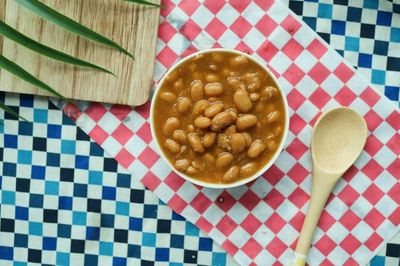
Baked Beans
Navy beans soak overnight. Bacon and onion render in a wide pot; cooked beans go in with a sauce of molasses, tomato puree, brown sugar, mustard, cider vinegar and beef stock. Bake covered at 150°C for 3 hours, uncovering for the last 30 minutes so the sauce reduces and sets sticky. The beans hold shape but the sauce thickens to glaze them.
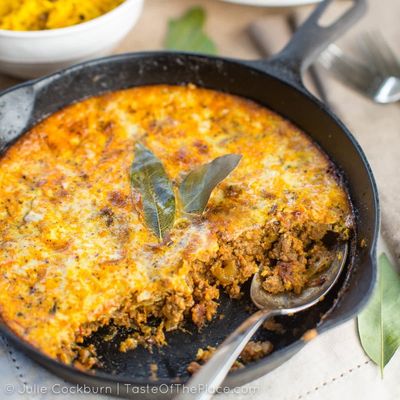
Bobotie
Bread is soaked in milk; mince is browned with onions; curry powder, turmeric and Cape Malay spices bloom. Apricot jam, mango chutney, vinegar and lemon balance the spice with sweet-sour notes. Raisins, toasted almonds and the soaked bread are folded through. The mixture is pressed into a baking dish; eggs are whisked with the leftover milk and poured over; bay leaves are stuck into the surface; the lot is baked until the topping is just-set with a faint wobble.

Boerewors
Boerewors, literally "farmer's sausage" in Afrikaans, is the national sausage of South Africa and the obligatory centrepiece of any braai. South African law actually defines it: minimum 90 per cent meat (beef the dominant component, often with pork or lamb for fat), no more than 30 per cent fat overall, no offal, and a defined spice profile led by toasted ground coriander. That coriander is the signature; combined with clove, nutmeg, allspice and black pepper, and brought together with a splash of malt or brown vinegar, it produces a flavour quite unlike any European sausage. The sausage is always coiled rather than linked, and grilled in a single long spiral that can be turned in one piece with a pair of long forks. Difficulty for the home cook is very low if you can buy ready-made boerewors from a South African butcher, deli or online supplier, which is the practical route for most. Making it from scratch needs a meat grinder and sausage stuffer but the spicing is straightforward. Cooking is the part everyone gets wrong: boerewors is a coarse-ground sausage with chunks of fat in the meat, and it cooks at medium heat, never high. Too hot and the casing splits, fat renders out and the sausage shrivels; just right and it stays plump, juicy, with a deep mahogany crust. The classic accompaniments are pap (a stiff white maize porridge), tomato-and-onion relish (sous), or stuffed into a fresh bread roll with tomato chutney and crispy fried onions as a boerie roll.
More like this
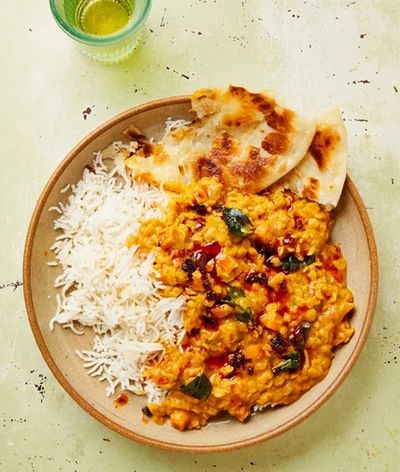
Malaysian Dhal Curry
Yellow split peas (chana dal) simmer with onion, turmeric and tomato until very soft. The lentils break down into a thick soup. Right at the end, a tempering of mustard seeds, curry leaves, dried red chillies, garlic and shallots is poured sizzling-hot over the surface. The aromatic oil seeps through; the dish transforms.
Authentic Jamaican Curry Chicken
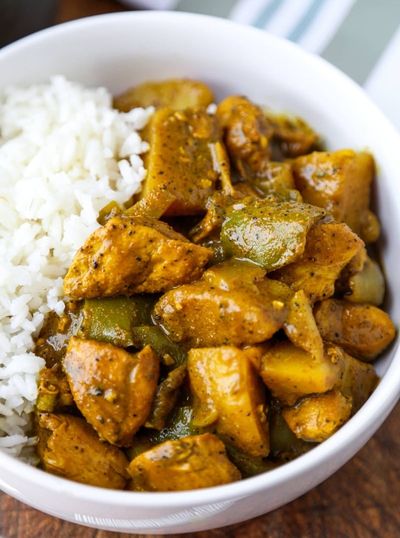
Jamaican curry sits in its own corner of the global curry map: heavier on turmeric and allspice than Indian Madras, lighter on cumin, and built on a technique called "burning the curry" that gives the dish its character. The technique is exactly what it sounds like, dry curry powder hits hot oil and is stirred for 30 seconds until it darkens from yellow to deep gold and smells like toasted spice. That move concentrates the flavours and removes any raw edge. The finished stew is bright yellow stained slightly orange, savoury and aromatic rather than searingly hot, with thyme and a whole pierced Scotch bonnet scenting the gravy without flooring it. Smell: bloomed curry powder, allspice, browned chicken fat. Not difficult, but requires confidence in the 30-second bloom (under-do it and the dish is flat; over-do it and you have to start over). A Sunday-dinner staple across Jamaica and the diaspora, served over white rice with the gravy spooned generously over.
Octopus Curry (Cari Ourite)
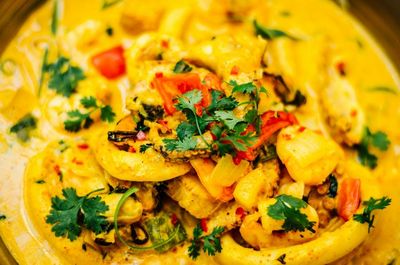
Cari ourite is the dish that turns up at every Mauritian fisherman's Sunday lunch, and at every Creole restaurant on the south coast. The technique is to braise octopus low and slow in a tomato-and-onion masala that leans on fresh thyme and a finishing pinch of garam masala instead of the heavier dried-spice masalas you find in cari boeuf or cari poulet. Octopus has a sweet, slightly mineral flavour that needs space, so the seasoning is restrained: thyme for aroma, tomato for body, ginger and garlic for the base, mild curry powder for depth, garam masala right at the end for top-note warmth. The tentacles cook for around 45 minutes (small octopus) to an hour (larger). The biggest variable is the octopus itself; small frozen octopus, sold cleaned at most fishmongers and many supermarkets, is reliable and the freezing actually helps tenderise the flesh. Difficulty is moderate; the cook is mostly passive once the masala is built. Serve with plain steamed rice and a satini cotomili (coriander chutney) or a spoon of pickled chilli. A simple green salad with vinaigrette on the side keeps it honest.
Trinidadian Curry Goat
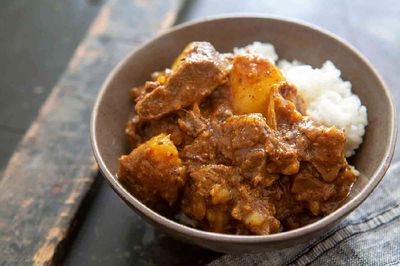
Trinidadian curry goat sits in a quiet rivalry with Jamaican curry goat, but the two are different dishes. Jamaican curry goat is built on Madras-style curry powder, scotch bonnet and allspice with little coconut and a wetter finish. Trinidadian curry goat is built on a fresh blend of green seasoning (a herb-and-aromatic puree of culantro, thyme, garlic, chives and onion), Caribbean curry powder (which leans heavily on amchar masala and roasted geera), and the bunjay technique of frying the curry paste in oil until it splits before the meat goes in. The result is a darker, herbier, drier curry that hugs the bone rather than pooling around it. Kid goat is the preferred meat; older mutton-goat works but takes longer. UK home cooks can usually find kid goat at Caribbean butchers, Halal butchers and many Asian supermarkets in the chilled or frozen section. Bone-in pieces are essential for flavour and gelatin. Lamb shoulder on the bone makes an honest substitute. Difficulty is low to moderate; the cook is mostly long and passive once the curry is bunjayed. Serve with paratha-style "buss-up-shut" roti, dhalpuri roti, white rice, or coconut rice.