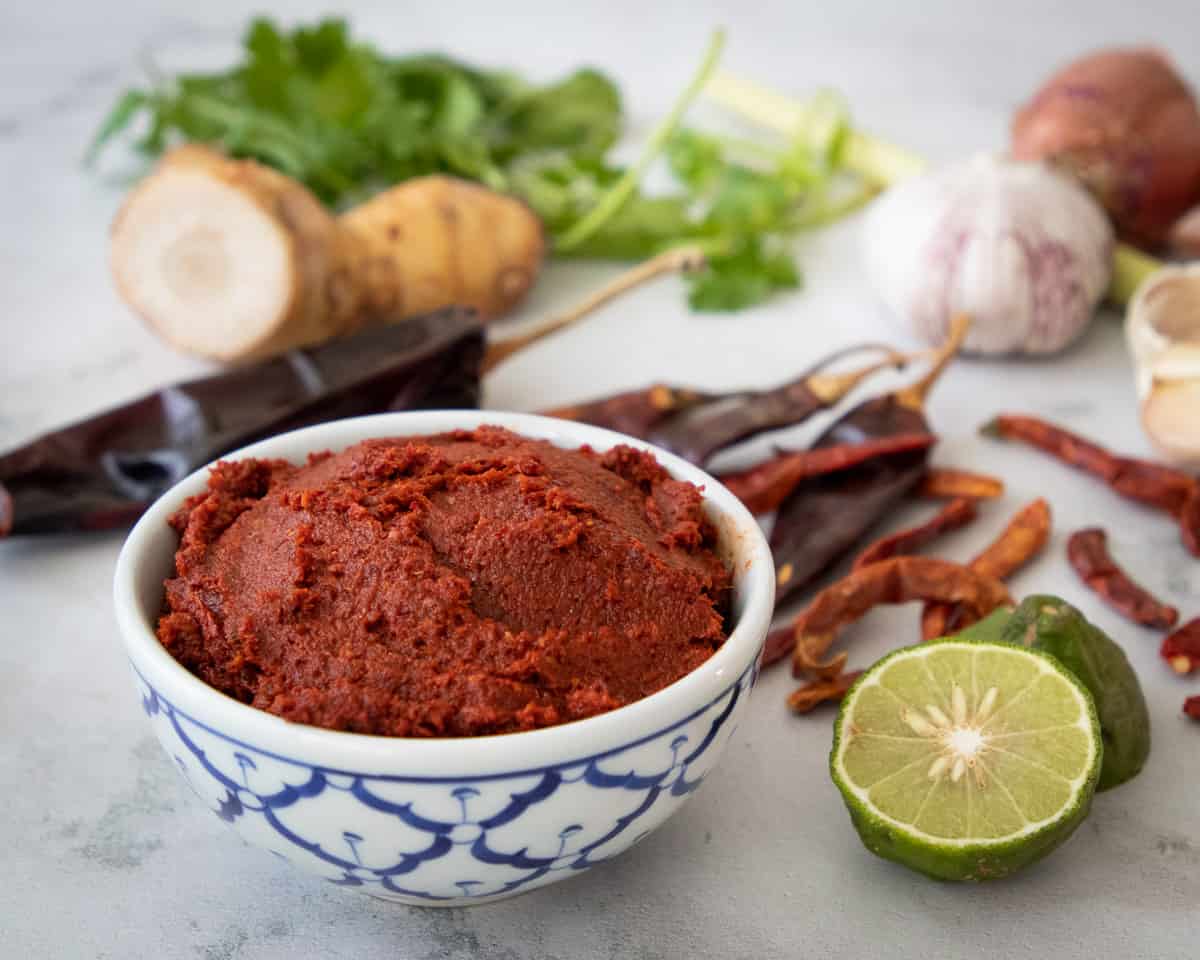
Red Curry Paste
Red is the more grown-up sibling of green. Dried red chillies replace fresh, soaked first to soften them, and a heavier hand with the dried spices gives it depth. The result is less herbaceous and more savoury, and it's the base of duck red curry, beef red curry and the dozen versions you'll find on any Thai menu.
Overview
Red curry paste (prik gaeng phet) substitutes dried red chillies for the fresh green chillies of green curry. The dried chillies bring a deeper, more brick-red flavour and colour; they're slightly less hot per gram than fresh bird's-eyes, but a typical red curry paste uses more of them, so the finished heat is comparable.
The aromatic base is almost identical to green curry: lemongrass, galangal, kaffir lime, garlic, shallot, coriander roots, shrimp paste. The difference is the chillies and a slightly heavier hand with the dried spices (more cumin, more coriander).
Red curry is more versatile than green. Where green pairs best with chicken, prawns and Thai aubergine, red works equally with duck, beef, pork, and richer ingredients like lychee or pineapple.
The Recipe
For about 200 g of paste (4 curries):
Ingredients
- 15-20 dried red chillies (large mild type like Kashmiri or guajillo; about 50 g)
- 4 fresh red bird's-eye chillies (for kick; optional but classical)
- 2 stalks lemongrass (tough outer leaves removed; bottom 10 cm, finely sliced)
- 30 g fresh galangal (peeled, finely sliced)
- 8 garlic cloves
- 4 large shallots (about 100 g)
- 4 kaffir lime leaves (finely chopped)
- 4 coriander roots (or 1 small bunch of stems if you can't find roots)
- 2 teaspoons coriander seeds
- 1 teaspoon cumin seeds
- 1 teaspoon white peppercorns
- 1 tablespoon shrimp paste (kapi)
- 1 teaspoon salt
Method
Stage 1 - Rehydrate the Dried Chillies
- Cut the stems off the dried chillies. Shake or scrape out most of the seeds (less = less heat).
- Soak in just-boiled water for 20 minutes. They should be pliable and soft.
- Drain, squeezing out water. Chop roughly.
The water that comes off has flavour; if you want to use it, save 1 tablespoon and add to the paste at the end. Otherwise discard.
Stage 2 - Toast the Whole Spices
Heat a dry pan over medium. Add coriander seeds, cumin seeds, white peppercorns. Toast 60-90 seconds, shaking constantly. Tip into a spice grinder or mortar. Grind to a powder.
Stage 3 - Pound the Paste
Same method as for green paste:
- Pound salt with lemongrass, galangal, kaffir lime leaves.
- Add garlic and shallots. Pound to a paste.
- Add coriander roots, fresh chillies. Pound.
- Add soaked rehydrated red chillies. Pound smooth.
- Stir in ground toasted spices, shrimp paste.
Or use a blender: combine everything, add 1-2 tablespoons of chilli soaking water, blitz to a smooth paste.
Stage 4 - Store
2 weeks in the fridge, 3 months in the freezer.
The Curry
A standard red curry uses 2-3 tablespoons of paste per curry, plus:
- 400 ml coconut milk
- 500 g protein (duck, beef, pork, chicken, prawn)
- 200 g vegetables (Thai aubergine, bamboo, baby corn, pineapple chunks)
- 1 tablespoon fish sauce
- 1 tablespoon palm sugar
- 6 kaffir lime leaves (torn)
- 1 handful Thai basil
See the worked example for full method.
Variations
Duck Red Curry (Gaeng Phet Phed Yang)
The classical Bangkok restaurant dish. Roast duck (the Chinatown shop-bought kind, sliced) added to red curry with pineapple chunks and cherry tomatoes. Sweet-sour-spicy, very rich. The benchmark Thai curry.
Beef Red Curry
Strips of sirloin, briefly seared. Cooked in the red curry liquid for 60 seconds. The beef stays rare-to-medium-rare; the curry takes the meat juices.
Pork Red Curry
Pork tenderloin or pork shoulder. Tenderloin: thinly sliced, 60 seconds. Shoulder: cubed, simmered 45-60 minutes for stew texture.
Panang Curry (Variant)
Add 3 tablespoons crushed roasted peanuts and 1 extra tablespoon palm sugar to the red curry. Reduce the coconut milk by half (use 200 ml instead of 400). The result is the drier, sweeter, peanut-rich panang. See Panang Curry Paste for the more formal panang recipe.
Common Mistakes
The paste is dry and won't pound. Dried chillies need more thorough rehydration. Soak longer (30 minutes); add 1 tablespoon of soaking water to the paste during pounding.
The colour is brown, not red. Either over-toasted the cumin/coriander (turn off the toast as soon as fragrant), or used dried chillies that weren't red enough (gnenuine Kashmiri or Mexican guajillo is the right colour).
The curry is too sweet. Less palm sugar. Reduce to half a tablespoon and adjust upward to taste.
The curry is too thin. Coconut milk too watery (bad brand) or paste under-fried. Fry the paste in the cream for longer until visibly thickened.
Heat is too much. Use fewer dried chillies; remove all seeds before soaking. Pair with extra coconut milk to dilute.
Where Next
- Green Curry Paste: the fresh-chilli sibling.
- Yellow Curry Paste: turmeric-led, with Indian influence.
- Massaman: the stew-curry variant.
- Panang Curry Paste: a richer drier red curry.
- Coconut Milk Technique: the cooking technique.
- Thai Red Curry Paste recipe: canonical recipe.
- Thai Curry Course landing: back to the main course.
Recipes mentioned here
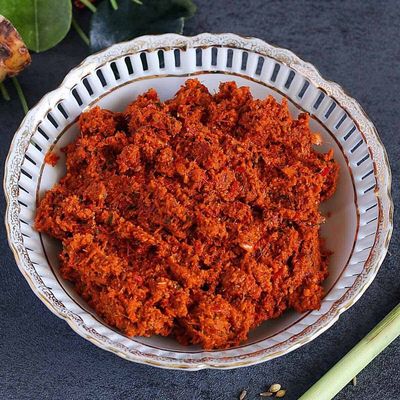
Panang Curry Paste
Milder, sweeter than red curry paste, with roasted peanuts. Key ingredient for Panang curries; adjust spice and sweetness as desired.
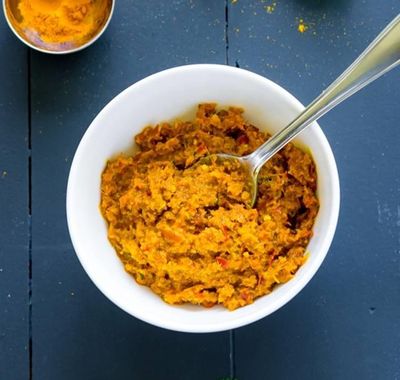
Yellow Curry Paste
Versatile paste with yellow color from turmeric. Use fresh turmeric for better flavor and moisture; it stains, so be careful.
More like this
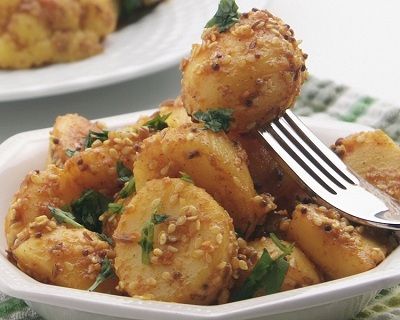
Bombay Potatoes
Bombay Potatoes is comfort food at its finest. Small potatoes are partially cooked, then coated in a richly spiced oil infused with seeds and aromatics. Some potatoes are mashed to create a creamy base, while others remain whole for texture. The result is a warm, golden, deeply spiced side dish that's utterly satisfying. This is a vegetarian staple of Indian home cooking.
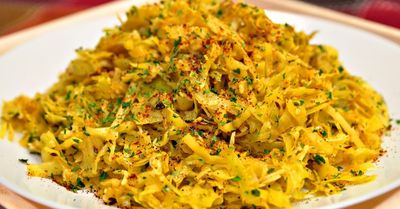
Cabbage Foogath
A foogath is the Goan version of a coconut-stir-fry vegetable: a temper of mustard seeds, dried red chilli, urad dal and curry leaves in coconut oil, sliced onion and garlic cooked briefly, then the vegetable tossed in over high heat. Fresh grated coconut is folded through at the end. The cabbage keeps a slight crunch and gets a nutty-sweet finish.
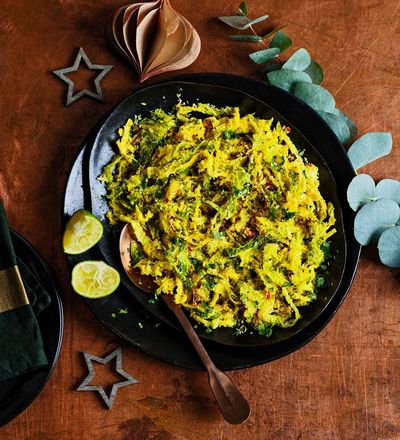
Cabbage Thoran
Cabbage is finely shredded into ribbons. A temper of mustard seeds, urad dal, dried red chilli and curry leaves is bloomed in coconut oil, the shredded cabbage tossed in over high heat, and a coconut paste of fresh coconut, green chilli, garlic and cumin folded through. The dish stays dry and the cabbage retains a slight crunch.
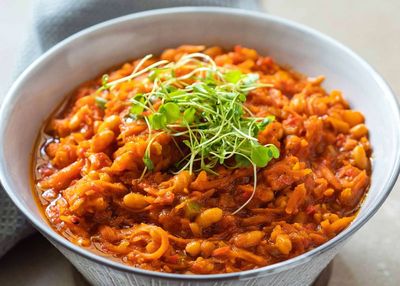
Chakalaka
Onion is softened in oil; garlic, ginger and curry powder bloom. Carrots cook briefly to tender-crisp. Peppers (red and green) and chillies join. Tomatoes simmer everything down. Tinned baked beans go in last with a splash of vinegar to balance. Eaten warm or at room temperature; tastes better the next day.